

Your Guide to Dry Socket Wisdom Tooth Symptoms

After wisdom tooth removal, some pain is expected. The key is knowing how to tell the difference between normal healing and a dry socket. Recognizing the warning signs lets you take action quickly.
The most critical dry socket wisdom tooth symptoms are a deep, throbbing pain that starts or worsens 3 to 5 days after your surgery, a visibly empty hole where the tooth was, and a bad taste or smell that won't go away. Unlike normal healing pain, which gradually gets better, dry socket pain gets significantly worse.
What Are the First Signs of a Dry Socket?
Think of the blood clot in your extraction site as a natural bandage. It shields the sensitive bone and nerve endings from air, food, and bacteria, allowing new tissue to grow.
A dry socket, known as alveolar osteitis, occurs when this crucial blood clot is dislodged or dissolves too soon. This leaves the bone and nerves exposed, which is what triggers intense pain and stalls your healing.
This timeline shows you the key window when dry socket symptoms typically appear, helping you identify a problem.
As you can see, your pain should decrease after the first day. If it suddenly spikes around day three, consider it a major red flag and contact your dentist.
To help you assess what you're experiencing, here’s a direct comparison.
Normal Healing vs Dry Socket Symptoms: A Quick Comparison
Use this table to quickly compare normal post-surgery discomfort with the specific warning signs of a dry socket. It will help you decide if it's time to call your dentist.
Symptom | Normal Healing After Wisdom Tooth Removal | Potential Dry Socket Symptoms |
|---|---|---|
Pain Level | Moderate discomfort that steadily improves each day. | Severe, throbbing pain that starts or worsens 3-5 days after surgery. |
Pain Location | Pain is localized to the extraction site. | Pain radiates to the ear, eye, temple, or neck on the same side. |
Medication | Discomfort is usually managed well with prescribed or over-the-counter pain relievers. | Pain doesn't respond well to standard pain medication. |
Socket Appearance | A dark blood clot is visible in the socket for the first few days. | The socket looks empty; sometimes the whitish jawbone is visible. |
Taste & Smell | A slight metallic taste is possible, but no persistent bad smell. | A foul taste in the mouth and/or noticeable bad breath (halitosis). |
If your symptoms align more with the "Potential Dry Socket" column, it's time to get a professional opinion.
The Most Obvious Symptom: Intense Pain
The number one sign of a dry socket is severe pain. This isn't a dull ache; it's a deep, throbbing pain that typically starts three to five days after your procedure. This timing is your most important clue. Post-op soreness should be fading by then, not escalating.
This pain isn't just in the socket. It often radiates outward, and you might feel it in your:
Ear on the same side of your face
Eye or temple area
Neck and along your jawline
Radiating pain that isn't managed by your prescribed pain medication is a classic sign you're dealing with more than normal healing.
What to Look and Smell For
Beyond pain, check for physical signs. If you carefully look at the extraction site in a mirror, you might see an empty-looking hole instead of a dark, jelly-like blood clot. In some cases, you may even be able to see the whitish color of the jawbone.
Actionable Insight: A persistent foul taste in your mouth or noticeable bad breath (halitosis) that you can't resolve with gentle rinsing are significant red flags. This is caused by food debris and bacteria accumulating in the exposed socket. If you notice this, call your dentist.
Why Dry Sockets Happen and Who Is Most at Risk
Understanding why a dry socket occurs helps you prevent it. The blood clot that forms after an extraction is a living bandage, creating a shield over the underlying bone and nerves.
A dry socket happens when that shield is lost. The clot might fail to form, dissolve too early, or be physically dislodged. Without that protection, the sensitive bone and nerves are exposed to air, food, and bacteria, triggering intense pain.
The two main culprits are physical actions that dislodge the clot and biological factors that make the clot unstable.
Identifying Key Risk Factors
While anyone can get a dry socket, certain factors dramatically increase your risk. Knowing if you fall into a high-risk category allows you and your dentist to take extra precautions.
The complexity of the surgery itself is a factor. Removing a deeply impacted wisdom tooth is more traumatic to the tissue than a simple extraction.
Your personal habits and health also play a major role. Here are the most common risk factors:
Previous Dry Socket: If you've had one before, you're more likely to get another.
Poor Oral Hygiene: Existing bacteria can disrupt clot formation and healing.
Tobacco and Nicotine Use: The chemicals in tobacco can contaminate the site, while the sucking motion of inhaling can easily dislodge the clot.
Oral Contraceptives: Estrogen in birth control pills can interfere with clot stability, increasing breakdown risk.
Extraction Location: Dry sockets are most common in the lower jaw, particularly with wisdom teeth.
A common misconception is that dry sockets are a high risk for any tooth removal. The data points specifically to wisdom teeth.
For routine extractions, the dry socket rate is only about 2% to 5%. This jumps to as high as 20% to 41.2% for impacted wisdom teeth. You can explore more data on dry socket prevalence to understand the significance. This statistic highlights why following your aftercare instructions is non-negotiable after wisdom tooth surgery.
How Smoking and Hormones Increase Your Risk
Two of the biggest preventable risk factors for dry socket are smoking and hormonal influences. Understanding how these affect your body's healing process gives you the power to take preventive action. They don’t just slightly increase the risk; they can significantly impair your ability to heal.
Smoking is arguably the most well-known and preventable cause of dry socket. It attacks the healing socket from two different angles.
The Double Threat of Smoking
First, the physical act of smoking creates suction. The negative pressure from inhaling on a cigarette, vape, or pipe is often enough to physically dislodge the fragile blood clot.
Second, the chemicals in tobacco are toxic to healing tissue. Nicotine constricts blood vessels, reducing the supply of oxygen and nutrients that the extraction site needs to heal properly. This can slow down or disrupt the entire process.
The data is clear. Smokers are significantly more likely to develop a dry socket than non-smokers.
Research shows smokers have a dry socket incidence rate of about 12%.
In contrast, non-smokers have a risk of only 4%—a 3x greater risk for smokers.
One major review placed the combined rate as high as 13.2% for smokers.
You can read the full research on smoking and dry socket for more detail. Given the other health risks of smoking cigarettes, quitting—even temporarily for your surgery—is the most effective action you can take to protect your recovery.
Hormonal Influences on Healing
Your body’s own chemistry can also play a role. High levels of estrogen, particularly from oral contraceptives (birth control pills), are linked to a higher risk of developing dry socket.
Estrogen appears to interfere with blood clot formation and stability. It is thought to encourage the clot to break down prematurely, before the socket has healed underneath.
This risk is highest mid-cycle when estrogen levels naturally peak.Actionable Insight: If you take hormonal birth control, inform your oral surgeon beforehand. They may recommend scheduling your extraction during a week when estrogen levels are lower (such as the last week of your pill pack, the placebo week) to reduce your risk.
Practical Steps to Prevent a Dry Socket
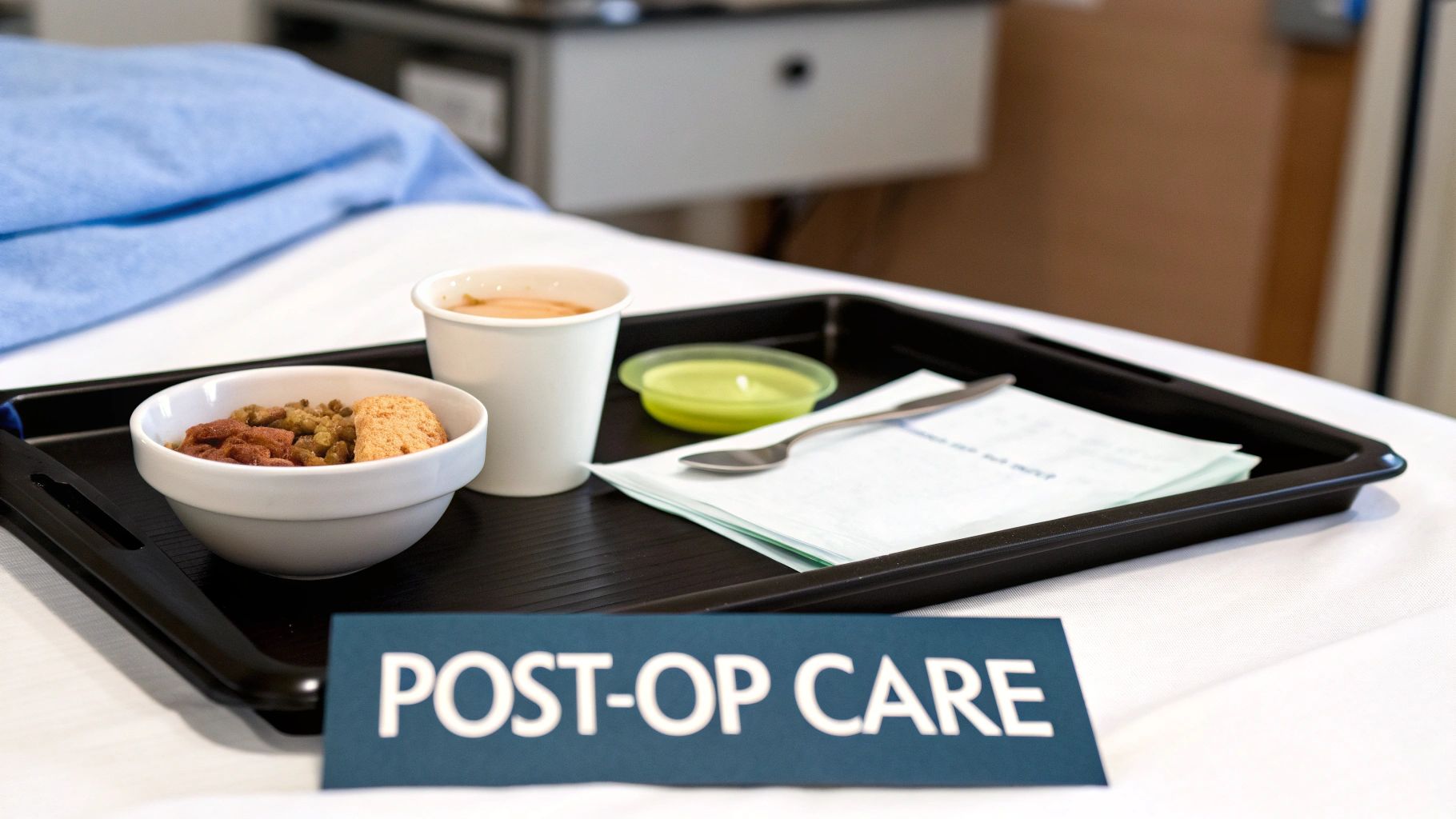
While you can't eliminate all risk, you have significant control over preventing a dry socket. Your primary job is to protect the blood clot. Following a few critical rules gives you the best chance for a smooth recovery.
Your number one goal is to avoid anything that creates suction or pressure in your mouth, as this is the biggest threat to the clot.
Your Post-Surgery Do's and Don'ts Checklist
Protecting the extraction site starts the moment your surgery is over. For the first few days, what you do—and what you avoid—directly impacts your risk of developing painful dry socket wisdom tooth symptoms. Follow these guidelines strictly.
Actions to Avoid (The Don'ts):
No Straws: Do not use a straw for at least one week. The sucking motion is a leading cause of dislodging the blood clot.
No Smoking or Vaping: Avoid all tobacco and nicotine products. Suction pulls the clot out, and the chemicals impair healing.
No Forceful Spitting or Rinsing: Let liquids fall gently from your mouth into the sink. Vigorous swishing or spitting creates dangerous pressure.
No Strenuous Activity: Avoid heavy lifting, intense workouts, and excessive bending for several days. Spikes in blood pressure can dislodge the clot.
Actionable Insight: The core principle is to be gentle with your mouth. Any action that creates pressure in the healing socket—from sucking on a drink to aggressive rinsing—is a risk you must avoid.
Smart Food and Drink Choices
Your diet is crucial for a smooth recovery. The goal is to get proper nutrition without disturbing the extraction site. For the first 24-48 hours, stick strictly to soft foods and liquids that require little to no chewing.
Good choices include: Yogurt, applesauce, smoothies (drunk from a cup), mashed potatoes, and lukewarm soups.
Foods to avoid are: Anything crunchy (chips, nuts), sticky (caramel), or small (rice, seeds) that can get lodged in the socket. Also avoid spicy or very hot foods, which can cause irritation.
Stay well-hydrated by drinking plenty of water, sipping directly from a glass.
For a complete recovery roadmap, see our guide on what to expect during wisdom teeth removal from prep to recovery.
Gentle Oral Hygiene Practices
Keeping your mouth clean is essential for preventing infection, but you must do it carefully. You can and should continue brushing your other teeth, but be extremely gentle and avoid the extraction site for the first few days.
After 24 hours, you can begin very gentle rinsing. Your dentist will likely recommend a warm salt water rinse (1/2 teaspoon of salt in 8 ounces of water) a few times a day, especially after eating. Let the water flow over the area, then tilt your head to let it drain out. Do not swish. This simple action helps keep the socket clean without disrupting the clot.
What to Do If You Think You Have a Dry Socket
If you're experiencing the intense, unmistakable pain of a suspected dry socket, do not panic. The pain is severe, but the condition is very treatable. This is not a problem you can solve at home.
Your most important action is to call your dentist or oral surgeon's office immediately. Describe your symptoms clearly—the throbbing pain, the bad taste, and when it started. Waiting will only prolong your pain. Your dental team needs to see you to clean the socket and initiate proper healing.
At-Home Care While You Wait for Your Appointment
While waiting for your appointment, you can take some steps to manage the pain. Remember, these are temporary measures to provide relief and will not fix the underlying problem.
These actions focus on managing discomfort and keeping the area clean without causing more harm.
Gentle Salt Water Rinse: Mix a half teaspoon of salt into a cup of warm water. Do not swish or spit. Tilt your head to let the warm salt water gently wash over the socket, then lean over the sink and let the water fall out of your mouth. This can help clear irritating debris.
Over-the-Counter Pain Relievers: An anti-inflammatory medication like ibuprofen can help reduce the pain. Follow the package dosage instructions carefully.
Cold Compress: Apply a cold pack to the outside of your cheek for 15-20 minutes at a time. The cold can help numb the radiating ache and reduce swelling.
Actionable Insight: These steps are for temporary pain management only. True relief begins once your dentist treats the exposed socket.
Eating may be difficult, but nourishment is important for healing. Stick to liquids and very soft foods. You can find safe options in our guide on what to eat after a tooth extraction.
How Dentists Treat a Dry Socket
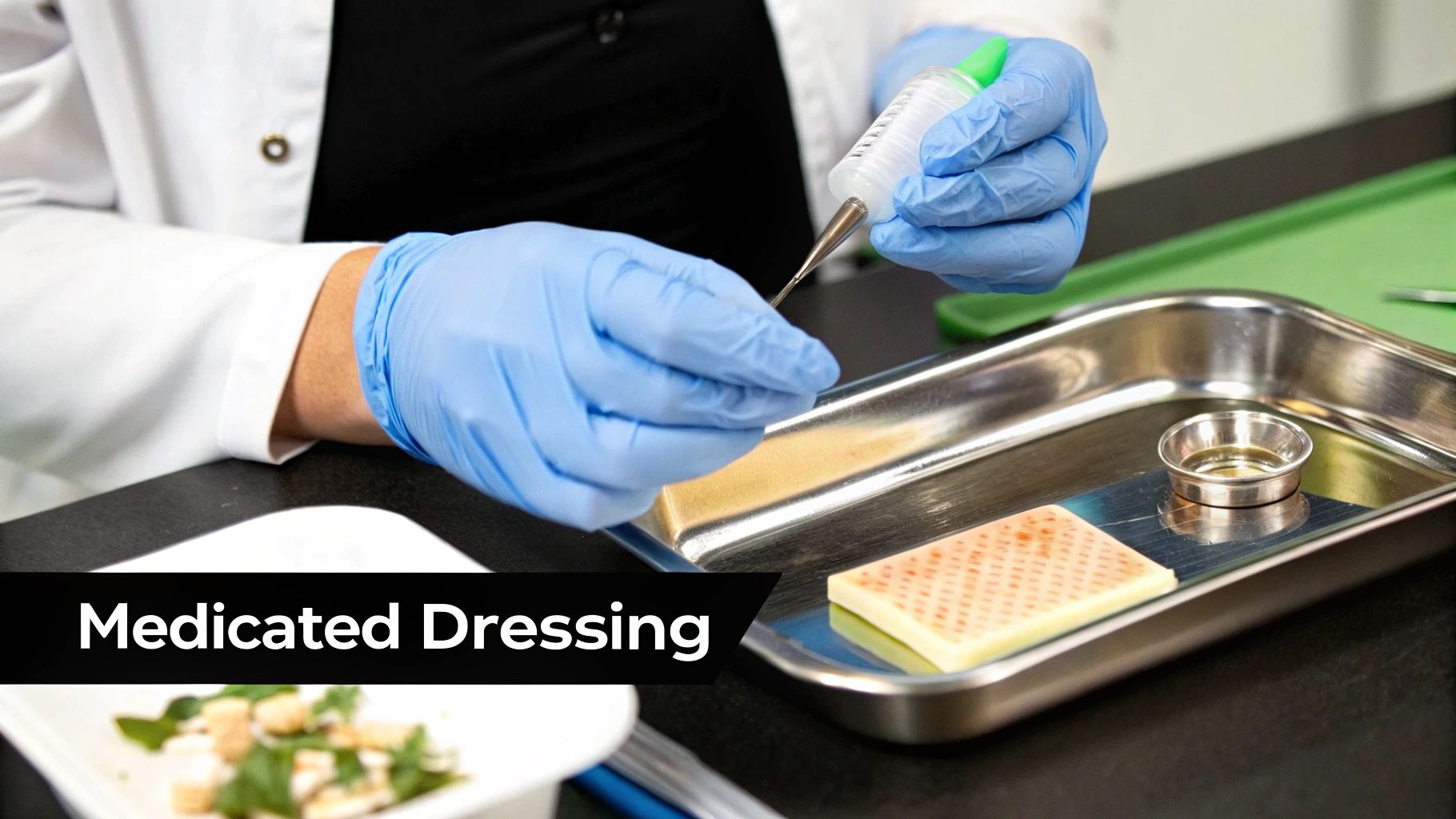
Walking into the dentist’s office with dry socket pain is miserable, but the treatment is straightforward and provides almost immediate relief. Knowing the process can help reduce any anxiety you might feel.
The primary goal is to get you out of pain. The procedure is designed to clean the socket gently so your body can restart the healing process correctly.
The Two-Step Treatment Process
Dry socket treatment is a simple, two-step procedure designed to get you comfortable and on the path to recovery.
Cleaning the Socket: The dentist will first gently flush out the empty socket with a sterile solution. This critical step removes food debris and bacteria that are causing the pain and foul taste.
Placing a Medicated Dressing: After cleaning the socket, your dentist will place a special medicated dressing inside. This dressing is made of a material soaked in soothing agents.
Think of the medicated dressing as a new, temporary shield for the exposed bone and nerve. It is often infused with ingredients like eugenol (from clove oil) that have natural pain-relieving and antiseptic properties. This is what provides rapid relief.
The dressing protects the area from air and food, allowing healing to begin. Your dentist will likely have you return in a few days to check on your progress and change the dressing if necessary.
Trying to rest with this level of pain is difficult. For help managing the stress and getting sleep, you may find these strategies for sleeping better with anxiety helpful. For other post-op concerns, our guide on how to reduce swelling after oral surgery offers practical tips.
Common Questions We Hear About Dry Socket
It's normal to have questions during your recovery. Here are direct answers to the most common concerns we hear about dry socket to help you heal with confidence.
How Long Does Dry Socket Pain Actually Last?
The duration of the pain depends entirely on getting professional treatment. Once your dentist cleans the socket and applies a medicated dressing, the severe, throbbing pain typically begins to subside within hours. Most people feel significant relief within a day.
If you attempt to wait it out at home, the severe pain can last for a week or more as the body struggles to heal over the exposed bone. Actionable Insight: The fastest way to stop the pain is to call your dentist immediately.
Is it Possible to Get a Dry Socket a Full Week After Surgery?
This is highly unlikely. The critical risk period for a dry socket is almost always between day two and day five post-extraction. This is when the blood clot is most fragile.
If you experience new or worsening pain a week or more after your surgery, it is more likely an infection. This is a clear signal to call your dentist right away so they can diagnose the actual problem.
Actionable Insight: The timing of your pain is a key diagnostic clue. Worsening pain on days 3-5 suggests a dry socket. New pain after a week suggests a different issue, like an infection.
Does a Bad Taste in My Mouth Automatically Mean I Have a Dry Socket?
Not by itself, but it is a major warning sign that you should not ignore. A persistent foul taste, especially when combined with worsening pain and bad breath, forms the classic trio of dry socket symptoms. It is caused by bacteria and food debris collecting in the unprotected socket.
While some minor taste changes can be normal, the specific combination of increasing pain, a bad taste, and a noticeable odor is your clear signal to call your dentist for an evaluation.
At Beautiful Dentistry, we know that recovering from wisdom tooth surgery can feel a little overwhelming. Dr. Martin Sobieraj and our entire team are here to give you clear, honest guidance and gentle care to make your healing as smooth as possible. If you’re dealing with any symptoms that worry you or just have a question about your recovery, please don't wait. We're here to help you get back to feeling great. Schedule your appointment online or give our Tempe office a call today.


Comments