

What to Eat After Tooth Extraction: An Actionable Recovery Guide

After a tooth extraction, your immediate goal is to help your body heal. What you eat is a critical part of this process. For the first few days, your diet must consist of cool, liquid, or ultra-soft foods that require zero chewing. Your go-to options should be chilled soups, smoothies (sipped from a cup, never a straw!), yogurt, and applesauce. Sticking to these foods is your best defense against complications like a dry socket.
Your Food Guide For The First 48 Hours
The first two days post-procedure are the most critical for your recovery. Your primary task is to protect the blood clot forming in the tooth socket; it's the natural bandage essential for healing. Eating the right foods will minimize pain and swelling, helping you recover faster.
This is a strict "no-chew zone." Avoid anything crunchy, hard, spicy, or steaming hot. These can irritate the sensitive tissue or dislodge the vital blood clot. Your diet must be gentle, cool, and nourishing.
Your Immediate Action Plan
For the first 24 to 48 hours, commit to a diet of only liquids and puréed foods. This eliminates guesswork and creates the ideal environment for healing.
Use this visual as a quick reference for your diet during these critical first two days.

The plan is straightforward: begin with cool liquids and smooth foods. On day two, you can introduce slightly more substantial but still very soft options, like yogurt or pudding.
Nutrient-Rich Choices For Healing
What you eat now isn't just for comfort; it's fuel for healing. Foods rich in specific nutrients can accelerate your recovery. For example, Omega-3 fatty acids found in eggs and the antioxidant lycopene in tomato soup are proven to support wound healing.
Actionable Tip: During the first 48 hours, use your diet as a recovery tool. Choose cool foods to reduce swelling and soft textures to protect the blood clot.
Once you feel ready for something more substantial, soft-scrambled eggs are an excellent choice. For tips on making a soft and nutritious fluffy omelet that’s easy to eat, this guide offers practical steps. Ensure they are lukewarm and very soft before eating.
To simplify your meal planning, use this table of safe foods for the initial recovery phase.
Safe Foods for the First 48 Hours
This table outlines approved foods and drinks to help you plan your meals for the first two days.
Food/Drink Category | Examples | Actionable Benefit |
|---|---|---|
Cool Liquids | Water, milk, cool herbal tea, diluted fruit juices (non-citrus) | Drink these to stay hydrated and soothe inflammation. |
Smoothies | Blended banana, yogurt, protein powder, and milk (no seeds) | Sip from a cup to get concentrated nutrients without chewing. |
Dairy & Alternatives | Yogurt, cottage cheese, kefir, pudding, Jell-O | Eat these for easy-to-swallow, protein-rich options. |
Puréed Soups | Chilled gazpacho, lukewarm tomato soup, creamy pumpkin soup | Consume for gentle nourishment and hydration. |
Soft Fruits | Applesauce, mashed bananas, fruit purées | Choose these for natural energy and recovery-boosting vitamins. |
This isn't about restriction; it's about making strategic food choices that actively support healing while ensuring your comfort.
Here is a practical list of foods to stock your kitchen with:
Chilled Soups: Prepare or buy smooth tomato or pumpkin soup. Gazpacho is another excellent, ready-to-eat option.
Smoothies: Blend soft fruits like bananas with yogurt or milk. Crucial rule: do not use a straw. The suction can dislodge the blood clot.
Yogurt and Cottage Cheese: Keep these on hand for a cool, soft source of protein to help repair tissue.
Applesauce and Mashed Bananas: Have these ready for a no-chew food that's easy to eat.
Pudding or Jell-O: Use these as simple, gentle options to help you feel full.
What to Eat From Day 3 to Day 7

After the initial 48-hour healing window, you can start reintroducing more textures into your diet. The key is to do it slowly. Your goal is to add variety without irritating the healing socket.
Listen to your body—it will guide you. As you add new foods, your comfort level is the best indicator of what is safe to eat. You are now entering the "semi-soft" food stage, where minimal chewing is required.
Stepping Up to Semi-Soft Foods
Think of this phase as a transition back to your normal diet. The foods you choose should be satisfying but still very gentle. This is also the time to bring back warm (not hot!) meals.
Here are some foods to start with:
Mashed Potatoes: Prepare them smooth and creamy for a filling, no-chew option.
Overcooked Pasta: Choose small shapes like macaroni or orzo and cook them until they are extra soft. Serve with butter or a mild, smooth sauce.
Flaky Fish: Bake a gentle white fish like cod or tilapia until it falls apart easily. This is a great source of protein and omega-3s.
When eating, take small bites and consciously chew on the side of your mouth opposite the extraction site. This simple action removes pressure from the healing area and reduces irritation risk.
Testing the Waters with New Textures
To know if you're ready for more substantial foods like soft-cooked vegetables or ground meat, test them carefully. Eat a tiny, soft piece and pay close attention to how your mouth feels.
Actionable Tip: If you feel any sharp pain, throbbing, or a mild ache after trying a new food, stop immediately. This is your body telling you to wait. Return to softer foods for another day before trying again.
For example, if a piece of steamed carrot requires too much effort to chew, the extraction site is not ready. Revert to mashed potatoes or a thick soup for that meal. Rushing the healing process is counterproductive; a gradual transition is the most effective strategy.
Meal Ideas to Keep You Going
Keeping your meals interesting will make recovery feel less restrictive. Nutrient-dense foods are vital now for rebuilding tissue. Studies confirm that a varied, nutritious diet actively promotes faster healing.
Here are some practical meal ideas for this week:
Breakfast: Prepare Cream of Wheat or oatmeal, ensuring there are no nuts or hard pieces. Soft-scrambled eggs are another excellent choice.
Lunch: Combine a bowl of lukewarm, creamy tomato soup with soft avocado slices.
Dinner: Bake tilapia and serve it with a scoop of smooth mashed sweet potatoes and steamed, soft zucchini.
Snacks: Choose cottage cheese, Greek yogurt, or a soft muffin without nuts or seeds.
Remember to stay hydrated by sipping water throughout the day, always directly from a cup. You must continue to avoid straws for this entire week to protect the blood clot.
What You Absolutely Need to Avoid After a Tooth Extraction
Knowing what not to eat is just as critical as knowing what to eat for a fast, comfortable recovery. Certain foods, drinks, and habits can disrupt the healing process, causing pain and complications.
Your main job is to protect the fragile blood clot in the empty tooth socket. This clot acts as a natural bandage. If it becomes dislodged, you risk developing a painful condition called a dry socket. This is a complication you must actively work to prevent.
Your "Do Not Eat" List for a Safe Recovery
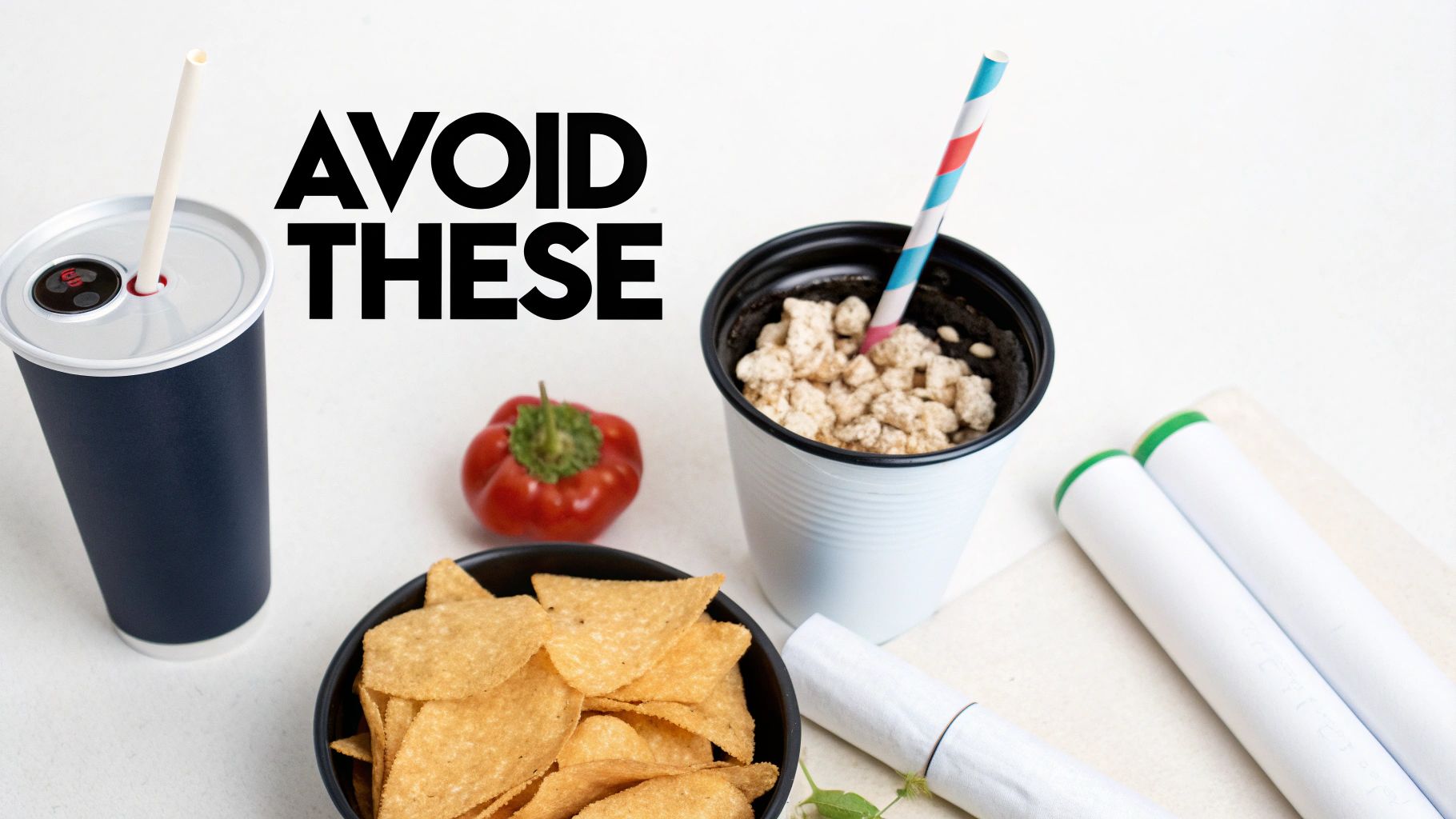
For the first week, eliminate anything from your diet that could poke or irritate the healing area. The primary culprits are foods that are hard, crunchy, sharp, or contain small particles that can get stuck in the socket.
Here is what you must avoid:
Hard & Crunchy Foods: Do not eat chips, popcorn, nuts, or hard taco shells. They can break into sharp fragments and injure the extraction site.
Tiny Grains & Seeds: Avoid sesame seeds, poppy seeds, and small fruit seeds (like those in raspberries). They can get lodged in the socket, causing inflammation.
Spicy & Acidic Foods: Postpone eating anything with hot sauce or citrus. These ingredients will cause a stinging sensation in the healing tissue.
Piping Hot Food & Drinks: Let hot coffee or soup cool to a lukewarm temperature. Extreme heat can dissolve or dislodge the protective blood clot.
Protecting the blood clot is your top priority. A single wrong snack can delay healing and cause significant pain. If you experience severe, radiating pain a few days post-extraction, learn to recognize the signs by reading our guide on what to do if you have a dry socket.
Use this table as a quick reference for what to avoid and for how long.
Foods to Avoid After Tooth Extraction
Food/Habit to Avoid | Reason for Avoidance | Recommended Avoidance Period |
|---|---|---|
Spicy or Acidic Foods | Can cause stinging, irritation, and pain at the extraction site. | At least 1 week |
Crunchy or Hard Foods | Sharp fragments can poke the wound or get lodged in the socket. | At least 1 week |
Seeds and Small Grains | Can easily become trapped in the socket, leading to infection. | At least 1 week |
Sticky or Chewy Foods | Can pull on the socket and dislodge the protective blood clot. | At least 1 week |
Extremely Hot Items | Heat can dissolve the blood clot and burn sensitive tissues. | First 24–48 hours |
Alcohol | Can interfere with medication and slow down the healing process. | At least 24–48 hours |
Avoiding these items is a direct and effective way to ensure a smooth recovery.
Habits That Can Sabotage Your Healing
It's not just about what you eat. Certain habits create suction in your mouth, which is the primary threat to a stable blood clot.
For at least the first week, you must completely stop:
Using Straws: The sucking motion creates a vacuum that can easily pull the clot from the socket.
Smoking or Vaping: This is a major risk. The suction is dangerous, and the chemicals in smoke and vapor impede healing and significantly increase your risk of infection and dry socket.
Forceful Spitting: When rinsing your mouth, do not spit. Instead, open your mouth and let the water gently fall out. Forceful spitting can instantly dislodge the clot.
Fueling Your Recovery with the Right Nutrients
After the first few days, shift your focus from "survival mode" soft foods to actively fueling your body's repair processes. Your body is working hard to heal the extraction site, and providing it with the right nutrients will directly impact how quickly you recover.
Make your soft foods count. The quality of your diet is crucial right now.
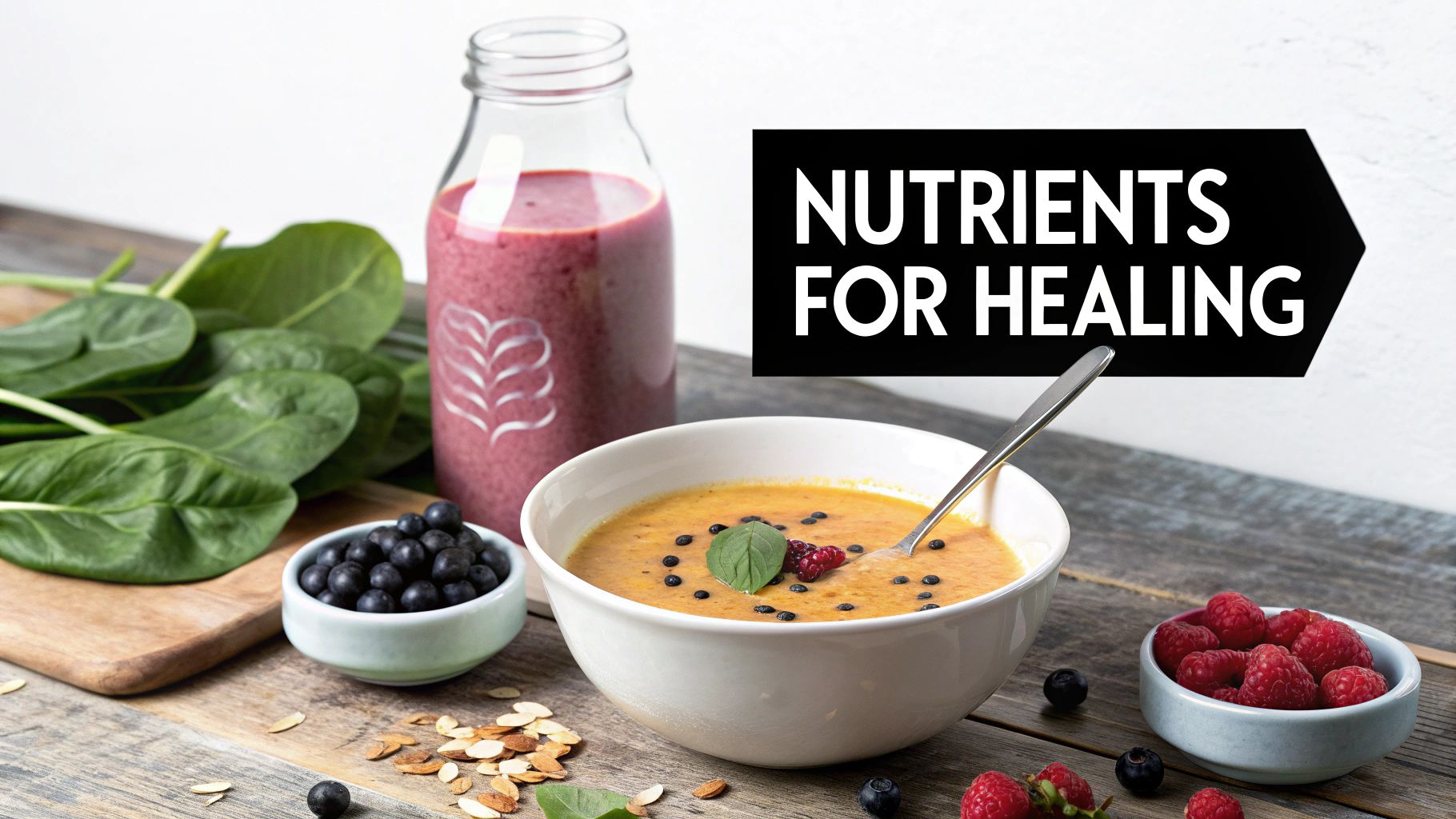
It's common to eat less after an extraction due to discomfort, but your body actually needs more energy to heal. An adult needs between 1950–2800 kcal/day to support healing, so your goal is to find nutrient-dense, easy-to-eat foods. You can learn more about post-extraction nutritional needs in this comprehensive study on PMC.
Key Nutrients for Faster Healing
Focus on these specific building blocks to turn your diet into a powerful healing tool.
Protein: This is essential for tissue repair. Your body uses protein to rebuild the gum tissue and bone in the socket. * How to get it: Blend unflavored protein powder into a smoothie or purée a creamy lentil soup.
Vitamin C: This vitamin is crucial for producing collagen, the framework for new gum tissue. A deficiency can slow down healing. * How to get it: Make a smoothie with mango and spinach. Mashed sweet potatoes are another excellent, soft source.
Zinc: This mineral supports your immune system to prevent infection and plays a key role in the cell growth needed to close the wound. * How to get it: Eat smooth pumpkin purée or well-cooked, creamy oatmeal for a zinc source that won't cause irritation.
Actionable Recipe: For a nutrient-packed smoothie, blend 1/2 cup Greek yogurt (protein), 1/2 cup frozen mango (Vitamin C), a handful of spinach, and a banana. Add milk to reach a smooth, sippable consistency. Drink it from a cup—no straws!
By focusing on these nutrients, you are taking an active role in accelerating your own recovery.
To better understand how vitamins and minerals impact your oral health, read our guide on the 5 best vitamins for teeth and gums. Smart food choices now will speed up your recovery and benefit your long-term dental wellness.
The Great Dairy Debate: Is It Safe for Healing?
Dairy is one of the most confusing topics when it comes to post-extraction diets. Some sources recommend it, while others advise against it. Let's clarify the facts so you can make an informed decision.
The confusion stems from differing clinical opinions. Historically, some dentists advised patients to avoid dairy for the first 24 to 48 hours, concerned it might promote bacterial growth or cause nausea with certain pain medications.
A Look at Differing Clinical Views
This advice varies significantly by region. An international survey found that while up to 56% of dentists in German-speaking countries advised against dairy, 95.3% of dentists elsewhere did not recommend avoiding it.
This disparity highlights how local dental traditions influence patient advice. You can explore these differing professional opinions on post-surgery dairy consumption in the linked study.
Why We Often Recommend Dairy
At Beautiful Dentistry, we, like many modern dental professionals, find that the benefits of dairy typically outweigh the risks for most patients.
Yogurt, cottage cheese, and milk are ideal post-extraction foods. They are soft, require no chewing, and are often served cool, providing a soothing effect on a sore extraction site.
From a healing standpoint, they are nutritionally beneficial:
Protein: Essential for rebuilding gum tissue.
Calcium: Supports the healing of your jawbone.
Our Actionable Advice: For most patients, dairy is not just safe—it's beneficial. Its soft texture, cool temperature, and high protein content make it an excellent choice for a smooth recovery.
Ultimately, you should follow your dentist's specific instructions. If you have a dairy sensitivity, are lactose intolerant, or have been told to avoid dairy due to your medications, adhere to that advice. For most people, however, dairy is a comforting and nutritious part of the healing process.
A Few More Tips for a Smooth Recovery (and When to Call Us)
Knowing what to eat is crucial, but managing your daily habits is equally important. A bit of planning and a few simple adjustments will protect the healing socket and keep you comfortable.
The most practical step you can take is to prepare your soft foods before your appointment. Having soups, smoothies, and mashed cauliflower ready means you won't have to cook when you're tired and need to rest. This preparation removes stress and ensures you have safe, nourishing food available.
Simple Habits That Make a Big Difference
Incorporate these small changes into your routine to protect the extraction site from irritation and prevent complications.
Chew on the Other Side: For at least the first week, consciously chew food on the side opposite the extraction.
Drink Plenty of Water (No Straws!): Stay hydrated by sipping directly from a glass. Using a straw creates suction powerful enough to dislodge the blood clot.
Take Small Bites and Go Slow: Cut food into small pieces and eat slowly. This minimizes jaw movement and reduces strain on the healing area.
Keep in mind that pain medication and a sudden diet change can cause other issues. This guide on managing constipation after surgery provides helpful dietary and mobility solutions for this common side effect.
Pro Tip: Do not try to tough it out. Your body needs rest to heal. Rushing back to a normal diet risks complications. A few extra days of soft foods is a smart investment in a smooth, uninterrupted recovery. For more actionable advice, review our guide on how to recover from a tooth extraction with fast recovery tips.
When You Should Call Beautiful Dentistry
While some soreness and swelling are normal, certain signs indicate a problem. Call our office immediately if you experience any of these red flags:
Pain that worsens after day three instead of improving.
Continuous bleeding that doesn't stop with gentle, firm gauze pressure.
Signs of infection, like fever, chills, or excessive or spreading swelling.
A foul taste or smell coming from the extraction site.
Common Questions About Post-Extraction Diets
It’s normal to have questions about what to eat after a tooth extraction. Clear, practical answers will help you feel more confident during your recovery. Here are the answers to the most common questions we hear from patients.
The most frequent question is, "When can I eat normally again?" Most people can begin slowly reintroducing normal foods about one week after the procedure. The key is to progress gradually. Start with semi-soft foods and assess how you feel before trying anything with more texture.
A critical rule to follow is to avoid chewing directly on the extraction site for at least two weeks. If you try a new food and feel any discomfort, stop. Revert to softer foods for another day or two before trying again.
Caffeine, Protein, and Crunchy Snacks
Many of us rely on coffee to start the day. You must avoid hot coffee for the first 24-48 hours because the heat can dissolve the protective blood clot. After that, lukewarm coffee is generally fine. Sip it directly from the mug—never use a straw.
Getting enough protein is vital for healing. Here are some easy-to-eat, high-protein options:
Greek Yogurt & Cottage Cheese: These are cool, soothing, and packed with protein.
Scrambled Eggs: A perfect warm, soft meal that requires minimal chewing.
Blended Protein Shakes: An excellent way to get a quick nutritional boost. Drink from a glass, not with a straw.
Puréed Soups: Lentil or black bean soups provide great plant-based protein and are gentle on your mouth.
We are often asked about chips and other crunchy snacks. You must avoid anything hard or sharp for at least one to two weeks. These foods can irritate the healing socket, and small pieces can get trapped, potentially causing an infection.
The most important action you can take is to listen to your body and follow the specific instructions our team provided after your procedure.
If you have more questions about your post-extraction diet or need personalized advice, the team at Beautiful Dentistry is here to help. Contact us today to ensure your recovery is as smooth and comfortable as possible.


Comments