

What to expect wisdom teeth removal: Prep, surgery, and recovery guide

Facing wisdom teeth removal can feel daunting, but knowing what's coming turns worry into confidence. This guide breaks down the process into clear, manageable steps: a consultation to map out your procedure, the surgery itself, and a well-defined recovery at home. With the right preparation, you can expect to be back to normal in about a week.
Your Roadmap to Wisdom Teeth Removal

If you're feeling nervous about the procedure, you're not alone. This is one of the most common oral surgeries performed. In the United States, around 5 million people have their wisdom teeth removed annually. This extensive history has refined the process into a safe and predictable experience for patients. You can review the wisdom tooth procedure statistics for more background.
Viewing this as a structured journey with clear milestones makes the entire experience feel more manageable. Each step is designed for your comfort and a successful outcome.
The Key Phases of Your Journey
Your comfort and safety guide every phase of the process. It begins with an initial evaluation, including X-rays, to create a personalized surgical plan. Next is the procedure, performed while you are comfortably sedated. The final and most critical phase is your recovery at home, where following post-operative instructions is your direct path to a fast, complication-free heal.
Actionable Tip: To reduce anxiety, focus on understanding the full timeline from your first appointment to your final check-up. This high-level view eliminates surprises and puts you in control.
To give you a clear overview, here is the entire journey at a glance.
Wisdom Teeth Removal At a Glance
This table outlines what to expect and your key actions during each phase of the wisdom teeth removal process.
Phase | What to Expect | Your Key Action Items |
|---|---|---|
Consultation & Planning | Your surgeon reviews X-rays, assesses tooth positions, and discusses your sedation options to ensure comfort. | Come with a list of questions, provide your complete medical history, and schedule your surgery date. |
Surgery Day | A straightforward outpatient procedure lasting 30-60 minutes, performed under your chosen anesthesia. | Arrange your ride home in advance. Follow all pre-op fasting instructions precisely. Wear loose, comfortable clothing. |
Recovery & Healing | Rest at home, manage swelling with ice packs, stick to a soft-food diet, and prioritize sleep. | Follow all post-op instructions meticulously. Take medications on schedule. Avoid straws and strenuous activity. |
Each phase has a distinct purpose, designed to move you from preparation to full recovery as smoothly as possible.
How to Prepare for a Smooth Surgery Day

A successful surgery and an easier recovery begin days before your appointment. By taking a few proactive steps, you can walk into your procedure feeling prepared, calm, and in control. This preparation is about setting the stage for a smooth healing process by handling logistics and creating a comfortable environment ahead of time.
Your Pre-Surgery Action Plan
Use the week before your surgery for preparation. Your first action item is to confirm your transportation. Since you will be sedated, you cannot drive yourself home. Arrange for a reliable friend or family member to take you to your appointment and bring you home safely.
Next, have a detailed discussion with your surgeon about your current medications, including any over-the-counter supplements. Some may need to be paused before surgery. For a comprehensive checklist, our post on how to prepare for oral surgery provides an actionable checklist is an excellent resource.
Actionable Tip: Your goal is to create a stress-free environment for surgery day and the first few days of recovery. A little planning now directly contributes to your comfort later.
To manage pre-surgery jitters, which are completely normal, try simple relaxation techniques. Practicing deep breathing exercises can effectively calm your nervous system.
Setting Up Your Recovery Nest
Transform your home into a healing sanctuary before you leave for your appointment. A dedicated, comfortable recovery space is essential.
Gather Your Pillows: Prop your head up with extra pillows on your bed or couch. Keeping your head elevated is a simple and effective way to minimize swelling.
Line Up Entertainment: Have books, movies, or podcasts ready. You will need to rest for the first 24-48 hours, and low-key distractions are key to passing the time comfortably.
Stock the Kitchen: Fill your fridge with soft foods and clear liquids. Good options include yogurt, applesauce, broth, Jell-O, and pre-made smoothie ingredients.
On the morning of your surgery, wear loose, comfortable clothing and avoid makeup, jewelry, or contact lenses. Crucially, follow your surgeon's fasting instructions precisely—this is a critical safety measure for IV sedation. Completing this checklist will allow you to arrive for your appointment fully prepared.
Understanding Your Anesthesia and Sedation Options
A common question is, "Will it hurt?" Modern dental anesthesia ensures you are completely comfortable and pain-free during the procedure. The best option depends on the complexity of your extraction, your anxiety level, and your surgeon's recommendation. We will work with you to find the ideal level of sedation for a stress-free experience.
Local Anesthesia: The Foundation of Comfort
Every procedure begins with local anesthesia. This numbing medication is applied directly to the extraction sites, blocking nerve signals to prevent pain in that specific area. For a simple extraction of an erupted tooth, local anesthesia alone may be sufficient. You will be awake and aware of pressure but will not feel pain.
Conscious Sedation: A State of Deep Relaxation
If you feel anxious about being awake, conscious sedation is an excellent choice. Administered as a pill taken before your appointment or as nitrous oxide ("laughing gas"), this method induces a state of deep relaxation. You remain conscious and able to respond, but you'll feel drowsy and at ease. Many patients have little to no memory of the procedure afterward, making it a popular choice for mild to moderate anxiety.
Actionable Tip: Your comfort is the priority. Be open with your surgeon about your anxiety levels so you can choose the right sedation. This decision transforms a potentially stressful event into a manageable one.
IV Sedation and General Anesthesia: The Deep Sleep Options
For complex cases involving impacted teeth or for patients with significant dental anxiety, IV sedation or general anesthesia is the recommended route. These options induce a "twilight sleep" or a deeper sleep, making you completely unaware of the surgery. The medication is administered via an IV, works quickly, and you will wake up with no memory of the procedure. This is the most common approach for wisdom teeth removal.
Our detailed guide on how dental sedation works provides a guide to comfort offers more information. A direct conversation with your surgeon will help you make the best choice for a peaceful experience.
What Happens During Your Wisdom Tooth Extraction
Once your chosen sedation has taken effect, the procedure begins. Understanding the steps can demystify the process and help you feel more at ease. The surgery itself is typically efficient, lasting between 30 and 60 minutes, depending on the number and position of the teeth being removed.
Getting to the Tooth
If a wisdom tooth has fully erupted, the extraction is straightforward. However, wisdom teeth are often impacted—trapped beneath the gums or blocked by adjacent teeth. To access an impacted tooth, the surgeon makes a small, precise incision in the gum tissue. This creates a flap that provides a clear view of the tooth and surrounding bone, allowing for targeted removal.
Actionable Tip: Understand that every step is deliberate and designed to be as gentle as possible. The surgeon's techniques are chosen to minimize tissue disturbance, which directly promotes a faster and more comfortable recovery.
Removing the Tooth
While some teeth can be removed whole, it is often gentler to divide an impacted tooth into smaller sections. This technique allows the surgeon to remove the tooth through a smaller opening, which reduces trauma to the surrounding bone and soft tissue. This approach is better for your healing process. You may feel some pressure during this step, but you will not feel pain.
After the tooth sections are removed, the surgeon cleans the area thoroughly. The gums are then closed with a few stitches, which typically dissolve on their own within a week. A sterile gauze pad is placed over the site to control bleeding, and the procedure is complete.
Your Detailed Day-by-Day Recovery Timeline
Knowing the recovery roadmap is the best way to ensure a smooth, stress-free healing process. This day-by-day guide will show you what to expect and the specific actions to take at each stage.
First, let's review the surgical process itself, which is a clear, three-step sequence.
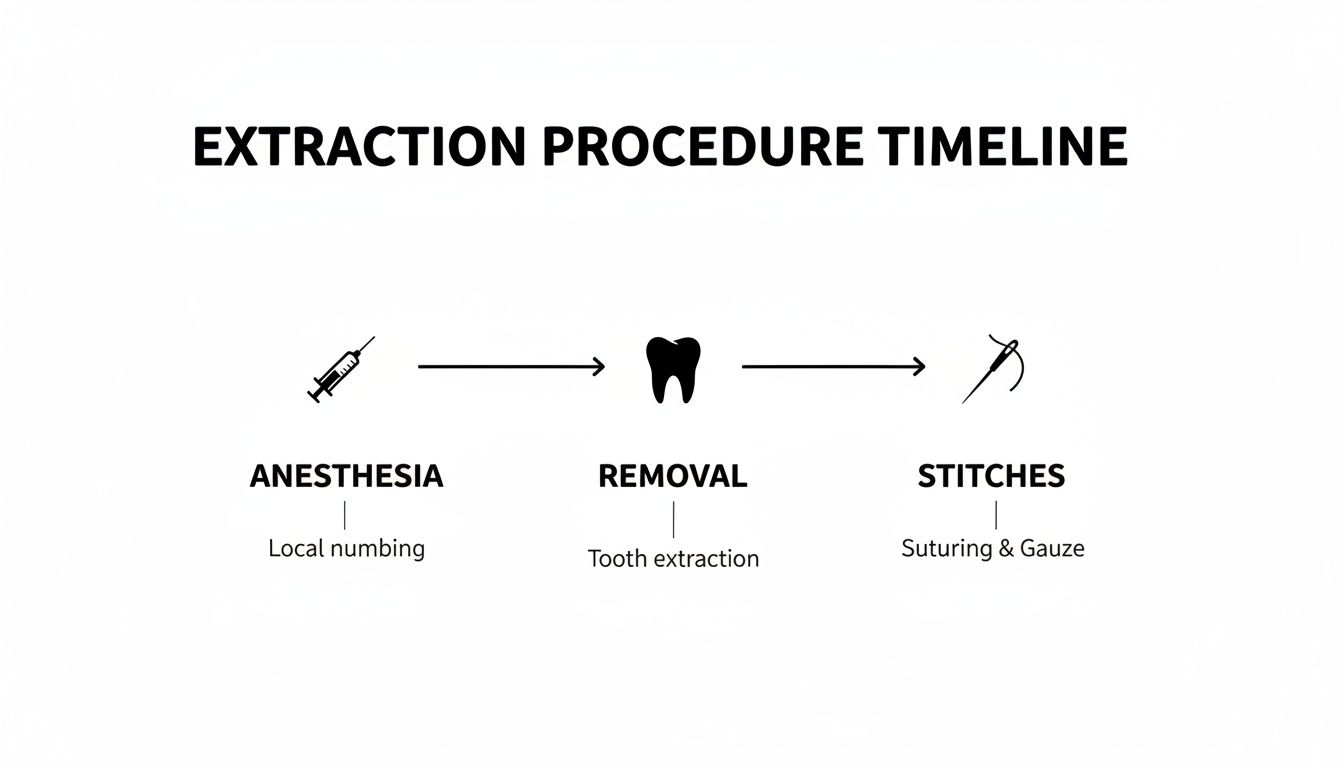
As shown, your surgeon uses anesthesia, removal, and stitches to ensure a comfortable and efficient procedure.
The First 24 Hours: Critical Rest
Your primary job immediately after surgery is to rest. This allows a protective blood clot to form in the tooth socket, which is essential for healing. You will be groggy from anesthesia and must have a designated driver to take you home.
Bite down gently on the gauze provided to control bleeding, changing it every 30-45 minutes. To get ahead of swelling, begin applying an ice pack to your cheeks immediately: 20 minutes on, 20 minutes off. This is the most effective time to use cold therapy.
Days 2-3: The Peak of Swelling
Expect swelling and discomfort to peak during this period. Looking like a chipmunk is a normal part of the healing process. Continue using ice packs consistently, as they are most effective during these two days. Adhere to a strict liquid or very soft food diet (yogurt, smoothies without a straw, lukewarm soup). Take your pain medication on the schedule prescribed to stay ahead of the discomfort.
Actionable Tip: Prioritize sleep. Your body heals most efficiently when you are resting. Making sleep a priority during this phase will directly speed up your recovery and help you feel better faster.
To optimize your rest, you can learn how to improve your sleep quality naturally.
The First Week: Transitioning Back to Normal
By day four, you should notice a significant improvement as swelling and soreness begin to decrease. You can now introduce semi-soft foods that require minimal chewing, such as scrambled eggs, oatmeal, or mashed potatoes.
Gentle oral hygiene is now crucial to prevent infection. Start rinsing your mouth carefully with a warm saltwater solution several times a day, especially after eating. When brushing your other teeth, take extreme care to avoid the extraction sites.
Use this checklist to stay on track during your first week.
Post-Op Recovery Checklist by Day
Timeframe | Expected Symptoms | Recommended Actions |
|---|---|---|
Day 1 | Grogginess, numbness, some bleeding, mild discomfort. | Rest with head elevated. Bite on gauze. Use ice packs (20 min on/20 min off). Take prescribed pain medication. |
Days 2-3 | Peak swelling and bruising. Increased soreness. | Continue ice packs. Stick to a liquid/soft food diet. Stay on top of pain medication. Prioritize rest. |
Days 4-5 | Swelling begins to decrease. Discomfort lessens. | Introduce semi-soft foods (scrambled eggs, mashed potatoes). Begin gentle warm salt water rinses after meals. |
Days 6-7 | Significant improvement. Minimal pain. | Continue soft food diet. Maintain gentle oral hygiene. Swelling should be mostly gone. Listen to your body. |
Following these daily actions will significantly improve your recovery experience.
Two Weeks and Beyond: Returning to Routine
As you enter the second week, you should feel much more like yourself. Most swelling and bruising should be gone. You can gradually reintroduce more solid foods as your jaw feels comfortable. Although you feel better, the surgical sites are still healing. Continue to avoid hard, crunchy, or sticky foods that could irritate the area. Most people can return to normal activities, including light exercise, after one week, but always follow your surgeon's specific guidance.
How to Manage Pain, Swelling, and Complications
Your active role in recovery is crucial for a smooth and comfortable experience. A clear plan for managing pain and swelling, combined with knowing the warning signs of complications, will empower you to heal confidently.
Your Strategy for Pain and Swelling
The key to managing pain is to stay ahead of it. Take your first dose of prescribed pain medication before the local anesthetic wears off. This proactive step is the most effective way to keep discomfort under control.
For the first 24-48 hours, use ice packs consistently. Apply them to your cheeks over the surgical sites for 20 minutes on, then 20 minutes off. This is the single best action you can take to minimize swelling, which typically peaks on day two or three.
Actionable Tip: Use your pain medication and ice packs as a combined strategy for the first 48 hours. Consistent, scheduled use is the foundation of a comfortable recovery.
After a few days, as the intense soreness subsides, you can often switch from prescription medication to an over-the-counter pain reliever like ibuprofen. This transition is a positive sign of healing.
Spotting Early Warning Signs of Complications
While the vast majority of wisdom teeth removals are complication-free, it's important to know what to watch for. Being able to distinguish between normal healing and potential issues like infection or dry socket allows for early intervention.
Contact your surgeon immediately if you experience any of the following:
Worsening Pain: Pain that increases instead of decreases after day three is a red flag.
Bad Taste or Smell: A persistent foul taste or odor can indicate an infection.
Pus or Discharge: Any visible pus from the extraction site requires immediate attention.
Fever: A temperature over 101°F (38.3°C) suggests your body is fighting an infection.
Severe, Radiating Pain: Intense, throbbing pain that travels toward your ear is the classic symptom of a dry socket. This occurs when the protective blood clot is dislodged, exposing the underlying bone and nerves.
Dry socket is the most common complication and is highly treatable. Our actionable guide on what to do for a dry socket provides clear steps to take. If any of these symptoms appear, call your oral surgeon's office. Prompt communication is the fastest way to resolve any issues and get your recovery back on track.
Even with this guide, you likely have more questions. Here are answers to a few common ones.
How Long Does The Surgery Actually Take?
The procedure itself is surprisingly quick, typically lasting 30 to 60 minutes. The exact time depends on factors like the number of teeth being removed and whether they are impacted. Plan to be at our office for about 90 minutes to two hours total, which allows for check-in, anesthesia, the procedure, and a brief recovery period before you go home.
What Should I Stock My Fridge With For Recovery?
Focus on soft, easy-to-eat foods that require no chewing. This protects the healing surgical sites.
First Few Days: Stock up on yogurt, smoothies (do not use a straw), applesauce, pudding, and lukewarm soups.
As You Heal: Gradually introduce semi-soft foods like mashed potatoes, oatmeal, and scrambled eggs.
Avoid anything hard, crunchy, spicy, or very hot for at least a week to prevent irritation and complications.
When Can I Get Back To My Normal Routine?
Most patients with a desk job or who are in school feel ready to return after resting for 2 to 4 days. If your job is physically demanding, plan to take a full week off. The most important rule is to listen to your body and not rush back into your normal activities until you feel ready.
At Beautiful Dentistry, our goal is to make sure you feel informed and completely comfortable every step of the way. If more questions come to mind or you're ready to book a consultation, please visit us at https://zdentist.com to learn more.


I appreciate how practical and patient-friendly this article is. It answers many of the common questions people may have before undergoing wisdom teeth removal and provides useful information about recovery. The explanation of Surgical Removal Teeth is especially valuable because understanding the procedure in advance can help patients feel more confident and prepared. A very informative and well-organised guide.
Excellent guide on wisdom teeth removal—so helpful for prepping and recovery! For restoring strength or repairing damage after extractions, dental crowns tempe az can help maintain a healthy, confident smile: https://tempefamilydentistry.com/services/crowns/