

How to Prepare for Oral Surgery: Your Actionable Checklist

Preparing for oral surgery is more than just marking a date on your calendar. Successful, smooth recoveries begin with proactive steps you take in the weeks and days leading up to your procedure. This guide provides a clear, actionable plan to help you feel confident and in control.
A little planning goes a long way in calming pre-surgery jitters and ensuring everything goes as smoothly as possible.
Your Practical Pre-Surgery Game Plan
Feeling anxious before a procedure is normal. The best way to manage this is with a solid, step-by-step plan. Following a clear checklist minimizes risks, helps speed up your healing, and lets you walk into your appointment feeling prepared.
A successful surgery starts long before you're in the chair. It begins with clear communication and thoughtful planning at home.
Creating Your Preparation Timeline
Break down your tasks into a manageable timeline to avoid feeling overwhelmed. Focus on what needs to be done a few weeks out, the day before, and the morning of your surgery.
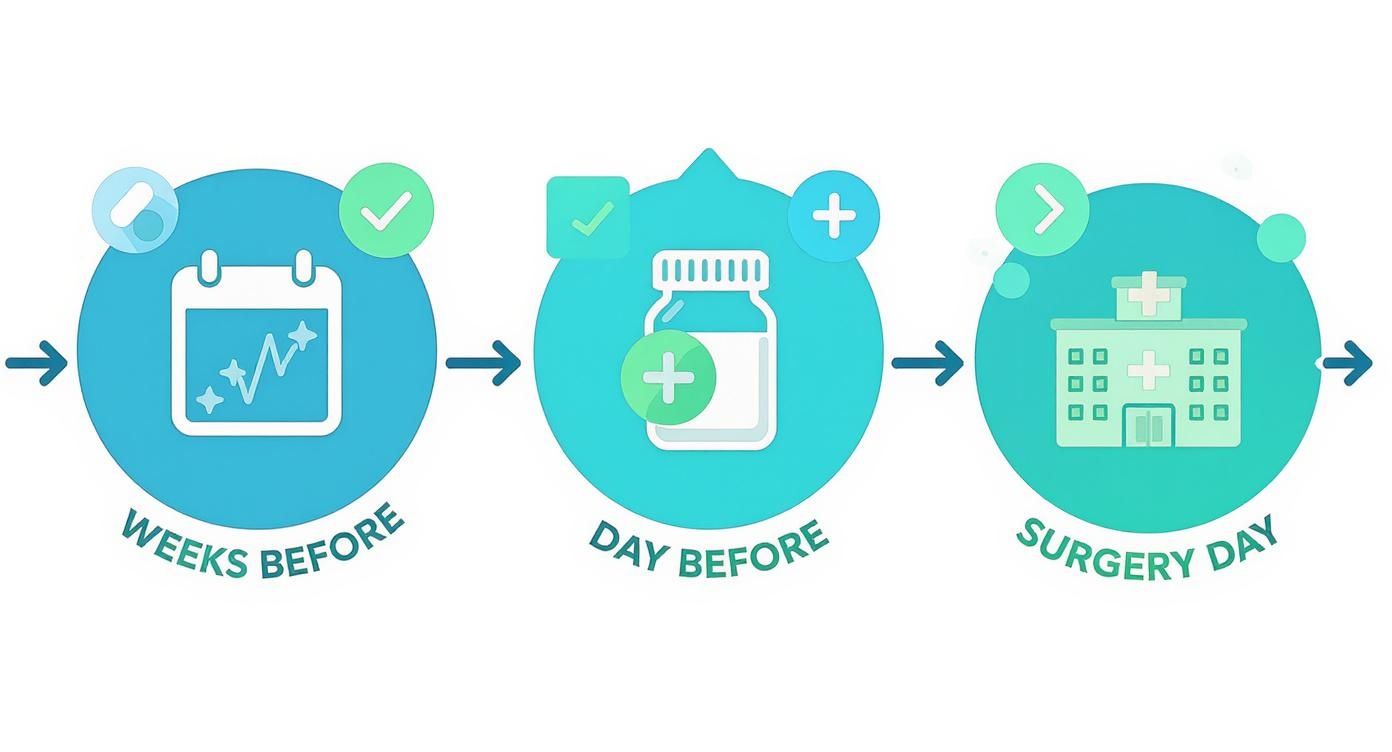
This approach lets you handle the big-picture items first, like medical consultations, and save the final details for the last minute.
Access to care can vary. For instance, high-income countries have a 72-fold greater density of oral and maxillofacial surgeons than low-income nations, a gap highlighted in a study on global oral surgeon availability. This is a powerful reminder to start your own preparations as early as you can.
Use this timeline to simplify your planning and stay on track.
At-a-Glance Oral Surgery Preparation Timeline
Timeframe | Key Action Items | Pro Tip |
|---|---|---|
2-4 Weeks Before | Discuss your medical history with your surgeon. Coordinate with other doctors. Arrange time off work. Confirm your driver and caregiver. | Create a list of all your questions and bring it to your consultation. No question is too small. |
1 Week Before | Go grocery shopping for soft foods. Fill your post-op prescriptions. Set up your recovery area at home. | Cook and freeze a few soft meals like soup or mashed potatoes so you don't have to worry about cooking later. |
24-48 Hours Before | Confirm your fasting instructions with the office. Get a full night's sleep. Pack a small bag with your essentials for appointment day. | Set a reminder alarm on your phone for your fasting cut-off time so you don't forget. |
Day of Surgery | Follow all fasting rules precisely. Wear loose, comfortable clothing. Leave all valuables at home. | Do not wear contact lenses, makeup, or jewelry to your appointment. Keep it simple. |
Always follow the specific instructions provided by your surgeon, as they will be tailored to your procedure.
A well-prepared patient is an empowered patient. Taking the time to coordinate care, ask questions, and arrange your recovery environment is one of the most effective ways to contribute positively to your own surgical outcome.
To break it down further, here are your core action items:
Medical Coordination: Disclose your complete health history. List every single medication, vitamin, and supplement you take for your surgeon.
Logistical Arrangements: Secure your ride home—you will not be able to drive. Arrange for any necessary time off from work and confirm that a friend or family member can assist you for the first 24 hours.
Home Preparation: Stock your kitchen with soft foods like yogurt, smoothies, and soup. Create a comfortable recovery spot on your couch with pillows and blankets. Fill your post-op prescriptions before your surgery day.
Managing Medications, Food, and Drink Before Surgery
Following pre-operative instructions on eating, drinking, and medications is not optional—it is a critical safety requirement. These rules are in place to prevent serious complications, especially if you are receiving sedation or general anesthesia.
Adhering to these guidelines is non-negotiable for a safe procedure. We will provide a personalized list of instructions; understanding the reasons behind them will help you follow them precisely.
Why Fasting Is Absolutely Essential
The primary reason for fasting is to prevent pulmonary aspiration, a dangerous complication where stomach contents are inhaled into the lungs. Under sedation, your body’s gag reflex is suppressed. If food or liquid is in your stomach, it can travel up and into your lungs, causing severe infections or a blocked airway.
The standard rule is no food or drink for at least eight hours before your surgery. This includes water, coffee, chewing gum, and mints.
We will cancel or reschedule your surgery if you haven't followed the fasting instructions. This isn't a penalty—it's a critical safety measure to protect you.
Navigating Your Daily Medications
You must have a detailed conversation with your surgeon about your medications. Some may need to be paused, while others must be taken on the day of surgery. Do not make any changes on your own.
Provide your surgeon with a complete list of every prescription, over-the-counter drug, vitamin, and supplement you take.
Common medications that require a specific plan include:
Blood Thinners: Drugs like warfarin (Coumadin®), clopidogrel (Plavix®), and daily aspirin require coordination with your prescribing doctor to determine when to stop them.
Over-the-Counter Pain Relievers: NSAIDs like ibuprofen (Advil®, Motrin®) or naproxen (Aleve®) can affect blood clotting and may need to be stopped a week prior.
Herbal Supplements: Inform your surgeon about supplements like fish oil, vitamin E, ginkgo biloba, and ginseng, as they can also have blood-thinning effects.
Your surgeon will give you exact instructions for any essential medications, such as those for blood pressure, which are often taken with a tiny sip of water. This is also the perfect time to review your sedation options. To learn more, read our guide on what is IV sedation dentistry and how it promotes dental comfort.
Special Considerations and Common Scenarios
If you make a mistake or a question comes up, call our office immediately.
If you accidentally eat or drink during your fasting period, call us right away. Do not feel embarrassed. Your honesty is crucial for your safety. Your surgeon will determine if it is safe to proceed or if your appointment needs to be rescheduled.
Likewise, if you get sick with a cold or feel unwell, let us know. Congestion can create breathing complications under anesthesia. It is always safer to reschedule.
Arranging Your Ride and Recovery Support
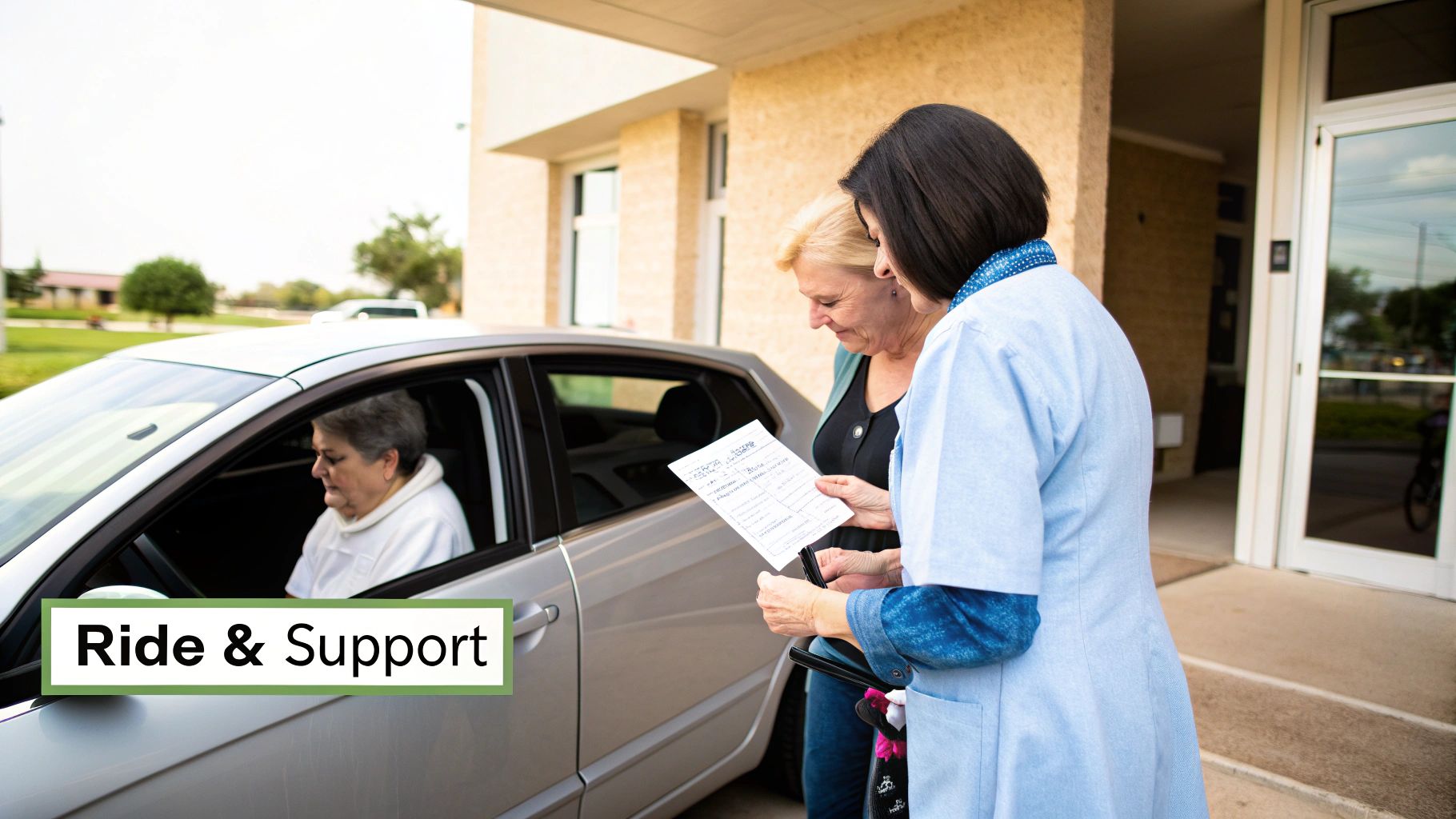
If you are receiving any form of sedation, you are required to have someone drive you home. You cannot drive yourself. Anesthesia impairs your coordination, judgment, and reaction time for hours.
Arrange your transportation and post-op support person well in advance. This crucial step ensures your day proceeds smoothly from start to finish.
Choosing Your Designated Driver and Caregiver
Your ride home is also your initial caregiver. Choose a reliable and patient friend, spouse, or family member who can get you settled, pick up prescriptions, and listen to post-op instructions. Plan for this person to stay with you for at least a few hours after you get home.
Confirm the following responsibilities with your caregiver:
Arrival and Departure: They must bring you to the office and be available to pick you up as soon as the procedure is complete. We will provide an estimated time and call them when you are ready.
Listening to Instructions: Your driver must come inside to hear the post-operative care instructions directly from our team and sign you out.
Post-Op Errands: Ask them to stop at the pharmacy to fill your prescriptions on the way home.
Getting You Settled: Their final task is to ensure you are comfortable at home with everything you need, including water, medication, and a comfortable place to rest.
Creating a Backup Plan
Always have a backup plan in case your primary driver has an emergency. Identify a second person you can call and give them a heads-up that they are your "on-call" support.
We absolutely cannot proceed with your surgery if you arrive without a responsible adult confirmed to drive you home. Planning for this ahead of time prevents a stressful, disappointing morning for everyone.
If friends or family are unavailable, arrange for professional transportation services that specialize in post-medical procedure transport.
Communicating Your Needs Effectively
Provide your caregiver with all necessary information in a single text or email.
Use this checklist to ensure they have all the details:
Our clinic’s name, address, and phone number.
The date and time of your appointment.
The estimated duration of the procedure and recovery.
The name and address of your pharmacy.
A reminder that they must come inside to sign you out.
By setting clear expectations and having a contingency plan, you can eliminate a major source of stress and focus on your procedure.
What Really Happens on Your Surgery Day
Knowing the step-by-step flow of your surgery day can help reduce anxiety. Every part of the process is designed for your safety and comfort. Your only job is to relax and let our experienced team take care of you.
Arrival and Final Preparations
When you arrive, check in at the front desk to complete any final paperwork. We will confirm your personal and insurance details at this time. We will also verify that your designated driver is present before proceeding with any sedation.
A surgical assistant will then guide you to a pre-op room to take your vital signs, such as blood pressure and heart rate. This is your final opportunity to ask any last-minute questions.
The moments right before surgery are all about double-checking the details and making sure you feel comfortable. Seriously, don't hesitate to speak up if anything is on your mind. We want you to feel completely at ease.
Meeting the Surgical Team and Anesthesia
Before the procedure, you will meet with your oral surgeon and the anesthesia provider. They will review your medical history one last time and walk you through the plan, ensuring everyone is on the same page.
If you are having IV sedation, the team will place a small IV in your arm or hand. You will feel a slight pinch, and the medication will take effect quickly, making you feel drowsy. Most patients have little to no memory of the procedure itself.
The oral surgery field, valued at USD 20.5 billion in 2022, continuously advances in technology and patient safety, ensuring you receive highly refined care.
Inside the Operating Room
Once you are comfortably sedated, the surgical team begins the procedure. You are monitored continuously throughout. Here is what happens while you are resting:
Continuous Monitoring: We closely track your heart rate, blood pressure, and oxygen levels in real-time.
Local Anesthetic: The surgeon numbs the surgical area to ensure you remain pain-free.
The Procedure: Your surgeon performs the planned oral surgery in Tempe with precision and care.
Our team operates in a calm, sterile, and controlled environment, following well-established protocols for every procedure.
Waking Up in the Recovery Room
After the surgery, we will move you to a quiet recovery area where a team member will monitor you as you wake up. It is normal to feel groggy, disoriented, and sleepy. Your mouth will be numb, and we will have placed gauze to manage any initial bleeding.
Once you are awake, we will bring your caregiver in to review the post-operative instructions with both of you. Having a second person listen is crucial, as you may not remember all the details. We will cover pain management, swelling, diet, and activity restrictions before clearing you to go home.
Getting Your Home Ready for a Smooth Recovery
One of the most effective ways to prepare for oral surgery is to set up a comfortable healing space at home before your procedure. This allows you to return home and focus exclusively on resting.
Create a "recovery nest" with everything you need within arm's reach. This simple preparation eliminates stress and supports a smoother healing process.
Stocking Your Kitchen for a Soft-Food Diet
For the first week, you will need a diet of soft foods that require little to no chewing. Stock your pantry and fridge before surgery to ensure you have appropriate, nourishing options available.
Here are some essential items to buy:
Protein Sources: Stock up on protein shakes, Greek yogurt, cottage cheese, and ingredients for smooth, blended soups. Protein is vital for tissue repair.
Fruits & Veggies: Plan for smoothies, applesauce, mashed bananas, avocados, and well-cooked, pureed vegetables like sweet potatoes or carrots.
Comfort Foods: Have Jell-O, pudding, instant oatmeal, and ice cream (without nuts or chunky pieces) on hand.
Properly storing pre-made meals is key. For tips, see this guide on How to Store Prepped Meals.
Designing Your Recovery Zone
Designate a comfortable spot—your bed, a recliner, or a couch—as your recovery zone. The key is to keep your head elevated for the first 24-48 hours to minimize swelling.
Prop your head up with two or three extra pillows. Lying flat can cause fluid to pool around the surgical site, increasing swelling and discomfort.
Place all your essentials on a nearby table so you can avoid getting up and down frequently.
Your Post-Op Recovery Kit Essentials
Assemble a post-operative care kit before your surgery day. This ensures you have everything you need the moment you get home, avoiding last-minute trips to the pharmacy.
Use this checklist to build your kit.
Post-Op Recovery Kit Essentials
Category | Essential Items | Why It's Important |
|---|---|---|
Pain & Swelling | Prescribed pain medication, over-the-counter options (if approved), gel ice packs | Have pain relief ready for when the anesthetic wears off. Use ice packs immediately to control swelling. |
Wound Care | Extra sterile gauze pads, salt for gentle saltwater rinses | Change gauze as directed to manage bleeding. Use saltwater rinses after 24 hours to keep the site clean. |
Comfort & Hydration | Lip balm, a large water bottle, soft blankets | Anesthesia is dehydrating and can dry out your lips. Staying comfortable helps you rest and recover faster. |
Entertainment | Books, magazines, a tablet with pre-downloaded shows or movies, headphones | Prepare low-key entertainment to pass the time and keep your mind off any discomfort. |
Organizing these supplies beforehand makes it easier to follow your post-op instructions precisely. By creating a dedicated healing space, you create an environment that supports a smooth and comfortable recovery.
Answering Your Last-Minute Oral Surgery Questions
Even with thorough preparation, last-minute questions are normal. Getting clear answers will help you feel calm and confident on your surgery day. Here are the answers to the most common questions we hear from patients.

What Should I Wear on Surgery Day?
Choose loose-fitting, comfortable clothes. A short-sleeved top is ideal, as it allows easy access for taking your blood pressure or placing an IV. Think sweats, t-shirts, or yoga pants. Avoid anything tight or restrictive. Leave all jewelry, including rings, necklaces, and earrings, at home for safety.
Can I Brush My Teeth Before Surgery?
Yes, please brush your teeth as you normally would. However, after your fasting window begins, be extremely careful not to swallow any water or toothpaste. A clean mouth reduces bacteria, but you must spit everything out completely to comply with fasting rules.
Answering these simple, practical questions is a key part of feeling prepared and in control of your surgical experience.
What Should I Bring to My Appointment?
Bring only the essentials to your appointment to ensure a quick and easy check-in.
Your ID: A government-issued photo ID (e.g., driver's license).
Insurance Cards: Your dental and medical insurance cards.
Payment Method: For any co-pays or balances.
Your Driver: Your designated caregiver must accompany you.
Leave valuables like laptops, extra cash, or jewelry at home.
What If...? Tackling Those Final Concerns
Patient research is common. Google data shows "wisdom teeth" is the top oral surgery search term, proving that patients actively seek information to prepare themselves. You can learn more about these trends in oral surgery patient searches.
Here are a few more common "what-if" scenarios:
Can I wear makeup or contact lenses?No. Please arrive with a clean face—no makeup, perfume, or contact lenses. Makeup can interfere with monitoring equipment. Wear your glasses instead of contacts, as your eyes will be closed during the procedure.
What if I get sick right before my surgery?Call our office immediately if you develop a cold, sore throat, or any other illness. We may need to reschedule, especially if you have a fever or congestion, to avoid complications with anesthesia.
Should I stop smoking or using tobacco?Yes. Stop all tobacco use for as long as possible before and after surgery—ideally for at least one week before and after your procedure. Tobacco use significantly slows healing and dramatically increases your risk of developing a painful dry socket.
Our goal is to ensure you feel confident and prepared. Knowing exactly what to do allows you to approach your surgery day with peace of mind.
At Beautiful Dentistry, we believe a well-informed patient is a confident one. If any other questions come to mind, our team is always here to provide clear answers and support you every step of the way. Visit us at https://zdentist.com to learn more about our patient-focused approach to oral surgery.


Comments