

How to Reduce Swelling After Oral Surgery: An Actionable Guide

To reduce swelling after oral surgery, act fast. The first 48 hours are your golden opportunity to minimize inflammation. Your two most effective actions are: consistently using ice packs—on for 20 minutes, off for 20 minutes—and keeping your head elevated above your heart, even while sleeping. Master these two steps, and you will set yourself up for a more comfortable recovery.
Your First 48 Hours: Take Control of Swelling Immediately
Your recovery mission starts the moment you get home. This isn't passive rest; it's an active strategy to manage your body's response to surgery. Every action you take now directly reduces future pain and swelling.
Swelling is a normal part of healing, as your body sends restorative cells to the surgical site. However, uncontrolled swelling causes unnecessary pain and delays recovery. Your goal is to manage this response before it peaks, which typically occurs between 48 and 72 hours.
Master The Ice Pack Cycle for Maximum Effect
Cold therapy is your most powerful tool in the first 48 hours. To get the full benefit without harming your skin, you must follow a specific cycle.
The gold standard is a strict 20 minutes on, 20 minutes off cycle. This timing effectively constricts blood vessels to reduce fluid buildup. The 20-minute break is crucial; it prevents skin damage and allows circulation to return briefly, which is essential for healing.
Action Plan:
Wrap a gel pack or a bag of frozen peas in a thin towel.
Place it on the outside of your cheek over the surgical area.
Set a timer for 20 minutes.
When the timer goes off, remove the pack and set another 20-minute timer for your break.
Repeat this cycle as consistently as possible while you are awake for the first two days.
This isn't just a suggestion—clinical evidence shows that following this intermittent cold therapy protocol in the first 24–48 hours can reduce swelling by 15–40% compared to no treatment.
Use Gravity: Keep Your Head Elevated at All Times
Gravity is your ally in draining fluid away from your face. By keeping your head propped above your heart, you prevent fluid from pooling at the surgery site, which is the primary cause of that tight, swollen feeling.
Action Plan:
During the Day: Rest in a recliner or sit upright on a couch supported by pillows.
At Night: Create an incline in your bed. Use two or three pillows to elevate not just your head but also your upper back. If you have a recliner, sleeping in it for the first couple of nights is an excellent strategy to maintain elevation effortlessly.
This simple adjustment makes a significant impact on your comfort. For a comprehensive look at how this fits into a broader recovery plan, explore our guide on how to recover from tooth extraction with fast recovery tips.
Immediate Swelling Control Checklist
Use this table as your action plan for the first two days. Follow these steps diligently to effectively manage swelling and discomfort from the very beginning.
Action | How to Do It | Why It Works |
|---|---|---|
Apply Cold Packs | Use a gel pack or frozen peas wrapped in a thin towel. Apply for 20 minutes, then remove for 20 minutes. | Constricts blood vessels, reducing blood flow and fluid accumulation at the surgical site. |
Elevate Your Head | Prop your head and upper back on 2-3 pillows while resting or sleeping. A recliner is also ideal. | Uses gravity to help drain fluid away from your face, preventing it from pooling and causing more swelling. |
Stay Hydrated | Sip on cool water throughout the day. Avoid straws, as the suction can dislodge the blood clot. | Proper hydration supports the body's natural healing processes and helps flush out inflammatory byproducts. |
Limit Activity | Avoid any bending, lifting, or strenuous activity. Focus on resting and moving slowly. | Keeps your heart rate and blood pressure down, which helps minimize bleeding and swelling at the site. |
Following this checklist is the most direct path to a smoother, less painful recovery. It puts you in control of the healing process right from the start.
This timeline gives you a great visual of how to manage swelling over the first 72 hours.
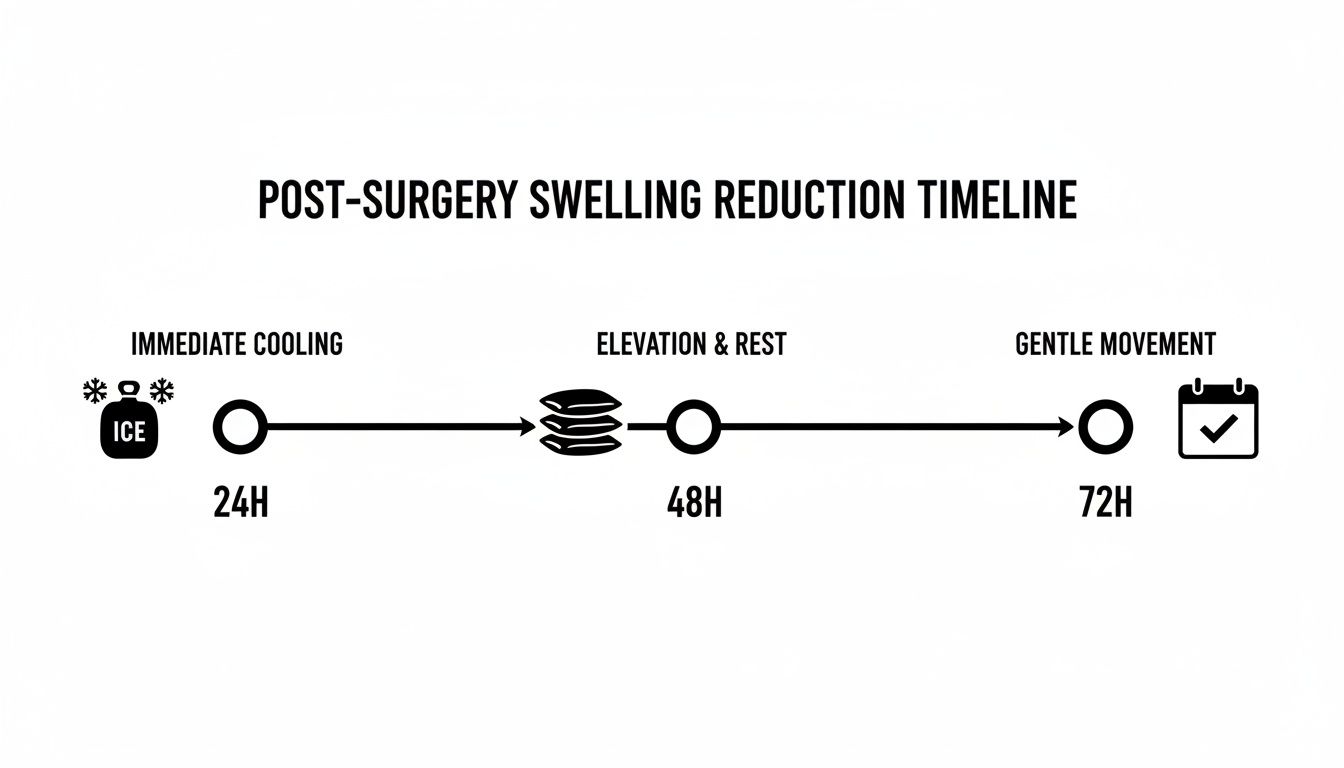
As you can see, the focus shifts from aggressive cold therapy in the beginning to maintaining elevation as you move past that initial 24-hour peak.
Using Medication to Effectively Manage Inflammation
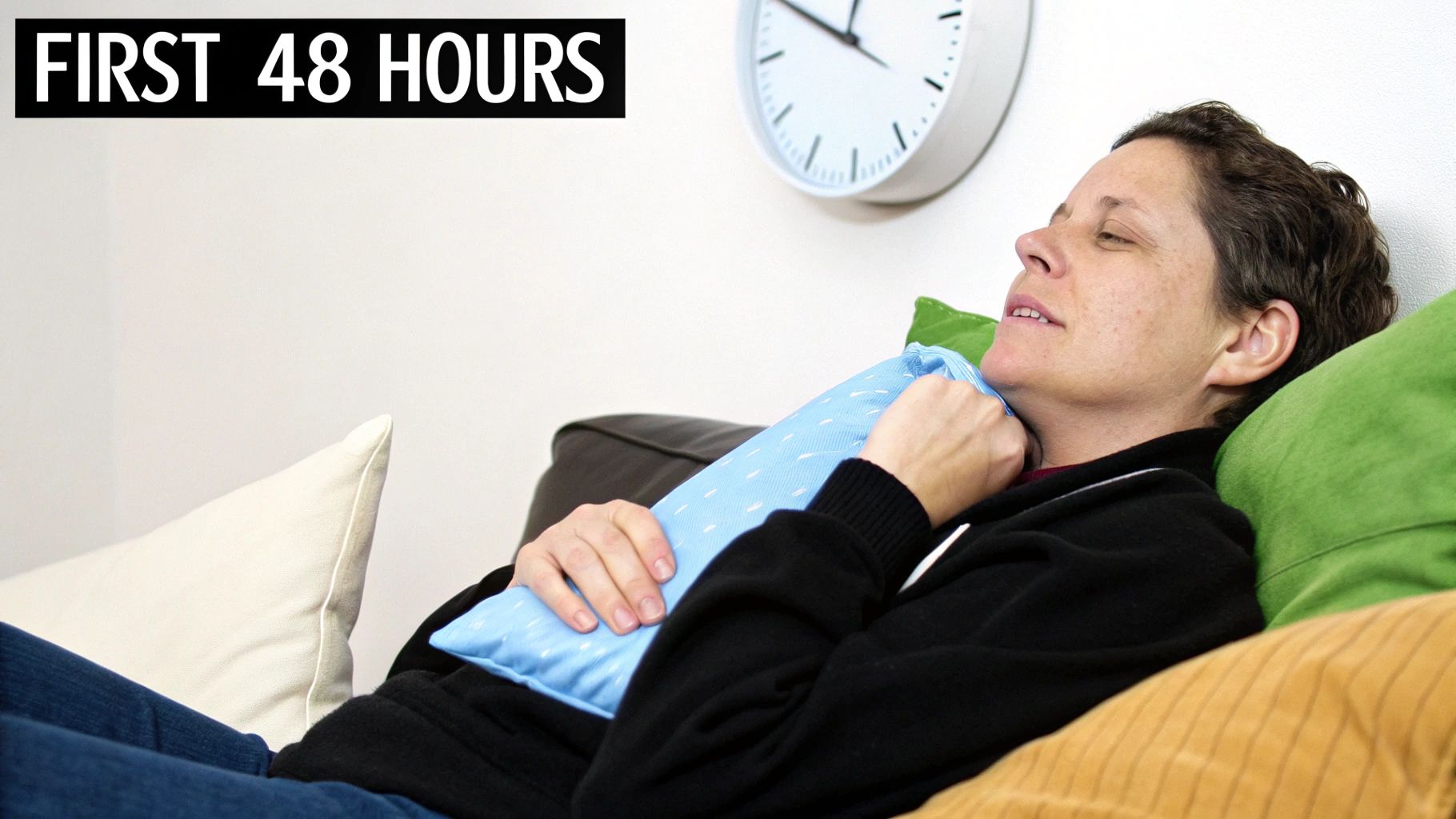
When using medication to manage swelling, the best strategy is to be proactive. A common mistake is waiting until pain and swelling become severe before taking medication. This makes recovery much more difficult.
The key is to stay ahead of the inflammation. Take your anti-inflammatory medication on a strict schedule as prescribed by your surgeon, even if you feel fine. This maintains a consistent level of medication in your system and prevents the inflammatory response from spiraling out of control. This is one of the most crucial actions for reducing swelling after oral surgery.
Over-The-Counter Anti-Inflammatories
Your surgeon will likely recommend a non-steroidal anti-inflammatory drug (NSAID) like Ibuprofen. While it helps with pain, its primary function here is to combat inflammation at its source.
Action Plan:
Start on Time: Take your first dose as directed by your surgeon, often before the local anesthetic wears off completely.
Set an Alarm: If the prescription says "take every six hours," set an alarm on your phone and do not miss a dose. Consistency is what prevents inflammation from peaking.
Think of it as maintaining a defensive wall. Each on-time dose keeps that wall strong. Waiting until you are in pain is like trying to build the wall after the attack has already begun. Combining this with effective pain management strategies ensures a more comfortable recovery.
Understanding Prescription Steroids
For more extensive surgeries, such as impacted wisdom teeth removal or dental implant placement, your surgeon may prescribe a corticosteroid. These are powerful anti-inflammatories that work more aggressively than NSAIDs to halt swelling.
Corticosteroids like dexamethasone are typically administered as a single dose around the time of your surgery. Their purpose is to preemptively shut down the body's initial, intense inflammatory reaction, giving you a significant head start on healing.
The science supports this approach. Studies show that a single dose of a corticosteroid can reduce facial swelling by 20–50% in the first 48–72 hours after major oral surgery.
Whether you're using an over-the-counter NSAID or a prescription steroid, the strategy is identical: use your medication to stay ahead of the swelling, not to play catch-up. Always follow your surgeon's specific instructions on dosage and timing for the best and safest results.
Your Anti-Inflammatory Diet for a Faster Recovery
The food you eat after oral surgery is a powerful tool that directly impacts swelling and healing speed. Your body is in repair mode; providing it with the right fuel can dramatically improve your recovery.
The right foods and drinks support the healing process, while the wrong ones can increase inflammation and slow you down. Follow these simple dietary guidelines for the first week to optimize your recovery.
Nutrient-Dense Foods to Embrace
Your goal is to get maximum nutrition with minimal chewing. Focus on soft, nutrient-rich foods that won't irritate the surgical site. Lukewarm soups, bone broths, and well-blended smoothies are ideal choices for hydration and vitamins.
Actionable Food List:
Greek Yogurt: Cool, soothing, and high in protein for tissue repair.
Mashed Potatoes or Avocado: Easy to eat, providing necessary calories and healthy fats.
Scrambled Eggs: An excellent source of soft, manageable protein.
Protein Shakes: A great option for getting calories and nutrients when your appetite is low or your jaw is sore.
Remember to stay hydrated by sipping water constantly. This helps flush out toxins and maintains a healthy healing environment in your mouth.
One critical rule: Do not use a straw for any drink. The suction can dislodge the protective blood clot at the surgery site, leading to a painful complication called dry socket, which will set back your recovery.
Foods and Habits to Avoid Completely
What you don't eat is just as important as what you do. Certain foods can physically damage the healing area or increase inflammation.
For a complete list, check our post on what to eat after a tooth extraction provides an actionable recovery guide.
For now, eliminate these from your diet for at least one week:
Crunchy or Hard Foods: Chips, nuts, popcorn, and hard candies can get lodged in the socket and cause pain or infection.
Spicy and Acidic Foods: Citrus, hot sauces, and tomatoes can irritate a fresh wound.
Extremely Hot Foods and Drinks: Heat increases blood flow and can worsen swelling. Allow all food and drinks to cool to a lukewarm temperature.
Focusing on an anti-inflammatory diet is a proactive step you can take. To learn more, check out this resource on the worst and best foods to decrease inflammation. Following these simple tips will create the ideal conditions for a fast and comfortable recovery.
Keeping Your Mouth Clean Without Messing with the Healing Process

Maintaining oral hygiene after surgery is a delicate balance. Good hygiene is essential to prevent infection—a primary cause of increased pain and swelling—but you must not disturb the healing site.
For the first 24 hours, do not touch the surgical area. This allows the critical blood clot to form and stabilize, which is the foundation for proper healing. After this initial period, you can begin a gentle cleaning routine.
The Gentle Power of a Saltwater Rinse
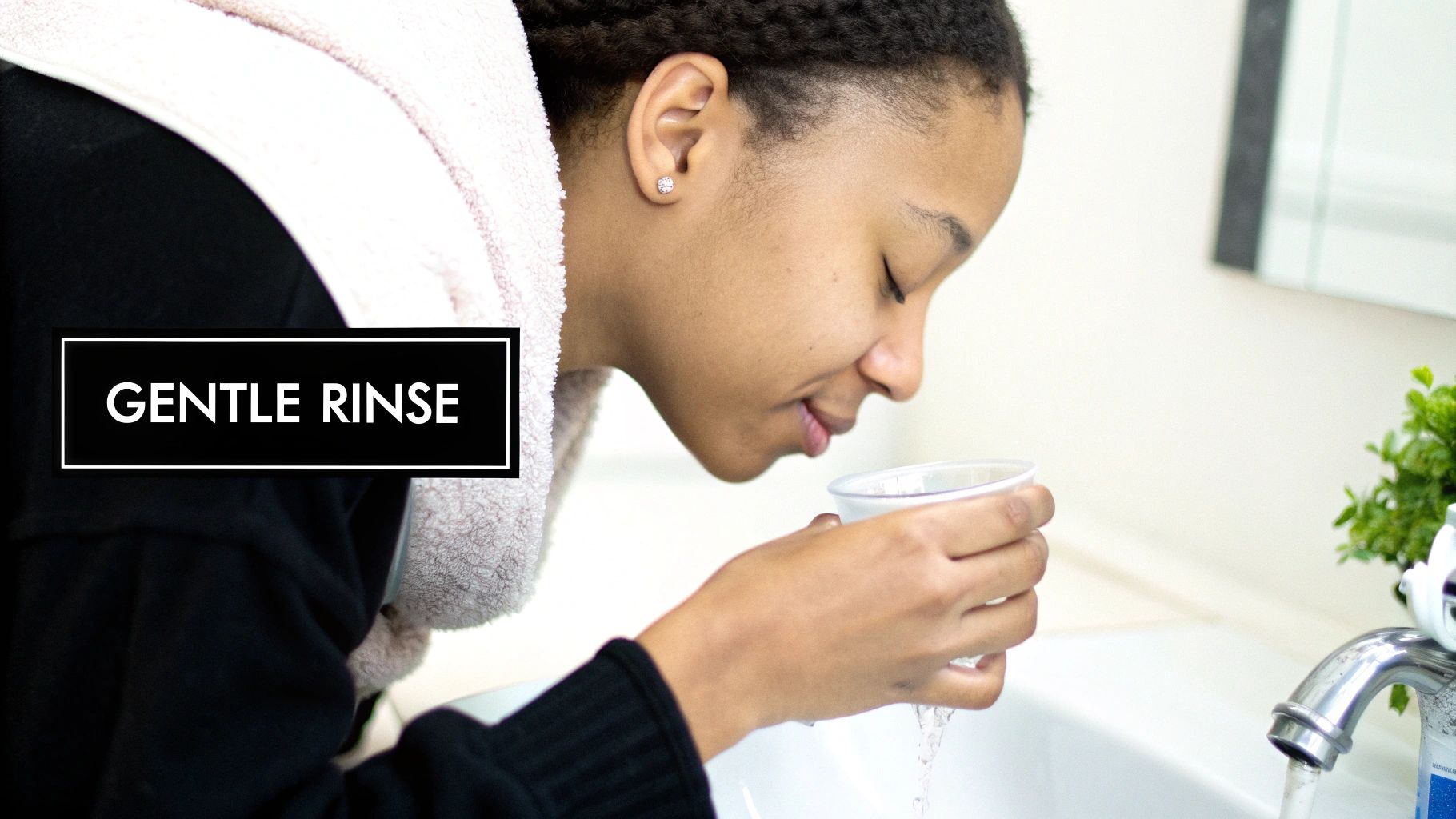
Starting the day after your surgery, a warm saltwater rinse is your most important cleaning tool. This is not a vigorous swish. Aggressive rinsing will dislodge the blood clot.
Action Plan:
Mix half a teaspoon of salt into an eight-ounce glass of warm water.
Take a sip and gently tilt your head from side to side, letting the solution flow over the surgical site.
When finished, simply open your mouth and let the water fall into the sink. Do not spit!
Repeat this process after every meal and before bed to remove food particles and reduce bacteria.
How to Brush Your Teeth Safely
You can and should continue brushing your other teeth. The key is to be extremely careful around the surgical area.
Action Plan:
Use a soft-bristled toothbrush with a small amount of toothpaste.
Brush the teeth far from the surgical site normally.
As you get closer, slow down and use very gentle, deliberate motions. Avoid the gums and stitches entirely.
When you rinse, use the same gentle, no-spitting method as the saltwater rinse.
Using a Medicated Rinse from Your Surgeon
Your surgeon may prescribe an antiseptic mouth rinse, typically containing chlorhexidine. This is a powerful tool for killing bacteria and preventing infection in a healing wound.
These rinses are highly effective. Studies show that using 0.12–0.2% chlorhexidine rinses can significantly reduce the risk of complications like dry socket. If you are prescribed one, follow the directions exactly. It creates an optimal healing environment and is a major asset in preventing infection-related swelling. You can review the research on how adjunctive antiseptic protocols reduce postoperative swelling for more information.
Don't Underestimate the Power of Taking It Easy
After oral surgery, "rest" is an active healing strategy, not a passive suggestion. Your body needs all its energy to repair tissue and manage inflammation. Any physical exertion diverts resources from this critical job. True rest is as vital as ice packs and medication for controlling swelling.
What to Avoid (And Why It Matters)
Your primary goal for the first few days is to keep your blood pressure low and stable. Any activity that elevates your heart rate will increase blood flow to your head, leading to more bleeding, throbbing, and swelling.
"Do Not Do" List for the first 24-48 hours:
Strenuous Exercise: No gym, running, cycling, or other workouts.
Heavy Lifting: Do not lift anything over 10-15 pounds, including children, groceries, or laundry.
Bending and Straining: Avoid bending at the waist, which rushes blood to your head. If you must pick something up, kneel down instead.
The connection is direct: an elevated heart rate forces more blood to the delicate surgical site. This actively counteracts your other efforts and will make swelling worse and prolong your recovery.
Your Timeline for Getting Back in Motion
Returning to your normal routine too quickly is a common mistake that can trigger a setback and renewed swelling.
Follow this simple guide:
Days 1-3 (Rest Phase): Your only job is recovery. Short, slow walks around your house are acceptable to promote circulation, but that is all. Prioritize rest.
Days 4-7 (Light Activity Phase): Slowly reintroduce gentle activities like a slow-paced walk around the block. Stop immediately if you feel your heart rate rising or you begin to sweat.
Week 2 and Beyond (Gradual Return): Listen to your body. If you feel good, you can start easing back into your normal exercise routine. Begin at 50% of your usual intensity and duration. Monitor how you feel the next day. If you notice any new pain or swelling, scale back immediately.
Common Questions About Post-Surgery Swelling
It's normal to have questions during your recovery. Understanding what to expect can reduce stress and help you identify potential issues. Here are answers to common concerns about post-surgical swelling.
Be aware that swelling is often delayed. It typically builds over time, peaking around the 48 to 72-hour mark. It is completely normal to be more swollen on day three than you were immediately after surgery. This is a sign that your body’s healing process is fully engaged.
How Long Does Swelling Last?
After peaking around 72 hours, swelling will begin to subside gradually. For most routine procedures, like a single tooth extraction, the majority of the swelling should resolve within 5 to 7 days.
For more complex surgeries, such as the removal of impacted wisdom teeth, the timeline can be longer. Some minor, residual swelling or jaw stiffness may persist for up to two weeks. The best way to accelerate this process is to adhere strictly to your aftercare instructions.
Healing is a process. The first few days are the most challenging, but your body continues its repair work for weeks. Be patient with your recovery.
A key warning sign is pain that gets worse instead of better, as this may indicate a complication. Learn what are the signs of a dry socket from our detailed guide so you know what to watch for.
When To Switch From Cold To Heat
The type of therapy you use is time-dependent.
First 48-72 Hours (Use Cold): Your primary tool is cold therapy (ice packs, gel packs). Cold constricts blood vessels, limits fluid buildup, minimizes swelling, and provides numbing pain relief.
After 72 Hours (Switch to Heat): You can switch to moist heat, such as a warm, damp washcloth. Heat does the opposite of cold: it dilates blood vessels, increasing circulation. This helps your body flush out remaining fluid and can soothe sore, stiff jaw muscles. Do not use heat in the initial 48-hour period, as it will increase swelling.
Why Is My Swelling So Bad After Wisdom Teeth Removal?
The swelling after wisdom teeth removal is often more significant for a clear reason: the procedure is more traumatic to the surrounding tissues, especially if the teeth were impacted (trapped beneath the gum or bone).
Extracting an impacted wisdom tooth requires the surgeon to manipulate gum tissue and sometimes remove a small amount of bone. Your body registers this as a major event and mounts a strong inflammatory response. Furthermore, these teeth are located near large chewing muscles, which also become inflamed, adding to the swelling and causing difficulty opening your mouth. The recovery advice is the same, but it is even more critical to follow it precisely.
At Beautiful Dentistry, we know that a comfortable, predictable recovery is just as vital as the surgery itself. If any questions or worries pop up while you're healing, our team is always just a phone call away to give you the guidance you need. To learn more or to book a visit, see us at https://zdentist.com.


Comments