

The Proper Way of Flossing Your Dentist Wants You to Know

It’s easy to think brushing covers all your bases, but mastering the proper way of flossing is what truly takes your oral health from good to great. Here's a fact that surprises many of my patients: brushing alone only cleans about 60% of your tooth surfaces. It leaves the critical spaces between your teeth vulnerable to plaque.
Think of this simple, daily habit as your best defense against cavities and gum disease.
Why Flossing Is Your Smile's Best Defense
Let's be honest—we all know we should floss, but why is it so non-negotiable? Imagine washing only the front of your dinner plates while ignoring the sides and back. Over time, that leftover food would become a breeding ground for bacteria. The same thing happens between your teeth, which is prime real estate for plaque—that sticky, nasty film of bacteria that loves to feed on sugar.
If you let it sit, plaque hardens into tartar in just 24-36 hours. Unlike plaque, which you can easily remove at home, tartar is like cement. It can only be cleared away by a dental professional during a cleaning here at Beautiful Dentistry. This hardened buildup irritates your gums, leading to inflammation and the first stage of gum disease, known as gingivitis.
The Real Impact of Neglecting Those Tight Spaces
Gingivitis is the earliest stage of gum disease, and its first signs are often subtle. You might notice puffy, red, or bleeding gums when you brush or floss. It’s easy to ignore, but it's a clear warning sign from your body.
When you ignore it, the condition can progress into more serious periodontal disease, which can actually damage the bone that supports your teeth.
The good news? Gingivitis is completely reversible with consistent, correct oral hygiene. This is where mastering the proper way of flossing becomes an absolute game-changer for your long-term health.
The benefits are clear and well-documented. We see it every day in our practice—patients who floss regularly simply have fewer cavities and healthier gums. In fact, proper flossing can remove up to 80% more debris from between teeth than brushing can on its own.
You can learn more about these powerful flossing advantages on our blog to get the full picture. The research is solid: regular flossers not only have healthier gums but also keep more of their natural teeth for life. For those who like the science, you can explore the full oral health findings in detail.
To put it in perspective, let's break down the difference flossing makes.
Flossing vs Brushing Alone A Quick Comparison
Hygiene Aspect | Brushing Only | Brushing + Proper Flossing |
|---|---|---|
Plaque Removal | Cleans about 60% of tooth surfaces | Removes plaque from nearly 100% of surfaces |
Gum Health | Higher risk of gingivitis and inflammation | Significantly reduces bleeding and inflammation |
Cavity Prevention | Ineffective at preventing cavities between teeth | Drastically lowers the risk of interproximal cavities |
Tartar Buildup | Allows tartar to form quickly in tight spaces | Disrupts plaque before it hardens into tartar |
Fresh Breath | Misses food particles that cause bad breath | Removes trapped debris, leading to fresher breath |
As you can see, adding that one simple step provides a massive boost to your overall oral hygiene. It's not just an "extra" step; it's essential.
The Right Way to Floss: A Step-by-Step Guide
Forget what you think you know about flossing. So many people just snap the floss between their teeth and call it a day, but that's not doing much good. As dental professionals, we've seen it all, and mastering the right technique is simpler than you think. It's all about a few key movements that will protect your gums and truly clean those hard-to-reach spots.
Let's start with the basics. You'll want to pull off a generous amount of floss—about 18 inches, or roughly the length from your hand to your elbow. This isn't just a random number; it ensures you have a fresh, clean section for every single tooth, so you're not just moving plaque from one spot to another.
Think of it this way: brushing gets the big, easy-to-reach surfaces, but flossing is what gets into the nooks and crannies where real trouble starts.
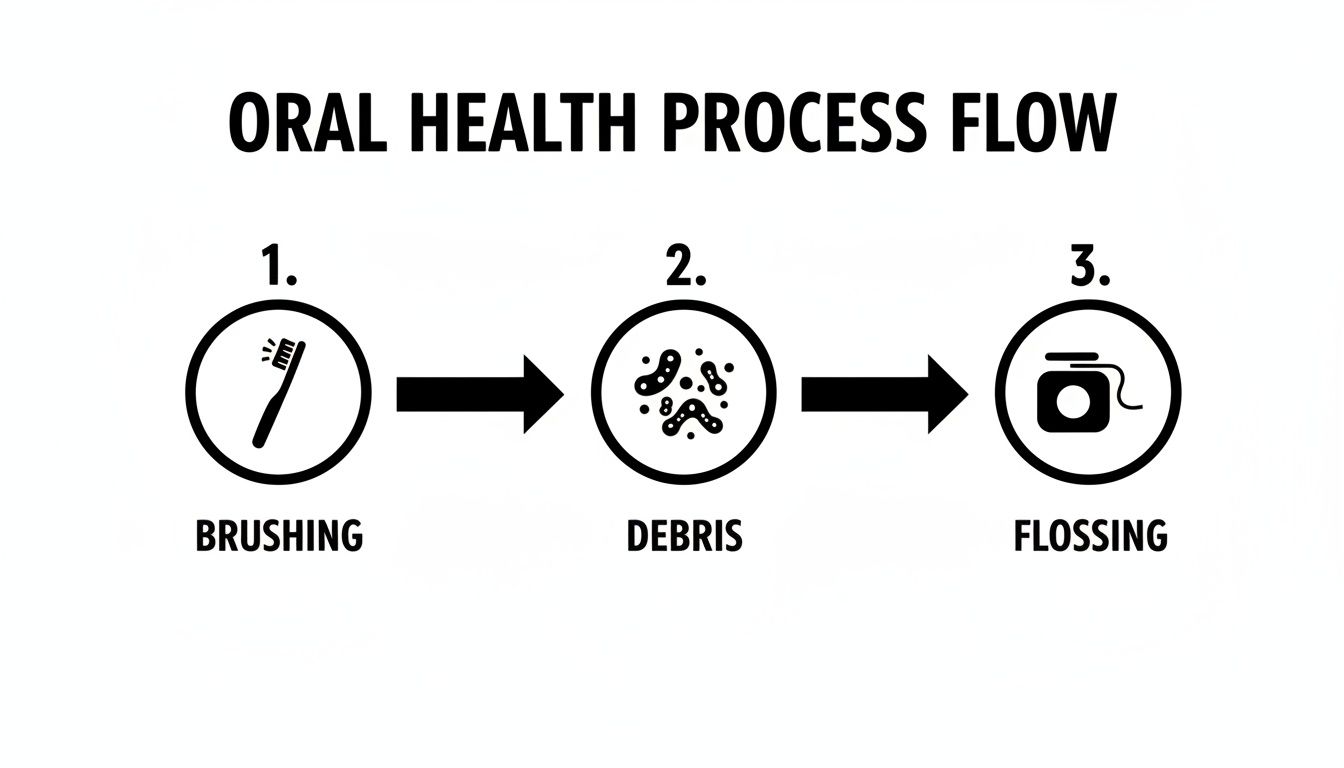
As you can see, flossing is that crucial final step for getting a truly deep clean.
Your Grip and Motion Make All the Difference
Now for the hands-on part. Wind most of that 18-inch string around your middle fingers—not your index fingers! This leaves your index fingers and thumbs free to actually guide the floss. You should have a tight, one- to two-inch section to work with. This grip gives you the control you need to be both gentle and effective. For a deeper dive, the American Dental Association offers great resources on these fundamentals.
Once you’re holding it correctly, gently slide the floss between two teeth using a soft, back-and-forth "sawing" motion. Whatever you do, don't just snap it down onto your gums. That’s a fast track to irritation and bleeding.
The "C-Shape Hug": Your Secret to a Deeper CleanOnce the floss is at your gumline, curve it into a “C” shape, wrapping it around one side of the tooth. Gently slide it just beneath the gumline until you feel a little resistance. This is where the magic happens—you're scooping out the plaque that your toothbrush could never hope to reach.
Remember to do this on both sides of every tooth. Use a clean piece of floss for each one by unwinding it from one middle finger and winding the used section onto the other.
Stop Sawing and Start Cleaning
One of the biggest mistakes we see at Beautiful Dentistry is the "sawing" habit. People aggressively rub the floss back and forth in the tight space between their teeth, thinking they're cleaning. In reality, this motion often misses the most important area—the plaque hiding just below the gumline—and can actually damage your delicate gum tissue.
Here’s a better way to think about it:
The Wrong Way (Sawing): This is like trying to clean a dusty corner by just sweeping the middle of the room. It makes noise and looks busy, but it doesn't actually get the job done.
The Right Way (C-Shape): This method is methodical. You’re carefully scraping the entire side of the tooth, from the top all the way down below the gumline, ensuring a truly comprehensive clean.
By ditching the aggressive sawing for the gentle C-shape hug, you'll get a far superior clean without hurting your gums. It might feel a bit slow at first, but with a little practice, it’ll become second nature.
Common Flossing Mistakes and How to Correct Them
Even with the best intentions, it's easy to fall into a few common flossing traps. If you feel like you're going through the motions but not getting the results you want, a few small tweaks can make a world of difference. Let's look at some of the habits we see most often in our practice.
The biggest issue is usually being too rough. Many people snap the floss down between their teeth and saw it back and forth aggressively. This can really irritate your delicate gum tissue, causing it to recede or even bleed unnecessarily. The goal is to clean, not to scrub. Remember, that gentle C-shape motion is all it takes to disrupt plaque without harming your gums.
Another classic mistake is using the same little piece of floss for your entire mouth. When you do that, you're essentially just moving bacteria from one spot to another. The whole point of using a long, 18-inch piece is so you can advance to a fresh, clean segment for every single tooth.
Why Your Gums Bleed and What to Do
The number one question we hear from patients is, "Why do my gums bleed when I start flossing?" It's a completely understandable concern, but the reason behind it isn't what most people think.
More often than not, bleeding is a clear sign of mild gum inflammation, also known as gingivitis. This happens when plaque builds up along the gumline, causing irritation. So, bleeding actually means you need to floss more consistently, not stop.
Once you start flossing gently and daily, you're removing that plaque buildup. The bleeding should clear up on its own within a week or two as your gums get healthier and stronger. If the bleeding is heavy or doesn't stop after a couple of weeks of consistent flossing, that's your cue to schedule a cleaning at Beautiful Dentistry so we can take a closer look.
For a deeper dive, check out our guide on what to do when your gums bleed when brushing.
Remember: A little initial bleeding often signals that your gums are finally getting the cleaning they desperately need. Don't let it discourage you from building a consistent flossing habit.
One last tip: don't neglect your back molars! It’s easy to focus on the front teeth that everyone sees, but those hard-to-reach molars are prime real estate for plaque. Make a conscious effort to wrap the floss all the way around the very last surface of your back teeth, top and bottom.
Flossing Troubleshooting Guide
Flossing can feel tricky at first, and it's normal to run into a few snags. We put together this quick table to help you identify common issues and get back on track.
Common Problem | What It Means | How to Fix It |
|---|---|---|
Floss shreds or gets stuck | Your teeth may be very tight, or you might have a rough filling or tartar buildup. | Try a different type of floss, like waxed tape or a monofilament floss (e.g., Glide). If it persists, a dental checkup is needed. |
Gums are sore after flossing | You're likely using too much force or snapping the floss into your gums. | Focus on a gentle, controlled C-shape motion. Let the floss do the work without forcing it. |
It's hard to reach back teeth | This is a common dexterity issue. It’s tough to maneuver back there! | Use a floss holder, floss pick, or a water flosser to make reaching these spots easier. |
Gums bleed every time | This is a classic sign of early gum inflammation (gingivitis) from plaque buildup. | Keep flossing gently and consistently every day. The bleeding should stop within 1-2 weeks. If not, see your dentist. |
Navigating these little hurdles is part of the process. The key is to be consistent and gentle, and your technique will improve in no time.
Beyond the String: Choosing Your Ideal Flossing Tool
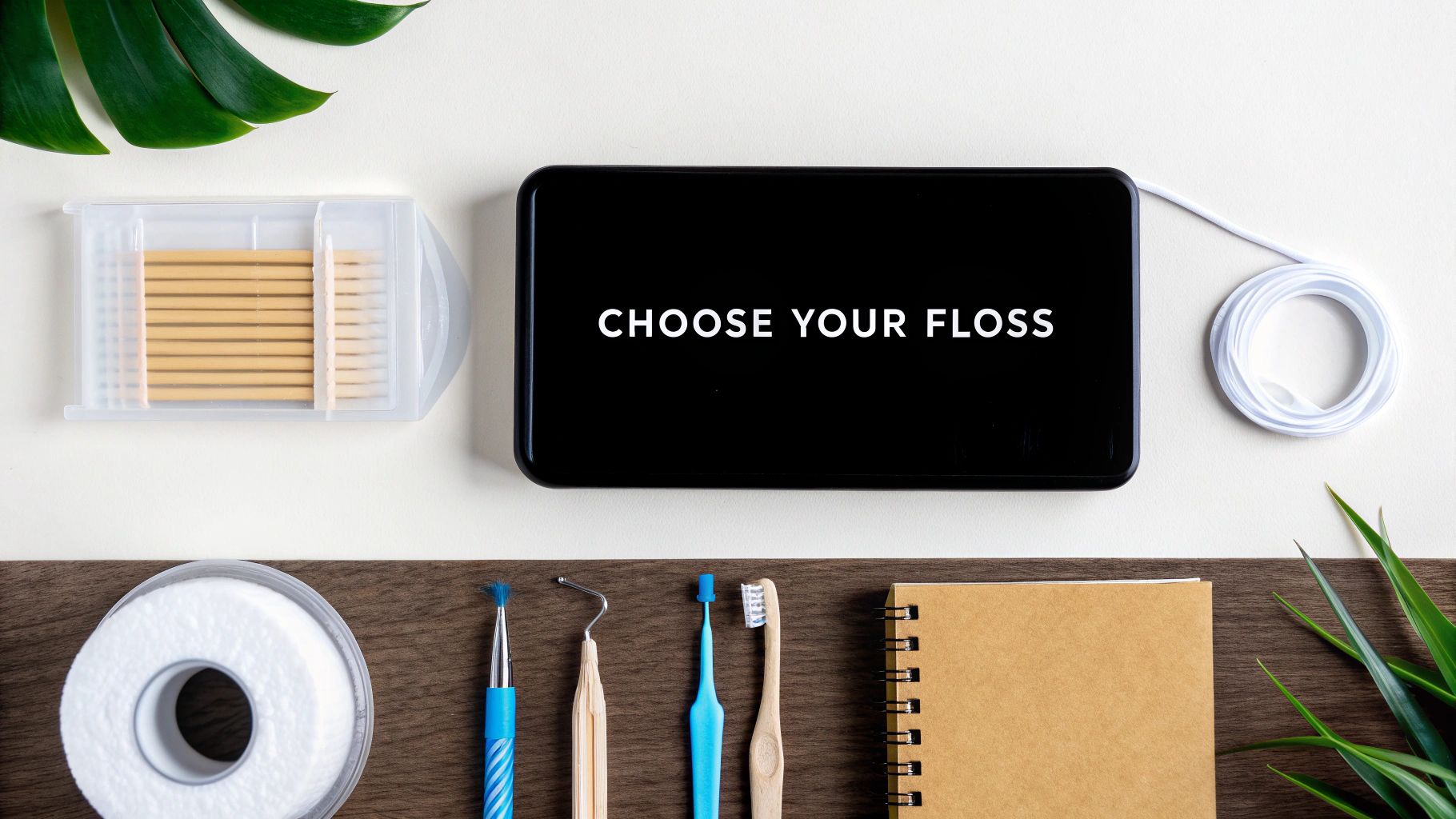
Here’s a little secret from a dental professional: the best flossing tool isn't a specific brand or type. It’s the one you'll actually use every single day. While we all know traditional string floss, the world of interdental cleaning has really opened up to fit just about every lifestyle and dental situation out there.
The innovation in this space is incredible. The dental floss market is on track to hit $3.27 billion by 2030, and that growth is fueled by products that make daily cleaning easier and more effective for everyone. You can dig deeper into these market trends in oral hygiene if you're curious, but the bottom line is that you've got more choices than ever. Finding your perfect match is what turns flossing from a chore into a solid habit.
Finding the Right Fit for Your Smile
Every smile is unique, so why would your flossing routine be one-size-fits-all? What works perfectly for one person might be a real struggle for another. Let’s break down the most common options.
Traditional String Floss: The classic for a reason. Waxed floss is great for tight contacts, as it glides easily between teeth without shredding. Unwaxed floss, on the other hand, can give you that "squeaky clean" feedback. It's an excellent choice for people with fairly normal tooth spacing and no complex dental work.
Dental Tape: Think of this as a wider, flatter version of floss. If you have bigger gaps between your teeth, dental tape is fantastic because its broad surface covers more area, giving you a more thorough clean.
Floss Picks: These little tools are a lifesaver for convenience. They’re perfect for cleaning on the go or for anyone who finds wrapping floss around their fingers difficult. I always suggest keeping a few in your car, purse, or desk drawer for after meals.
Water Flossers: You might know these as oral irrigators. They shoot a targeted stream of water to flush out plaque and food particles from between teeth and along the gumline. For anyone with braces, bridges, or dental implants, a water flosser is a total game-changer, reaching spots that string floss simply can't.
Ultimately, the most important part of the proper way of flossing is consistency. Don’t get hung up on finding the "perfect" tool right away. Feel free to experiment with a few different kinds until you land on the one that feels the most comfortable and convenient for you.
Navigating Flossing with Braces, Implants, and Bridges
Standard flossing techniques need a few adjustments when you have dental work. If you've got braces, implants, or a bridge, you already know that cleaning around all that hardware requires a different approach. Let's walk through how to keep every nook and cranny of your smile healthy.
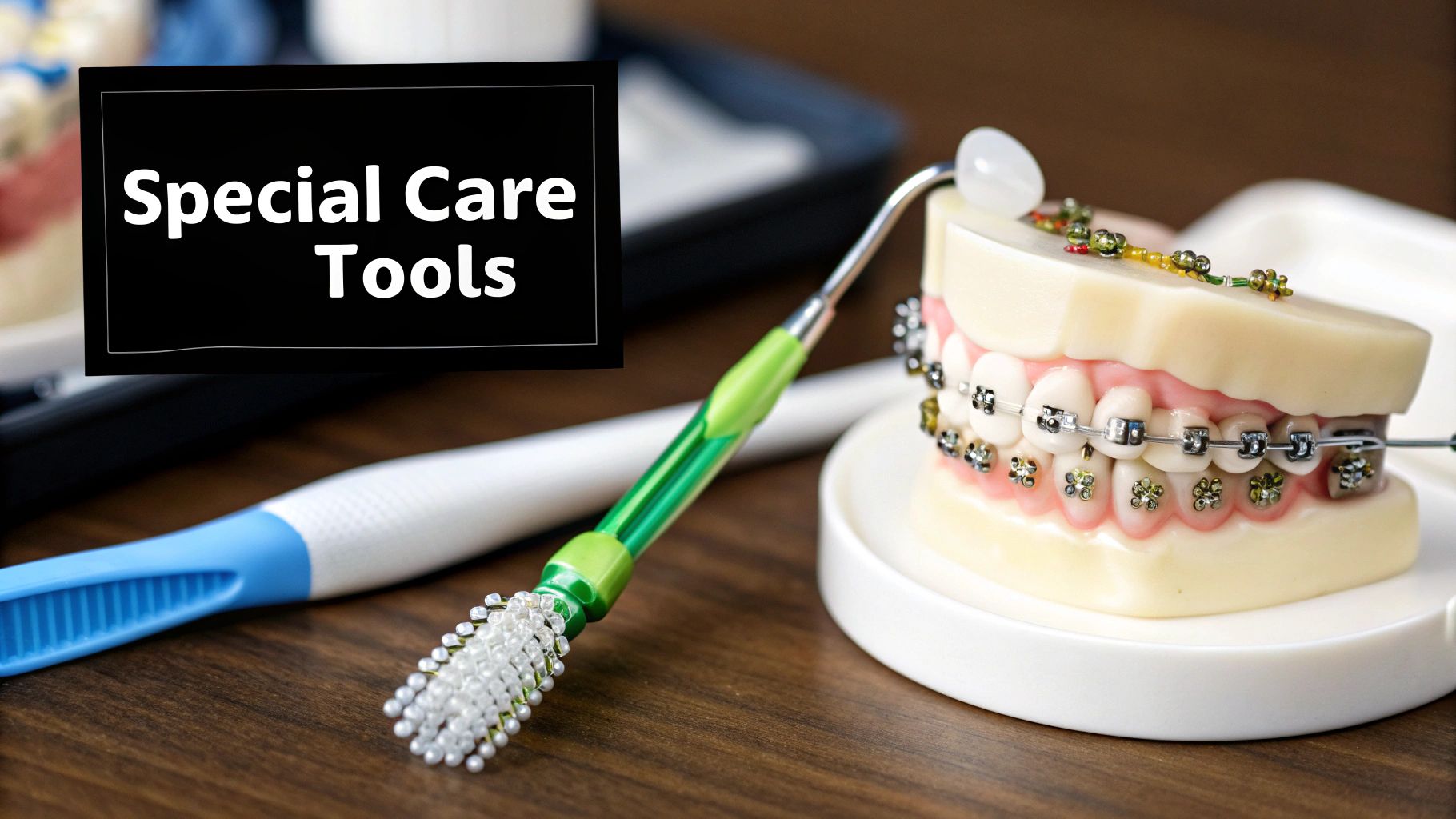
For those with braces, the archwire is the biggest obstacle. It completely blocks you from flossing the traditional way. The secret weapon here is a floss threader, which is a small, flexible loop designed to guide floss where it needs to go.
Just pull about 18 inches of your favorite floss through the threader's loop. Then, carefully guide the stiff end of the threader under the archwire. Once it’s through, you can remove the threader and floss each side of the tooth using the C-shape method we talked about earlier. It takes a little practice, but you'll get the hang of it quickly.
Cleaning Around Implants and Bridges
Dental implants and bridges introduce a unique challenge: keeping the area clean where the restoration meets your gums. Plaque loves to hide underneath bridges and around the base of implants, which can compromise your gums and the health of your investment.
The key to making your dental work last a lifetime is meticulous hygiene. Cleaning under a bridge or around an implant is every bit as important as cleaning your natural teeth.
To get the job done right, you'll want to add a few specialized tools to your routine:
Super Floss: This is a fantastic all-in-one product. It comes in pre-cut strands with a stiffened end for easy threading, a spongy section for cleaning around appliances, and a regular floss end for the rest of your teeth.
Interdental Brushes: Think of these as tiny pipe cleaners for your teeth. They are perfect for gently scrubbing the sides of implants and getting into the space right underneath a bridge.
Water Flossers: An oral irrigator, or water flosser, is a game-changer. It uses a targeted stream of water to flush out food particles and plaque from those hard-to-reach spots around any kind of dental work.
Proper care is the best way to protect the investment you've made in your smile. If you're curious to learn more about how these restorations function, our guide on what a dental bridge is offers a great overview.
Your Partner in Lifelong Oral Health
Mastering the art of flossing is one of the most powerful things you can do for your long-term health. It’s a simple, two-minute habit that does wonders for preventing cavities, stopping gum disease in its tracks, and keeping your smile genuinely bright. The real trick, of course, is turning that knowledge into something you do every single day.
The big takeaways here are all about consistency, using that gentle C-shape technique, and finding the right tool for your mouth. When you put this into practice, you're doing so much more than just cleaning your teeth—you're making a real investment in your overall wellbeing.
To help make flossing an automatic part of your day, you might want to look into tools like free habit tracking apps. Sometimes a simple daily reminder is all it takes to build a healthy habit that lasts a lifetime.
At the end of the day, it's these small, consistent actions that have the biggest impact on your oral health.
If you ever have questions about your technique or just want some personalized advice on which flossing tools would work best for you, the next step is simple. Let's get you scheduled for a professional cleaning and check-up. The team here at Beautiful Dentistry is ready to help you perfect your routine and maintain a healthy, confident smile for years to come.
Your Top Flossing Questions, Answered
Over the years, we've heard just about every question there is when it comes to flossing. Let's tackle some of the most common ones we hear from our patients right here in the office.
Floss Before or After Brushing? What's the Right Order?
This is a classic debate, but most dental pros, including our team here at Beautiful Dentistry, will tell you to floss before you brush. Think of it as clearing the way for a deeper clean.
When you floss first, you’re pulling out all the food bits and plaque that are tightly packed between your teeth. This opens up those spaces, allowing the fluoride from your toothpaste to really get in there and do its job. Your brushing just becomes that much more effective.
How Often Do I Really Need to Floss?
The official word from the American Dental Association (ADA) is to floss at least once per day. Honestly, the key isn't so much the time of day, but the consistency. Just make it a daily habit.
Why daily? Plaque—that sticky film of bacteria—can start to harden into tartar in as little as 24 hours. Once it turns into tartar (or calculus), you can't get it off with a brush or floss. It has to be professionally removed during a dental cleaning.
Is It Normal for My Gums to Bleed When I Start Flossing?
Yes, it’s actually very common to see a little bit of pink in the sink when you first get back into a regular flossing routine. This is usually a sign of mild gum inflammation, called gingivitis, which is caused by that plaque we just talked about.
Don't panic and stop! The bleeding is your gums' way of telling you they need more attention. If you keep up with gentle, daily flossing, the bleeding should clear up on its own within a week or two as your gums get healthier.
If the bleeding continues for longer than that, it’s definitely time to let us take a look.
Ready to get your oral health on the right track and make sure your smile is as healthy as it can be? The team at Beautiful Dentistry is here to give you personalized advice and professional care. Book your comprehensive exam and cleaning in Tempe today!


Comments