

Gums Bleed When I Brush: An Actionable Guide to Stop It

Noticing a pink tint in the sink after brushing is more than just a minor annoyance—it's a clear signal from your body that your gums need attention. This bleeding is often the first sign of gingivitis, the earliest and most reversible stage of gum disease.
The good news? You have the power to fix it. With a few targeted adjustments to your daily routine, you can stop the bleeding and restore your gums to perfect health. This guide will show you exactly what to do.
The Real Reason Your Gums Are Bleeding
Seeing blood when you brush can be alarming. Your first instinct might be to stop brushing that area, fearing you're causing more harm. However, the opposite is true. The bleeding is a sign of inflammation caused by bacteria, and your gums are sending a direct message: "Clean me better!"
The root cause is almost always plaque—a sticky, invisible film of bacteria that builds up on your teeth, especially along the gumline. When it's not removed, your body treats it like a splinter, sending extra blood to the area to fight the infection. This is what causes the swelling and sensitivity.
This inflammation, known as gingivitis, makes your gums so sensitive that even the gentle pressure from your toothbrush causes them to bleed. The bleeding isn't a sign that you're being too rough; it’s a sign that plaque has been left behind.
That bleeding is your body’s immune system responding to a bacterial invasion. In short, your gums are asking for help.
Your Immediate Action Plan for Bleeding Gums
What you do the moment you notice bleeding can determine how quickly you solve the problem. Reacting the right way stops the cycle of inflammation, while the wrong reaction can make it worse. Here’s your quick-start guide to taking control.
Action to Take (Do) | What to Avoid (Don't) |
|---|---|
Continue Brushing Gently. Use a soft-bristled brush and focus on cleaning the area where your teeth and gums meet. This removes the plaque causing the problem. | Stop Brushing. This is the worst thing you can do. It allows more bacteria to accumulate, which guarantees more inflammation and bleeding. |
Start Flossing Daily. Plaque thrives between teeth. Floss once a day to remove bacteria from these hidden spots and give your gums a chance to heal. | Brush Aggressively. Scrubbing harder will not remove plaque more effectively. It will only irritate your inflamed gums and can cause permanent damage. |
Rinse with Warm Salt Water. Dissolve half a teaspoon of salt in a glass of warm water and swish for 30 seconds. This simple rinse soothes sore gums and helps reduce inflammation. | Ignore the Bleeding. Think of it as a fire alarm for your mouth. It's a clear warning that requires action before it develops into a more serious issue. |
Following these immediate steps is crucial, but consistency is what creates lasting change. By gently but thoroughly removing plaque every single day, you empower your gums to heal and become strong again.
Why Are My Gums Bleeding When I Brush?
While plaque buildup is the number one cause of bleeding gums, other factors can make your gums more susceptible to irritation. Identifying the specific reason is the first step toward finding the right solution. Think of it as detective work for your oral health.
Are You Brushing Too Hard?
It’s easy to think that more pressure means cleaner teeth, but your gums are delicate. Brushing too aggressively can cause damage and bleeding. Here’s how to assess your technique:
Check Your Brush: Are the bristles hard or medium? Action Step: Switch to a toothbrush with soft bristles. They are just as effective at removing plaque without harming your gums.
Analyze Your Motion: Do you scrub back and forth? Action Step: Use gentle, circular motions, angling the brush at 45 degrees toward the gumline to sweep plaque away effectively.
New to Flossing? If you just started flossing, some bleeding is normal. This is your gums reacting to being cleaned in a new way. Action Step: Keep flossing daily. The bleeding should stop within a week as inflammation subsides.
The Connection to Your Overall Health
Your mouth often reflects your overall health. Sometimes, bleeding gums are a sign that something else is going on in your body. Globally, severe gum disease affects over 10% of the population—that's more than 743 million people. The inflammation is a direct result of how bacteria cause disease by activating your immune system.
Here are other health factors that can increase gum sensitivity:
Hormonal Shifts: Puberty, pregnancy, and menopause increase blood flow to the gums, making them more prone to swelling and bleeding.
Medications: Blood thinners and certain other prescriptions can directly impact your body's clotting ability.
Vitamin Deficiencies: A lack of Vitamin C (crucial for tissue repair) or Vitamin K (essential for clotting) can make your gums bleed more easily. Action Step: Ensure you're eating a balanced diet rich in fruits and vegetables.
Understanding the Difference Between Gingivitis and Periodontitis
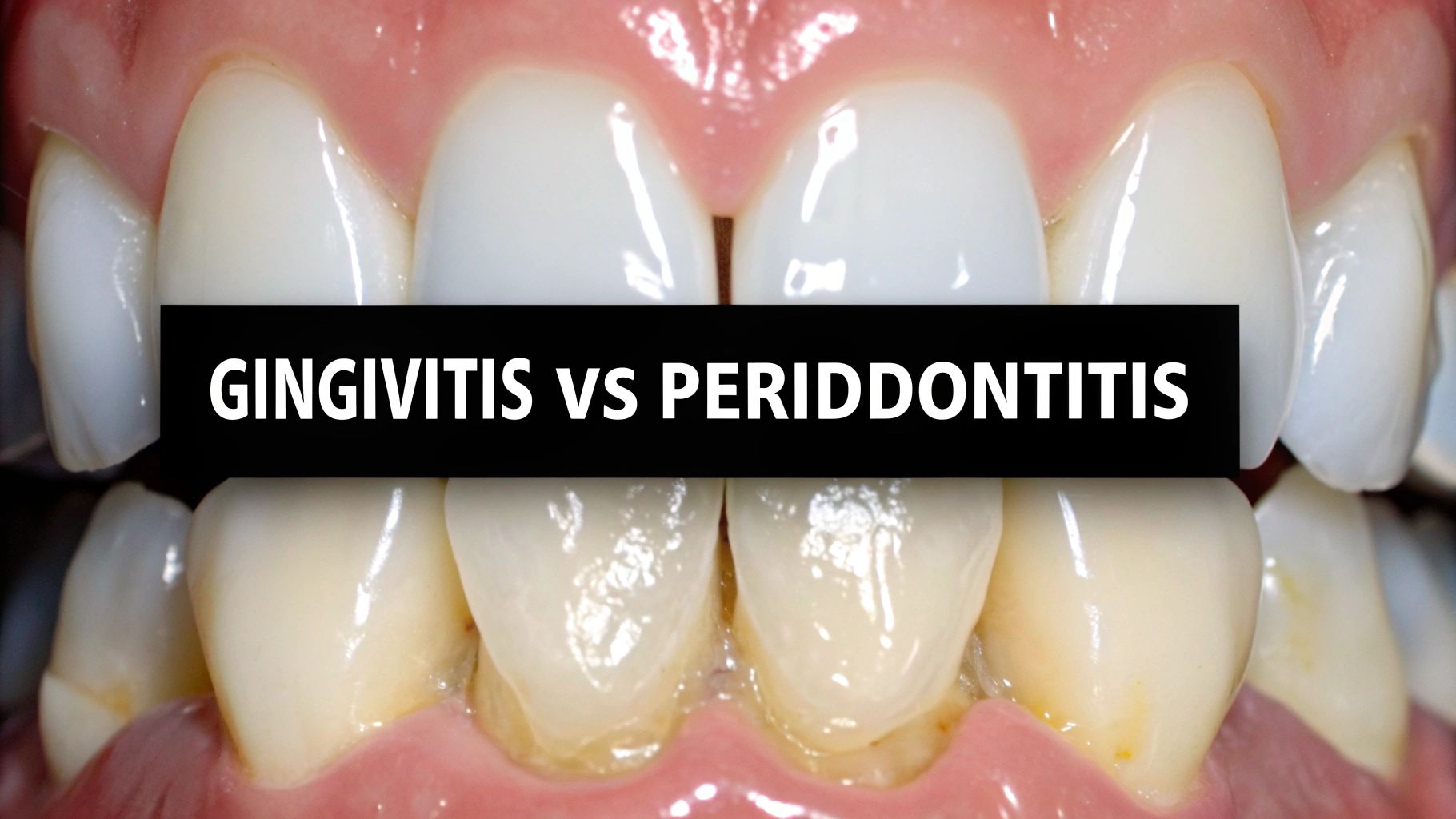
When your gums bleed, they're sending a distress signal. Usually, this points to gingivitis, the mildest and fully reversible form of gum disease. But if you ignore it, it can advance into periodontitis, a serious condition that causes permanent damage.
Understanding the difference empowers you to act at the right time.
Think of gingivitis as a small, controllable fire. It’s caused by plaque along the gumline, leading to redness, puffiness, and bleeding. The Actionable Insight: At this stage, the damage is 100% reversible. By improving your brushing and flossing and getting a professional cleaning, you can completely extinguish the fire and restore your gums to full health.
The Point of No Return: Periodontitis
If that fire is left unattended, it spreads and becomes periodontitis. The infection has now moved deeper, attacking the bone and ligaments that hold your teeth in place. This is where the damage becomes irreversible. Your body's immune response, trying to fight the chronic infection, begins to destroy the very structures supporting your teeth.
Signs That Gingivitis Has Advanced
The progression from gingivitis to periodontitis comes with clear warning signs. If you notice any of these, it's time to see a dentist immediately:
Receding Gums: Your teeth look longer because your gums are pulling away, creating deep pockets where bacteria can hide.
Pus Between Teeth and Gums: This is an undeniable sign of a serious infection requiring professional treatment.
Changes in Your Bite: Your teeth feel loose or have shifted, which means the underlying bone support has been damaged.
This progression from a fixable issue to permanent damage is why early action is critical. When your gums bleed when you brush, it's your best opportunity to intervene before the problem escalates.
Unlike gingivitis, bone lost to periodontitis cannot be regrown. While treatments can stop the disease from progressing, preventing it in the first place is the best strategy for protecting your smile for life.
Actionable Home Care Tips to Stop Bleeding Gums
Seeing pink in the sink is your call to action. The best part is that the most effective solutions are in your hands, starting today. These simple, consistent habits are your playbook for calming inflammation and healing your gums.
Perfect Your Brushing Technique
How you brush is far more important than how hard you brush. The goal is to be gentle yet thorough, removing plaque without causing further irritation.
Here is your 3-step action plan for better brushing:
Choose the Right Tool: Switch to a toothbrush with soft bristles. They clean effectively without damaging your gums or enamel.
Angle for Success: Hold your brush at a 45-degree angle to your gumline. This allows the bristles to sweep away the plaque hiding right where your teeth and gums meet.
Use Gentle, Circular Motions: Ditch the aggressive back-and-forth scrubbing. Use small, gentle circles on each tooth, letting the bristles do the work.
Master the Art of Flossing
Flossing is non-negotiable. Your toothbrush can’t clean the 40% of tooth surfaces hidden between your teeth—prime real estate for plaque. If you're new to flossing, a little bleeding at first is normal. Stick with it daily, and it should resolve within a week as your gums become healthier.
For a step-by-step guide to doing it right, check out this resource on how to properly floss teeth for a healthier smile. This will ensure you're removing plaque, not just pushing it around.
Your daily routine is your primary defense. By mastering gentle brushing and consistent flossing, you directly remove the cause of gum inflammation and stop the bleeding at its source.
Elevate Your Toolkit with Supportive Rinses
Once you have the fundamentals down, a rinse can provide extra support. An antiseptic or therapeutic mouthwash reduces the overall bacterial load in your mouth, creating a better healing environment.
For a simple and effective home remedy, use a warm salt water rinse. Just mix half a teaspoon of salt in a glass of warm water and swish for 30 seconds to soothe sore gums and reduce inflammation.
Remember, your mouth is connected to the rest of your body. Reducing systemic inflammation through a balanced diet can also support gum health. You can explore beneficial gut health supplements to learn more about a holistic approach.
Knowing When to See a Dentist About Bleeding Gums
While improving your home care is the critical first step, some situations require professional intervention. A visit to the dentist isn’t a failure; it’s a smart, decisive action to protect your long-term health. Knowing when to make that call can prevent a minor issue from becoming a major one.
If your gums bleed when you brush consistently, you’re in good company. Over 42% of U.S. adults over 30 have some form of gum disease, and that number rises to 60% for those over 65. It’s a common problem, but that doesn’t mean it should be ignored.
Red Flags That Mean It's Time to Call
If you have dedicated yourself to gentle brushing and daily flossing for a week or two and the bleeding continues, that is your cue to schedule a dental appointment. Your home care can't remove plaque that has hardened into tartar.
Here are the specific signs that mean you should call your dentist:
Persistent Bleeding: The bleeding hasn't improved after 7-10 days of diligent home care.
Swelling or Pain: Your gums are puffy, bright red, or tender to the touch.
Receding Gums: You notice your teeth appearing longer, a sign that gums are pulling away.
Changes in Your Bite: Your teeth feel loose or fit together differently when you bite down.
This flowchart maps out your decision-making process. Start with improving home care, but if symptoms persist, a professional consultation is the necessary next step.
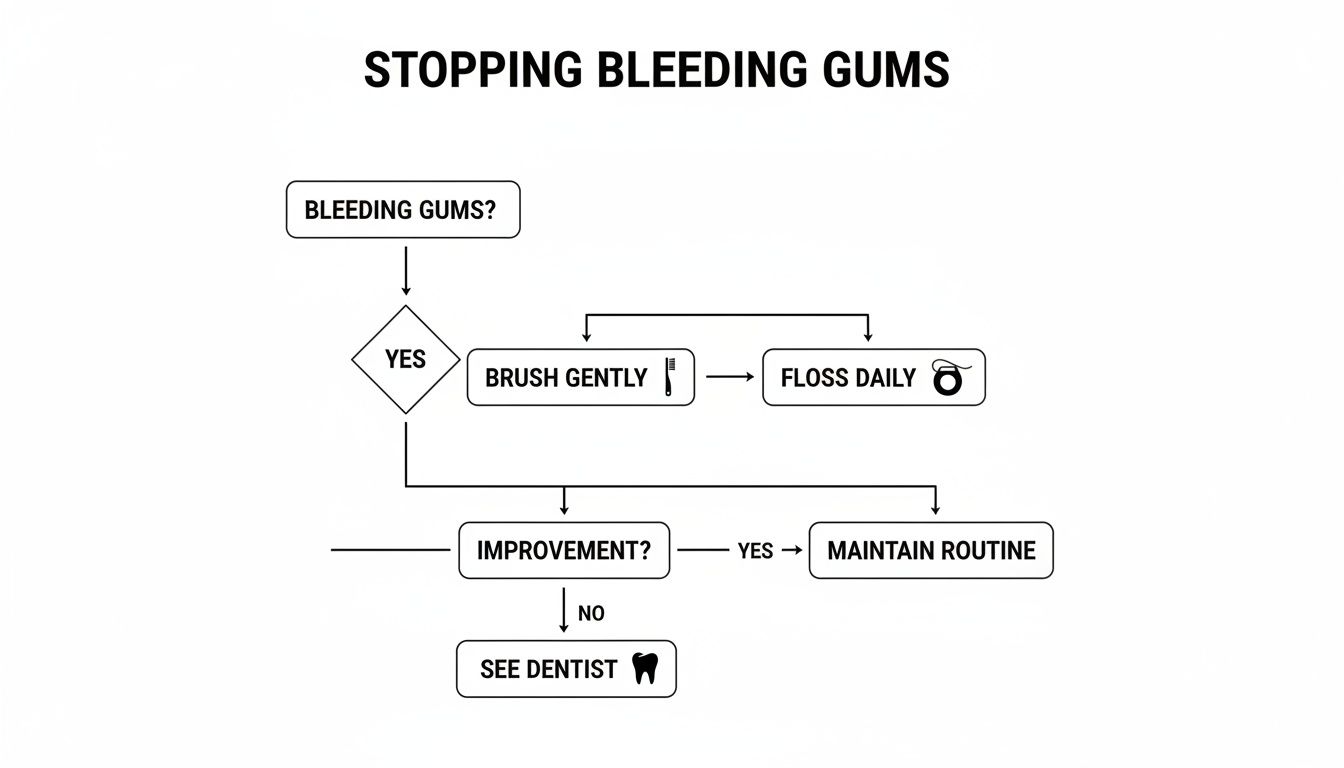
It truly is this straightforward. Gentle home care is your first move, but a dental visit is the definitive solution when symptoms don't resolve quickly.
A professional cleaning is the only way to remove hardened plaque (tartar) that your toothbrush can't. This single step can halt the progression of gum disease and give your gums a fresh start.
To understand what to expect during a visit, you can learn more about our dental cleaning and exams. Taking action is the best thing you can do for your smile.
What to Expect from Professional Gum Treatments
If your gums are bleeding, getting professional care is the most direct path to recovery. Our treatments are designed to be comfortable and highly effective because they address the root cause of the infection.
First, we conduct a thorough gum evaluation. We use a tiny probe to gently measure the space between your teeth and gums, called a periodontal pocket. Healthy pockets are shallow. Deeper pockets indicate gum disease and provide a hiding place for harmful bacteria. This measurement gives us a precise diagnosis and allows us to create a targeted treatment plan for you.
Deep Cleaning: Scaling and Root Planing
For gingivitis or early periodontitis, the most effective treatment is a therapeutic deep cleaning known as scaling and root planing. Think of it as a reset for your gums. It goes far beyond a standard cleaning to remove the source of the infection.
Here’s what the two-step process involves:
Scaling: We carefully remove all the plaque and hardened tartar from both above and below your gumline, cleaning all the way to the bottom of the periodontal pockets.
Root Planing: After the tartar is gone, we smooth the surfaces of the tooth roots. This makes it harder for new bacteria to attach and helps your gums heal and reattach firmly to your teeth.
This procedure is the gold standard for stopping gum disease. By eliminating the bacterial buildup in these hard-to-reach areas, we remove the source of the inflammation, allowing your gums to finally heal and the bleeding to stop.
Getting Your Gums Healthy Again
We always ensure the area is numb and comfortable during the procedure. Afterward, your gums can begin the healing process. The puffiness will go down, the bleeding will cease, and the pockets will shrink. This treatment stops gum disease before it can cause irreversible bone loss.
Our goal is to restore your oral health and equip you with a personalized home care plan to prevent the problem from returning. To learn more about our specific approach, you can read about our gum disease treatment in Tempe. Taking this step is a powerful investment in your long-term health.
Still Have Questions About Bleeding Gums? We Have Answers.
It's normal to have questions. Here are clear, actionable answers to the most common concerns we hear from our patients.
Why Do My Gums Only Bleed Sometimes?
Intermittent bleeding is a classic sign of early gingivitis. It means plaque is building up enough to cause irritation, but the inflammation isn't yet constant. You might notice it after eating something hard or if you’ve skipped flossing for a day.
Actionable Insight: Treat this as an early warning. It’s your cue to be more consistent with your brushing and flossing to prevent the issue from becoming a daily problem.
Is It Safe to Brush if My Gums Are Bleeding?
Yes, it is absolutely essential. Avoiding the area allows more plaque to build up, which will only worsen the inflammation and bleeding.
Actionable Insight: The key is to be gentle. Use a soft-bristled brush and focus on cleaning the gumline with small, circular motions. The goal is to remove the bacteria causing the irritation, not to scrub the gums themselves.
When your gums bleed, it's often a sign of gingivitis, a condition that is part of a larger global health issue. Research highlights that severe gum disease affects nearly 1 billion adults worldwide. You can explore the data behind global gum health trends on frontiersin.org.
Can Bleeding Gums Go Away on Their Own?
No, they cannot. Bleeding is your body's response to a bacterial infection (plaque). While your immune system is trying to fight it, it can't win without your help.
Actionable Insight: The problem will not resolve until the source—the plaque—is physically removed. Only consistent, effective brushing and flossing can do this. You are the solution.
If you’re in the Tempe or South Phoenix area and are ready to stop seeing pink in the sink for good, our team at Beautiful Dentistry is here to help you achieve healthy gums.
Take the first step toward a healthier smile and schedule your comprehensive exam today.


Comments