

What Does Dry Socket Feel Like? Signs and Actionable Steps for Relief
- Caterina Rutter
- Jan 12
- 12 min read

You've just had a tooth pulled and are on the road to recovery. You expect some discomfort, but then, a few days in, something feels wrong. Instead of getting better, the pain suddenly gets much worse.
This isn't just regular soreness. This is a deep, throbbing, and relentless ache. If this sounds familiar, you might be experiencing a dry socket, and it's a clear signal to take action.
What's Happening Inside a Dry Socket?
When a tooth is removed, your body forms a blood clot in the empty space. This clot is a natural bandage, covering the underlying jawbone and sensitive nerve endings. It's a critical step for proper healing.
A dry socket, known as alveolar osteitis, happens when that protective blood clot gets dislodged, dissolves too early, or fails to form.
Without that crucial bandage, the bone and nerves are left exposed to air, fluids, food, and bacteria. This exposure is the direct cause of the intense, radiating pain that is the hallmark of a dry socket. Understanding this process is the first step in knowing how to prevent it and when to seek help.
The Tell-Tale Signs: What a Dry Socket Actually Feels Like
The biggest giveaway for a dry socket is the timing and the nature of the pain. Normal post-op discomfort gradually fades. Dry socket pain does the opposite: it appears with a vengeance about 2 to 3 days after your procedure, right when you should be feeling better.
This isn’t a dull ache. It’s a severe, throbbing pain that can feel like it’s deep within your jawbone. It often radiates outward, causing pain in your ear, eye, temple, or neck—all on the same side as the extraction.
One major review of over 1,300 tooth extractions found that 3.2% of patients developed a dry socket. The overwhelming complaint wasn't just soreness, but this distinct, severe, and radiating pain. You can review the clinical findings from that study for more data.
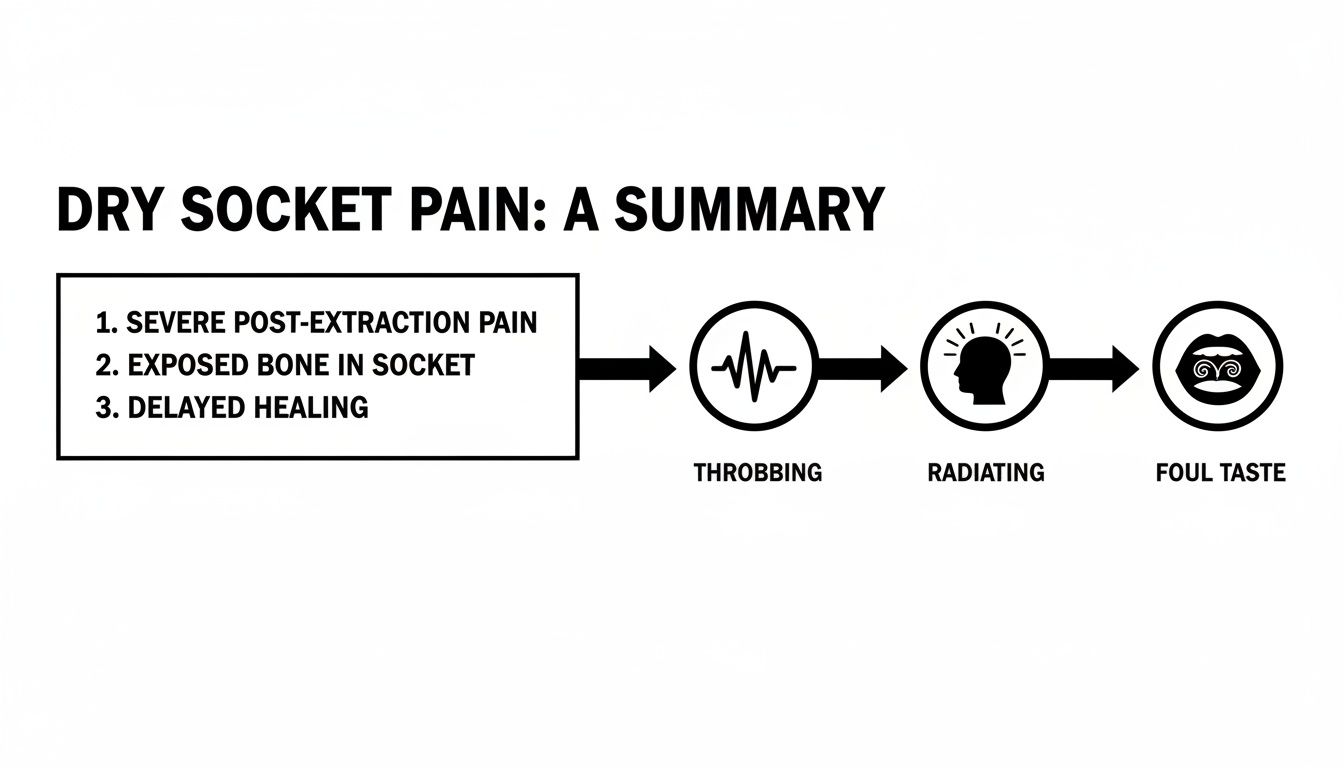
As you can see, it's a combination of symptoms, with intense, spreading pain being the primary red flag that requires your immediate attention.
Dry Socket Symptoms vs Normal Healing After Tooth Extraction
It can be tough to tell what's normal and what's not. Use this table to compare your symptoms and decide on your next step.
Symptom | Normal Healing Process | Potential Dry Socket |
|---|---|---|
Pain Level & Timing | Mild to moderate discomfort that is worst on day one and steadily improves each day. | Pain that suddenly worsens 2-3 days after the procedure, becoming severe and throbbing. |
Pain Location | Localized soreness and tenderness right at the extraction site. | Pain that radiates from the socket to the ear, temple, or neck on the same side. |
Appearance of Socket | You can see a dark blood clot filling the socket, which gradually gets smaller as healing progresses. | The socket looks empty, and you might see a whitish or yellowish color, which is the exposed bone. |
Taste & Smell | Your mouth tastes normal, or perhaps slightly metallic for the first day. | A persistent bad taste in your mouth or a foul odor coming from the extraction site. |
Response to Painkillers | Over-the-counter pain medication effectively manages the discomfort. | Prescription or over-the-counter pain medication doesn't seem to touch the intense pain. |
If your symptoms are in the "Potential Dry Socket" column, your most important action is to call your dentist.
Other Key Symptoms to Watch For
Besides the signature pain, a few other clues point to a dry socket. If you notice any of these, it’s time to seek professional advice.
Visible Bone: This is the most definitive sign. If you gently pull back your cheek and look into the socket with a flashlight, you might see the whitish gleam of your jawbone instead of a dark, healing clot.
A Foul Taste or Bad Breath: An unpleasant taste you can't rinse away or a noticeable odor can indicate that food and bacteria are getting trapped in the exposed socket.
The Site Just Isn't Healing: A week after your extraction, a normally healing socket should look smaller and be filling in with new pink tissue. A dry socket will still look like an open, raw hole.
The key takeaway is the timing. Normal healing means feeling a little better each day. A dry socket means feeling worse when you should be feeling better.
Why Dry Socket Happens and What Puts You at Risk
To prevent a dry socket, you have to understand what causes it. After an extraction, your body creates a blood clot in the empty socket. This clot is an essential natural bandage that covers the sensitive jawbone and nerve endings, allowing new tissue to form underneath.
A dry socket occurs when that protective clot is dislodged, dissolves too early, or never forms correctly. Without that bandage, the raw bone and nerves are exposed, leading to intense pain.

Key Actions That Can Dislodge the Blood Clot
Certain actions create suction in your mouth that can pull the fragile blood clot out of place. Avoiding these is the most practical step you can take to ensure proper healing.
Using a Straw: The sucking motion creates a vacuum that can easily dislodge the clot.
Smoking or Vaping: The sharp inhale creates a similar negative pressure, putting the clot at high risk.
Vigorous Rinsing or Spitting: Swishing or spitting too aggressively generates enough force to dislodge the clot.
These actions are most dangerous during the first 24 to 72 hours post-procedure, when the clot is most delicate. Be gentle with all mouth movements during this crucial healing window.
The entire goal of post-extraction care can be boiled down to one simple rule: protect the clot. Every piece of advice your dentist gives you—from what to eat to how to clean your teeth—is designed to keep that natural bandage secure so your body can heal properly.
Other Factors That Increase Your Risk
Besides physical actions, other factors can interfere with healing. Some are within your control, while others require a discussion with your dentist.
Behavioral and Health-Related Risks:
Poor Oral Hygiene: Letting bacteria build up can lead to infection that breaks down the blood clot.
Tobacco Use: Nicotine and other chemicals reduce blood flow, slowing down healing and making it harder for a stable clot to form.
Oral Contraceptives: Estrogen in birth control pills can sometimes interfere with blood clotting. Inform your dentist if you take them.
History of Dry Socket: If you’ve had a dry socket before, you’re more likely to experience it again, making prevention even more critical.
Knowing these risk factors is your first line of defense. By being mindful of your habits and sharing your full health history with your dentist, you can take control of your recovery and significantly lower your chances of developing a dry socket.
Who Is Most Likely to Experience Dry Socket
While anyone can get a dry socket, some factors dramatically increase your odds. Understanding your personal risk profile is an actionable step toward prevention.
Dry socket occurs in about 1–4% of all extractions, but that number can jump significantly depending on the tooth and procedure. For impacted lower wisdom teeth, the risk is much higher. For a deep dive into the clinical data, the National Library of Medicine offers a comprehensive look.
Surgical vs. Non-Surgical Extractions
The complexity of the extraction is a major factor. A simple, non-surgical extraction involves less trauma to the bone and gum tissue, making it easier for a stable blood clot to form.
A surgical extraction, often needed for impacted teeth, is more involved and may require incisions and bone removal. This trauma can make it harder for a solid clot to form. One study found that dry socket occurred in just 1.7% of non-surgical removals but jumped to 12% for surgical extractions. If you are having a surgical extraction, your prevention efforts are even more crucial.
Age and Tooth Location
Your age and the specific tooth being pulled are also major predictors. Dry socket is most common in patients between 18 and 33—the prime age for wisdom teeth removal.
The location of the tooth is perhaps the single biggest factor:
Lower Jaw (Mandible): Extractions in the lower jaw, especially back molars, are more prone to dry socket. The bone here is denser with less blood supply, which can impede clot formation.
Impacted Wisdom Teeth: This is the highest-risk category. For impacted lower wisdom teeth, the rate of dry socket can be as high as 30%.
If you fall into a high-risk category, you can take proactive steps. Review our guide on wisdom teeth removal prep, surgery, and recovery to create a solid game plan with your dentist for a smooth recovery.
Your Game Plan for Preventing Dry Socket
Knowing what dry socket is is half the battle; preventing it is the other half. For the first few days after your tooth extraction, your one and only job is to protect that fragile blood clot forming in the empty socket. This period is the critical window where your actions directly influence whether you have a smooth, easy recovery or a run-in with this painful complication.
Think of it this way: your body has formed a natural, perfect little bandage over the extraction site. All you have to do is leave it alone. This guide will walk you through the essential "do's and don'ts" to get you through the healing phase successfully.
Protecting the Clot: Your Must-Do List
After any extraction, your dentist will give you a list of post-operative care instructions. Follow them to the letter. While every case is a bit different, these core principles are the universal rules for protecting that healing site.
Stick to Soft Foods: For the first few days, you're on a soft-food diet. Think yogurt, applesauce, mashed potatoes, and lukewarm soups. This isn't just for comfort—it minimizes chewing and stops sharp, crunchy food bits from getting into the socket and tearing up the clot.
Drink Plenty of Water (Gently!): Hydration is key to healing, but you need to sip carefully from a glass. Don't gulp or use any kind of suction.
Rest, Rest, and Rest Some More: Your body does its best healing when you’re taking it easy. Plan to lay low for at least the first 24-48 hours. That means no gym sessions, no heavy lifting, and no activities that get your heart rate up, as this can increase blood pressure and dislodge the clot.
The Don't-You-Dare List: Actions to Avoid
What you don't do is just as important as what you do. There are a few common habits that create negative pressure in your mouth or introduce contaminants, and they are absolute poison for a new blood clot. Avoiding these is non-negotiable.
The Golden Rule for the first 72 hours: Do absolutely nothing that could physically pull out or chemically damage the blood clot. It’s that simple. Every rule is built around this single, critical goal.
The biggest enemy here is suction.
No Straws, Period: The sucking motion creates a powerful vacuum in your mouth that can yank the clot right out of its socket. You need to avoid straws for at least a full week.
No Smoking or Vaping: The forceful inhale does the same thing as a straw. On top of that, the chemicals in smoke and vapor are terrible for healing—they can restrict blood flow and introduce bacteria right into the wound.
Don't Spit or Rinse Aggressively: It’s tempting to want to swish and spit to keep your mouth clean, but this can easily dislodge the clot. After the first 24 hours, you can let a gentle warm saltwater rinse flow around your mouth by tilting your head, then just let the water fall out into the sink.
Here’s a quick checklist to help you stay on track during that crucial initial healing period.
Post-Extraction Care Checklist to Prevent Dry Socket
This table breaks down the most important actions to take (and avoid) in the first 72 hours after your tooth is removed. Keeping this handy can make all the difference.
Action | Why It's Important | Timeframe |
|---|---|---|
Do: Eat only soft foods | Avoids physical disruption of the clot from chewing hard or crunchy items. | First 2-3 days |
Don't: Use a straw | The suction can easily dislodge the protective blood clot. | At least 1 week |
Do: Drink plenty of water | Hydration is essential for your body's natural healing processes. | Ongoing |
Don't: Smoke, vape, or chew tobacco | Suction and chemicals both severely damage the healing site. | At least 72 hours (longer is better) |
Do: Get plenty of rest | Limits physical strain and keeps blood pressure stable to protect the clot. | First 24-48 hours |
Don't: Spit or rinse forcefully | This pressure can easily dislodge the clot. Let water fall from your mouth. | First 72 hours |
Do: Gently rinse after 24 hours | A gentle warm salt water rinse helps keep the area clean without causing harm. | After the first 24 hours |
Following these guidelines gives you the best possible defense against dry socket. For more advice on a comfortable recovery, check out our guide on how to reduce swelling after oral surgery. A little care now will ensure your healing is as quick and painless as possible.
How Your Dentist Treats Dry Socket and Relieves Pain
If you have the intense, radiating pain of a dry socket, the best action you can take is to see your dentist. Relief is just one visit away. Treating a dry socket is a simple, gentle process designed to provide immediate comfort and get your healing back on track.
The goal is to clean the area and place a protective dressing over the exposed bone and nerves. This simple step is highly effective at stopping the pain.
What to Expect at Your Dental Visit
When you arrive at the office, the first priority is your comfort. The treatment is straightforward and gentle.
Here’s a step-by-step of what will happen:
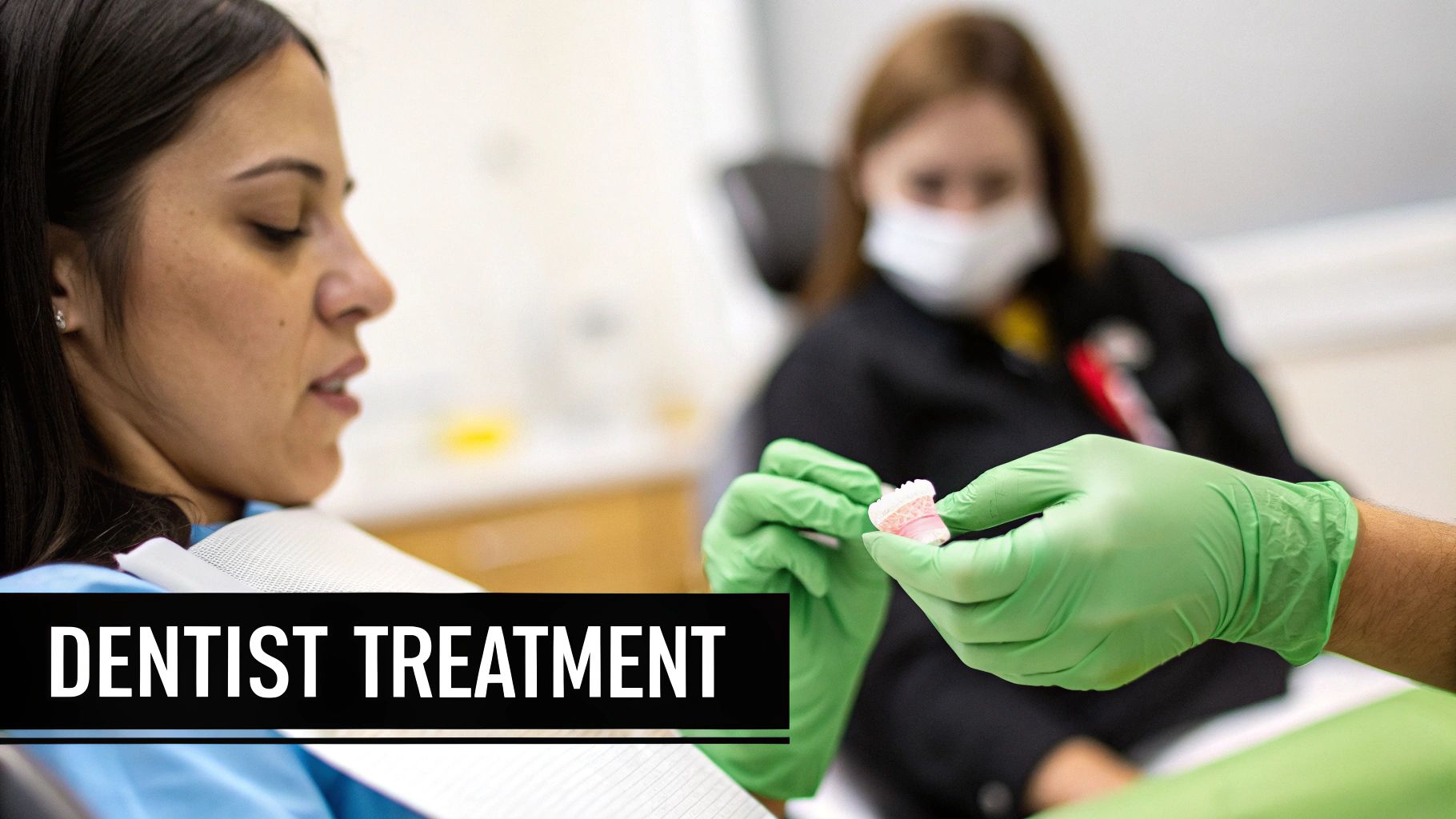
Cleaning the Socket: Your dentist will gently flush the empty socket with a sterile solution. This removes any food particles or debris that have become trapped and are causing irritation.
Applying Medicated Dressing: After cleaning, a special medicated dressing is placed inside the socket. This is often a small piece of gauze or a paste containing soothing ingredients like eugenol (from clove oil) and a mild anesthetic.
This medicated bandage acts as a protective barrier, shielding the exposed nerve endings from air, food, and liquids—doing the job the original blood clot was meant to do.
The moment that dressing covers the exposed bone is often when patients feel that first wave of real relief. It calms those irritated nerves right down, stopping the constant throbbing almost instantly.
After the Treatment
With the dressing in place, the worst of the pain should fade quickly. Your dentist will provide specific instructions for home care to protect the area as it heals.
You may need a follow-up visit in a few days to have the dressing changed or removed, depending on your healing progress. These quick check-ins ensure that healthy new tissue is forming correctly.
For more details, review this actionable guide on what to do if you have a dry socket. The most important thing to remember is that professional treatment works, it's fast, and it’s your quickest path to feeling better.
When to Call Your Dentist Immediately
Knowing what a dry socket feels like is useful, but knowing exactly when to pick up the phone is critical. While some discomfort is normal after an extraction, certain symptoms are clear signals that you need professional help right away.
Your best strategy is not to wait until the pain is unbearable. Acting on early warning signs is the fastest route to relief.
If you experience any of the following, contact your dental office without delay.
Critical Warning Signs
Do not second-guess yourself if these red flags appear, especially two to four days after your surgery.
Worsening Pain: After day one, your pain should improve. If it suddenly intensifies into a deep, throbbing ache or your pain medication stops working, that's the number one sign of a problem.
Radiating Discomfort: If the pain travels from the extraction site toward your ear, temple, or neck, that’s a classic symptom of dry socket.
Foul Taste or Odor: A persistent bad taste or smell from your mouth, even after gentle rinsing, signals that something is wrong in the socket.
Visible Bone: Look in the mirror. If you see a whitish or yellowish color where the dark blood clot should be, you are likely looking at exposed bone and should call your dentist.
Trust what your body is telling you. Normal healing feels like a gradual improvement. A dry socket feels like a significant step backward into severe pain.
For our patients in the Tempe, AZ area, if you're experiencing these symptoms, the team at Beautiful Dentistry is here to provide prompt, compassionate care. Call us at (480) 831-1700 to get the help you need and start feeling better fast.
Answering Your Questions About Dry Socket
Having a tooth pulled can be stressful enough without worrying about complications. Let's tackle some of the most common questions we hear from patients to clear up any confusion and help you feel more in control of your recovery.
How Long Does Dry Socket Pain Last After Treatment?
The good news is that relief comes quickly once you're in the dental chair. After your dentist cleans the area and places a medicated dressing, you should feel a dramatic reduction in pain within a few hours. That intense, throbbing ache finally subsides once the exposed bone and nerve endings are protected.
We typically have you come back every couple of days to change the dressing. This process continues until the socket is clearly healing on its own and you're no longer in pain. With proper care, most people are back to feeling normal within 5 to 10 days.
Can a Dry Socket Heal On Its Own?
While the socket would eventually heal over time, leaving it untreated is a bad idea. You would endure weeks of preventable, agonizing pain and leave yourself vulnerable to a serious infection in your jawbone.
Think of it this way: dental treatment isn't just about stopping the pain. It's about getting the site clean, protecting it from bacteria, and guiding the body to heal correctly.
Do not try to "tough it out." Seeking professional help is the only safe and effective action to take.
Is It Possible to Get Dry Socket Weeks Later?
This is extremely rare. Dry socket is a complication of the initial healing phase when the blood clot is most vulnerable, typically between days 2 and 4 after surgery.
If you develop new pain weeks later, it is almost certainly due to another issue, such as a secondary infection or a problem with an adjacent tooth. For more clarity, our guide on understanding what a dry socket is can provide additional peace of mind.
If you're in the Tempe area and worried about your symptoms, don't wait for the pain to get worse. The compassionate team at Beautiful Dentistry is here to provide the gentle care you need for fast relief. Schedule your appointment online or give our office a call today.


Comments