

The Ultimate 2025 Guide: 8 Pros and Cons of False Teeth Explored

Losing teeth, whether due to injury, decay, or age, can significantly impact your daily life, from the foods you enjoy to the confidence you feel when you smile. Modern dentistry offers a range of effective solutions to restore oral function and aesthetics, and among the most time-tested of these are dentures, commonly known as false teeth. While they have successfully transformed millions of lives for decades, they are not a universal solution suitable for every patient or every lifestyle. Making an informed decision requires moving beyond basic definitions and understanding the practical, day-to-day realities of wearing them.
This comprehensive guide is designed to provide exactly that: a clear, actionable breakdown of the pros and cons of false teeth. We will cut through the complexities to give you a straightforward look at what you can truly expect. You will learn about the key advantages, such as restored appearance and affordability, as well as the potential challenges, including adjustments to eating and speaking.
We will explore different types of dentures, from traditional full and partial sets to more advanced implant-supported options, detailing how each choice impacts your experience. The goal is to equip you with specific, honest information so you can have a more productive conversation with your dental team at Beautiful Dentistry. This clarity will empower you to confidently choose the tooth replacement path that best aligns with your health needs, budget, and long-term goals for a functional, vibrant smile.
1. Pro: Restored Appearance and a Confident Smile
One of the most immediate and impactful advantages of dentures is the dramatic restoration of a full, natural-looking smile. This benefit goes far beyond simple aesthetics; it often serves as a catalyst for renewed self-esteem, empowering individuals to engage more freely and confidently in social and professional situations. For many people evaluating the pros and cons of false teeth, this cosmetic and emotional transformation is the primary motivator.
Modern Dentures: A Personalized Approach
Today's dentures are a world away from the artificial-looking "false teeth" of previous generations. Modern dental technology allows for a high degree of personalization, ensuring your new smile is uniquely yours.
The customization process involves:
Harmonizing with Facial Features: Your dentist will design the dentures to complement your specific facial structure, including your jawline, cheekbones, and lip support. This prevents the sunken-in look that can occur after tooth loss.
Matching Natural Tones: The shade of the artificial teeth is carefully selected to match your natural skin tone and any remaining teeth, ensuring a seamless and believable appearance.
Custom Shaping and Sizing: Each tooth in the denture is shaped and sized to create a look that is both aesthetically pleasing and appropriate for your age and gender.
This meticulous customization results in a smile that doesn't just fill gaps but genuinely enhances your overall appearance. The support provided by a full set of teeth can also smooth out wrinkles around the mouth, contributing to a more youthful look.
Actionable Tip: When discussing your new dentures, bring photos of yourself with your natural smile. This gives your dentist a valuable reference point for creating a restoration that looks and feels like you, ensuring the final result aligns with your personal identity and aesthetic goals.
Ultimately, a beautiful, complete smile can remove a significant source of self-consciousness. Patients often report feeling more comfortable laughing openly, speaking in public, and posing for photographs, moments they may have previously avoided. This profound psychological boost is a key reason why restoring one's smile is a major "pro" in the decision-making process.
2. Pro: Cost-Effective Tooth Replacement Solution
For many individuals weighing the pros and cons of false teeth, the financial aspect is a significant deciding factor. Dentures represent one of the most accessible and affordable solutions for replacing multiple missing teeth, especially when compared to more invasive and costly procedures like full-arch dental implants or extensive bridgework. This affordability makes a complete and functional smile achievable for patients on a tighter budget, ensuring that financial constraints do not have to be a permanent barrier to good oral health and confidence.
Breaking Down the Financial Advantage
The cost disparity between dentures and other restorative options is substantial, primarily because traditional dentures do not require surgical implantation or complex modifications to adjacent teeth. This makes the entire process simpler, faster, and less expensive from start to finish.
A clear cost comparison highlights the value:
Traditional Full Dentures: A complete set often ranges from $1,000 to $3,000, providing a full-arch replacement without surgery.
Dental Implants: A full-mouth restoration with implants can easily exceed $20,000, and often costs much more, depending on the number of implants and the need for bone grafting.
Dental Bridges: While less expensive than implants, bridges are priced per unit and can become costly when replacing several teeth in a row.
This economic accessibility allows patients to address tooth loss promptly, preventing further oral health issues like jawbone deterioration and shifting of remaining teeth. By choosing an affordable option, you can restore function and appearance without incurring substantial debt. To understand how these options compare in more detail, you can explore this guide to implants, bridges, and dentures.
Actionable Tip: Always ask your dental provider for a detailed breakdown of all associated costs, including initial impressions, fittings, and any necessary adjustments after you receive your dentures. Inquire about available payment plans or third-party financing options to make the investment more manageable over time.
Ultimately, the affordability of dentures provides a practical and immediate solution for restoring your smile. This financial accessibility ensures that patients from all walks of life can regain the ability to eat, speak, and smile with confidence, making it a powerful "pro" in the decision-making process.
3. Pro: Non-Invasive Procedure with Minimal Recovery Time
For individuals considering tooth replacement, the procedural intensity is a significant factor. One of the most compelling advantages of traditional dentures is that the process is non-invasive and requires no surgery. This makes it an accessible and less intimidating option, especially when comparing the pros and cons of false teeth against more complex surgical alternatives like dental implants.
A Gentle Path to a Complete Smile
Unlike procedures that require bone grafting, incisions, or the alteration of adjacent healthy teeth, the journey to getting dentures is straightforward and focuses on external impressions and fittings. This gentle approach is a major benefit for many patients.
The process typically involves:
Impression Taking: Your dentist will take precise molds of your gums and any remaining teeth. This is a simple, painless process that captures the unique contours of your mouth.
Bite Registration: You will bite into a wax rim to record how your upper and lower jaws relate to one another, ensuring the final dentures will function correctly.
Aesthetic Try-Ins: A wax model of your future dentures, complete with the chosen artificial teeth, is created. You'll try this in to approve the look, fit, and feel before the final set is fabricated.
This multi-step, non-surgical pathway is particularly advantageous for individuals with certain health conditions, such as uncontrolled diabetes or bleeding disorders, who may not be ideal candidates for surgery. It also appeals to those with dental anxiety who wish to avoid more intensive procedures. The recovery is limited to the adjustment period of getting used to wearing a new appliance, not healing from a surgical site.
Actionable Tip: To make the fitting process as smooth as possible, schedule your appointments on days when you are not rushed. Plan for several short visits for impressions and adjustments rather than one long one, and be prepared to provide detailed feedback during the wax try-in stage. This is your best opportunity to perfect the look and feel before the final denture is made.
Ultimately, the non-invasive nature of traditional dentures removes significant barriers to tooth replacement. It offers a solution that restores function and aesthetics without the physical stress, recovery time, and potential complications associated with surgical interventions, making it a key "pro" for a wide range of patients.
4. Con: Maintenance and Care Challenges
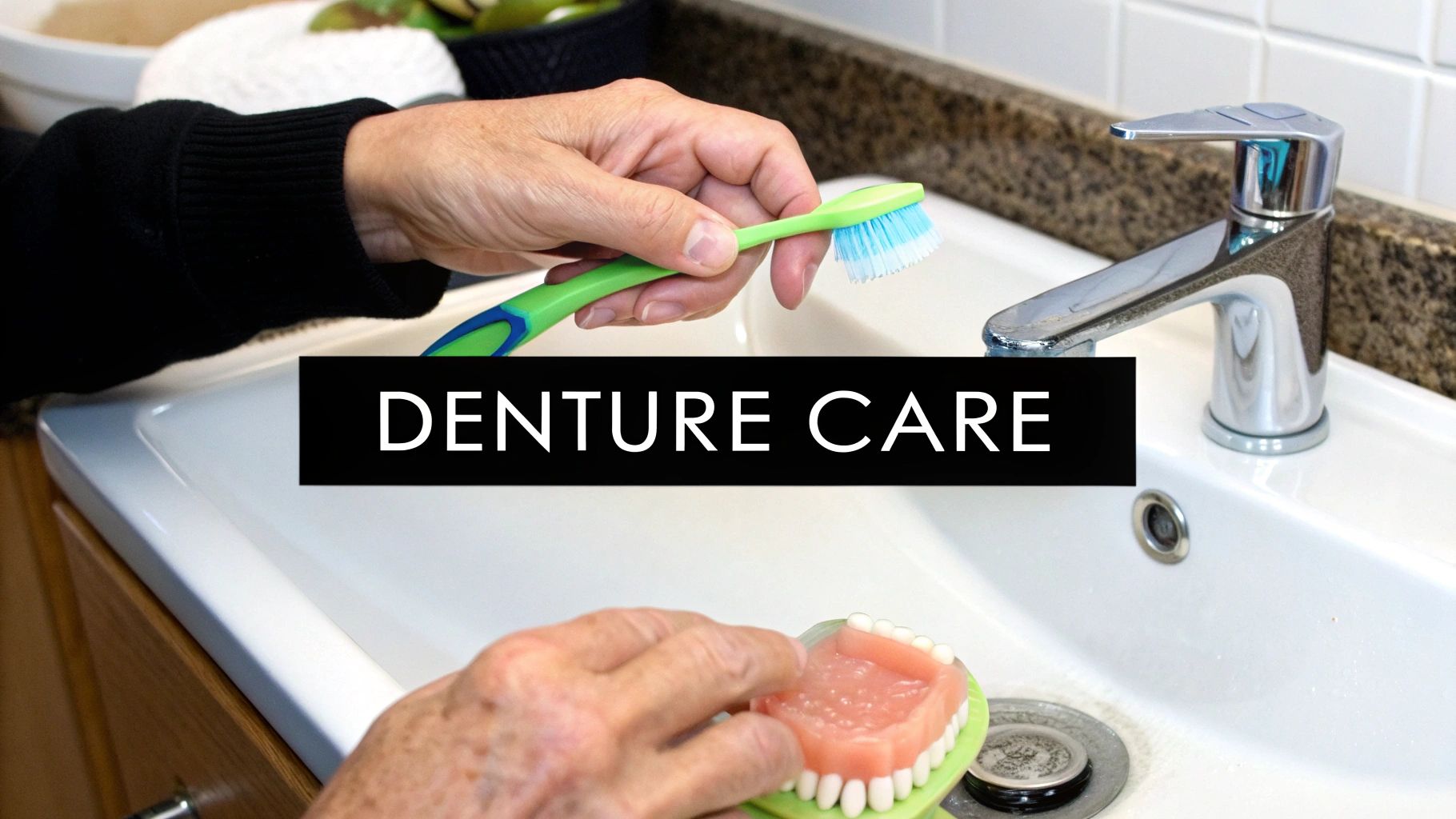
While dentures restore function and appearance, they introduce a daily care regimen that is non-negotiable for oral health and the longevity of the appliance. Unlike natural teeth, dentures require specific cleaning, handling, and storage procedures. This ongoing commitment can be a significant "con" for individuals considering the pros and cons of false teeth, as it represents a new, and sometimes burdensome, daily responsibility.
The Daily Denture Care Routine
Proper maintenance is crucial to prevent staining, bacterial buildup, and damage to the dentures themselves. An inconsistent routine can lead to oral health issues like fungal infections (oral thrush) or gum irritation.
The essential care steps include:
Daily Cleaning: Dentures must be removed and cleaned daily, just like natural teeth. This involves gently brushing them with a soft-bristled denture brush and a non-abrasive denture cleanser to remove food particles and plaque.
Proper Handling: Dentures are durable but can break if dropped. It is recommended to clean them over a folded towel or a sink filled with water to provide a cushion in case they slip.
Overnight Soaking: Most types of dentures need to be kept moist to retain their shape. Soaking them overnight in a specialized denture solution keeps them from drying out and helps disinfect them.
Oral Hygiene: It's equally important to clean your gums, tongue, and the roof of your mouth every morning before inserting your dentures to stimulate circulation and remove plaque.
Forgetting these steps can have consequences. For instance, frequent travelers often report complications with managing their soaking and cleaning solutions on the go, while others might forget to soak them overnight, risking damage. Learn more about the maintenance challenges of dentures on zdentist.com to fully understand the commitment.
Actionable Tip: Create a "denture care station" in your bathroom. Keep your denture case, specialized brush, and cleaning solution together in one visible spot. This simple organizational habit serves as a powerful visual reminder, making it easier to integrate the routine into your daily life.
Ultimately, the need for this meticulous daily regimen is a significant factor. Potential wearers must be prepared to adopt these new habits consistently to ensure their oral health and protect their investment in their new smile. This required diligence is a key consideration when weighing the overall convenience of dentures.
5. Con: Difficulty with Eating and Taste Sensation
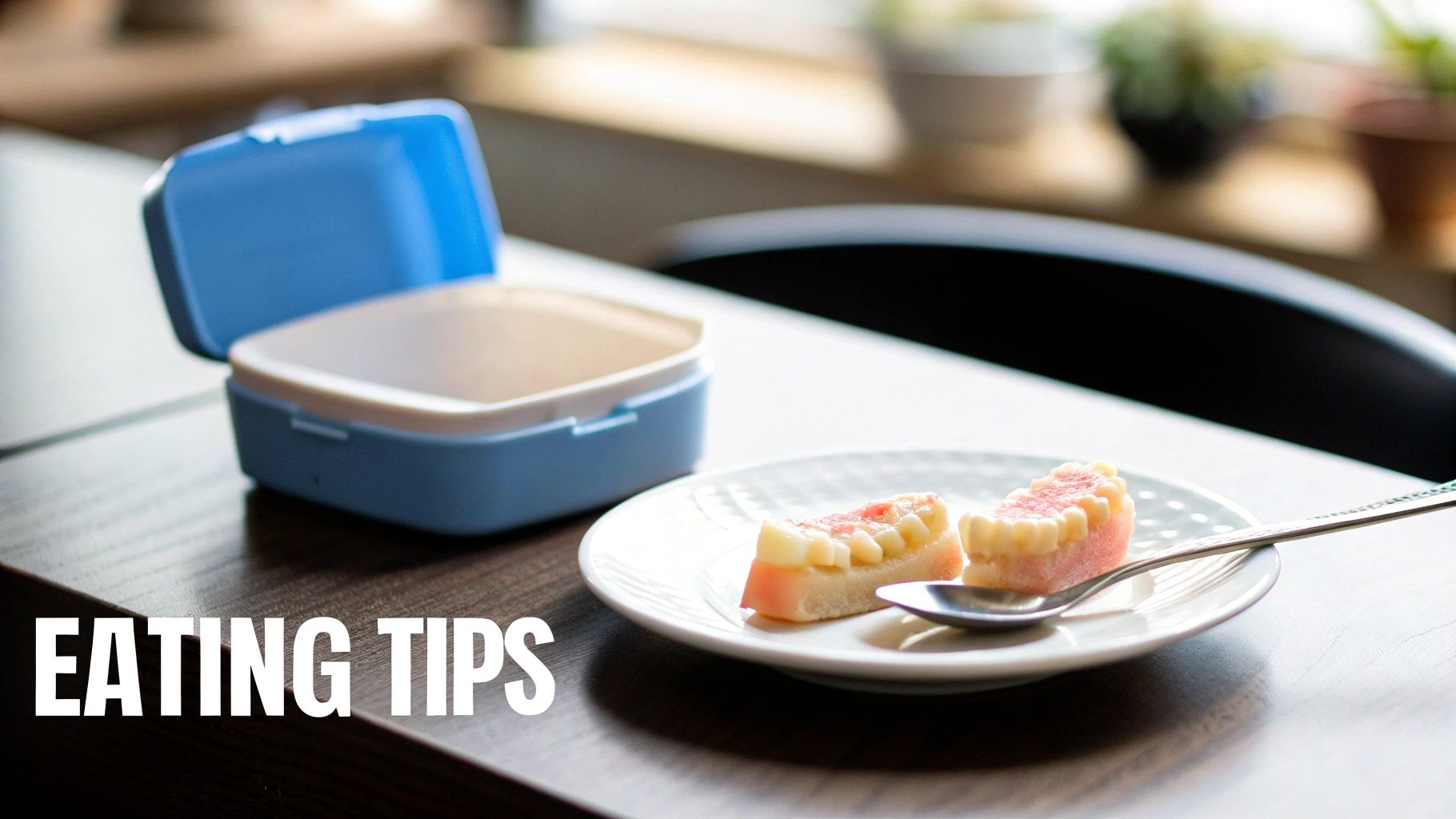
While dentures are excellent at restoring the appearance of a full set of teeth, one of the most significant challenges new wearers face is the adjustment period related to eating. This con is a critical factor when weighing the pros and cons of false teeth, as it directly impacts daily quality of life and nutrition. The transition from natural teeth to a dental prosthetic involves a substantial learning curve.
Reduced Bite Force and Palate Coverage
The functional difference between natural teeth and dentures is considerable, impacting both the mechanics of chewing and the enjoyment of food.
This functional shift involves:
Significant Bite Force Reduction: Natural teeth are anchored in the jawbone and can exert around 200 pounds of pressure. Dentures, resting on the gums, typically provide only 25-50% of that force. This makes it challenging to eat hard, tough, or chewy foods like steak, raw carrots, nuts, and certain types of bread.
Palate Coverage and Taste: A full upper denture covers the roof of the mouth (the palate), which contains thousands of taste buds and sensory receptors. This coverage can dull the sensation of taste and temperature, making it harder to fully enjoy the flavor and experience of meals.
Initial Instability: Learning to chew with dentures requires practice. At first, the prosthetic may feel unstable or shift while eating, leading to discomfort and a lack of confidence during meals.
These challenges often require a conscious adjustment to both eating habits and food choices, particularly in the initial weeks and months.
Actionable Tip: When you begin eating with new dentures, start a food diary. Log what you eat, how you prepared it (e.g., steamed, chopped small), and how easy or difficult it was to chew. This practical record will help you identify which foods and preparation methods work best for you, accelerating your adaptation process.
Ultimately, while most people adapt successfully over time, the initial difficulty with eating and the potential for reduced taste sensation are significant drawbacks. Patients must be prepared to be patient, start with soft foods, and slowly reintroduce a wider variety of textures as their comfort and skill improve. This adjustment period is a crucial aspect to consider in the overall denture experience.
6. Con: Speech and Pronunciation Issues
A significant consideration in the list of pros and cons of false teeth is the initial adjustment period that impacts speech. The introduction of a new dental appliance, whether a full or partial denture, changes the landscape of your mouth. This can temporarily alter how your tongue interacts with your teeth and the roof of your mouth, leading to difficulties with pronunciation and overall speech clarity.
The Initial Adjustment to Speaking
When you first get dentures, your brain and tongue need time to relearn how to form certain sounds. The new thickness and shape of the appliance can feel bulky, causing a temporary lisp or slurring.
Common speech challenges include:
Difficulty with Sibilant Sounds: Sounds like "s," "sh," and "z" often require precise tongue placement against the teeth and palate. Dentures can initially interfere with this, making these sounds fuzzy or indistinct.
Trouble with Consonants: Consonants like "t," "d," and "th" that involve the tongue touching the back of the front teeth may also require practice.
A Feeling of Mumbling: The initial bulkiness might cause you to mumble as you subconsciously try to hold the dentures in place while talking.
While this can be a source of frustration and self-consciousness, especially for those in public-facing roles, it is almost always temporary. Studies show that a majority of new wearers experience these changes, but with consistent practice, most people adapt and regain their normal speech patterns within a few weeks to a couple of months.
Actionable Tip: Practice reading aloud from a book or newspaper every day for 15-20 minutes. This repetitive exercise helps retrain your tongue and facial muscles to work with the new dentures. Record yourself speaking to identify specific words or sounds that are giving you trouble and focus on practicing them slowly.
Ultimately, these speech issues are a temporary "con" that can be overcome with patience and practice. If problems persist for more than a few months, it could indicate an improper fit, and a follow-up appointment with your dentist is recommended to check the denture's stability and make necessary adjustments.
7. Con: Bone Resorption and Progressive Fit Changes
A significant long-term disadvantage of traditional dentures is their inability to halt jawbone resorption. When natural teeth are lost, the jawbone no longer receives the stimulation needed to maintain its mass and density. This leads to a gradual, irreversible shrinking process that fundamentally alters the fit and function of your false teeth over time. Evaluating the pros and cons of false teeth requires understanding this critical biological response.
The bone can shrink by as much as 25% in the first year after tooth loss, with a slower but continuous reduction in the years that follow. This progressive change is why a perfectly fitted denture will inevitably become loose, leading to instability, discomfort, and difficulty chewing.
The Impact of a Changing Jaw Structure
The consequences of bone resorption extend beyond a loose denture. The continuous changes in your jaw's foundation create a domino effect of challenges that require ongoing management.
This process involves:
Decreased Stability: As the bone ridge flattens, the denture has less to hold onto, causing it to slip, click, or even fall out during normal activities like speaking or eating.
Facial Structure Alterations: The loss of jawbone height contributes to a sunken or collapsed facial appearance, often leading to more pronounced wrinkles around the mouth and a shortened distance between the nose and chin.
Need for Constant Adjustments: To counteract the loosening fit, dentures require periodic professional adjustments, relining (adding material to the base), or complete replacement every five to ten years.
This ongoing cycle of changes means that dentures are not a one-time solution but a prosthetic that requires lifelong maintenance and financial planning for future replacements. Unlike dental implants which integrate with the bone to prevent resorption, traditional dentures do not address this underlying issue. For those concerned about preserving jawbone health, you can learn more about dental implants on zdentist.com and how they offer a more permanent solution.
Actionable Tip: Budget for denture maintenance as you would any other recurring health expense. Plan for a professional reline every one to two years and a full replacement every five to ten years to ensure your dentures remain comfortable, functional, and properly fitted to your changing jaw structure.
Ultimately, while dentures restore the appearance of teeth, they cannot stop the foundational changes happening beneath the gums. This progressive bone loss is a crucial "con" to consider, as it necessitates continuous adjustments and financial investment to maintain comfort and function long-term.
8. Con: Comfort and Adjustment Difficulties
While modern dentures are more refined than ever, one of the most significant cons for new wearers is the initial period of discomfort and adjustment. The mouth is an incredibly sensitive area, and introducing a foreign prosthetic device requires time for the gums, jaw, and tongue to adapt. This acclimation phase can be a major challenge when weighing the pros and cons of false teeth.
The Reality of the Denture Adjustment Period
For many, the first few weeks with dentures involve a learning curve marked by physical discomfort. The appliance can feel bulky, and sore spots or irritation may develop where the denture base puts pressure on the gum tissue. Statistics show that this is a common experience, with up to 50% of new wearers reporting significant initial discomfort.
Common adjustment challenges include:
Sore Spots and Irritation: Direct pressure from the denture base can create painful spots on the delicate gum tissues, often requiring several follow-up appointments for adjustments.
Gag Reflex: A full upper denture covers the palate, which can trigger a gag reflex in approximately 30% of new patients. While this often subsides, it can be distressing at first.
Excess Saliva and Difficulty Speaking: The mouth may initially produce more saliva in response to the new object. Learning to speak clearly without a lisp or clicking sound also takes practice and patience.
These issues are normal but can be frustrating. The brain and muscles need time to accept the dentures as the "new normal," a process that can take anywhere from a few weeks to several months.
Actionable Tip: To soothe irritated gums, rinse your mouth several times a day with a warm salt water solution (one-half teaspoon of salt in a cup of warm water). This simple, natural remedy helps reduce inflammation and promotes faster healing of any sore spots, making the adjustment period more manageable.
Ultimately, patience is key. While some individuals adapt quickly, others may need multiple appointments with their dentist to fine-tune the fit and relieve pressure points. Understanding that this adjustment period is a temporary but necessary phase is crucial for successfully transitioning to life with dentures.
False Teeth: 8-Point Pros & Cons
Item | Implementation Complexity 🔄 | Resource Requirements ⚡ | Expected Outcomes ⭐ | Ideal Use Cases 💡 | Key Advantages 📊 |
|---|---|---|---|---|---|
Improved Appearance and Smile Confidence | Moderate 🔄 — custom design & precise fitting | Moderate ⚡ — prosthodontist time, lab work | High ⭐ — natural look; immediate cosmetic improvement | Cosmetic restoration where appearance matters (social/professional) | Restores smile, boosts self-esteem; customizable shade/shape |
Cost-Effective Tooth Replacement Solution | Low 🔄 — non‑surgical fabrication process | Low ⚡ — lower upfront cost; insurance/financing options | Moderate ⭐ — restores function/appearance affordably | Budget-constrained patients; full-mouth replacement | Most affordable option; accessible without surgery |
Non-Invasive Procedure with Minimal Recovery Time | Low 🔄 — no surgery; multiple fittings | Low-Moderate ⚡ — chair time and lab work only | High ⭐ — safe, quick return to normal activities | Elderly or medically compromised patients; those avoiding surgery | No surgical risk; suitable for patients with comorbidities |
Maintenance and Care Challenges | Moderate 🔄 — daily cleaning routine + periodic visits | Moderate ⚡ — cleaning supplies, adhesives, professional cleans | Variable ⭐ — good care preserves function; neglect causes issues | Patients committed to daily hygiene and routine follow-up | Prevents infection and prolongs denture life when maintained |
Difficulty with Eating and Taste Sensation | Low-Moderate 🔄 — adaptation and possible design tweaks | Low ⚡ — dietary changes; occasional refit or palate-free option | Moderate ⭐ — reduced bite force/taste; improves with adaptation | Patients able to modify diet or request palate-free designs | Restores ability to eat with adjustments; can encourage healthier choices |
Speech and Pronunciation Issues | Moderate 🔄 — fit affects articulation; may need therapy | Moderate ⚡ — practice time; optional speech therapy sessions | Variable ⭐ — most adapt in weeks–months | Patients with time to adapt; consider alternatives for professional voice users | Speech usually improves with fit adjustments and training |
Bone Resorption and Progressive Fit Changes | High 🔄 — ongoing monitoring, relines, replacements | Moderate-High ⚡ — repeated relines, replacement costs; implant alternatives | Low-Moderate ⭐ — progressive fit loss over years despite maintenance | Long-term edentulous patients planning maintenance or implants | Predictable progression; relines extend lifespan; implants can mitigate resorption |
Comfort and Adjustment Difficulties | Moderate 🔄 — initial sore spots; multiple adjustments | Moderate ⚡ — adjustment visits, adhesive/relief products | Variable ⭐ — most comfortable by 2–3 months; some persistent issues | Patients willing to follow staged wear and seek prompt adjustments | Many problems resolvable with relines, adhesives, and relief materials |
Making Your Decision: Your Next Steps Toward a Healthy Smile
Choosing the right path to restore your smile is one of the most important healthcare decisions you will make. It directly influences your daily comfort, your nutritional health, and the confidence you project to the world. Throughout this guide, we've navigated the complex landscape of false teeth, breaking down the specific advantages and disadvantages to give you a clear, balanced perspective. The journey from considering tooth replacement to enjoying a fully functional smile is a personal one, and the "right" choice is never one-size-fits-all.
The pros and cons of false teeth highlight a fundamental trade-off. On one hand, dentures offer an accessible, non-invasive, and cost-effective way to immediately restore aesthetics and basic function. They can give you your smile back quickly without the surgical procedures or extended healing times associated with alternatives. On the other hand, they require a commitment to meticulous daily maintenance and an adjustment period that can affect speech, eating, and overall comfort. The potential for long-term bone resorption and the need for periodic relining or replacement are critical factors to consider in your decision.
Key Takeaways: From Information to Action
To move forward with confidence, it's essential to translate this information into a personalized action plan. Reflect on the points we've covered and consider how they align with your specific circumstances.
Here are the most critical takeaways to guide your next steps:
Lifestyle Compatibility is Key: Consider your daily life. Are you an adventurous eater? Do you speak publicly for your job? While traditional dentures can be adapted to many lifestyles, their limitations in stability and chewing efficiency might be a significant drawback for some. Be honest about what you need your teeth to do for you every day.
Long-Term Health vs. Short-Term Cost: The lower initial cost of traditional dentures is a major advantage. However, you must weigh this against the potential long-term costs of relines, replacements, and the physiological impact of bone resorption. Implant-supported options, while more expensive upfront, address the bone loss issue and offer a more permanent, stable solution. This isn’t just a financial decision; it’s an investment in your long-term oral health.
The Adjustment Period is Real: Successfully adapting to dentures requires patience and resilience. The initial phase of learning to speak clearly and eat comfortably is a universal part of the experience. Understanding and preparing for this adjustment period can make the transition smoother and more successful.
Your Personalized Path Forward: A Practical Checklist
Your journey doesn't end with reading an article; it begins with a conversation. The most valuable step you can take now is to consult with a dental professional who can apply this general knowledge to your unique oral anatomy and health profile.
Schedule a Comprehensive Dental Evaluation: This is non-negotiable. An exam with full dental imaging will reveal the health of your gums, the density of your jawbone, and the status of any remaining teeth. This clinical data is the foundation for any sound recommendation.
Prepare a List of Questions: Before your appointment, write down everything you're worried or curious about. No question is too small. Ask about specific materials, the expected timeline, detailed cost breakdowns (including future maintenance), and what you can realistically expect on day one, week one, and year one.
Discuss All Alternatives: Ensure your dentist explains every viable option, not just dentures. Ask them to compare the pros and cons of traditional dentures, partials, implant-supported dentures, dental bridges, and single-tooth implants for your specific case.
Ultimately, weighing the pros and cons of false teeth is about empowering yourself with knowledge. This understanding allows you to engage in a meaningful dialogue with your dentist, ensuring the final decision is a collaborative one that you feel confident and secure in. Your new smile should not only look great but also support a healthy, vibrant, and fulfilling life.
Are you ready to explore your options with a team that listens and provides personalized, actionable advice? The experts at Beautiful Dentistry in Tempe specialize in helping patients navigate the pros and cons of false teeth to find the perfect solution for their needs and budget. Schedule your no-obligation consultation today to get a clear, personalized roadmap to your best smile.


Ball88 hôm bữa mình lướt thử vì thấy mọi người nhắc, kiểu vào xem giao diện thôi chứ không có ngồi tìm hiểu sâu. Ấn tượng đầu là trang nhìn khá sáng sủa, khoảng cách giữa các phần vừa đủ nên không bị rối mắt. Mình thích nhất là cách họ chia nội dung theo từng khối rõ ràng, nhìn lướt qua là biết chỗ nào là thông tin chính, chỗ nào là phần phụ. Menu cũng đặt ngay chỗ dễ thấy nên bấm qua lại vài mục khá nhanh, không phải mò lâu. Nói chung cảm giác dùng như kiểu “đỡ mệt”, hợp với ai chỉ muốn xem nhanh rồi thoát. Mấy khung nội dung xếp theo cột gọn…
hitclub hôm bữa mình thấy mấy đứa bạn nói qua nên vào thử cho biết, kiểu xem giao diện có rối không thôi chứ mình cũng không ngồi chơi lâu. Trang nhìn khá dễ thở, cuộn xuống là từng khối nội dung tách bạch nên đọc lướt vẫn nắm được ý. Mình để ý họ có đoạn nói về kiểm định RNG, ghi rõ chứng chỉ iTech Labs với GLI nên cảm giác thông tin không bị giấu ở đâu đó. Với lại phần bảo mật cũng trình bày gọn, có nhắc SSL 256-bit kèm OTP hai lớp, nhìn như một box riêng nên khỏi phải mò trong mớ chữ. Nói chung mình thích kiểu họ đặt mấy ô thông…
https://tylebong88.com/ mình ghé thử cho biết vì thấy mọi người hay nhắc, chủ yếu xem trang bố cục ra sao thôi. Vừa vào là thấy phần tiêu đề “Chào Mừng Đến WEbsite Của Chúng Tôi” đặt khá dễ nhìn, nên lướt một vòng không bị rối. Mình cũng để ý mấy ô nội dung kiểu “Review / Visit” xếp gọn gàng, nhìn qua là hiểu đây là chỗ tổng hợp đánh giá với thông tin khuyến mãi cơ bản. Không phải kiểu phải bấm sâu mới thấy nội dung chính, nên hợp với ai chỉ muốn xem nhanh. Mà màu sắc với khoảng trắng cũng ổn, đọc đỡ mỏi mắt. Nói chung mình thấy họ chia nội dung theo từng…