

How to Stop Gums Bleeding: An Actionable Guide
- Caterina Rutter
- Dec 17, 2025
- 12 min read

Seeing pink in the sink after brushing can be alarming, but there's no need to panic. Knowing how to stop gums bleeding involves immediate, practical first-aid steps. Your goal is to apply gentle pressure to stop the bleeding, use a cold compress to constrict blood vessels, and rinse with a saltwater solution to clean and soothe the area.
What to Do the Moment You See Blood

Spotting blood after brushing or flossing is a signal from your body that your gums need attention. Instead of worrying, take these calm, immediate actions. How you respond in the first few moments can soothe the irritation and get the bleeding under control quickly.
Step 1: Apply Gentle, Direct Pressure
Before rinsing, your first action should be to apply direct pressure. Grab a clean piece of sterile gauze—avoid tissues or paper towels, which can shred and leave fibers behind.
Fold the gauze into a small pad and press it directly onto the bleeding area of your gum. Maintain firm, steady pressure for 10-15 minutes. This simple compression helps your body form a clot and stop the bleeding naturally.
Step 2: Use a Cold Compress
While applying pressure with gauze, use a cold compress on the outside of your mouth. An ice pack, a bag of frozen vegetables wrapped in a towel, or ice cubes in a sealed bag will all work.
The cold helps constrict the small blood vessels in your gums, which reduces blood flow to the area. This is a classic and effective first-aid technique for minimizing bleeding and swelling.
Pro Tip: Never apply ice directly to your gums, as the extreme cold can damage the delicate tissue. Always use a cloth or towel as a barrier between the ice pack and your skin.
Step 3: Rinse with a Soothing Saltwater Solution
Once the bleeding has slowed or stopped, follow up with a warm saltwater rinse. Salt acts as a natural antiseptic that cleans the area and reduces inflammation without the sting of an alcohol-based mouthwash.
Mix half a teaspoon of salt into an 8-ounce glass of warm water. Stir until dissolved, then gently swish the solution in your mouth for 30 seconds before spitting it out. Repeat this rinse two to three times a day to keep the area clean and promote healing. For more immediate tips, check out these three ways to stop your gums from bleeding.
These first-aid actions are effective for minor, occasional bleeding. However, if your gums bleed frequently or heavily, it's a sign that you need to see a dentist. It's important to know when you're dealing with issues that might be dental emergencies in Tempe requiring expert care.
Decoding Why Your Gums Are Bleeding
Think of bleeding gums as an early warning system. That pink in the sink is a clear signal that something is wrong. Identifying the "why" is the first step toward finding a real, long-term solution instead of just a temporary fix.
Most often, the cause is gingivitis, the earliest stage of gum disease. It begins with plaque—a sticky film of bacteria constantly forming on your teeth. If not removed, plaque hardens into tartar, which irritates your gums and causes inflammation. Your body responds by increasing blood flow to the area, making the tissue red, swollen, and likely to bleed from gentle pressure.
Gingivitis Versus Periodontitis
Understanding the difference between early-stage gingivitis and the more destructive periodontitis is critical. Both involve gum inflammation, but their long-term consequences are vastly different.
Gingivitis: This stage is completely reversible. The bleeding indicates surface-level irritation. With improved home care and a professional cleaning, your gums can return to full health with no permanent damage.
Periodontitis: This is a more severe infection. If gingivitis is left untreated, the inflammation moves deeper, destroying the bone and ligaments that hold your teeth in place. Bleeding at this stage signals a destructive process that can lead to gum recession, loose teeth, and eventual tooth loss.
Recognizing this progression is vital. Bleeding gums are the most common sign of periodontal disease, an issue that affected an estimated 1.07 billion people globally in 2021. Addressing bleeding gums immediately is your best defense against the advancement of this common condition.
Beyond Plaque Buildup: Other Common Causes
While poor oral hygiene is the leading culprit, it’s not the only reason your gums might bleed. Several other factors can increase gum sensitivity, and identifying them is key to effective treatment.
Hormonal FluctuationsHormonal changes can alter how your body responds to plaque. This is why "pregnancy gingivitis" is common—elevated hormone levels make gums extra sensitive. Similar flare-ups can occur during puberty, monthly menstrual cycles, or menopause.
Medications You Are TakingCertain medications can directly affect your gums. Blood thinners (anticoagulants), for example, reduce clotting, which can turn minor irritation into more significant bleeding. Other drugs can cause dry mouth, reducing saliva that naturally washes away bacteria.
Key Takeaway: Always provide your dentist with a complete list of your medications, including over-the-counter drugs and supplements. This information is crucial for developing a safe and effective treatment plan.
Systemic Health ConditionsYour mouth is a window to your overall health. Conditions like diabetes can impair your body's ability to fight infection, including in your gums. This creates a dangerous cycle: uncontrolled blood sugar can worsen gum disease, while active gum disease can make it harder to manage blood sugar. If you have diabetes, protecting your gums is essential. You can explore the critical link between diabetes and the risk of gum disease to learn more.
Nutritional DeficienciesYour gums need proper nutrients to stay healthy. A lack of Vitamin C and Vitamin K can make them more vulnerable. Vitamin C is essential for producing collagen, the protein that keeps gum tissue strong. Vitamin K is vital for blood clotting. A diet lacking these nutrients can lead to weak, bleed-prone gums. Stay informed by learning the 7 key signs of gum disease to watch for so you can act quickly.
Building Your At-Home Gum Health Toolkit
To stop your gums from bleeding for good, you must shift from reacting to the problem to actively preventing it. This requires a consistent at-home routine focused on supporting gum health. The key isn't to brush harder; it's to use the right tools and techniques with intention every single day.
With a few simple adjustments, you can create a daily practice that actively fights inflammation and keeps your gums healthy and resilient.
Brushing Smarter, Not Harder
Proper brushing technique is the foundation of oral health. Aggressively scrubbing your teeth can damage your gums, causing recession and more bleeding.
Your goal is to gently but thoroughly disrupt plaque. Always use a toothbrush with soft bristles. When you brush, hold the brush at a 45-degree angle to your gums and use short, gentle, circular strokes. This angle allows the bristles to clean your teeth and sweep away plaque from just below the gum line, where inflammation often starts.
A Personal Tip: Think of brushing as polishing a delicate surface, not scrubbing a dirty pot. Be thorough but gentle. If your toothbrush bristles look frayed and flat after only a few weeks, you are pressing too hard.
Mastering the Space Between Your Teeth
Brushing alone only cleans about 60% of your tooth surfaces. The other 40% is between your teeth, a prime spot for plaque to hide. To stop gum bleeding, you must clean these spaces effectively.
Choose the tool you are most likely to use correctly and consistently.
Traditional Floss: When used properly, string floss is excellent for scraping plaque from tight spaces and below the gum line. It takes practice, but its effectiveness is hard to beat. For a technique refresher, review our guide on the correct way to floss for better oral health.
Water Flossers: These devices use a targeted stream of pulsating water to flush out plaque and debris. They are an excellent option for people with braces, implants, or bridges that make traditional flossing difficult.
Interdental Brushes: These tiny, cone-shaped brushes are designed to fit into the spaces between your teeth. They are particularly useful if you have larger gaps or some gum recession.
Of course, home care is just one piece of the puzzle. Factors like plaque buildup, hormonal changes, and even certain medications can all contribute to gum inflammation.
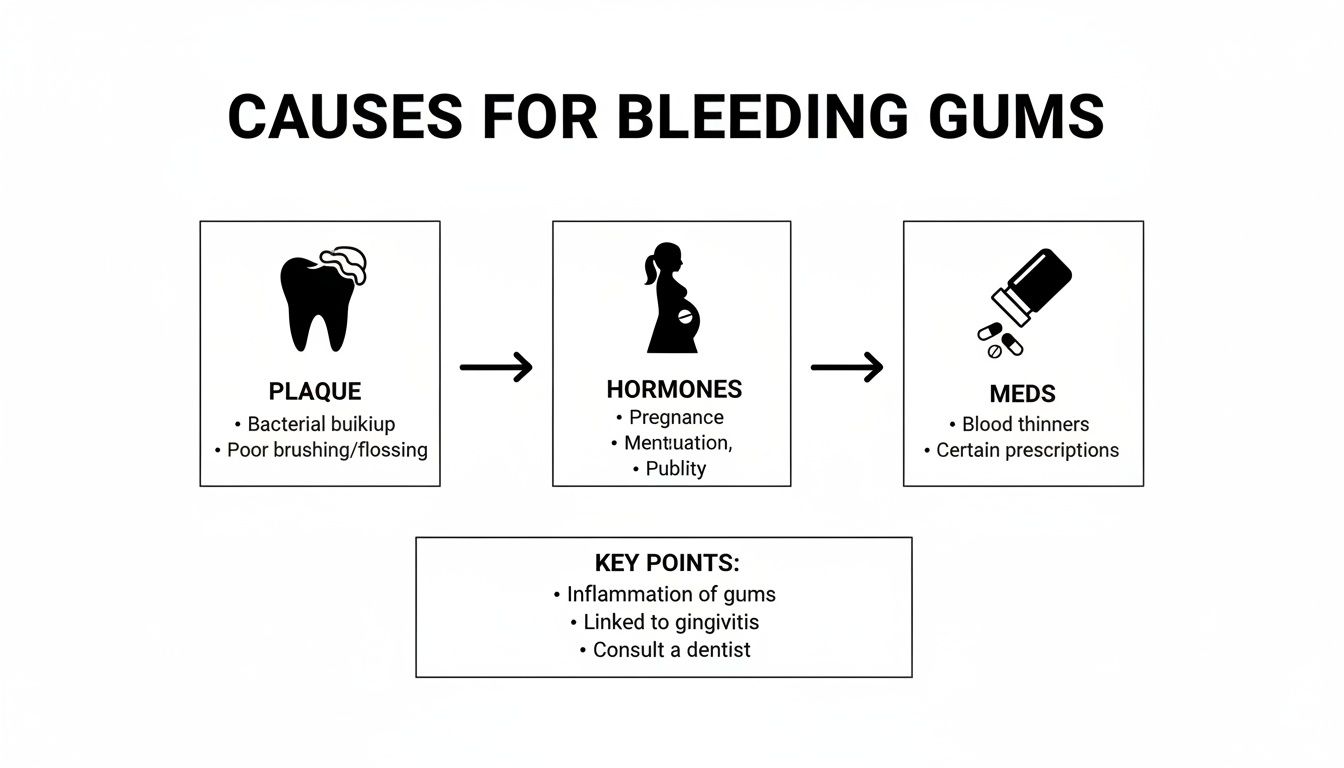
This visual highlights how various triggers can affect your gums, reinforcing the need for a consistent and thorough daily routine to manage these risks.
The table below outlines these core home care techniques in simple, actionable steps.
Actionable Home Care Techniques for Healthy Gums
Technique | Benefit for Bleeding Gums | Pro Tip |
|---|---|---|
Soft-Bristled Brushing | Gently removes plaque at the gum line without causing irritation or further damage to sensitive tissue. | Hold your brush at a 45-degree angle to your gums and use short, circular motions. Let the bristles do the work, not pressure. |
Daily Flossing | Cleans the 40% of tooth surfaces that brushing misses, removing the primary source of gum inflammation. | Curve the floss in a "C" shape around each tooth and slide it gently beneath the gum line. Use a fresh section for each tooth. |
Water Flossing | Flushes out bacteria and food particles from deep pockets and hard-to-reach areas, reducing inflammation. | Start on a low-pressure setting and aim the water stream at the gum line. Lean over the sink to avoid a mess! |
Antiseptic Mouthwash | Reduces the overall bacterial load in your mouth, giving your gums a chance to heal. | Look for an alcohol-free rinse to avoid drying out your mouth. Swish for 30-60 seconds after brushing and flossing. |
Focusing on these simple but powerful habits can make a world of difference in a surprisingly short amount of time.
Fueling Your Gums From the Inside Out
Your diet plays a critical role in gum health. A diet rich in the right vitamins and minerals can strengthen your gum tissue from within, making it more resilient to the bacteria that cause inflammation.
Consider your diet an essential tool in your gum health arsenal. Vitamin C is a key player, as it's vital for producing the collagen that keeps your gums firm. Without enough Vitamin C, your gum tissue can weaken and become more prone to bleeding.
Boost your intake with foods like:
Citrus fruits (oranges, grapefruits)
Bell peppers
Strawberries
Broccoli
Leafy greens like kale and spinach
Vitamin K is also important for proper blood clotting. While a deficiency is uncommon, ensuring you get enough helps your body stop minor bleeding quickly. You can find it in leafy green vegetables.
The best part is that these changes deliver results. Studies show that combining consistent home care with professional guidance can lead to a 50–70% reduction in gum bleeding within just 2–3 weeks. This data proves that your daily efforts truly pay off.
When You Need to See a Dentist
While an excellent at-home routine is your best defense, some situations require professional intervention. Your dentist is your partner in oral health, and knowing when to schedule an appointment is as crucial as brushing and flossing correctly. Ignoring persistent symptoms can turn a reversible issue into a complex and expensive problem.
Bleeding That Persists or Worsens
Seeing some pink on your toothbrush for a day or two after starting a new flossing routine can be normal. However, if your gums are still bleeding for more than a week despite consistent, gentle care, it's a clear sign you need to see a dentist.
Persistent bleeding often indicates that hardened plaque, or tartar, has built up below the gumline where your toothbrush and floss can't reach. Only a professional cleaning can safely remove this buildup and eliminate the source of the irritation.
Visible Changes in Your Gums
Healthy gums are firm, pale pink, and fit snugly around your teeth. Take a close look at your gums in the mirror. If you notice any of the following changes, schedule an appointment:
Puffy or Swollen Gums: If your gums look swollen or puffy instead of streamlined, it's a classic sign of inflammation.
Bright Red or Purplish Color: A change from healthy pink to a vibrant red or deep purple indicates increased blood flow as your body fights an infection.
Receding Gums: If your teeth appear longer than they used to, your gums may be receding. This is a significant warning sign of advancing gum disease.
Don’t wait for the bleeding to get worse. Visible changes in the color, texture, or shape of your gums are important indicators that you need a professional evaluation.
Other Critical Warning Signs
Beyond bleeding and visual changes, other symptoms can signal that gum disease is progressing from reversible gingivitis to destructive periodontitis.
Persistent Bad BreathBad breath (halitosis) that doesn't go away after brushing, flossing, and using mouthwash may be caused by bacteria thriving in deep gum pockets. This chronic odor often points to an underlying infection.
Loose or Shifting TeethThis is one of the most serious warning signs. If any of your teeth feel loose or if your bite feels different, it suggests that the bone and ligaments supporting them are damaged. This requires immediate dental intervention to save the teeth. At this stage, knowing how to stop gums bleeding becomes a matter of urgent professional treatment, not just home care.
Professional Treatments That Stop Bleeding for Good

If your gums are still bleeding despite your best efforts at home, it's time for professional treatment. These dental procedures are designed to get to the root of the problem in ways your toothbrush can't, removing irritants and giving your gums a chance to heal completely.
Our goal is to eliminate the cause of the inflammation, not just mask the symptoms. Here are the two most common and effective treatments we use to resolve bleeding gums.
Your First Line of Defense: A Professional Cleaning
Even with perfect at-home care, a professional cleaning (or prophylaxis) is essential. When plaque is missed, it hardens into tartar (calculus), a substance that cannot be removed by brushing or flossing.
During a professional cleaning, a hygienist uses specialized tools to remove all tartar from your teeth, especially along the gum line where it causes irritation. This single step removes the source of the inflammation, allowing your gums to begin healing. For many people with early-stage gingivitis, a professional cleaning combined with improved home care is all that's needed to stop the bleeding.
Think of tartar as a tiny splinter stuck in your gum. As long as it's there, the area will remain sore, red, and prone to bleeding. A professional cleaning is how we remove that splinter so the tissue can finally heal.
Scaling and Root Planing for Deeper Issues
When an infection has moved below the gum line, creating deep pockets between the teeth and gums, a standard cleaning isn't enough. In these cases, a procedure called scaling and root planing is necessary. Often called a "deep cleaning," this is our most effective non-surgical treatment for periodontitis.
To ensure your comfort, we typically use a local anesthetic for this two-step process:
Scaling: Your dentist or hygienist will meticulously clean below the gum line, removing the plaque and tartar that have accumulated on the roots of your teeth.
Root Planing: After the roots are clean, we smooth their surfaces. This crucial step eliminates the rough spots where bacteria collect, making it harder for new plaque to attach. A smooth surface also helps your gums reattach firmly to your teeth, which is essential for healing.
A routine cleaning addresses buildup above the gum line, while a deep cleaning targets the infection below it. Scaling and root planing is a therapeutic treatment designed to stop gum disease in its tracks and is one of the most reliable ways how to stop gums bleeding when the problem has become more serious.
Your Long-Term Plan for Healthy Gums
Stopping your gums from bleeding is the immediate goal, but keeping them healthy for life is the ultimate success. This requires a sustainable strategy that combines your daily habits with your lifestyle choices and a strong partnership with your dental team.
This is your roadmap to a future free from bleeding gums. It's about being proactive and understanding that your oral health is directly connected to your overall well-being.
Make Dental Check-Ups Non-Negotiable
Committing to regular dental check-ups and cleanings is the single most effective action you can take for long-term gum health. These appointments, typically every six months, are your best defense against the silent progression of gum disease.
During these visits, your hygienist removes the hardened tartar that you can't eliminate at home. More importantly, your dentist can spot the earliest signs of trouble—like inflammation or developing gum pockets—long before they become noticeable to you.
A Dentist's Perspective: A dental check-up is like a tune-up for your car—you do it to prevent a breakdown, not just fix one. We can catch and resolve a small issue easily, saving you from a much bigger, more complex problem later.
Manage the Big Picture Lifestyle Factors
Your mouth is deeply connected to your overall health. Certain lifestyle choices and health conditions can dramatically increase your risk for gum inflammation and bleeding.
Smoking and diabetes are two of the biggest risk factors. Tobacco use not only makes you more susceptible to periodontitis but also masks early warning signs like bleeding while actively damaging gum tissue. Similarly, poorly managed diabetes often leads to higher rates of gum inflammation. To understand this connection better, you can learn more about oral health findings from the World Health Organization.
If You Smoke, Make a Plan to Quit: Smoking constricts blood vessels in your gums, impairing their ability to heal and fight infection. Quitting is one of the best things you can do for both your oral and overall health.
Keep Diabetes Under Control: Work closely with your doctor to maintain stable blood sugar levels. Well-managed blood sugar significantly reduces your risk for all types of infections, including gum disease.
Fuel Your Gums with a Nutrient-Rich Diet
A healthy diet can strengthen your gums from the inside out. Focus on foods packed with vitamins and minerals that fight inflammation and support tissue repair.
Here are a few powerhouse nutrients to add to your grocery list:
Vitamin C: Essential for producing collagen, which gives your gums their firm structure. Find it in citrus fruits, bell peppers, broccoli, and strawberries.
Vitamin K: Crucial for blood clotting. Leafy greens like spinach and kale are your best sources.
Crunchy Fruits and Vegetables: Foods like apples, carrots, and celery act like natural toothbrushes, scrubbing away plaque as you chew and stimulating saliva production to wash away bacteria.
By combining consistent professional care with smart lifestyle choices, you're not just learning how to stop gums bleeding—you're building a foundation for a lifetime of excellent oral health.
If you're in the Tempe area and ready to create a personalized plan for your gum health, the team at Beautiful Dentistry is here to help. We combine advanced technology with compassionate, patient-focused care to help you achieve a healthy, confident smile that lasts. Schedule your comprehensive exam today and take the first step towards a bleed-free future by visiting us at https://zdentist.com.


đánh đề online là cụm mình gặp suốt nên tò mò bấm vào mấy site như lodeonline.gb.net xem họ thiết kế ra sao. Mình không quan tâm mẹo chơi hay chọn số, chủ yếu soi giao diện: bảng kết quả đặt ở đâu, lịch sử các kỳ hiển thị thế nào, có phần thống kê/tổng hợp dễ nhìn không. Mình thích kiểu chia khối rõ ràng, số to, màu sắc vừa phải, kéo xuống là thấy ngay các mục cần xem. Có tab hoặc bộ lọc gọn gàng thì tra lại nhanh hơn hẳn. Nói chung bố cục mạch lạc là đủ dùng.
kèo nhà cái hôm nay mình thấy xuất hiện dày đặc trên mấy diễn đàn bóng đá nên cũng ghé thử vài trang tổng hợp để xem họ trình bày ra sao. Mình không rành soi từng mức tỷ lệ, chủ yếu để ý bố cục: mỗi trận tách riêng, cột kèo nhìn rõ, cập nhật nhanh là ổn. Thấy tiện nhất là khi họ chia rõ kèo châu Á, châu Âu và tài xỉu, đọc lướt cái nắm được ngay. Một số trận còn có kèo chấp để cân bằng hai đội, nhìn sơ cũng hiểu đội nào bị “đè” hơn trước giờ bóng lăn.
tai xiu mình thấy xuất hiện kha khá trên mấy diễn đàn khi mọi người nói về trò dựa vào kết quả xúc xắc nên cũng ghé thử vài trang để xem họ trình bày thế nào. Mình không tập trung vào chuyện đặt dự đoán hay chơi từng ván, mà xem cách họ sắp xếp bảng kết quả, lịch sử các phiên và phần thống kê. Nói chung nếu giao diện gọn, chữ dễ đọc, các mục tách bạch thì nhìn qua là hiểu ngay đang ở phần nào. Với người mới tìm hiểu như mình, chỉ cần hiển thị rõ ràng vậy là đủ nắm được khái quát rồi.
Tôi thường ưu tiên những bài giới thiệu nền tảng giải trí được viết ngắn gọn, rõ ràng để có thể đọc nhanh trên điện thoại mà vẫn nắm đủ thông tin chính. Phần nhắc đến KP88 được đặt ở giữa bài nên mạch nội dung khá tự nhiên, không tạo cảm giác quảng bá quá sớm. Bài viết giới thiệu nền tảng theo hướng dễ hiểu, thao tác ổn định, cùng nhiều danh mục quen thuộc như slot, game bài, mini game để người đọc dễ hình dung. Cách trình bày tập trung vào trải nghiệm tổng thể, diễn đạt vừa phải, đủ thông tin nhưng không quá dài dòng, giúp người xem cảm thấy thoải mái khi theo dõi.
Hôm trước mình thấy mọi người nhắc đến TR88 trong một cuộc trao đổi dài và cũng bị cuốn hút, nên quyết định mở trang đó ra xem thử. Mình chỉ lướt qua một lúc, không sâu vào lắm, nhưng cảm nhận được bố cục của nó khá hợp lý và dễ đọc. Sau khi xem qua, mình lại quay về để theo dõi thêm các ý kiến khác.