

How to Fix a Chipped Tooth: An Actionable Guide

It often starts with a sickening crunch—biting into an olive and finding the pit, or an accidental elbow during a game. The first thing you feel is that sharp, alien edge where a smooth tooth used to be. A chipped tooth can be alarming, but what you do in the first few minutes can directly influence how simple the final repair will be.
What To Do Right After You Chip a Tooth
Panic is a natural reaction, but clear, decisive action is your best tool. Your immediate goals are to manage pain, prevent further damage, and prepare for a dental visit. Acting quickly isn't just about comfort; it's about setting the stage for a successful restoration.
Take Immediate Control of the Situation
First, find any broken pieces of the tooth. If you locate the fragment, do not scrub it. Gently rinse it with milk or water and store it in a small container of milk or your own saliva. This helps keep the cells on the fragment alive, which may allow the dentist to reattach it. Avoid storing it in tap water, as this can damage the cells.
Next, rinse your mouth with a simple solution of a half-teaspoon of salt in a glass of warm water. Swish gently to clean the area, reduce the risk of infection, and soothe the surrounding gums.
Your Immediate Next Step: Call your dentist. I can't stress this enough. Even a tiny chip can hide deeper, invisible cracks. A professional evaluation is the only way to understand the full extent of the damage and determine the correct treatment.
To help you act decisively in a stressful moment, use this checklist.
Chipped Tooth Immediate Action Checklist
This table provides a step-by-step action plan to minimize damage and discomfort right after chipping a tooth.
Action Item | What to Do |
|---|---|
Call Your Dentist | Immediately schedule an appointment. This is essential to rule out hidden damage and plan the right repair. |
Find & Save Tooth Pieces | Carefully collect any fragments. Your dentist may be able to reattach the original piece. |
Store Fragment in Milk/Saliva | Place the fragment in a small container of milk or saliva to preserve its living cells. |
Rinse Mouth with Salt Water | Mix 1/2 tsp of salt in warm water and swish gently to clean the area and reduce infection risk. |
Apply a Cold Compress | Hold a cold pack on your cheek for 15-minute intervals to reduce swelling and numb pain. |
Following these steps provides the best possible foundation for a successful and straightforward dental repair.
Manage Pain and Protect the Tooth
If your cheek or lip begins to swell, apply a cold compress or an ice pack to the outside of your face over the injured area for 15 minutes at a time. This constricts blood vessels, reducing swelling and providing numbing relief. You can also take an over-the-counter pain reliever according to the package directions.
Until you see your dentist, you must protect the damaged tooth. Eat only soft foods like yogurt, soup, or mashed potatoes, and avoid chewing on the injured side of your mouth. Steer clear of hard foods (nuts, ice), sticky candies (caramel), and extreme temperatures, as an exposed nerve will be highly sensitive.
If the broken edge feels jagged and irritates your tongue or cheek, cover it. Press a small piece of sugarless gum or dental wax (available at any pharmacy) over the sharp spot to create a smooth, protective buffer.
Is a Chipped Tooth a Dental Emergency?
The jarring moment you feel a sharp, new edge on your tooth can send a jolt of panic through you. But before you rush to an emergency dentist, take a breath. Not every chip requires immediate, after-hours care. The key is to calmly assess your symptoms.
When to Seek Urgent Dental Care
Certain signs indicate a serious injury that requires immediate professional attention. If you experience any of the following, call your dentist for an emergency appointment. Delaying care could lead to infection, nerve damage, or even tooth loss.
Seek urgent care for these critical warning signs:
Severe, persistent pain: A deep, throbbing ache that doesn't subside is a major red flag, often indicating the tooth's nerve is exposed or damaged.
Uncontrolled bleeding: While a small amount of blood is normal initially, continuous bleeding points to a more serious injury.
A large piece of the tooth is missing: If a significant chunk has broken off, the sensitive inner pulp is likely exposed and vulnerable to bacteria.
Signs of infection: Look for swelling in the gums, a pimple-like abscess on the gumline near the tooth, or a foul taste in your mouth.
If you’re dealing with a true dental emergency, understanding different patient access solutions in healthcare can help you navigate the system and get the care you need more quickly.
This infographic provides a visual guide to the essential first-aid steps for a chipped tooth.
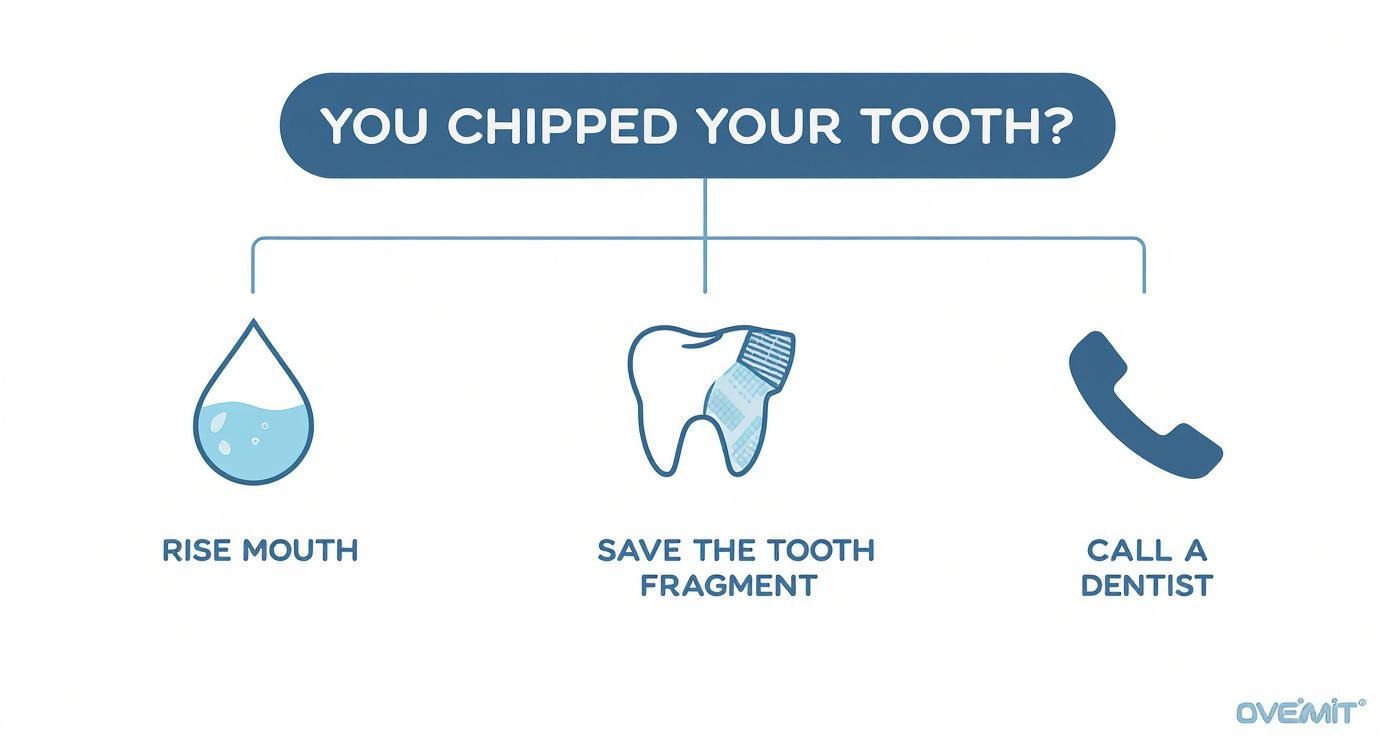
The core actions are simple: rinse, save the fragment, and call a professional. These steps are crucial regardless of the chip's size.
Assessing Non-Emergency Chips
What if the chip is small and doesn't hurt? If there is no pain and the edge isn't sharp, you likely don't have an emergency. However, this does not mean you can ignore it. You still must book a regular dental appointment for evaluation and repair.
Even minor damage creates rough surfaces where plaque can accumulate, leading to decay. The cost of repair varies based on the damage. A simple cosmetic bonding procedure might cost $100 to $420, whereas a complex case requiring a crown could exceed $1000.
Actionable Insight: Use pain as your guide. Intense pain signals an emergency. A painless chip can wait for a scheduled appointment. Remember, a chipped tooth will never heal on its own and always requires professional repair.
Professional Repair Options for Chipped Teeth
Once you're in the dentist's chair, the goal is to restore your tooth's appearance and protect its health. The right repair method depends on the chip's size, its location, and whether the inner pulp is exposed. Your dentist will evaluate the damage and recommend the best options for you.
Dental Bonding for Smaller Chips
Dental bonding is the primary solution for small, cosmetic chips, especially on front teeth. The procedure is typically completed in a single visit, often without anesthesia.
Here is the process:
The dentist lightly etches the tooth's surface to help the bonding material adhere.
A tooth-colored composite resin—a putty-like material—is applied.
The dentist skillfully sculpts the resin to match your tooth's natural shape.
A special curing light hardens the resin, locking it into place.
A final polish makes the repair blend seamlessly with your natural tooth.
Actionable Insight: Dental bonding provides immediate cosmetic results, but the resin is not as strong as natural enamel. To maintain the repair, avoid biting directly into hard foods with the bonded tooth.
Veneers for a Flawless Finish
If a front tooth is chipped and you also have other cosmetic concerns like stains or an uneven shape, a dental veneer is an excellent option. A veneer is a thin, custom-made porcelain shell that covers the entire front surface of the tooth.
The process requires two appointments. At the first visit, the dentist removes a thin layer of enamel to make room for the veneer and takes an impression. This impression is sent to a lab where your custom veneer is created. At the second visit, the veneer is fitted and bonded to your tooth, providing a durable, stain-resistant, and aesthetically pleasing restoration.
Dental Crowns for Serious Damage
When a large piece of a tooth breaks off, or the chip compromises the tooth's structural integrity, a dental crown is the recommended solution. A crown (or cap) covers the entire tooth, restoring its original shape, size, and strength. This is an especially effective repair for molars, which endure significant chewing forces.
Modern crowns are made from porcelain, ceramic, or other materials that mimic the look and feel of natural teeth. Crowns are a reliable, time-tested technique for repairing significant damage. Studies on similar injuries, like deep cracks, show that proper restoration results in impressive survival rates, often between 82% and 96%.
To get the most out of this investment, read our guide on how long dental crowns last provides an actionable guide to a longer lifespan.
When a Chip Signals a Deeper Problem
A minor chip can sometimes be a warning sign of a more serious, underlying problem like a cracked tooth. Dismissing what appears to be superficial damage can lead to significant complications later. While a chip is often cosmetic, you must pay attention to accompanying symptoms.
One of the most elusive dental issues is cracked tooth syndrome, where symptoms can be erratic. You might feel a sharp pain when biting down that disappears upon release, or you may develop a sudden sensitivity to hot and cold. These are classic red flags that the problem is more than just a chip.
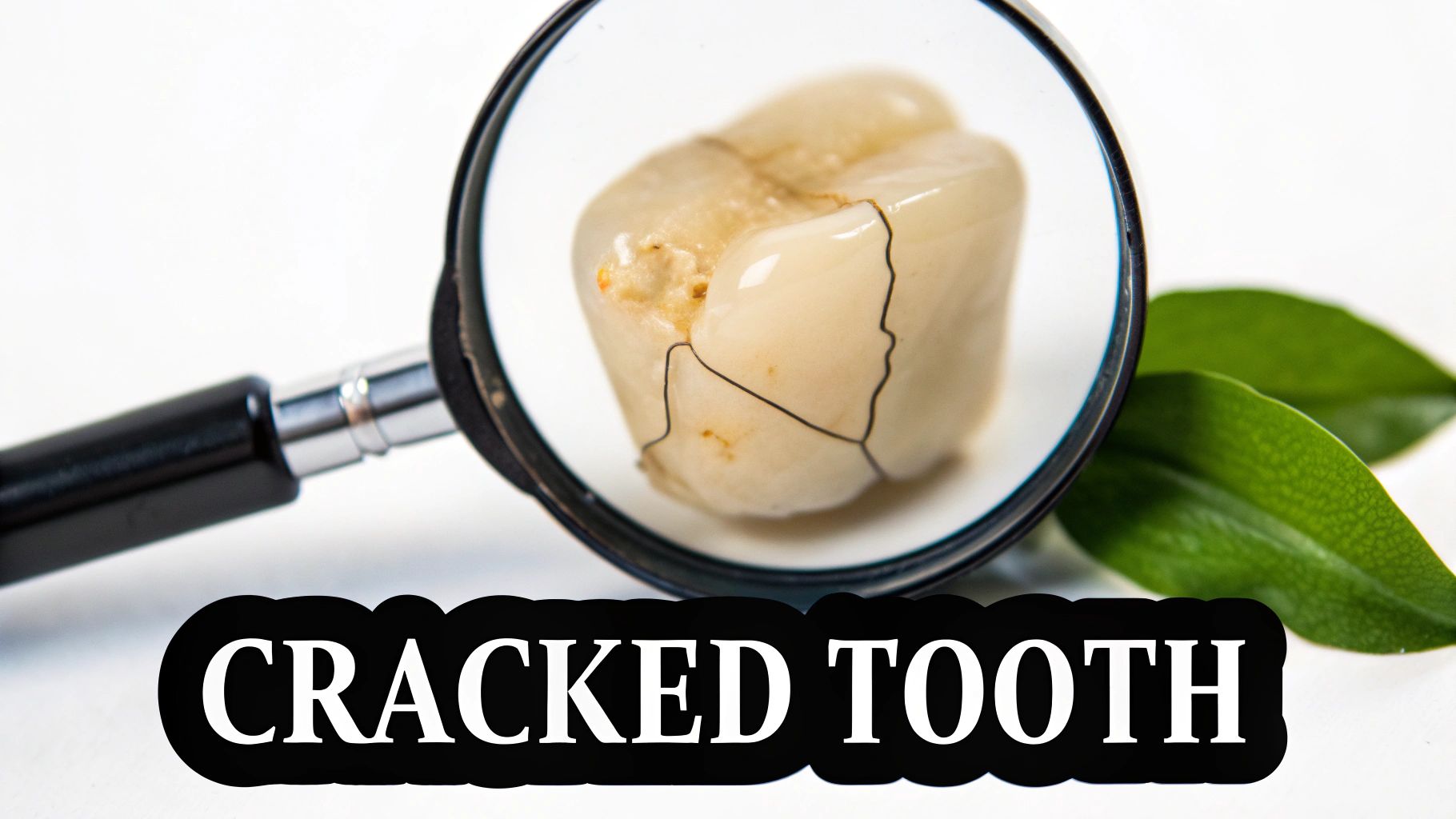
Different Types of Tooth Cracks
A dentist has the tools and expertise to identify the specific type of fracture, which is crucial for determining the correct treatment.
Craze Lines: These are extremely fine vertical lines on the outer enamel. They are very common in adults and are almost always a cosmetic issue requiring no treatment.
Fractured Cusp: This occurs when a piece of the tooth's chewing surface breaks off, often around a filling. It rarely affects the pulp and is typically not very painful.
Cracked Tooth: This involves a fracture line extending from the chewing surface down towards the root. If left untreated, the crack will spread and worsen.
Split Tooth: This is the result of an untreated cracked tooth. The tooth separates into two or more distinct pieces, and at this stage, it is often impossible to save.
Your Action Plan: If you have a chip accompanied by pain when chewing or temperature sensitivity, see your dentist immediately for an evaluation. They can use special tools and dyes to identify hidden fractures and recommend treatment before a small problem becomes a major one.
Why Proactive Care Is Essential
Ignoring a significant crack is a gamble. The fracture line creates a pathway for bacteria to invade the inner pulp, leading to infection or an abscess. When this occurs, you will likely need more invasive procedures to address the nerve damage. You can learn more about what that involves by reading about the stages of root canal therapy and aftercare in our detailed guide.
Early treatment dramatically improves outcomes. For instance, one study found that 92.6% of cracked teeth managed with simple orthodontic bands still had healthy pulp after two months, highlighting the effectiveness of timely intervention. Get any chip professionally evaluated to rule out hidden dangers.
How to Prevent Chipping Your Teeth Again
Once your tooth is repaired, your next goal is to prevent it from happening again. Protecting your repair and your other teeth involves building better habits and being mindful of how you use them. Many chips occur when we use our teeth for tasks they were never designed for, like opening packages or holding pins. This places unnatural stress on your teeth, making fractures more likely.
Build Tooth-Friendly Habits
Your first line of defense is awareness. While tooth enamel is the hardest substance in your body, it is not indestructible. Make these small behavioral changes to protect your smile:
Stop chewing on hard objects. This is the number one cause of chips. Avoid ice, hard candy, un-popped popcorn kernels, pen caps, and fingernails.
Be cautious with tough foods. When eating foods with bones or pits, like ribs or olives, chew more slowly and deliberately to avoid biting down on something hard unexpectedly.
Don't use your teeth as tools. Make a conscious rule to stop this habit. Keep scissors and bottle openers accessible to avoid the temptation.
Actionable Insight: Protecting your teeth is about consistent, daily habits. By eliminating high-risk behaviors, you can prevent the kind of damage that leads to chips.
Shield Your Teeth During High-Risk Activities
Sometimes the risk comes from a specific activity, like contact sports or nighttime teeth grinding (bruxism). In these situations, proactive protection is necessary.
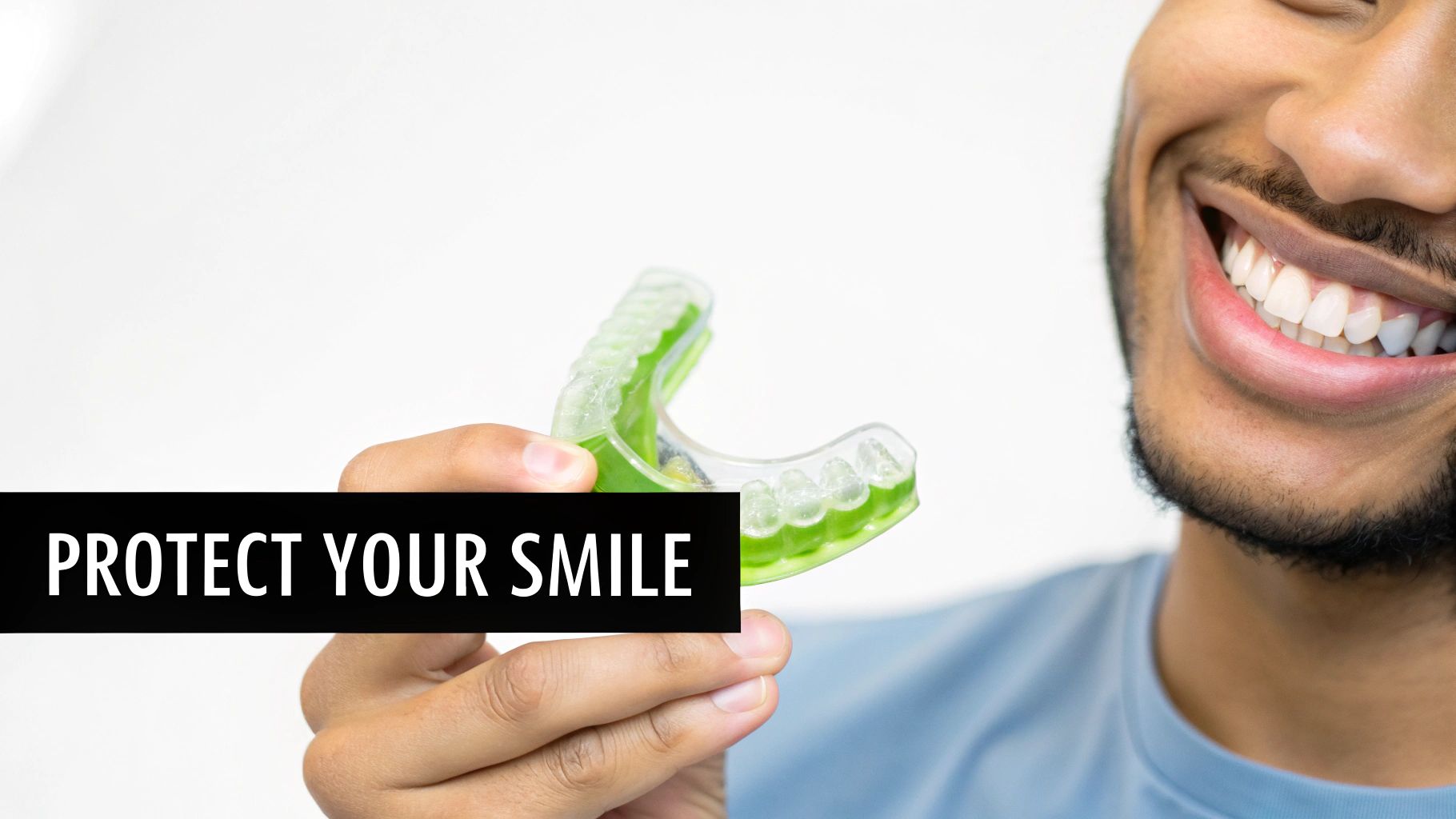
If you participate in sports like basketball, hockey, football, or martial arts, wear a custom-fitted mouthguard. It is an essential piece of equipment designed to absorb and distribute the force from a sudden impact.
Similarly, if you wake up with a sore jaw or your dentist notes signs of wear on your teeth, a nightguard is crucial. It creates a protective barrier that absorbs the immense pressure from clenching and grinding while you sleep. You can learn more about this and other bad habits that could harm your teeth in our detailed post.
Your Chipped Tooth Questions, Answered
Even after learning about the repairs, you likely have more questions. Here are clear, straightforward answers to the most common concerns.
Can a Chipped Tooth Heal on Its Own?
No. Unlike a bone, tooth enamel has no living cells and cannot regenerate. Once a piece of your tooth is gone, it is gone permanently. The body cannot regrow it. Leaving even a small chip untreated creates a rough surface that attracts bacteria, increasing your risk of decay or further fracture. A dental professional must restore the tooth.
The Bottom Line: A chipped tooth is permanent damage. Waiting to get it fixed allows a simple repair to escalate into a more complex and costly problem.
Is Fixing a Chipped Tooth Painful?
Most repairs for chipped teeth involve minimal to no pain. Your comfort level will depend on the severity of the chip.
Small chips (bonding or contouring): These procedures are minimally invasive and rarely require anesthesia. You should feel little to no discomfort.
Larger chips (crowns or veneers): For these more extensive restorations, your dentist will completely numb the tooth and surrounding area. You will not feel pain during the procedure.
Deep chips exposing the nerve: In these cases, the chip itself is causing pain. A root canal is performed to relieve that pain, and it is always done with local anesthesia to ensure your comfort.
You may experience mild sensitivity for a day or two after a larger restoration like a crown, which is easily managed with over-the-counter pain relievers.
How Long Does Dental Bonding Last?
Dental bonding is a cost-effective repair, but it is not a permanent solution. The composite resin is durable but not as strong as natural enamel or porcelain. With proper care, you can expect dental bonding to last 3 to 10 years.
Your outcome depends on several factors:
Your habits: Biting nails, chewing on pens, or using your teeth as tools will significantly shorten the lifespan of your bonding.
Location of the repair: Bonding on the biting edge of a front tooth is under less stress and will last longer than a repair on the chewing surface of a molar.
Diet: Frequent consumption of staining agents like coffee, red wine, and tobacco will discolor the resin over time.
By treating the bonded tooth gently and maintaining good oral hygiene, you can maximize its lifespan.
At Beautiful Dentistry, we know a chipped tooth can throw off your whole day. Our team right here in Tempe, AZ, is all about providing gentle, expert care to get your smile back to 100%, fast. If you're dealing with a chip or have any other dental concerns, we'd love to show you how we put patients first. You can schedule your appointment online today.


Comments