

Can Wisdom Teeth Cause Migraine Headaches? A Guide to Actionable Solutions
- Caterina Rutter
- Jan 7
- 13 min read
Yes, your wisdom teeth can be a direct trigger for severe headaches and even debilitating migraines. This surprises many, but when these molars lack room to grow, they create a perfect storm of pressure, inflammation, and nerve irritation. Your brain can mistake these signals for a migraine, turning a jaw problem into widespread head pain. The key is knowing what to look for and what steps to take for lasting relief.
How a Toothache Can Feel Like a Migraine
If you're wondering whether your wisdom teeth could be the source of your migraines, you're asking the right question. The link isn't a coincidence; it's rooted in your facial anatomy. A problem like an impacted wisdom tooth can overload the entire circuit of nerves in your jaw and head.
This chain reaction starts when a wisdom tooth pushes against another tooth or gets trapped in the jawbone, creating intense pressure. The pain signals travel along major nerve highways like the trigeminal nerve—a primary player in migraine attacks. When this nerve is flooded with distress signals from your jaw, your brain can't always pinpoint the source. It registers the intense signal and responds with classic migraine symptoms: throbbing pain, nausea, and sensitivity to light.
The Key Biological Triggers
Understanding how a dental issue escalates into a full-blown headache helps you identify the root cause and seek the right treatment.
Nerve Irritation: An impacted wisdom tooth can physically press on or inflame branches of the trigeminal nerve, the main sensory nerve for your face and a known migraine trigger.
Referred Pain: This is a classic case of crossed wires. The pain originates in your jaw, but your brain "refers" it, making you feel the sensation in your temples or behind your eyes.
Muscle Strain: To cope with constant pain from your wisdom teeth, you might unconsciously clench your jaw. This leads to muscle fatigue and tension in your face and neck—well-known triggers for tension headaches that can morph into migraines.
Actionable Insight: Waking up with a headache is a tell-tale sign that you’ve been clenching your jaw all night to cope with pressure from your wisdom teeth. Track if your headaches are worse in the morning—this is valuable information to share with your dentist.
Did you know that approximately 12% of people in the United States suffer from migraines? Emerging wisdom teeth can be an overlooked culprit, putting tremendous pressure on the jaw and either triggering a migraine for the first time or worsening existing ones.
Wisdom Teeth and Migraines at a Glance
Use this table as a quick reference to connect your symptoms to potential wisdom teeth issues. It's a practical tool to help you understand what's happening and what to discuss with your dentist.
Key Factor | How It Contributes to Headaches | What Actionable Steps to Take |
|---|---|---|
Impacted Teeth | Teeth trapped in the jaw exert constant pressure on bone, nerves, and adjacent teeth. | Note any feeling of pressure, dull aches, or sharp pain in the back of your jaw to report to your dentist. |
Nerve Pathway | The pain signals travel along the trigeminal nerve, a primary nerve involved in migraines. | Track where the pain radiates. Does it move from your jaw to your temples, eyes, or forehead? |
Referred Pain | Your brain misinterprets the pain's source, making you feel it in your head instead of your jaw. | If typical headache remedies fail, consider dental-focused care like applying a cold pack to your jaw. |
Muscle Tension | Unconscious jaw clenching (bruxism) to manage dental pain leads to muscle fatigue and tension headaches. | Pay attention to morning symptoms like a sore jaw, neck stiffness, or headaches upon waking. |
Understanding these connections is your first step toward relief. While many factors cause head pain, exploring the hidden link between jaw pain and headaches provides more insight. For many, the path to relief begins with a conversation about wisdom teeth removal in Tempe.
How Do Impacted Wisdom Teeth Actually Trigger Headaches?
To understand how wisdom teeth can cause a migraine, picture your facial anatomy as an interconnected network. An impacted wisdom tooth—stuck in your jawbone or gums—sends disruptive signals across this network, which your brain often interprets as a severe headache. Let's break down the actionable triggers.
This diagram shows how an impacted wisdom tooth creates direct pressure, leading to head pain.
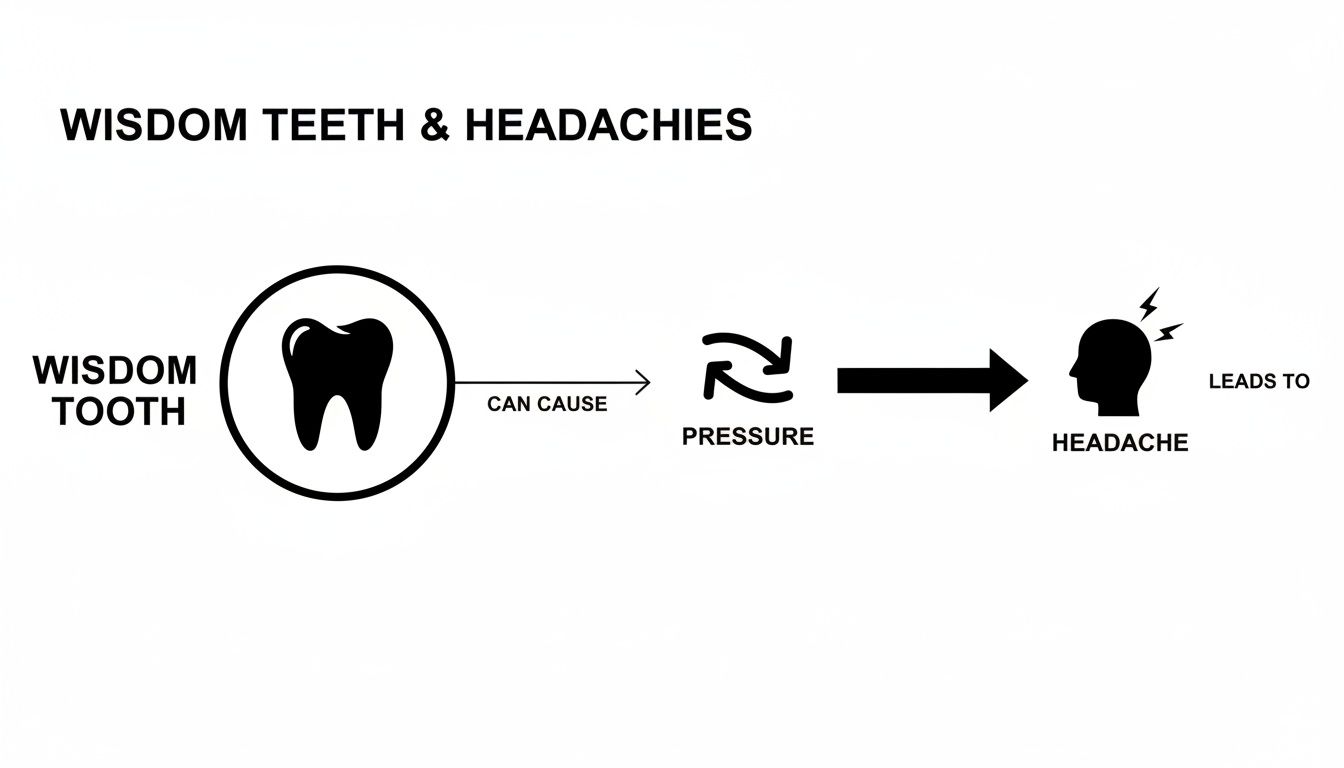
The image shows a core concept: a dental issue creates physical force, and that force translates into pain signals you feel in your head. This pressure is the starting point for several other problems.
The Trigeminal Nerve: A Superhighway for Facial Pain
The trigeminal nerve is the main information highway for your face, with branches sending sensations from your jaw, cheeks, and forehead to your brain. An impacted wisdom tooth irritates this nerve, creating a "traffic jam" of pain signals. Because the trigeminal nerve is a primary player in migraines, this constant barrage can trigger a full-blown attack.
Your brain gets hit with intense signals and can't pinpoint the source. Instead of flagging a dental problem, it defaults to a familiar response: a severe, throbbing headache.
Referred Pain: When Your Brain Gets Its Wires Crossed
Feeling pain in a different spot from its source is called referred pain. This is why a jaw problem can show up as excruciating pain behind your eyes. The jaw muscles and joints are so closely connected to structures in your head and neck that pain signals easily cross over.
You might not even feel much jaw pain—just persistent headaches. This is why a proper dental exam is a critical step to identify the true source of your discomfort.
Inflammation: The Silent Pain Amplifier
A partially emerged or impacted wisdom tooth can form a pocket in the gum tissue that’s hard to clean, leading to a low-grade infection called pericoronitis. This inflammation releases chemicals that travel and sensitize the trigeminal nerve, making it more reactive. This heightened sensitivity lowers your migraine threshold, meaning it takes less of a trigger to set off an attack.
Disrupting Your Bite and Straining Your Jaw
An emerging wisdom tooth can throw off your bite's delicate balance. As it pushes against other teeth, it can shift how your jaws meet, forcing your jaw muscles to work harder. This creates constant muscle tension and fatigue, often linked to Temporomandibular Joint (TMJ) dysfunction.
Actionable Insight: The constant strain on your jaw muscles radiates upward, contributing to tension headaches that can escalate into migraines. If you wake up with a sore jaw or a headache, it’s a clear sign you’re clenching your jaw at night in response to wisdom tooth pressure. This is a key symptom to discuss with your dentist.
While wisdom teeth are known for causing tension headaches, the pressure from an impacted molar can provoke migraines in people already prone to them, with pain radiating to the temples, eyes, and neck.
Sinus Pressure From Above
The roots of your upper wisdom teeth are located very close to your sinus cavities. If an upper wisdom tooth is impacted or infected, the inflammation can directly affect your sinuses, leading to symptoms that mimic a sinus headache:
Pressure and aching around your cheeks and forehead.
A stuffy or congested nose.
A dull ache that worsens when you bend over.
By understanding these five pathways, you can see how a small dental issue can create significant pain. If you're considering next steps, our guide on what to expect during wisdom teeth removal can help you prepare.
Distinguishing Between a Migraine and a Dental Headache
Is the pounding in your head a migraine or an impacted wisdom tooth? Getting the right diagnosis is critical for effective treatment. While the pain feels similar, key differences can help you decide whether to call your doctor or your dentist.
You can become a detective for your own body. Pay attention to the subtle clues. A migraine is a complex neurological event, while a "dental headache" is a case of referred pain—the problem starts in your mouth, but you feel it elsewhere. Learning to spot the differences is your first step toward relief.
The Tell-Tale Signs of a Dental Headache
Headaches from wisdom teeth often leave clues centered around your mouth and jaw. Look for these specific signs to determine if your wisdom teeth are causing migraine-like pain. A dental headache often feels like a constant, dull ache on one side of your head—the same side as the problem tooth.
Pain with Jaw Movement: Does your head hurt more when you chew, yawn, or talk? This is a strong indicator that the source is jaw tension from a wisdom tooth.
Localized Jaw Tenderness: Gently press on the area in front of your ears or along your back jawline. Soreness or tightness points to a dental or TMJ issue.
Earache or Fullness: The jaw joint is next to the ear canal. Inflammation can create what feels like an ear infection—a dull ache or pressure.
Actionable Insight: Track your pain patterns. If your headache flares up after a big meal or you consistently wake up with a sore jaw and a headache, the link to a dental problem is strong. Bring these specific observations to your dental appointment.
Classic Migraine Symptoms to Watch For
While an impacted wisdom tooth can trigger a migraine if you're already prone to them, a true migraine has a distinct neurological signature. The pain is typically severe, throbbing, and debilitating.
It's the accompanying symptoms that tell the real story. Migraines bring a host of other issues that suggest the problem is more than just dental.
Aura: About 25% of migraine sufferers experience an "aura"—visual warnings like flashing lights, blind spots, or zigzag lines before the headache hits.
Sensory Sensitivity: The hallmark of a migraine is extreme sensitivity to light (photophobia), sound (phonophobia), and sometimes smells (osmophobia). A dark, quiet room is often the only relief.
Nausea and Vomiting: Feeling sick to your stomach is a very common migraine symptom and is rarely caused by dental pressure alone.
An impacted wisdom tooth can strain your jaw, leading to TMJ dysfunction, a known migraine trigger. If this sounds familiar, our guide on how to relieve jaw pain from TMJ offers practical steps.
Symptom Checker: Dental Headache vs. Classic Migraine
Use this table to pinpoint the likely source of your head pain. This information will empower you to have a more productive conversation with your healthcare provider.
Symptom | Likely Caused by Wisdom Teeth | Characteristic of a Classic Migraine |
|---|---|---|
Pain Location | Temples, behind the eyes, or back of the head, often one-sided. | Typically one-sided, but can be on both sides; often described as "pulsating." |
Pain Triggers | Chewing, talking, jaw clenching, or pressure on the back molars. | Hormonal changes, stress, certain foods, lack of sleep, or bright lights. |
Associated Signs | Jaw soreness, earache, clicking jaw, difficulty opening mouth wide. | Nausea, vomiting, visual aura, extreme sensitivity to light and sound. |
Pain Character | Dull, constant, aching pressure. | Severe, throbbing, and often incapacitating. |
By analyzing your symptoms with this framework, you can get a clearer picture and decide whether your next call should be to your doctor or your dentist.
The Path to a Clear Diagnosis
If you suspect your wisdom teeth are the culprit behind your headaches, getting a firm diagnosis is the next logical step. Booking a dental appointment for a headache is often the fastest way to find the root cause. A clear diagnosis isn't just about finding the problem; it’s about creating a roadmap to feeling better.
The diagnostic process is thorough but straightforward, combining a physical check-up with advanced imaging to see what’s happening both on the surface and inside your jaw.
Your Comprehensive Dental Exam
Your journey to an answer begins with a comprehensive dental exam. Your dentist will look for specific clues connecting your oral health to your head pain, such as:
Red or swollen gums around your back molars (a sign of infection).
Changes in your bite caused by a pushing wisdom tooth.
Clicking or popping sounds when you open and close your jaw (a sign of TMJ dysfunction).
Sore spots or tension when gently pressing on your jaw, face, and neck muscles.
Come prepared to discuss your symptoms, including when your headaches occur and what makes them better or worse.
The Power of Advanced Imaging
A physical exam provides valuable information, but the full story is often hidden below the surface. Imaging lets us see the exact position and angle of your wisdom teeth.
The most effective tool is a panoramic X-ray, which provides a complete view of your entire mouth, jawbones, and sinus cavities. It’s the gold standard for diagnosing impacted wisdom teeth.
A panoramic X-ray will clearly show:
If a wisdom tooth is impacted (stuck).
The angle at which it's growing.
Whether it's crowding or damaging neighboring teeth.
Its proximity to major nerves and your sinuses.
Actionable Insight: This detailed image is crucial. It not only confirms a physical issue but also provides the information needed to plan a safe and effective treatment. It directly answers the question, "Could my wisdom teeth be causing these headaches?" and guides your next steps.
When a Specialist Referral Is Needed
Most of the time, we can diagnose the problem in our office. However, if symptoms are complex or persist after dental treatment, a referral may be necessary. We might suggest seeing a neurologist to rule out primary migraine conditions or an Ear, Nose, and Throat (ENT) specialist to investigate sinus issues. This team-based approach ensures you get the right diagnosis and the most effective care.
Effective Treatment Options for Lasting Relief
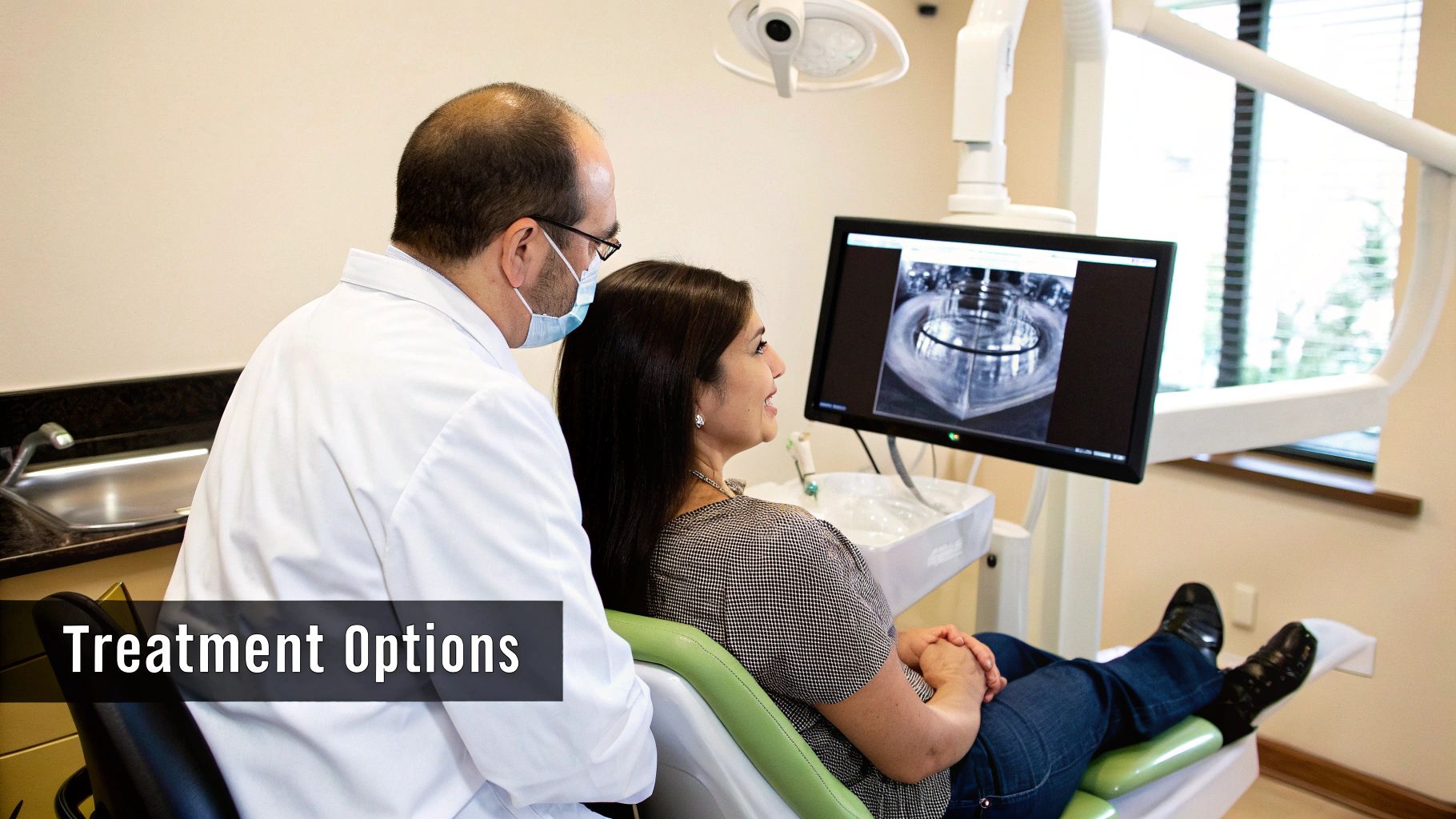
Once we've identified your wisdom teeth as the source of your headaches, we can shift from managing symptoms to solving the problem. The goal is lasting relief. We’ll develop a personalized plan to tackle the specific cause—be it pressure, inflammation, or jaw strain—which often leads to a dramatic improvement in your headaches.
In most cases, removing the problem teeth is the most direct solution. We also offer supportive treatments to manage immediate pain and address related issues.
Wisdom Tooth Extraction: The Definitive Solution
For most people with headaches from impacted wisdom teeth, extraction is the clearest path to relief. By removing the tooth causing pressure and nerve irritation, we stop the pain signals at their source.
This is a routine surgical procedure where your comfort is our top priority. We use a range of sedation options to ensure you are relaxed and comfortable throughout. We will carefully remove the wisdom teeth, which may involve a small incision if the tooth is impacted.
The primary benefit of extraction is its permanence. Once the source of pressure is gone, nerve irritation, muscle strain, and inflammation can finally heal. It’s a definitive fix for this specific headache trigger.
After the procedure, you'll start to feel the difference as you recover. Many patients report a significant drop in headache frequency and intensity within a few weeks.
Supportive Treatments for Immediate and Ongoing Relief
While extraction addresses the root cause, other therapies can provide immediate comfort and support your recovery.
Managing Infections: If a wisdom tooth has led to an infection (pericoronitis), we must get it under control first.
Antibiotics to eliminate the bacteria.
A professional cleaning of the area.
A medicated mouth rinse to keep the gums clean and reduce swelling.
Alleviating TMJ and Muscle Strain: If chronic clenching is part of the problem, these therapies can relax the jaw muscles and ease head pain.
Custom Night Guards: A professionally fitted night guard creates a protective barrier, preventing grinding and allowing your jaw muscles to relax.
Physical Therapy: Specialized exercises can stretch and strengthen jaw muscles, improving function and easing tension.
Targeted Injections: For severe clenching, treatments like Botox for Jaw Clenching and Relief can effectively relax overworked jaw muscles.
What to Expect After Treatment
The results can be life-changing. Up to 1 in 6 American adults deals with migraines or severe headaches, and an impacted wisdom tooth is often an aggravating factor.
Relief typically comes quickly. Many people notice a major improvement within 3-7 days after wisdom teeth removal, with the jaw feeling fully relaxed in about two weeks.
Some temporary soreness after the procedure is normal. You might even have a mild headache as the swelling subsides, but it will be different from the chronic pain you were experiencing. As your jaw heals, the tension and nerve irritation that triggered your headaches will fade, paving the way for lasting comfort.
Your Next Steps Toward a Pain-Free Life
Now that you understand the connection between your oral health and head pain, you have a clear action plan. You can stop enduring the discomfort and move toward a lasting solution. If you've been dealing with stubborn headaches, especially alongside jaw pain, earaches, or trouble chewing, it's time to act.
Don't let uncertainty keep you in a cycle of pain. A consultation with a professional can provide the clarity you need.
When to Schedule an Evaluation
Your body provides clear signals when it's time for a dental visit. If any of the following are part of your regular life, being proactive is the best way to prevent the pain from worsening.
It's time to see a dentist if you experience:
Headaches with Jaw Pain: Pain that centers around your temples, jawline, or behind your eyes, especially when eating or talking.
Unexplained Earaches: A dull ache or stuffy feeling in your ears without any sign of an infection.
Morning Discomfort: Waking up with a sore jaw and a headache is a major red flag for nighttime clenching caused by dental pressure.
The most important action you can take is to seek a professional opinion. You don't have to just live with it. Many people who ask, can wisdom teeth cause migraine headaches, discover that a dental check-up is the key to unlocking relief.
Taking the next step is straightforward. An evaluation at Beautiful Dentistry will provide a clear diagnosis and a plan to get you back to feeling good. Schedule your consultation today to stop guessing about your pain and start your journey toward real, lasting comfort.
Got Questions? We’ve Got Answers.
When you're dealing with persistent headaches, it’s natural to have questions. Here are clear answers to what we hear most often.
How Quickly Will My Headaches Go Away After My Wisdom Teeth Are Removed?
While it varies, many people report a noticeable improvement in headache frequency and intensity within the first one to two weeks post-procedure.
Once the source of pressure is eliminated and the swelling subsides, your jaw muscles and nerves can begin to heal. The relief typically continues to improve over the following month.
Can Wisdom Teeth Cause Headaches Even if My Jaw Doesn't Hurt?
Yes, absolutely. This is due to a phenomenon called referred pain. The pain signal starts at your wisdom tooth, but your brain misinterprets it and makes you feel it elsewhere, like your temples. You can have an impacted wisdom tooth irritating a nerve and causing headaches without significant jaw soreness.
What if I’m Still Getting Migraines After the Extraction?
If your migraines persist after you've fully healed, it indicates another trigger is likely at play. While impacted wisdom teeth can be a major contributor, they aren't always the only cause.
Your next step should be to consult your primary care doctor or a neurologist. They can help you investigate other potential causes and develop a comprehensive management plan.
Is Getting Wisdom Teeth Taken Out Painful?
We understand this is a major concern. With modern anesthetics and sedation options, the procedure itself is comfortable, and you won't feel pain during the extraction.
Afterward, expect some manageable soreness and swelling, which we'll help you control with medication. For most, a few days of recovery is a small price to pay for a future free from chronic head pain.
Tired of guessing the cause of your headaches? Let our team at Beautiful Dentistry provide a clear, definitive answer and a plan for relief.
Schedule your comprehensive evaluation today and take the first real step toward a pain-free life.