

How to Relieve Jaw Pain from TMJ: Your Actionable Guide
- Caterina Rutter
- Dec 25, 2025
- 13 min read

When a TMJ flare-up hits, the sharp, demanding pain in your jaw can bring your day to a screeching halt. Your first instinct is to do anything to make it stop. The good news is that you have powerful, simple tools right at your fingertips to take immediate control.
Your first move is a two-pronged attack: apply ice to numb sharp pain and reduce inflammation, then switch to moist heat to soothe and relax overworked muscles. Combine this with over-the-counter pain relievers and a temporary soft-food diet to give your jaw the break it needs to start healing.
Your First Steps for Immediate TMJ Pain Relief
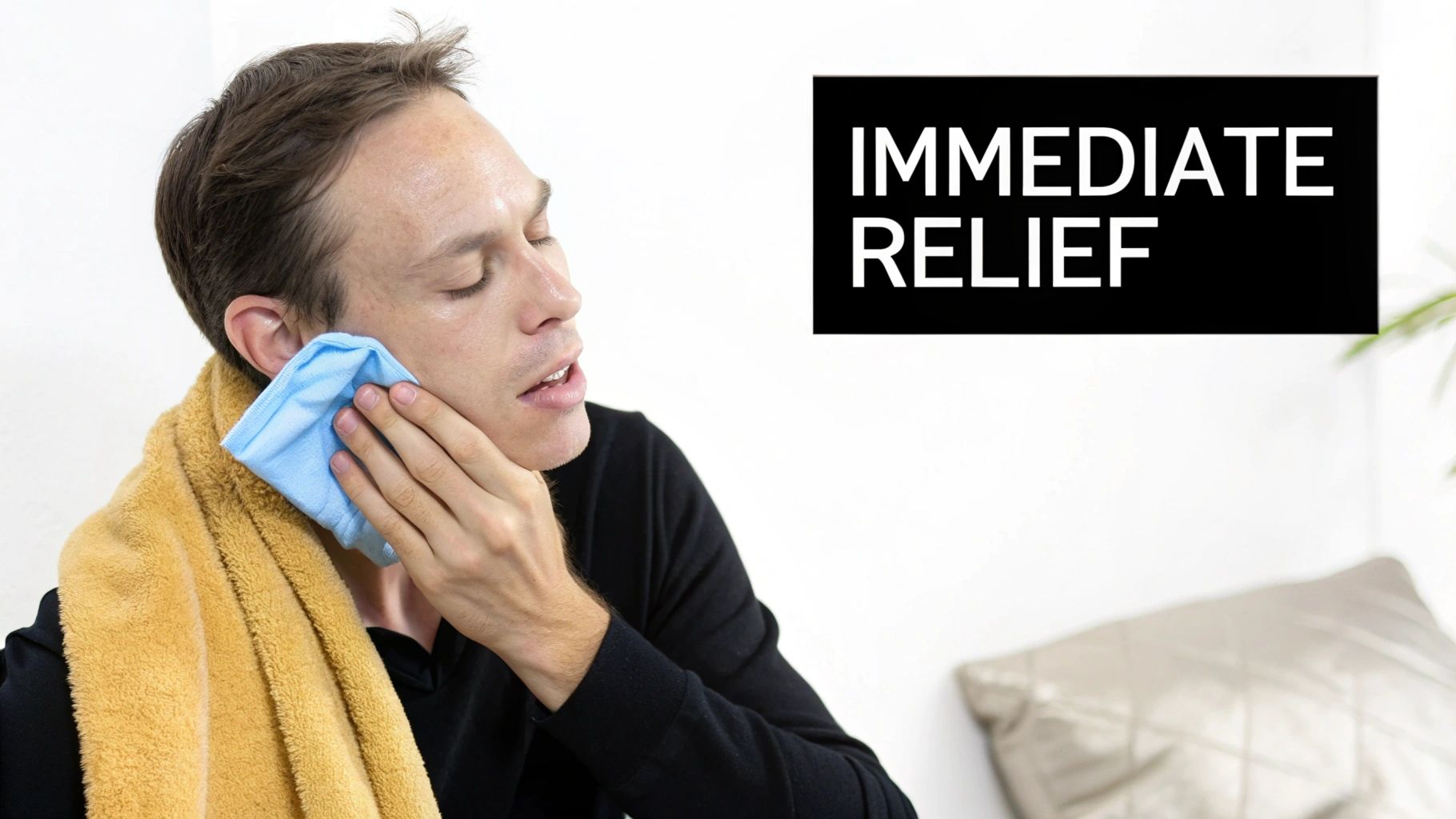
A sudden bout of jaw pain can be jarring, turning simple actions like talking or chewing into a painful chore. Right now, your goal is to calm the storm. Think of these strategies as your first-aid kit for an aching jaw.
These non-invasive steps are highly effective. For most people dealing with TMJ pain, these conservative, at-home therapies are the best place to start and often provide significant relief. This isn't just anecdotal; research consistently shows that self-care strategies are proven to reduce pain and improve jaw function. You can dive deeper into these guideline-based treatments in a comprehensive review from the National Academies.
Hot and Cold Therapy
One of the most accessible tools for managing jaw pain is temperature therapy. The trick is knowing when to reach for the ice pack versus the heating pad.
ACTION: Apply a Cold Pack for Acute Pain. If the pain is sharp, throbbing, or the area feels inflamed, cold is your best tool. Cold constricts blood vessels, which helps numb intense pain and reduce swelling. Wrap an ice pack or a bag of frozen peas in a thin towel and apply it to the sore spot for 10-15 minutes.
ACTION: Use Moist Heat for Muscle Tightness. When your jaw feels stiff, sore, and achy, moist heat is a game-changer. Heat boosts blood flow, encouraging tight, knotted muscles to relax. Apply a warm, damp washcloth or a microwaveable heat pack for 15-20 minutes to melt away tension.
A quick word of caution: never place ice or heat directly on your skin. If you notice swelling accompanied by a fever, avoid heat, as it could worsen a potential infection. If the pain is severe and unyielding, it might be more than a typical flare-up; understanding the signs of dental emergencies in Tempe can provide helpful context.
Give Your Jaw a Rest
It sounds obvious, but it’s a critical step we often forget. When a joint is sore, you must stop overworking it. During a TMJ flare-up, consciously giving your jaw a vacation is one of the most effective actions you can take.
Key Takeaway: For the next few days, avoid anything hard, chewy, or crunchy. Step away from steak, bagels, hard candies, and even raw carrots. Instead, choose soft foods like yogurt, smoothies, mashed potatoes, soups, and scrambled eggs. This simple dietary swap dramatically reduces the strain on your jaw joint, giving it the space it needs to calm down and heal.
When your jaw is screaming for help, these first-aid measures can provide the immediate comfort you need. The table below summarizes these go-to strategies for quick relief.
Quick Relief Strategies for TMJ Flare-Ups
Strategy | How It Helps | Practical Tip |
|---|---|---|
Cold Compress | Numbs sharp pain and reduces acute inflammation and swelling. | Wrap an ice pack in a thin cloth and apply for 10-15 minutes at a time. Best for the first 24 hours of a flare-up. |
Moist Heat | Relaxes tight, sore muscles and improves blood flow to the area. | Use a warm, damp towel or a microwaveable heat pack for 15-20 minutes. Ideal for dull, persistent muscle aches. |
Soft-Food Diet | Minimizes chewing and reduces mechanical stress on the jaw joint. | Stick to foods like soup, yogurt, oatmeal, and smoothies. Avoid anything crunchy, chewy, or that requires wide opening. |
OTC Pain Relievers | Anti-inflammatory medications like ibuprofen can reduce both pain and swelling. | Always follow the dosage instructions on the package and take with food if it upsets your stomach. |
These simple, actionable steps are your first line of defense, empowering you to manage pain and regain control right when you need it most.
Gentle Jaw Exercises for Lasting Comfort
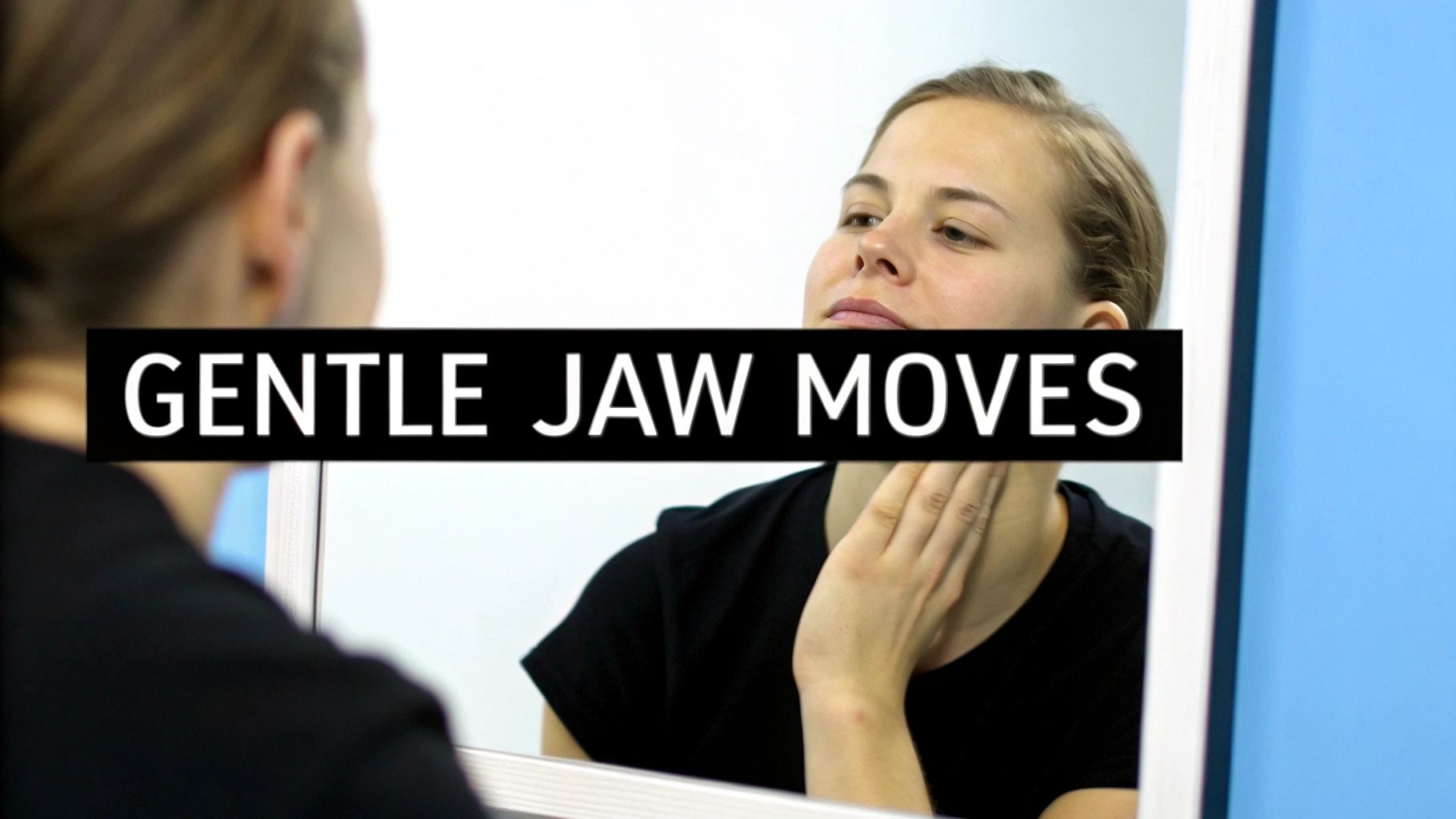
While ice packs and soft foods are great for getting through a bad flare-up, they are temporary fixes. For real, lasting relief, you need to reintroduce gentle movement. Consistent, mindful exercise is one of the most powerful things you can do to ease chronic muscle tension, restore proper function, and improve your jaw’s range of motion.
The key word is gentle. This is not a workout. You are not trying to push through pain. Think of it as re-educating your jaw muscles, reminding them how to work smoothly without strain and tension.
Foundational Movements for Jaw Mobility
Start with these basic exercises to release that locked-up feeling and increase flexibility. Go slowly, breathe, and pay attention to your jaw’s feedback. If you feel any sharp pain, back off immediately.
A fantastic framework to borrow from is the Rocabado 6x6 exercise program, a physical therapy routine involving six exercises, performed six times each, six times a day. Here are a few foundational moves inspired by its principles:
Tongue Rest Position: Lightly press the tip of your tongue against the roof of your mouth, just behind your top front teeth (where you'd make an "N" sound). Allow your jaw to hang loosely so your teeth aren't touching. Hold this for several deep breaths to release hidden tension.
Controlled Opening: Keep your tongue in that same resting spot. Slowly open your jaw as far as you comfortably can without your tongue detaching. Close just as slowly. This exercise keeps the joint moving in a stable, controlled path.
Side-to-Side Glides: Place a clean finger on your chin for feedback. Gently guide your jaw to the left, hold for a moment, then slide it back to the center. Repeat on the right side. The goal is smooth, even movement, not maximum distance.
Expert Tip: Perform these exercises in front of a mirror. This is the best way to see if your jaw is tracking straight or deviating to one side as you open. Correcting improper movements is a huge step toward breaking the habits that cause pain.
Building Strength with Gentle Resistance
Once mobility exercises feel comfortable, add a little resistance. Stronger, better-coordinated jaw muscles are less likely to become fatigued and spasm. This is a crucial step to relieve jaw pain from TMJ for good.
Resistance Opening: Make a fist and place your thumb under your chin. As you slowly open your mouth, apply gentle upward pressure with your thumb.
Resistance Closing: Use your index finger and thumb to lightly pinch your chin. As you slowly close your mouth, apply gentle downward pressure.
Again, use just enough resistance to engage the muscles, not to cause strain. Start with a few repetitions of each and build up. Consistency is more important than intensity.
Sticking with a daily routine of these gentle exercises can make a world of difference. Clinical reports show most people see a meaningful drop in pain and an improvement in mouth opening within just 6 to 12 weeks of starting conservative treatments like these. You can read more about these findings on the National Academies' website. That consistent, daily effort builds the foundation for true, lasting relief.
Lifestyle Adjustments That Soothe Your Jaw
Often, the most profound relief for TMJ comes from tweaking the small things you do every day. The constant, low-grade stress we put on our jaws—often without realizing it—can lock us into a cycle of pain.
The good news is that you have a ton of control here. By becoming more mindful of habits, from how you sleep to how you sit at your desk, you can start to unwind that tension and give your jaw a much-needed break.
Rethink Your Sleep Position
Do you wake up with a stiff, aching jaw? Your sleeping position might be the culprit. Sleeping on your stomach or side can push your jaw out of alignment and put pressure on the joint all night long.
Switching to back-sleeping can be a complete game-changer. It might feel strange at first, but it's the best way to keep your head, neck, and spine in a neutral line.
Sleeping on your back allows your head, neck, and spine to rest in a neutral position. This alignment takes the pressure off your temporomandibular joint, allowing your jaw muscles to fully relax during the night.
If you find yourself rolling over, try using pillows to prop up your sides. A flatter pillow for your head and a small, rolled-up towel for neck support can also make a huge difference.
Create a Jaw-Friendly Workspace
That "tech neck" posture—hunched forward, staring at a screen—is brutal on your jaw. When your head juts forward, your lower jaw follows, putting a constant strain on surrounding muscles. Your ergonomic setup is critical for your jaw health.
Here’s a quick checklist to adjust your desk:
Monitor Height: Adjust your screen so the top is at or just below eye level. Your chin should remain level, not tilted.
Chair Support: Use a chair with good lumbar support to maintain a natural spinal curve, which takes pressure off your neck and jaw.
Take Breaks: Set a timer to get up and stretch every 30-60 minutes. This breaks the tension cycle before it can set in.
Break Subconscious Daily Habits
We all have small habits that overwork our jaws, like chewing on a pen cap, biting nails, or cradling a phone between the shoulder and ear. The key is to start noticing when you're doing them.
Use the following checklist to identify common jaw-straining behaviors and swap them for healthier alternatives.
Daily Habit Checklist for a Happier Jaw
This is a simple guide to help you become more aware of the small, unconscious actions that might be contributing to your TMJ pain and replace them with better habits.
Habit to Avoid | Why It Hurts Your TMJ | Jaw-Friendly Alternative |
|---|---|---|
Chewing gum, pens, or ice | Creates constant, repetitive motion and muscle fatigue. | Sip on water or suck on a sugar-free mint instead. |
Cradling your phone | Puts your neck and jaw in an awkward, strained position. | Use headphones, speakerphone, or a Bluetooth headset. |
Resting your chin on your hand | Pushes the jaw out of alignment and places direct pressure on the joint. | Sit up straight with good posture, keeping hands in your lap. |
Clenching during the day | Keeps jaw muscles perpetually tense, leading to fatigue and pain. | Practice the "lips together, teeth apart" resting position. |
Making these small adjustments takes practice, but they can dramatically reduce the daily load on your jaw joints.
Since stress is a huge trigger for clenching, incorporating effective stress relief techniques can also provide immense relief. By tackling these habits, you're not just managing symptoms—you're addressing one of the root causes of the pain.
Getting a Handle on Clenching and Grinding
If you're dealing with jaw pain, there's a good chance that teeth grinding (bruxism) and jaw clenching are the main culprits. These habits are sneaky, often happening subconsciously when you’re asleep or concentrating, putting immense pressure on your jaw joints and muscles.
A huge part of finding relief is simply becoming aware that you’re doing it. Many of us clench our jaws during the day without a second thought—stuck in traffic, staring at a computer, or feeling stressed. The first, most important step is to start noticing.
Catching Yourself in the Act: Daytime Clenching
Daytime clenching is a habit you can train yourself out of with mindful attention. The goal is to teach your jaw what its natural, relaxed resting position feels like.
Set a quiet reminder on your phone or place a sticky note on your monitor. When you see it, do this quick check-in:
Are my teeth touching? Unless you're chewing, they shouldn't be.
Is my tongue pushing against my teeth? Let it rest gently on the roof of your mouth.
Are my jaw muscles tight? If you feel tension, consciously let your jaw go slack.
The mantra to practice is "lips together, teeth apart." Each time you interrupt the clenching pattern, you reinforce relaxation as your jaw's new normal.
Your jaw is meant to be at rest most of the time. Simply creating and holding a small space between your upper and lower teeth gives those overworked muscles a much-needed break to start healing.
Winding Down to Stop Nighttime Grinding
While you can't consciously stop grinding in your sleep, you can tackle the root causes. Nighttime grinding is often driven by stress and an overactive nervous system.
Building a simple, calming evening routine can work wonders. This signals to your body and mind that it's time to let go of the day's tension, which can lead to less clenching overnight.
Try these actionable steps:
Deep Breathing: Before sleep, lie down and place a hand on your belly. Breathe in slowly through your nose for a count of four, feeling your stomach expand. Hold for four, then exhale slowly through your mouth for a count of six. Do this for five minutes.
Mindfulness or Meditation: Use a guided meditation app or simply spend 10 minutes focusing on your breath. This creates distance from the daily worries that fuel grinding.
Cut Back on Stimulants: That late-afternoon coffee or evening glass of wine can disrupt sleep quality and increase muscle activity. Try avoiding them for a few hours before bed to see if it helps.
For many people, bruxism is the biggest piece of the TMJ puzzle. If you suspect you’re a nighttime grinder, seeking professional TMJ treatment and options for teeth grinding in Tempe is a smart move. A custom-fit nightguard can protect your teeth and give your jaw a break, offering a direct solution for lasting comfort.
When to Seek Professional Help for Your TMJ
While self-care strategies are fantastic for managing flare-ups, there's a point where they aren't enough. It's crucial to know when a few bad jaw days have become a red flag signaling a deeper issue.
If you’ve been diligent with home care but the pain isn't letting up, that’s your cue to seek a professional evaluation to get to the root of the problem.
Pain that persists for more than a week despite your best efforts with ice, heat, and a soft diet is a major indicator. You also shouldn't have to live with discomfort so severe that it disrupts your sleep or makes talking and eating a chore.
Recognizing Critical Warning Signs
Some symptoms are more than just soreness—they're alarm bells that require immediate professional attention. Do not "wait out" these signs, as they can point to more serious problems within the joint itself.
Seek help immediately if you experience any of these:
A Locked Jaw: This is when your jaw gets stuck open or closed. It's often frightening and a definitive sign that the joint mechanics are failing.
Painful Clicking or Popping: While minor noise isn't always a problem, it becomes a major concern when accompanied by pain. A loud, sharp "pop" can mean the disc inside the joint has slipped out of place.
Trouble Chewing or a Bite That Feels “Off”: If your teeth suddenly don’t seem to fit together correctly, it could be due to swelling or a structural change inside the TMJ that requires professional diagnosis.
Crucial Insight: Never try to force a locked jaw open or closed, as you risk causing more damage. Instead, relax as much as possible, apply moist heat to the area, and call a professional for help right away.
Bruxism is a huge driver of TMJ pain, and managing it often requires professional guidance. This decision tree can help you visualize the next steps.
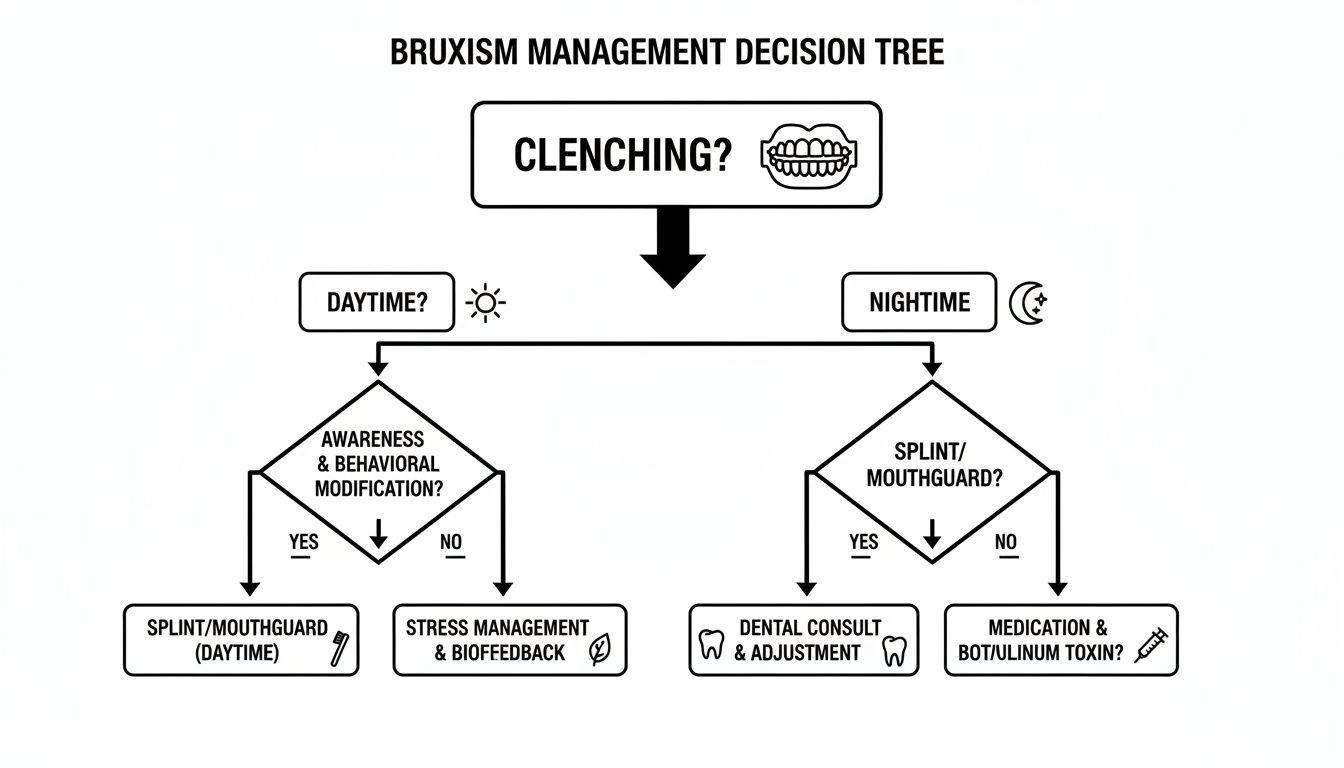
As the flowchart shows, whether you clench during the day or at night, professional solutions like custom-fit nightguards are often a key part of the treatment plan.
What to Expect at a TMJ Evaluation
A professional TMJ exam is a deep dive into your jaw's health. The dentist will feel the muscles around your jaw, listen for sounds as you open and close your mouth, and measure your range of motion. They'll also look for tell-tale signs of wear on your teeth from grinding.
In some cases, they may need X-rays or a CT scan to get a clear picture of the joint's condition. For severe cases, you might need to explore options for oral surgery in Tempe to find a permanent solution.
Interestingly, studies consistently find women report TMJ symptoms more often than men, especially between 18 and 60 years old. One analysis found a prevalence of 36.7% in females compared to 26.7% in males, highlighting the need for timely care.
If your jaw pain won’t quit or is seriously impacting your life, don’t hesitate to get professional guidance. You might also look into other therapies, like exploring red light therapy as a treatment for joint pain. A specialist can map out the best path forward, ensuring you get the right treatment for your specific situation.
Answering Your Top Questions About TMJ Pain
If you're dealing with a clicking, aching jaw, you've probably got questions. You're in good company. TMJ disorders are incredibly common, so you're not alone in seeking answers.
Just how common? A 2024 meta-analysis found the global prevalence of temporomandibular disorders to be around 34%. You can dig into the full findings on TMJ prevalence worldwide if you're curious, but the bottom line is that millions of people are asking the same questions you are. Let's get them answered.
Custom vs. Store-Bought Mouthguards: What's the Real Difference?
It’s easy to see the appeal of a cheap, accessible boil-and-bite mouthguard. However, it’s rarely a real solution for TMJ pain. These one-size-fits-all guards are often bulky, fit poorly, and can sometimes throw your bite further out of alignment, making the problem worse.
A custom-fit nightguard from a dentist is in a different league. It's created from an exact impression of your mouth for a perfect, comfortable fit. More importantly, it's designed not just to protect your teeth, but to guide your jaw into a stable, relaxed position. This gives those overworked muscles and joints a chance to finally rest and heal.
Think of it this way: a store-bought guard is like a generic cushion. A custom splint is a precisely engineered medical device designed to correct the mechanical stress causing your pain.
How Long Until Jaw Exercises Actually Work?
This is where patience and consistency pay off. You won't do a few stretches today and wake up pain-free tomorrow. Most people start to feel a meaningful, noticeable improvement in pain and jaw movement within about 6 to 12 weeks of performing daily, gentle exercises.
The goal isn't a dramatic, immediate change. It's a slow, steady process of retraining your jaw muscles, improving their coordination, and gently building their endurance. The key is to stick with the routine, even on good days. That consistency maintains your progress and helps prevent future flare-ups.
Can TMJ Pain Be Managed for Good?
For the vast majority of people, the answer is a resounding yes. While there isn't always a single "cure" that makes it vanish forever, TMJ pain can be managed so effectively that it stops disrupting your life.
Lasting relief almost always comes from a multi-faceted approach, not a single fix. It's about combining these strategies:
Being Mindful: Catching yourself clenching during the day is half the battle.
Lifestyle Tweaks: Correcting your posture, managing stress, and changing how you sleep can make a huge difference.
The Right Tools: A custom-fit nightguard is essential for tackling nighttime grinding.
Gentle Movement: Consistently doing your jaw exercises keeps the joint mobile and the muscles relaxed.
When you put these pieces together, you can effectively break the pain-and-tension cycle. This gives your jaw the space it needs to heal and function comfortably again.
At Beautiful Dentistry, we know just how much jaw pain can get in the way of your life. If you're tired of struggling, our team is here to give you a clear diagnosis and build a treatment plan that's all about restoring your comfort and confidence. Schedule your consultation with us today!


Comments