

What to Do When You Chip a Tooth: A Step-by-Step Guide
- Caterina Rutter
- Jan 8
- 11 min read

That moment your tooth meets something unexpectedly hard—a popcorn kernel, an olive pit, or even a fall—is jarring. You feel that sharp, unfamiliar edge with your tongue and your heart sinks. A chipped tooth can be alarming, but acting quickly and correctly can make all the difference for your tooth's long-term health.
Your Immediate First Aid for a Chipped Tooth
First, stay calm and follow these steps. Your goal is to clean the area, manage pain, and protect the tooth from further damage.
Start by gently rinsing your mouth with warm salt water. This will help clear away any small fragments or debris and soothe the surrounding gum tissue. Swish gently to avoid making the damage worse.
Preserving the Tooth and Managing Discomfort
If you can find the piece that broke off, save it. Pick it up carefully by the chewing surface, avoiding the root area. To keep it viable for potential reattachment, place it in a small container filled with milk or your own saliva. This prevents the fragment from drying out.
Next, manage the pain and swelling. Apply a cold compress or an ice pack wrapped in a cloth to your cheek over the affected area. Do this in 15-minute intervals. The cold helps constrict blood vessels, which reduces both swelling and throbbing pain.
Think about this: the average human bite packs a punch, delivering 36 kg to 46 kg of force. That's a lot of pressure. It means even a seemingly innocent bite can be enough to fracture a tooth that already has a weak spot.
Here is a quick reference guide to help you remember these critical first steps.
Chipped Tooth Emergency Action Plan
Action | Why It's Important | How to Do It |
|---|---|---|
Rinse Gently | Cleans the area of debris and bacteria. | Use warm salt water and swish gently. |
Save the Fragment | May allow the dentist to reattach the original piece. | Store it in a small container of milk or saliva. |
Apply Cold Compress | Reduces swelling and numbs pain. | Wrap an ice pack in a towel; apply to the cheek for 15-minute intervals. |
Call Your Dentist | Prevents infection and further damage. | Explain the situation and schedule an appointment ASAP. |
Following these steps buys you crucial time and sets the stage for a successful repair.
Why Calling a Dentist Is a Non-Negotiable Step
A chipped tooth is more than a cosmetic problem; it's often a warning sign of a bigger issue, like a hidden crack or enamel weakened by decay. In fact, CDC data reveals that nearly 90% of adults aged 20–64 have had at least one cavity, creating these kinds of vulnerabilities.
This is why you must contact a dentist immediately. You can learn more about why immediate care matters for dental emergencies in Tempe. An urgent exam and an X-ray are the only ways to confirm if the damage extends to the tooth's sensitive inner pulp or root.
Acting quickly allows your dentist to use simpler treatments like bonding or a crown. Waiting risks turning a small chip into a major, painful, and expensive problem. For more on the prevalence of these conditions, you can review the detailed findings in the CDC's surveillance report on adult oral health.
So, Is a Chipped Tooth a Dental Emergency?
Okay, the initial shock has passed. Now you need to determine if you should call your dentist for a same-day appointment or if it can wait.
Not all chips are equal. A tiny nick on a back molar is far less urgent than a fractured front tooth with an exposed nerve. The key is to calmly assess the situation.
When You Need to See a Dentist ASAP
If you experience any of the following symptoms, you have a genuine dental emergency and need to get help the same day.
Serious, persistent pain: A throbbing pain that doesn't subside is a major warning sign. It usually indicates the damage has reached the inner pulp, where the nerves and blood vessels are.
Bleeding that won’t stop: If you've applied gentle pressure with gauze for 10-15 minutes and it’s still bleeding, call a professional.
Signs of infection: Look for swelling in your gums, a sudden fever, or a foul taste. An infection requires immediate attention before it can spread.
A large piece is missing: If a big chunk has broken off, leaving a sharp or highly sensitive surface, you must protect what’s left as soon as possible.
A lot of people make the mistake of thinking, "no pain, no problem." I've seen it countless times. Even a painless chip can hide a hairline crack that runs down to the root, setting you up for a much bigger, more painful break down the road.
This chart quickly walks you through the immediate first aid steps.
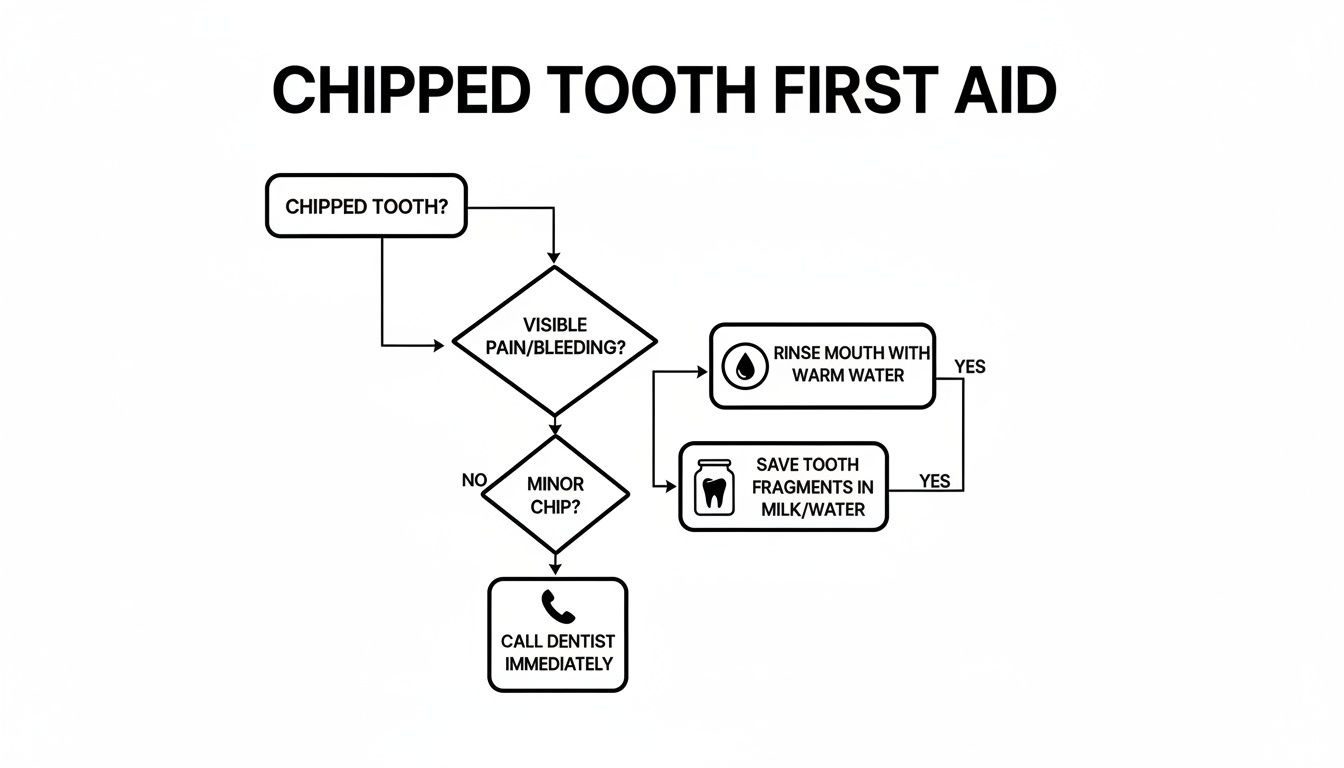
It really boils down to three simple actions: rinse your mouth, save the piece if you can find it, and call us. We'll tell you exactly what to do next based on your specific situation.
What if It’s Just a Minor Chip?
If the chip is tiny, doesn't hurt, and isn't cutting your tongue or cheek, you can likely schedule an appointment for the next day or two.
But be clear: "less urgent" does not mean "ignore it." You must call and schedule a visit. Leaving any chip untreated is asking for trouble later.
Exploring Professional Tooth Repair Options
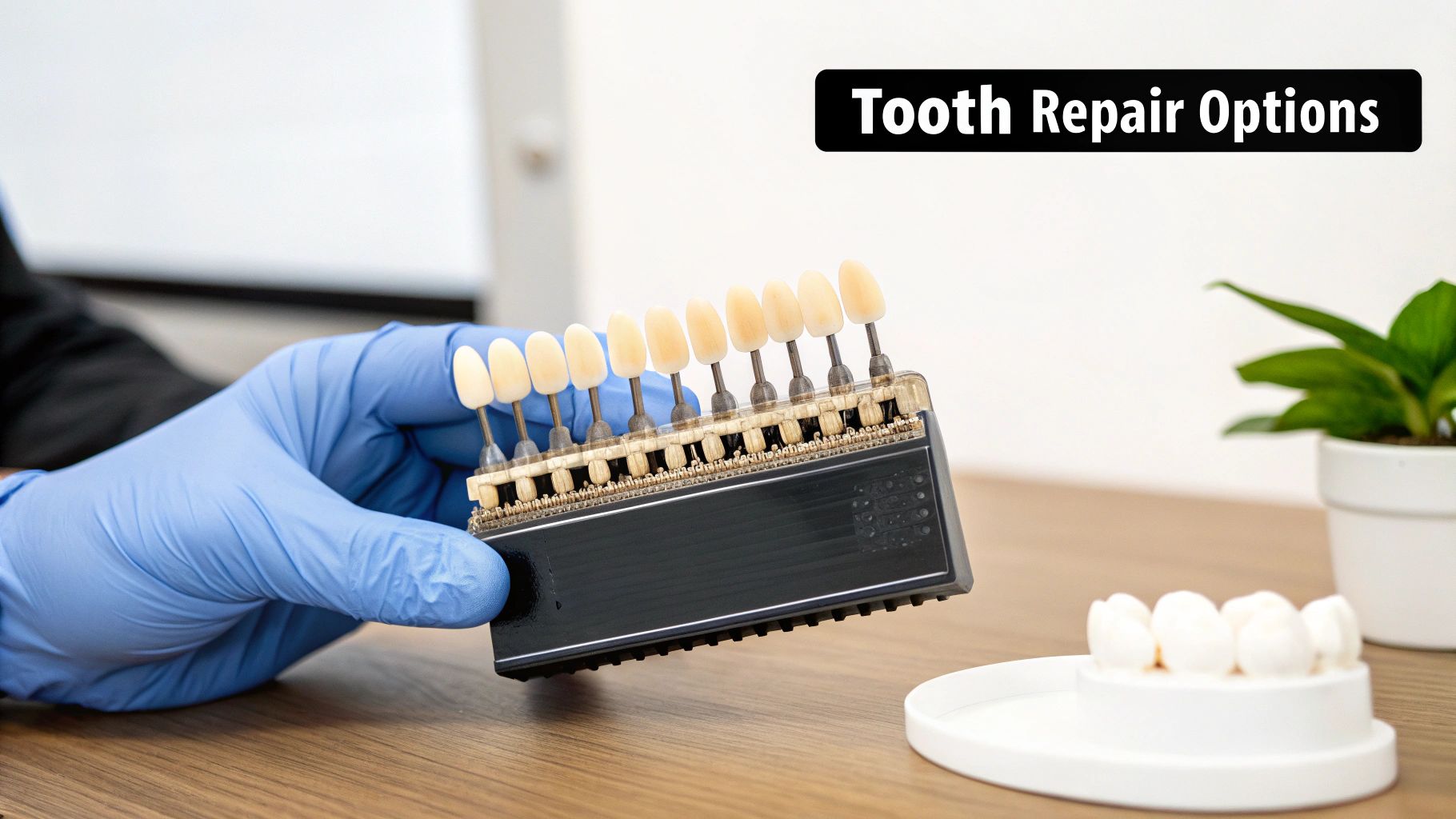
Once you're in the dental chair, the goal is to find a lasting, professional solution. Your dentist will examine the chip's size, location, and severity to determine the best way to restore your tooth's function and appearance.
Modern dentistry offers a range of excellent options, from quick cosmetic fixes to robust structural repairs, tailored to your unique situation.
For Minor Cosmetic Chips: Dental Bonding
For small, straightforward chips, especially on front teeth, dental bonding is the most common solution. The process is like a sculptor rebuilding the missing part of your tooth and is almost always done in a single visit.
A tooth-colored composite resin is applied directly to the chipped area, then meticulously shaped and polished until it blends seamlessly with your natural tooth. When done correctly, the repair is virtually invisible. You can learn more about the details in our practical guide to the dental bonding procedure.
It's a fantastic solution because it's minimally invasive—we preserve as much of your natural tooth as possible—making it both effective and budget-friendly for minor damage.
For Visible Front Teeth: Porcelain Veneers
When a chip on a front tooth is more noticeable, or if you want to correct other issues like discoloration at the same time, a porcelain veneer is an excellent option. A veneer is a custom-made, paper-thin shell of durable ceramic bonded to the front of your tooth.
Veneers offer several key advantages:
Exceptional Aesthetics: Porcelain mimics the light-reflecting properties of natural enamel for a stunning, lifelike result.
Stain Resistance: Unlike natural teeth, porcelain is highly resistant to staining from coffee, tea, and red wine.
Durability: With proper care, veneers provide a strong, long-lasting restoration.
Getting a veneer typically requires two appointments: one to prepare the tooth and take impressions, and a second to permanently place your custom-crafted restoration.
For Significant Damage: Dental Crowns
If a large piece of your tooth has broken off or the chip has weakened the tooth's structure, a dental crown is the most reliable repair. A crown, or cap, covers the entire visible part of the tooth, giving it 360-degree protection.
This is critical for molars, which handle tremendous chewing forces. A crown restores the tooth to its original shape, size, and strength, so you can bite and chew with confidence.
A Word of Caution: Don't put off getting a significant chip looked at. Research on cracked and chipped teeth shows that 21% to 29% of these cases eventually need a root canal if left untreated. What starts as a simple chip can deepen into a full-blown split, sometimes leading to tooth loss.
Modern crowns made from all-porcelain or zirconia look incredibly natural. At our practice, we can often create and place your permanent crown in a single visit, so you don't have to deal with temporaries.
When the Damage Reaches the Nerve
If a chip is deep enough to expose the tooth's inner pulp (the chamber with nerves and blood vessels), it usually causes intense pain and sensitivity. If the pulp becomes damaged or infected, a root canal is necessary to save the tooth.
During a root canal, the infected pulp is removed, the inside of the tooth is cleaned and disinfected, and then it is sealed. Afterward, a dental crown is almost always placed over the tooth to protect it from breaking and restore its full function.
Comparing Chipped Tooth Repair Options
Choosing the right repair depends on factors like the chip's location and your cosmetic goals. This table breaks down the most common solutions.
Treatment | Best For | Durability | Typical Time |
|---|---|---|---|
Dental Bonding | Small, cosmetic chips on low-stress teeth (like front teeth). | 5-7 years | A single visit (30-60 mins) |
Porcelain Veneer | Moderate chips on front teeth; correcting cosmetic issues. | 10-15+ years | Two appointments |
Dental Crown | Large chips, cracked teeth, or damage to molars. | 15+ years | One to two appointments |
Root Canal + Crown | Deep chips that expose the tooth's nerve and pulp. | Long-term (crown may need replacing) | Two or more appointments |
Each option has its place, and the best path forward is always determined after a thorough exam. We'll discuss the pros and cons of each treatment so you can make a confident decision about restoring your smile.
Navigating Dental Anxiety and Pain Management
For many people, the thought of getting a chipped tooth fixed is more frightening than the injury itself. If dental appointments make you anxious, you are not alone. A huge number of adults deal with dental anxiety, but there are effective ways to ensure your comfort.
Your well-being is a core part of the treatment process. We focus on creating a space and offering options that make your visit as calm and painless as possible.
Finding Calm in the Dental Chair
Start by telling us about your anxiety when you call. A good dental team wants to hear your concerns. We will take the time to explain every step, so there are no surprises.
We also work to create a relaxing atmosphere. Little things can make a massive difference:
Cozy Comforts: We offer warm blankets, plush chairs, and even Netflix to help you tune out and relax.
Clear Communication: We will always tell you what we're doing and why, so you feel in control of your care.
Breaks on Your Terms: If you feel overwhelmed, just raise your hand. We can pause anytime you need a moment.
It's a total myth that you have to just "white-knuckle" your way through a dental visit. The truth is, your mental comfort is directly tied to your physical comfort and how well the treatment goes. Taking care of your anxiety is just as important as fixing the tooth.
Sedation Options for a Genuinely Stress-Free Visit
For patients who need extra help feeling at ease, sedation dentistry is a safe and effective solution.
A popular and gentle option is nitrous oxide, or "laughing gas." You breathe it in through a small mask over your nose, creating a light sense of relaxation. You remain awake and can communicate, but the anxiety fades. The effects wear off within minutes, so you can drive yourself home.
If your anxiety is more intense, oral conscious sedation may be a better fit. You take a prescribed pill before coming to the office. By the time you arrive, you’ll feel profoundly calm and perhaps a bit drowsy. You'll still be conscious but so relaxed that you may not remember the procedure afterward. For this option, you will need someone to drive you home.
Knowing you have these options can make all the difference. If you want to explore this topic further, take a look at our guide on how to overcome dental anxiety with proven strategies. You can also find some great external resources on How to Calm Anxiety Naturally that can help make any dental visit easier.
How to Keep Your Teeth from Chipping Again
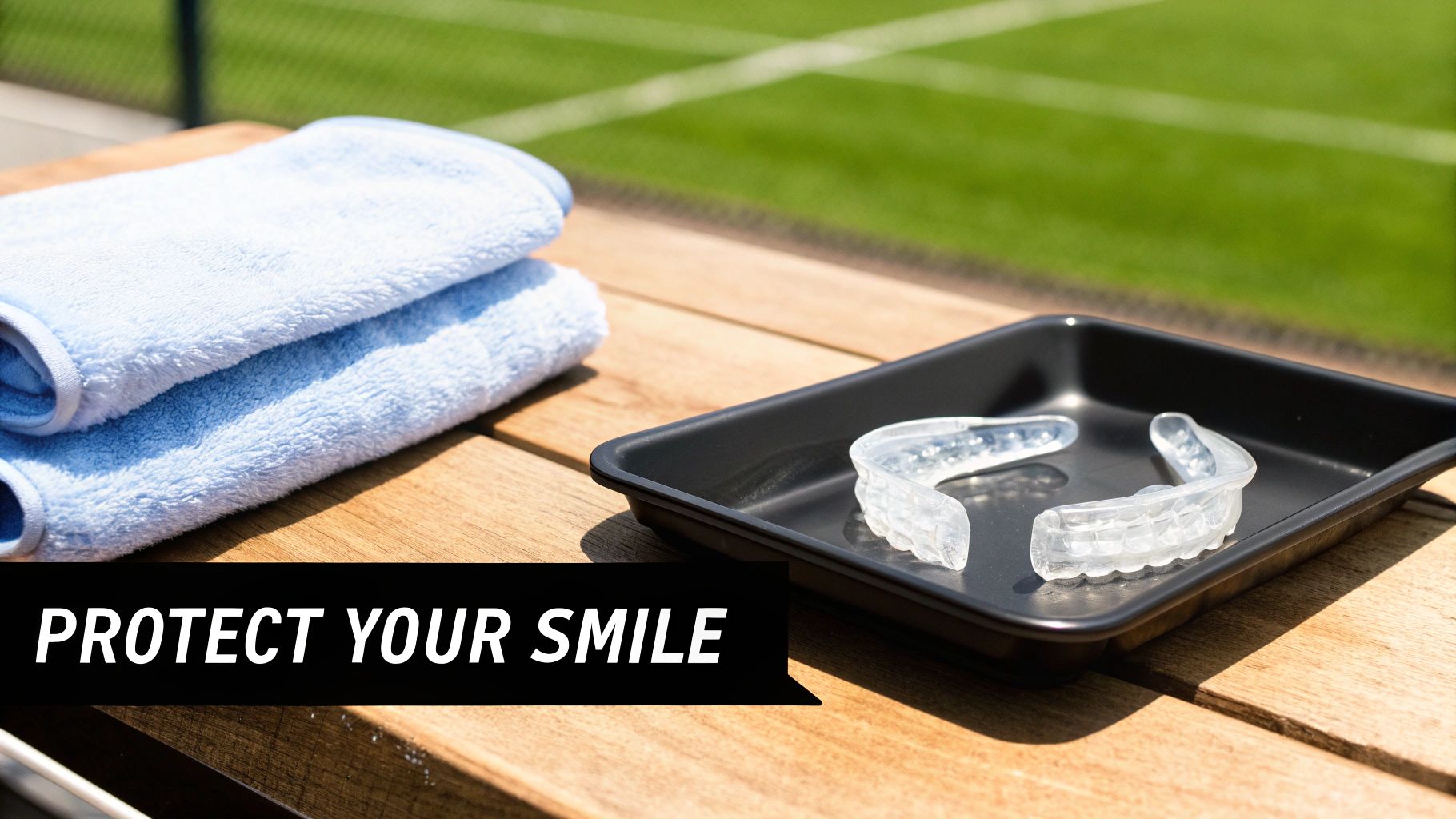
Once your smile is repaired, your next goal is prevention. This means building smart, proactive habits to shield your teeth from the forces that cause damage.
Many fractures are not accidents but the result of accumulated wear or risky habits. By addressing the root cause, you can dramatically reduce your chances of another dental emergency.
Gear Up: Your Smile's Best Defense
If you are active in sports with potential contact—like basketball, soccer, or hockey—wear a custom-fitted mouthguard. A guard made by your dentist is molded to your teeth, absorbs impact more effectively than generic types, and is a small investment that prevents significant injury.
The other essential piece of gear is a nightguard. Many people grind or clench their teeth at night (bruxism), often without knowing it. This puts incredible force on your teeth, creating microfractures that lead to chips. A custom nightguard creates a protective buffer, absorbing that pressure and saving your enamel.
During your check-up, your dentist can spot the classic signs of grinding, like worn-down chewing surfaces. If they suggest a nightguard, listen to them. It's one of the most effective things you can do to protect your teeth long-term.
It's the Little Habits That Make a Big Difference
Often, the greatest dangers to our teeth are seemingly harmless habits. Changing a few of these can prevent another frantic search for what to do when you chip a tooth.
Take action on these common culprits:
Stop using teeth as tools. Do not rip open packages, bite tags off clothing, or hold nails with your mouth. Your teeth are for chewing food only.
Don't chew on hard things. Avoid ice, un-popped popcorn kernels, hard candy, and pen caps. These create pressure points that can fracture a tooth.
Be present when you eat. Pay attention while chewing to avoid biting down on an olive pit, a piece of bone, or a hard nut.
Ultimately, your best defense is consistent dental care. Regular check-ups allow your dentist to spot and fix weak spots—like an old filling or a tiny crack—before they become a painful, expensive problem.
Your Chipped Tooth Questions, Answered
After the initial shock of a chipped tooth, questions start to surface. Here are clear, reliable answers to the most common concerns.
Can a Chipped Tooth Heal on Its Own?
No. A chipped tooth cannot heal or grow back. Tooth enamel has no living cells to regenerate lost tissue. Once a piece is gone, it’s gone for good.
Ignoring the damage is a gamble. An untreated chip can leave a rough edge that irritates your tongue, trap bacteria that lead to decay, or develop into a larger crack. The only solution is a professional repair to restore the tooth’s strength and seal it from further harm.
How Much Does It Cost to Fix a Chipped Tooth?
The cost varies depending on the severity of the damage and the type of treatment. We will always work with you to find a solution that fits your budget.
Here is a general cost breakdown of the options:
Dental Bonding: This is the most budget-friendly option for small, cosmetic chips.
Porcelain Veneer: A larger investment, but it delivers a stunning, long-lasting result for more noticeable chips on front teeth.
Dental Crown: For a major fracture or a chipped molar, a crown offers the best protection and is priced accordingly.
Before any work begins, our team will provide a transparent breakdown of all costs and discuss insurance or payment options.
Here’s a piece of advice I always give my patients: getting treatment right away is almost always the more affordable option. Fixing a small chip with bonding costs a fraction of what a root canal and crown would, which is often where you end up if the damage is ignored and gets worse.
What if I Swallowed the Broken Tooth Fragment?
First, don't panic. Swallowing a small piece of your tooth is common and rarely a medical emergency. The fragment is almost always small enough to pass through your digestive system without any issues.
Focus on the tooth still in your mouth. You have a sharp edge and an exposed inner layer that is vulnerable. Follow the first-aid steps: rinse gently with warm water and call us to schedule an appointment as soon as possible.
Should I Use a Temporary Filling Kit from the Pharmacy?
Temporary filling kits can seem like a tempting quick fix, but use them with extreme caution and only as a last resort if you cannot get to a dentist.
The problem is that these materials can trap bacteria against the exposed part of your tooth, potentially leading to infection or decay.
Your safest bet is always to call us first. We can give you solid advice over the phone and will do everything possible to see you for a same-day emergency appointment. A professional repair is the only way to ensure the tooth is properly sealed, protected, and restored for the long term.
At Beautiful Dentistry, we know that a chipped tooth is more than just an inconvenience—it's a stressful and disruptive experience. Our team is here to provide fast, compassionate, and expert care to get your smile and your peace of mind back. If you're dealing with a dental emergency, don't put it off. Contact us today to schedule your appointment. You can find us online at https://zdentist.com.


Comments