

What Is Oral Conscious Sedation and How Does It Work?

For many people, the thought of a dental visit is enough to cause real anxiety. If that sounds familiar, oral conscious sedation could be the key to getting the care you need without the stress. It’s a straightforward, needle-free approach where you simply take a prescribed pill before your appointment. The goal? To help you reach a state of deep relaxation while you remain awake and in control.
What is Oral Conscious Sedation, Really?
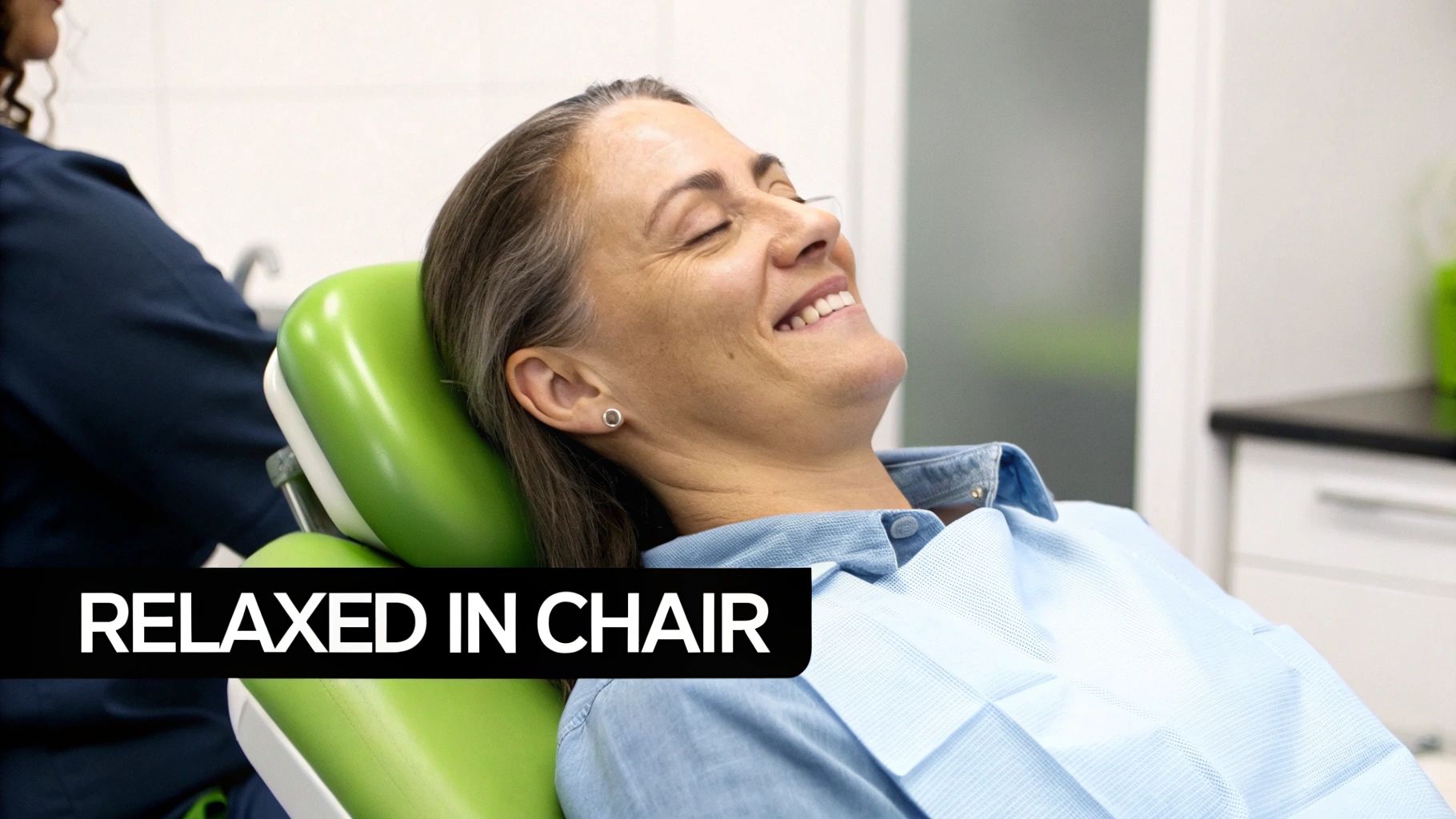
Picture yourself settling into the dental chair feeling completely calm, almost like you’re in a light, pleasant dream. That’s the experience oral conscious sedation aims to create. It offers a practical middle ground—more relaxing than laughing gas but without the total unconsciousness of general anesthesia.
This method is a game-changer for the nearly 40 million Americans who struggle with significant dental anxiety. That feeling of dread is your body’s natural fight-or-flight response kicking in. Oral sedation acts directly on the central nervous system to gently dial down that stress reaction before it starts, giving you a clear path to getting necessary dental care.
So, How Will I Feel During My Appointment?
Once the medication takes effect, you’ll feel drowsy and profoundly relaxed. You won’t be asleep, so you can still respond to your dentist's questions and follow simple instructions. The difference is that the sounds, sights, and sensations of the dental office will feel distant and unimportant.
This gentle approach creates a sense of detachment, allowing you to get the care you need without the usual anxiety. Most patients tell us their appointments feel like they only took a few minutes.
A key benefit to prepare for is the medication's amnesic effect. It's very common to have little or no memory of the procedure afterward. This helps break the cycle of fear, making future dental visits much less intimidating and easier to schedule.
Who Is a Good Candidate for This?
Oral conscious sedation is an excellent solution for anyone who needs more help than a comforting chairside manner can provide. You should discuss this option with your dentist if you:
Experience moderate to severe dental phobia.
Have a strong gag reflex that makes treatment difficult.
Need to complete long or complex procedures in a single visit.
Find it hard to get fully numb with local anesthetic alone.
By taking a small pill about an hour before your visit, you can turn a stressful event into a calm, manageable experience. It puts you back in control of your oral health, ensuring fear doesn’t stand in the way.
How a Simple Pill Creates a Calm Dental Visit
It might seem like a bit of magic, but the way oral conscious sedation eases dental anxiety is grounded in simple science. It all starts with a small pill prescribed by your dentist, which you'll typically take about an hour before your appointment. The medication is usually from a class of sedatives called benzodiazepines, which have been used safely in medicine for decades.
Think of your brain's communication network as a busy highway. When you feel anxious, it's like a massive traffic jam—fear and stress signals are firing off everywhere. Benzodiazepines act like skilled traffic controllers. They boost the effect of a natural chemical messenger in your brain called GABA (gamma-aminobutyric acid). GABA's main job is to slow things down, effectively turning down the volume on your body's stress alerts.
The Journey into Relaxation
After you take the pill, the medication is absorbed and begins calming your central nervous system. You'll begin to notice a gentle wave of drowsiness and a profound sense of relaxation washing over you. The tension you might have been holding in your shoulders and jaw just melts away.
The result is a wonderfully calm state. You're still technically awake, but you feel comfortably detached from what's happening around you. You'll be able to hear us and respond to simple questions, but your perception of the appointment itself will become pleasantly hazy. Many patients feel like time flies by, and the usual sights and sounds of the dental office fade into the background.
The goal of oral conscious sedation isn't to knock you out. It’s to create a powerful buffer between you and your dental fears, allowing you to have a genuinely peaceful and comfortable experience from beginning to end.
Your Safety is Always Our Top Priority
While you're relaxing, our team is completely focused on your well-being. To ensure your safety, we use modern monitoring equipment to keep a close, constant watch on your vitals throughout your entire visit.
This continuous monitoring includes:
Pulse Oximetry: A small, painless clip on your fingertip keeps track of your blood oxygen levels and heart rate.
Blood Pressure Monitoring: We'll check your blood pressure periodically to make sure it stays stable and in a healthy range.
This diligent supervision ensures you remain safe and comfortable the entire time. You can truly rest easy, knowing you're in expert hands and finally able to get the dental care you need without the weight of anxiety holding you back.
Comparing Your Dental Sedation Options
When it comes to dental sedation, there isn't a one-size-fits-all solution. Think of it less like a switch and more like a spectrum, ranging from light relaxation to complete unawareness. Finding the right spot on that spectrum is key to a comfortable and stress-free experience.
To help you picture it, let’s use an analogy. Nitrous oxide is like a casual bike ride—it’s a gentle, easy way to take the edge off, and you're in full control. Oral conscious sedation is more like a comfortable train journey; you're relaxed and awake, but not steering. IV sedation is a quick flight, and general anesthesia is a long-haul trip where you sleep through the entire journey and wake up at your destination.
This simple diagram shows how a small pill can create a state of profound calm, allowing you to get the care you need without the fear.

The medication works by gently calming the parts of your brain that trigger anxiety, which allows your body to relax completely during your appointment.
Oral Sedation vs. Nitrous Oxide
Nitrous oxide, or "laughing gas," is the mildest option. You simply breathe it in through a small nose mask. It works within minutes to create a light, floaty feeling and wears off just as quickly once the mask is removed. This makes it a great choice for mild anxiety during routine procedures like fillings, and you can drive yourself home right after.
Oral conscious sedation takes things a step further. You’ll take a prescribed pill about an hour before your appointment, leading to a much deeper and longer-lasting state of relaxation. It's the perfect middle ground for patients with moderate dental phobia or for those undergoing longer treatments. The one big difference? You'll definitely need a trusted friend or family member to drive you to and from your appointment.
Stepping Up to IV Sedation and General Anesthesia
For more complex procedures or severe anxiety, there are stronger options. IV sedation is administered directly into a vein, which gives your dentist incredibly precise control over your sedation level in real-time. It works almost instantly and can be adjusted as needed. You can learn more about this method in our guide to IV sedation dentistry.
General anesthesia is the deepest form of sedation, where you are completely unconscious. This is typically reserved for major oral surgeries and is always performed in a hospital or a specialized surgical facility with an anesthesiologist present.
Oral conscious sedation hits that sweet spot for most people. It provides significant anxiety relief without the intensity, cost, or complex monitoring that comes with IV sedation or general anesthesia.
To make comparing these options even easier, here's a quick side-by-side look.
Dental Sedation Options at a Glance
This table breaks down the key differences between the most common types of dental sedation to help you understand which one might be the best fit for you.
Feature | Oral Conscious Sedation | Nitrous Oxide ('Laughing Gas') | IV Sedation | General Anesthesia |
|---|---|---|---|---|
How It's Administered | A pill taken by mouth | Inhaled through a nose mask | Directly into a vein (IV) | Combination of IV and inhaled gas |
Level of Sedation | Minimal to moderate | Mild (anxiolysis) | Moderate to deep | Unconscious |
Consciousness | Awake, but very drowsy | Fully conscious and responsive | "Twilight sleep," conscious but unaware | Completely unconscious |
Recovery Time | Several hours | A few minutes | Several hours | Many hours |
Need a Driver? | Yes, absolutely | No | Yes, absolutely | Yes, absolutely |
Best For | Mild to moderate anxiety, longer procedures | Mild anxiety, simple procedures | Moderate to severe anxiety, complex surgery | Severe anxiety, major surgery |
Ultimately, the best choice depends on your personal anxiety level, your medical history, and the type of dental work you need. Your dentist will help you make the most informed decision.
It typically involves a prescribed pill from the benzodiazepine family, which helps you reach a state of minimal-to-moderate sedation where you remain awake and able to respond. It’s no surprise that 75.7% of dentists in the United States and Canada regularly use some form of conscious sedation. This statistic shows how safe, effective, and essential this tool has become in making modern dentistry accessible to everyone, regardless of their fear.
Is Oral Conscious Sedation Right for You?
Figuring out if oral conscious sedation is the best path forward comes down to your comfort level, your medical history, and what kind of dental work you need. It's a fantastic option for many, but a conversation with your dentist is the best way to determine if it's right for you.
Let's break down who this approach helps the most, and when you might need to consider something different.
This method is a game-changer for people whose dental anxiety is so intense that it stops them from getting care. For so many, the dread tied to a dental visit is a specific kind of situational anxiety. Oral sedation tackles this head-on by calming your nerves before you even get into the dental chair.
Who Benefits Most from Oral Sedation?
Every person is different, but you might be a perfect candidate if any of this sounds familiar. Be sure to discuss these points with your dentist.
Moderate to Severe Dental Anxiety: If just thinking about the dentist makes your heart race, oral sedation can provide the deep sense of calm you need to get through it.
A Strong Fear of Needles: This is a big one. Since the medication is just a small pill you swallow, it's a completely needle-free way to relax.
A Sensitive Gag Reflex: When you're truly relaxed, your gag reflex is naturally suppressed. This makes the whole experience more comfortable for you and allows your dentist to work more easily.
Difficulty Getting Numb: High anxiety can make it harder for local anesthetics to work properly. By calming your entire system, sedation helps the numbing agent do its job much more effectively.
It's also a practical choice if you need a lot of work done in one go. Staying relaxed for a longer appointment makes complex procedures feel far less overwhelming. If you want to dive deeper into this, we have a guide on how to overcome dental anxiety with proven strategies.
When Another Option Might Be Better
While oral conscious sedation is extremely safe for most healthy adults, there are times when it’s not the right fit. A careful, honest review of your medical history is the most important step to guarantee your well-being.
Your safety is our absolute priority. A transparent conversation about your health is the first step in finding the best and safest sedation method for your unique situation.
There are a few instances where your dentist will likely steer clear of this method and suggest an alternative:
Pregnancy: We generally avoid any sedation during pregnancy to protect both mom and baby.
Certain Respiratory Conditions: Anyone with a condition like severe COPD or sleep apnea might face added risks.
Specific Allergies: If you have a known allergy to benzodiazepines (the most common family of oral sedatives), this is obviously not the route for you.
Uncontrolled Medical Issues: Before proceeding, you and your dentist will need to ensure any significant health conditions are stable and well-managed.
Ultimately, this is a decision we make together. By talking openly about your fears, your health, and your goals for treatment, we can confidently land on the option that will give you a safe, comfortable, and genuinely positive experience.
What to Expect During Your Sedation Appointment
Walking into a dental appointment can be nerve-wracking, but knowing exactly what’s going to happen can make a world of difference. When you know the step-by-step process for oral conscious sedation, there are no surprises—just a calm, predictable experience.
Let's break down what your journey will look like, from the initial chat all the way through to your recovery at home.
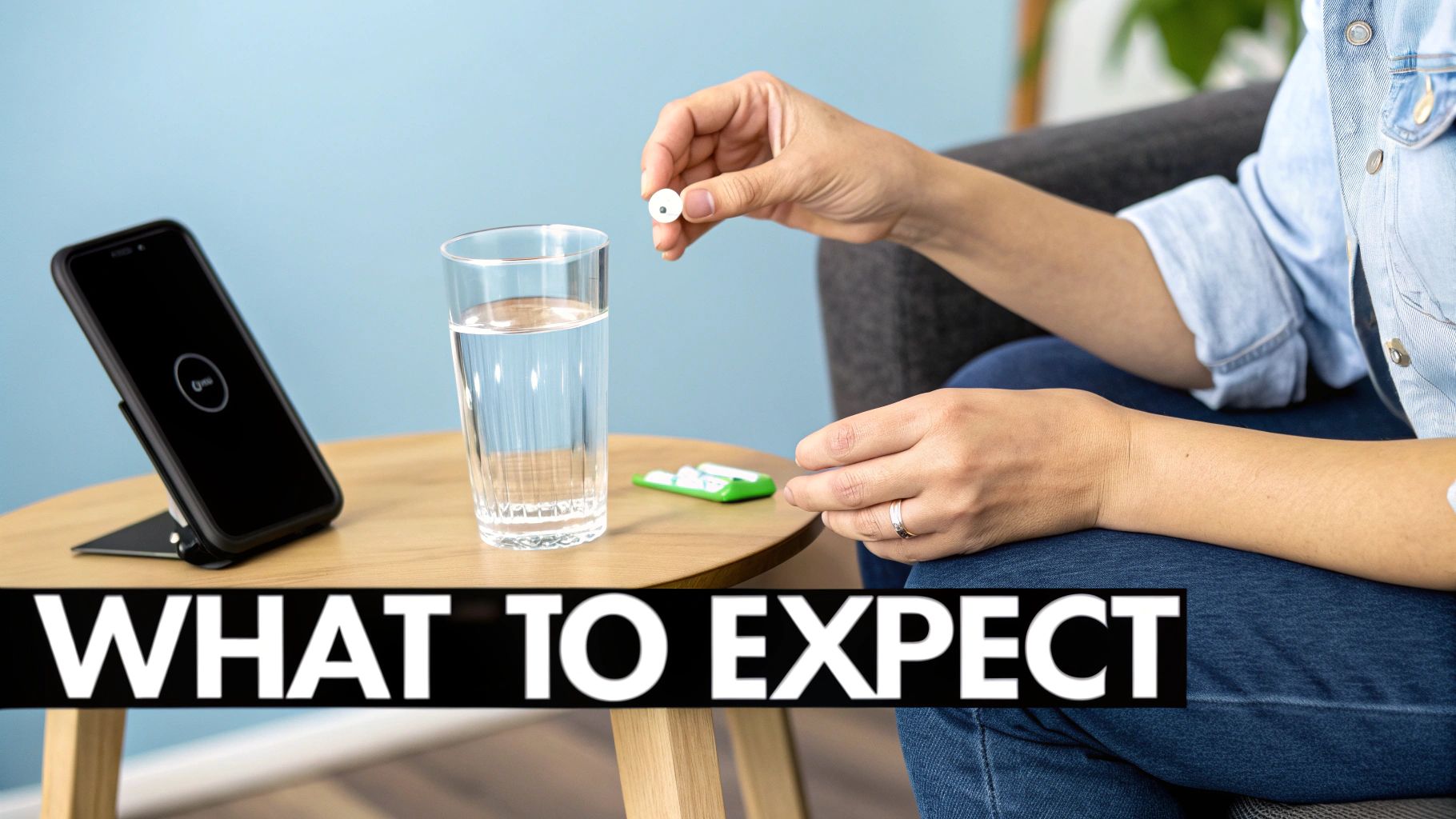
It all starts with a detailed consultation. This is where we sit down and talk, reviewing your full medical history and any concerns you have. This conversation is crucial for us to select the perfect medication and dosage for you, ensuring your complete safety and comfort.
Preparing for Your Visit
Once we’ve determined that oral sedation is a great fit for you, we’ll give you a clear set of pre-appointment instructions. Proper preparation is the key to a safe and effective sedation experience.
Here’s a checklist of what you’ll need to do:
Arrange a Driver: This is non-negotiable. You must have a responsible adult bring you to the office and take you home. The sedative’s effects will make it unsafe for you to drive for the rest of the day. Confirm this with your driver well in advance.
Fasting Instructions: We'll ask you to stop eating or drinking for at least six hours before your appointment. This is a vital safety precaution to prevent any complications while you’re sedated. Set a reminder on your phone the night before.
Wear Comfortable Clothing: Choose loose-fitting clothes to ensure you are as comfortable as possible during your visit.
The Day of Your Appointment
On the big day, you’ll take the prescribed pill with a small amount of water about an hour before leaving for our office. By the time your driver gets you here, you’ll already feel a wave of deep relaxation and drowsiness washing over you.
Once you’re settled in the dental chair, our team will immediately begin monitoring your vital signs—your heart rate, blood pressure, and oxygen levels. We keep a close eye on these monitors throughout the entire procedure to make sure you are safe and sound. You’ll be relaxed and sleepy, but still able to communicate with us if you need to.
It’s estimated that between 6% and 14% of the population has such severe dental anxiety that they avoid necessary care. This is a key reason sedation has become so common.
In fact, a survey of dentists found that over 75% now regularly use conscious sedation, transforming it from a niche service to a standard tool for patient comfort. These methods allow millions to overcome dental phobia and get the care they need.
Your Recovery After Sedation
When your treatment is finished, your driver will take you home. The effects of the sedative will stick around for several hours, so plan on taking it easy for the rest of the day.
Here is your post-appointment action plan:
Rest: Have a friend or family member stay with you until the medication has fully worn off.
Avoid: Do not drive, operate any machinery, cook, or make important decisions for at least 24 hours.
Hydrate & Eat Soft Foods: Once you feel up to it, start with clear liquids and soft foods.
Follow Post-Op Instructions: Adhere to any specific after-care instructions related to your dental procedure itself.
Just kick back, relax, and let your body recover in peace.
Common Questions About Oral Conscious Sedation
It's completely normal to have a few questions, even after learning the basics. Here are straightforward answers to the questions we hear most often so you can feel fully confident in your decision.
Is Oral Conscious Sedation Safe?
Yes, absolutely. When managed by a trained dentist, oral conscious sedation has a strong safety record. The first step is a thorough review of your medical history and any medications you're currently taking. This isn't just a formality—it's how we choose the right sedative and the precise dose for your body.
Throughout your appointment, we continuously monitor your heart rate, blood pressure, and blood oxygen levels with modern equipment. This ensures you’re safe from start to finish.
Will I Be Completely Asleep?
No, you won't be asleep. This is the biggest difference between what is oral conscious sedation and general anesthesia. You'll feel deeply relaxed and drowsy, but you’ll still be "with us" and able to respond if we ask you a question.
One of the best parts is the medication’s amnesic effect. Even though you're technically awake, most patients remember little to nothing about the procedure afterward. This feature is fantastic for breaking the cycle of dental anxiety.
How Will I Feel After the Procedure?
Plan on feeling pretty groggy and relaxed for several hours as the medication wears off. That’s why it is mandatory to have a responsible friend or family member drive you home and stay with you for the rest of the day.
Your only job is to take it easy. For the next 24 hours, you must avoid driving, operating machinery, cooking, or making important decisions. Your coordination and judgment won't be back to normal until the sedative is completely out of your system.
Are There Special Instructions Before My Appointment?
Yes, and following them is crucial for your safety. Our team will give you a detailed set of pre-appointment instructions tailored to you.
The most common guideline is to avoid eating or drinking for at least six hours before you come in. An empty stomach is a key safety precaution that helps prevent potential complications during sedation. We’ll walk you through every single guideline during your consultation so you know exactly what to do.
At Beautiful Dentistry, we put your comfort and safety above all else. If you have more questions about oral conscious sedation or want to see if it’s a good fit for you, we’re here to talk. You can schedule a friendly, no-pressure consultation by visiting us at https://zdentist.com and take the first step toward a dental experience you can actually look forward to.


Comments