

What Are Inlays and Onlays? An Actionable Dental Guide

When your tooth has more damage than a simple filling can fix, but not enough to require a full crown, you need a solution that hits the sweet spot. This is where dental inlays and onlays come in. Think of them as custom-made restorations that fit into your tooth like a puzzle piece, restoring its strength and shape while preserving as much of your natural tooth structure as possible.
Making the right choice here is key to avoiding more extensive dental work down the road. Inlays and onlays provide a durable, long-term repair that can significantly strengthen a compromised tooth.
The Smart "In-Between" Solution
Inlays and onlays are often called "indirect fillings" because they are fabricated as a single, solid piece outside of your mouth—either in a dental lab or with in-house technology—before being bonded to your tooth. This is a critical difference from a standard filling, which is packed directly into the cavity.
This process gives you a stronger, more durable restoration. When bonded in place, an inlay or onlay doesn't just patch a hole; it can actually increase the tooth's overall strength, seal it against bacteria, and prevent future fractures. Deciding on an inlay or onlay is an investment in the long-term health and function of your tooth.
A Growing Trend in Modern Dentistry
Patients are increasingly seeking dental treatments that are both conservative and aesthetically pleasing, which is why inlays and onlays are becoming a go-to option. The global market for these restorations is projected to grow from USD 4.0 billion to USD 7.0 billion by 2030. This growth is heavily driven by same-day technology that lets you walk out with a final restoration in a single visit. You can review the specifics of this dental market trend from industry research.
This chart helps you visualize where inlays and onlays fit in your restorative options.
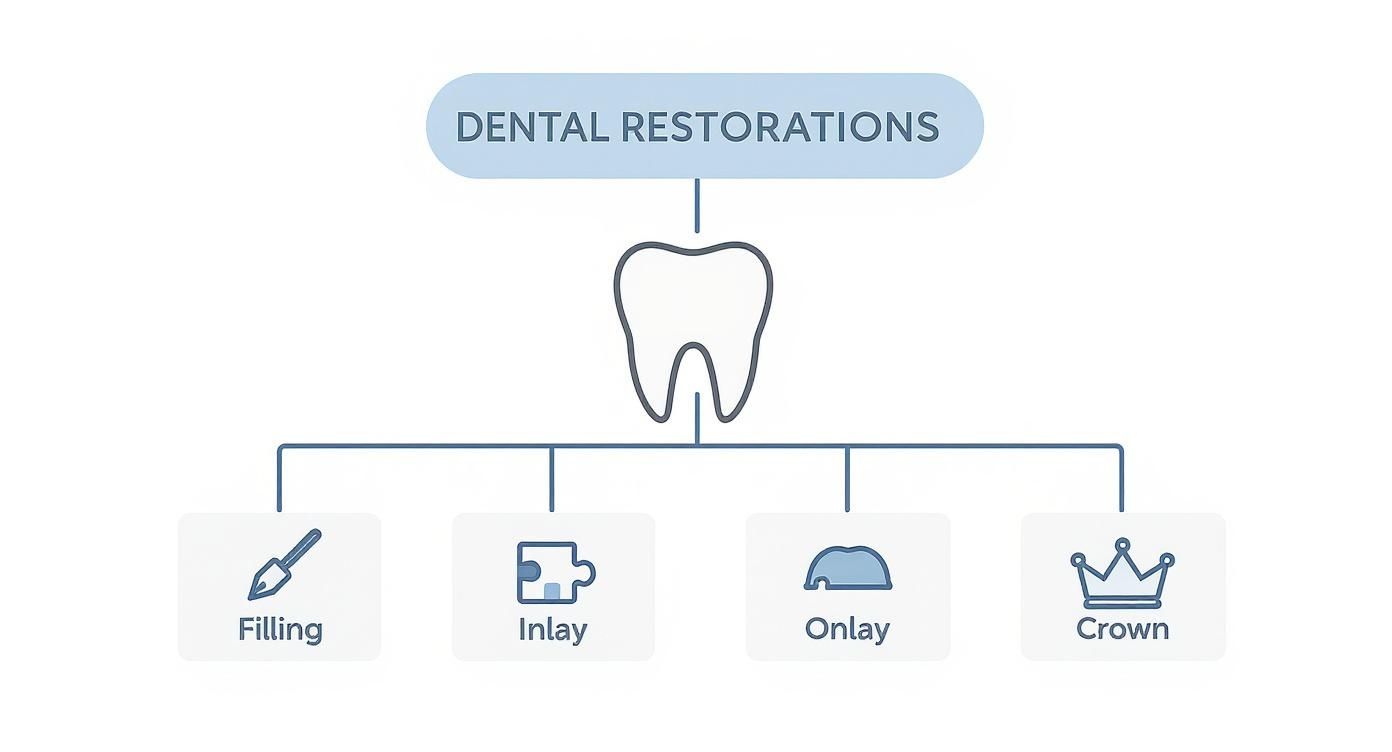
As you can see, the decision is based on the extent of the damage. A filling handles minor decay, a crown protects a severely compromised tooth, and inlays and onlays are the ideal solution for the moderate damage in between.
To help you understand your options, here’s a clear breakdown.
Comparing Inlays, Onlays, Fillings, and Crowns
Restoration Type | Area of Tooth Covered | Your Actionable Decision Point | Tooth Preservation |
|---|---|---|---|
Filling | Within the cusps (chewing bumps) | Choose for small to moderate cavities with strong surrounding tooth structure. | Maximum |
Inlay | Within the cusps, fabricated as one solid piece | Choose for larger cavities where a filling might fail but the cusps are intact. | High |
Onlay | Covers one or more of the tooth's cusps | Choose for moderate damage that includes a cracked or weak cusp. | Moderate |
Crown | Covers the entire visible surface of the tooth | Choose for severely damaged teeth or after a root canal. | Minimum |
This table clarifies the specific role each restoration plays. Your dentist's primary goal is to match the right solution to your specific problem while saving as much healthy tooth structure as possible.
Understanding the Inlay vs Onlay Difference
While both are custom-fit restorations, the key difference between an inlay and an onlay is simple: how much of the tooth they cover. Your dentist's decision between the two comes down to the health of your tooth's cusps—the pointed peaks on the chewing surface of your back teeth.
Think of it this way:
An inlay is like patching a pothole. It fits within the chewing surface of the tooth.
An onlay not only fills the pothole but also resurfaces the cracked pavement around it, covering one or more of those cusps to protect them.
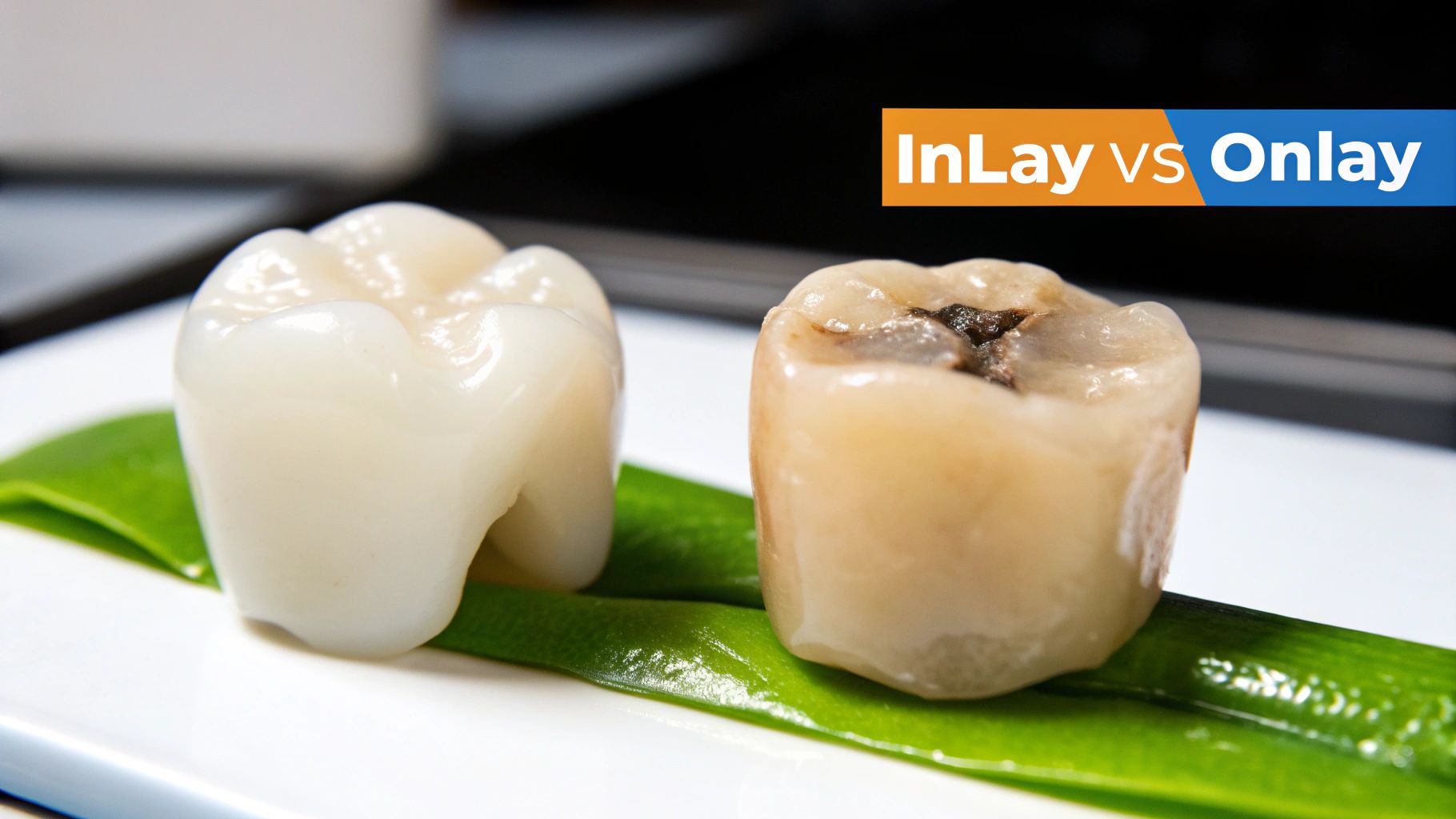
This distinction in coverage is how your dentist determines the most conservative yet effective way to restore your tooth's strength and prevent future problems.
When an Inlay Is the Right Choice
An inlay is the more conservative option, designed to fit perfectly between the cusps without covering them.
An inlay is the recommended course of action when:
The damage is contained entirely within the indented chewing surface of the tooth.
Your tooth's cusps are strong, healthy, and not at risk of fracture.
You need to replace a large, old filling that hasn't compromised the tooth's structural integrity.
By fitting precisely inside the tooth, an inlay reinforces the internal structure and provides a superior seal against bacteria.
When an Onlay Is Necessary
An onlay offers more substantial coverage by extending over one or more of the tooth's cusps, which is why it’s often called a "partial crown."
An onlay is the perfect middle-ground solution. It’s for a tooth that's too damaged for a simple filling or inlay but not damaged enough to justify grinding it down for a full crown. It rebuilds the tooth while saving healthy enamel.
An onlay is the right choice in these specific situations:
Damaged Cusps: Decay or a crack has weakened or fractured one or more cusps, making them vulnerable.
Serious Reinforcement Needed: The tooth requires significant structural support to withstand chewing forces without breaking.
The "In-Between" Scenario: The damage is too widespread for an inlay but not severe enough to justify removing healthy tooth structure for a full crown.
Choosing an onlay can be the critical step that saves your tooth from needing a more invasive and costly procedure later on. If the damage is more extensive, our guide can help you determine when you might need a dental crown.
Choosing the Right Material for Your Restoration
One of the most important decisions you'll make is choosing the material for your inlay or onlay. Your choice will directly impact the restoration's appearance, durability, and cost. Each option has clear benefits, and the right one for you depends on the tooth's location and your personal priorities.
We’ll guide you through the choices, but understanding these practical differences will help you make a confident decision that fits your smile, bite, and budget.

Porcelain: The Aesthetic Champion
For a tooth that shows when you smile, porcelain is the top choice. This ceramic material can be matched precisely to the shade of your natural teeth, making the restoration virtually invisible. It’s also highly resistant to stains, helping your smile stay bright for years.
The demand for porcelain is high; it accounted for over 30% of the USD 3.0 billion dental inlay and onlay market in 2021. Patients choose it for its beautiful, strong, and natural-looking finish.
Composite Resin: The Versatile Balancer
Composite resin offers a great balance between aesthetics and cost. This is the same tooth-colored material used for many modern fillings and in cosmetic bonding procedures. It delivers a natural look without the higher cost of porcelain.
While not as durable as porcelain or gold, modern composite materials are remarkably strong and are an excellent choice for repairing teeth with moderate damage. They also bond directly to the tooth, which helps seal and support the remaining structure.
Gold: The Durability Powerhouse
For maximum strength and longevity, nothing outperforms a gold alloy. It is incredibly durable and wears at a rate very similar to natural tooth enamel, which makes it gentle on the opposing teeth during chewing.
While not a cosmetic choice, for a back molar that endures immense chewing pressure, gold is a smart investment. A well-crafted gold restoration can easily last for decades, making it one of the most reliable and time-tested materials in dentistry.
Choosing Your Inlay and Onlay Material
This table gives you an actionable summary to help guide your decision with your dentist.
Material | Key Advantage | Main Consideration | Actionable Insight: Choose this for... |
|---|---|---|---|
Porcelain | Superior Aesthetics: Matches natural tooth color. | Can be abrasive to opposing teeth. | Visible teeth (premolars, front teeth) where appearance is the top priority. |
Composite Resin | Affordability: A cost-effective, tooth-colored option. | Can stain over time; less durable. | Small to moderate restorations when budget is a primary concern. |
Gold | Maximum Durability: Extremely strong and long-lasting. | Aesthetics: Highly visible and not tooth-colored. | Back molars that are not visible and require maximum strength and longevity. |
Ultimately, the best choice is a collaborative one. We’ll discuss your specific situation, analyze the biting forces on the tooth, and help you select the material that meets your functional needs and aesthetic goals.
What to Expect During the Inlay and Onlay Procedure
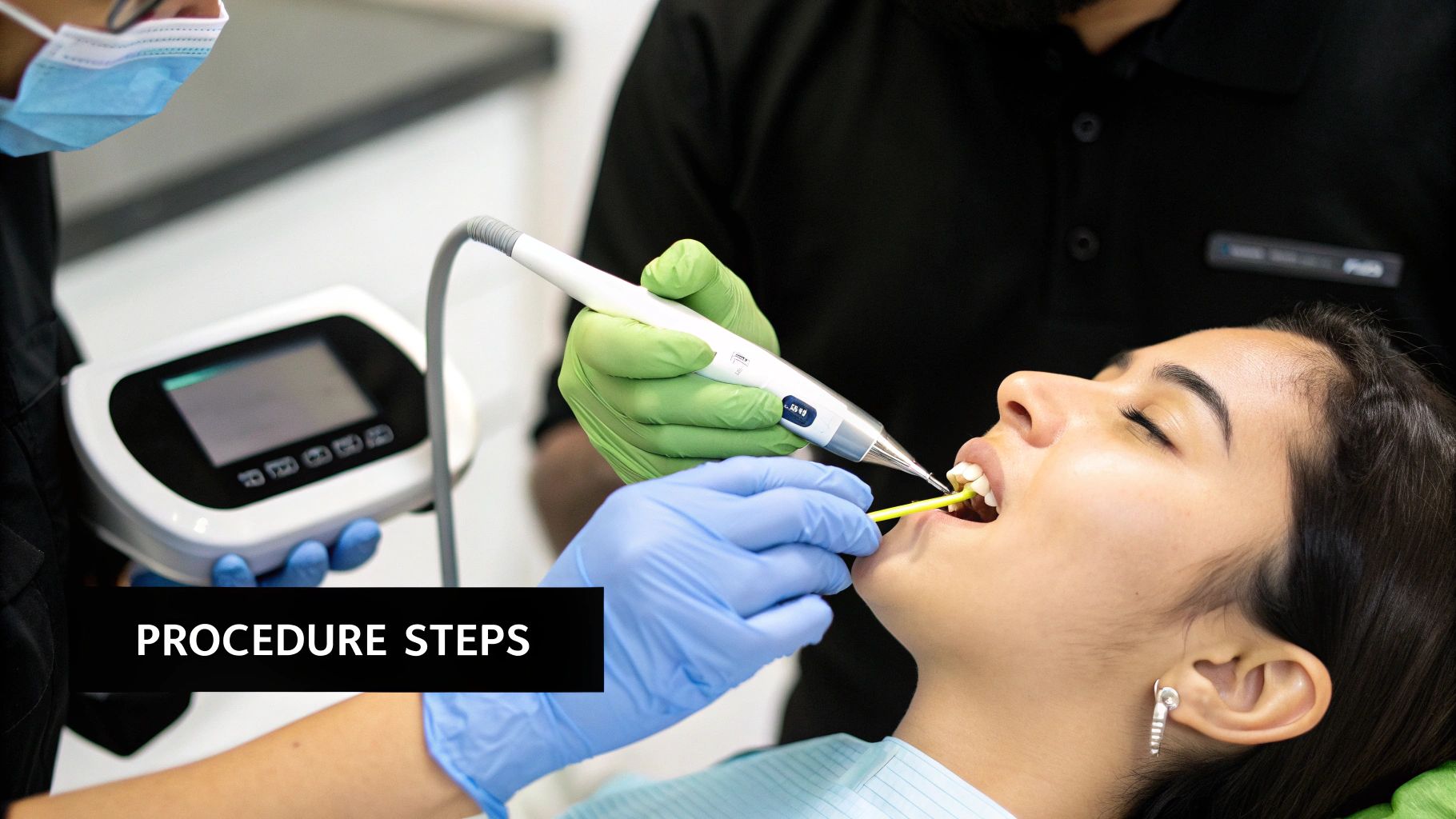
Knowing the step-by-step process can make your dental visit feel more predictable and comfortable. Getting an inlay or onlay is a straightforward procedure that can be completed in either one or two visits, depending on the technology available. Both methods result in a durable, perfectly fitted restoration.
Regardless of the approach, the first steps are the same. We will numb the area to ensure you are completely comfortable. Then, we will carefully remove any decay or old filling material to create a clean, stable foundation for your new restoration.
The Traditional Two-Visit Approach
The classic method for creating inlays and onlays involves two appointments spaced about a week or two apart. This allows a dedicated dental lab to craft your restoration with meticulous precision.
Here’s what you can expect:
Impression and Temporary Fit: After preparing your tooth, we take a detailed impression, which serves as a blueprint for the dental lab. They will use this to fabricate your custom inlay or onlay from the material you selected. We will place a temporary restoration on your tooth to protect it between visits.
The Final Placement: At your second visit, we remove the temporary piece and check the fit, feel, and color of your new permanent restoration. Once you and your dentist confirm it's a perfect match, we will bond it securely to your tooth, polish it, and check your bite to ensure it feels completely natural.
This method delivers a high-quality, durable result crafted by expert lab technicians.
The Modern Same-Day CEREC Option
We are proud to offer an advanced alternative that completes the entire process in a single appointment. Using CEREC (Chairside Economical Restoration of Esthetic Ceramics) technology, we eliminate the need for a temporary restoration and a second visit, saving you valuable time.
Here’s the single-visit workflow:
Digital Scanning: Instead of a physical impression, we use a small camera to take a fast and comfortable 3D digital scan of your prepared tooth.
On-Site Design and Milling: The digital model is sent directly to our in-office milling machine, which precisely carves your inlay or onlay from a solid block of high-quality ceramic in about 15-20 minutes.
Immediate Bonding: As soon as the restoration is ready, we bond it to your tooth, adjust your bite, and give it a final polish. You leave the same day with your permanent restoration fully complete.
The rise of in-clinic fabrication like CEREC is a key reason the dental inlays and onlays market is growing. In 2021, these efficient methods already held the largest market share because they offer a better patient experience.
This shift toward faster, more convenient dental care is a major benefit for patients. The global market, valued at USD 2.99 billion in 2021, continues to grow because of technologies that prioritize your time and comfort. You can explore the data in this dental inlays and onlays market analysis.
Durability, Longevity, and Simple Aftercare
When you choose an inlay or onlay, you are making a smart investment in your long-term dental health. One of the most significant benefits is how they reinforce your natural tooth. A well-placed inlay or onlay can increase a tooth's strength by up to 75%, restoring a compromised tooth to full function.
This is a prime example of conservative dentistry in action. Unlike a full crown, which requires significant removal of healthy tooth structure, inlays and onlays are designed to preserve as much of your natural tooth as possible. This approach is fundamental to maintaining your tooth's integrity for years to come.
How Long Do Inlays and Onlays Last?
With proper care, inlays and onlays are built to last for 10 to 30 years, often outperforming standard fillings by a significant margin. This impressive durability makes them a reliable solution for moderate tooth decay.
To maximize their lifespan, focus on these key factors:
Your Choice of Material: High-strength materials like gold and porcelain offer the greatest durability and longevity.
Your Daily Habits: A consistent routine of brushing and flossing is essential to prevent new decay from forming around the restoration's edges.
What You Chew: Avoid habits like chewing ice, pens, or hard candies, as these can place extreme stress on any dental work.
A huge part of their success comes from the precision fit. Unlike fillings, which can sometimes shrink as they set, inlays and onlays are milled to exact specifications. This creates an incredibly tight seal that is highly effective at keeping bacteria and food particles out.
Simple Aftercare for a Lasting Restoration
Caring for your new inlay or onlay is straightforward. Immediately after your procedure, you might experience minor sensitivity to hot or cold temperatures. This is normal and should subside within a few days. It's wise to chew on the opposite side of your mouth for a day or two to allow the dental adhesive to fully cure.
For long-term success, simply care for the restored tooth as you would your other teeth. This means brushing twice daily, flossing at least once, and maintaining your regular dental check-ups. These visits allow us to monitor the restoration and address any potential issues early. Many of these care principles also apply to other restorations; you can learn more about how long dental crowns last to get a broader understanding of dental longevity.
Is This the Right Treatment for You? And What About the Cost?
Deciding if an inlay or onlay is your best option means identifying if your tooth's condition is in the "sweet spot." The ideal candidate has a tooth with more damage than a simple filling can repair, but not so much that it needs the full-coverage protection of a dental crown. This often includes teeth with large cavities, cracked cusps, or those needing a large, failing metal filling replaced.
The key question to ask is: Is the core of my tooth strong, but a significant portion is weakened? If the answer is yes, an inlay or onlay can restore its strength and function without the need to remove extensive healthy tooth structure. Conversely, if decay is minor, a filling is the more direct fix. If a tooth is severely cracked or has had a root canal, a crown is the necessary choice to protect it from further breakdown.
Breaking Down the Cost
Understanding the investment is crucial for making a confident decision. While the cost of inlays and onlays varies, we believe in providing a clear picture of the factors involved.
Here are the key elements that influence the final cost:
The Material We Use: As discussed, materials like porcelain and gold have a higher upfront cost but offer superior durability and longevity. Composite resin is a more budget-friendly alternative.
The Complexity of the Work: A larger onlay covering multiple cusps requires more time and precision than a small inlay and will be priced accordingly.
Your Location: Dental fees can vary by region, reflecting local operational costs.
Your Dental Insurance: Your plan's coverage is a significant factor. Our team excels at navigating insurance benefits and will provide you with a detailed estimate before beginning any treatment.
It’s important to think about long-term value, not just the initial expense. An inlay or onlay may cost more than a large filling at first, but its superior lifespan and ability to protect the tooth from needing more invasive work often make it the more economical choice over time.
Your Inlay and Onlay Questions, Answered
Even with all the details, you probably still have a few practical questions. Here are straightforward answers to the questions we hear most often.
Does Getting an Inlay or Onlay Hurt?
No, the procedure itself is painless. We use local anesthetic to ensure the area is completely numb, so you won’t feel anything during the treatment.
After the numbness wears off, it's normal to feel minor sensitivity or soreness for a day or two as the tooth adjusts. This is typically mild and can be easily managed with over-the-counter pain relievers if needed.
How Long Do Inlays and Onlays Actually Last?
This is where they truly excel. A well-maintained inlay or onlay can easily last for 10 to 30 years, significantly outlasting a large traditional filling. They are designed for long-term performance.
To ensure this longevity, you need to focus on:
The material: Choose porcelain or gold for maximum durability.
Your habits: Maintain a consistent daily brushing and flossing routine.
Regular check-ups: Professional cleanings and exams allow your dentist to monitor the restoration and catch any issues early.
Can an Inlay or Onlay Fall Out?
It is extremely rare, but it can happen. If a restoration becomes loose, it is almost always due to an underlying issue, such as new decay forming at the margin, an injury to the tooth, or the dental cement wearing down after many years.
Action Step: If your inlay or onlay ever feels loose or comes off, do not panic. Retrieve the piece, store it safely, and call your dentist immediately. In many cases, it can be re-cemented, protecting your tooth and restoring your smile quickly and easily.
Prompt attention is the best way to protect your tooth and your investment.
Ready to see if an inlay or onlay is the right solution for you? At Beautiful Dentistry, we blend advanced technology with a truly personal touch to bring your smile back to its best. Schedule your comprehensive consultation today and let’s create a plan that fits you perfectly.


Comments