

How to Prevent Tooth Decay Naturally: A Practical Guide

Preventing cavities naturally is about more than just dodging sugar. It’s about creating an environment in your mouth where teeth can constantly repair themselves. This guide provides an actionable strategy, combining a nutrient-dense diet with smart oral hygiene to help your body’s own defenses stop cavities in their tracks.
Understanding How Tooth Decay Really Happens
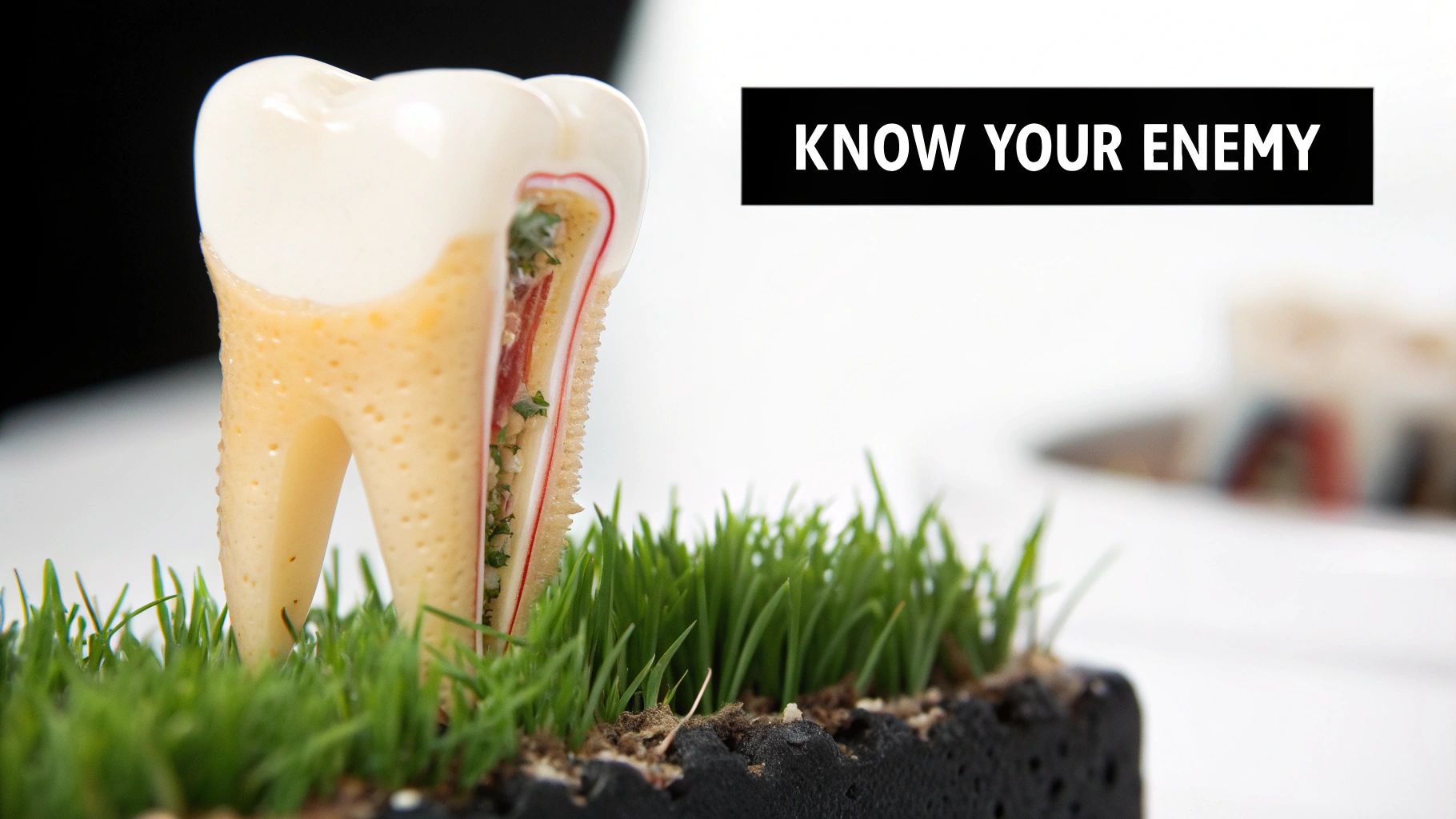
To win the fight against tooth decay, you need to understand the battlefield. This isn’t about a single piece of cake causing a cavity; it’s about a continuous, microscopic tug-of-war between damage and repair that happens in your mouth every day.
Simply put, certain bacteria in your mouth feed on sugars and starches. As they consume these leftovers, they produce acids. That acid is the direct cause of tooth decay.
The Cycle of Demineralization
When acid levels in your mouth spike, it starts leaching essential minerals—calcium and phosphate—directly from your tooth enamel. This mineral-stripping process is called demineralization. If this happens faster than your body can replenish those minerals, a weak spot forms, and a cavity begins.
This infographic shows exactly how bacteria, acid, and demineralization team up to cause decay.
As you can see, you can break this cycle by removing harmful bacteria, neutralizing acids, or strengthening your enamel.
Your Body's Natural Defense: Remineralization
The good news is that your body has a built-in repair system called remineralization, and your saliva is the key player.
Your saliva has three critical jobs:
It neutralizes the acids that bacteria produce.
It carries a fresh supply of calcium and phosphate directly to your tooth surfaces.
It washes away lingering food debris and bad bacteria.
Actionable Insight: Your goal is to keep this remineralization process winning. Every choice you make, from what you eat to how you clean your teeth, should aim to support your saliva and strengthen your enamel.
This is a massive global issue. Dental caries is the most common noncommunicable disease in the world, affecting an estimated 2.5 billion people. The World Health Organization points to limiting free sugars as a primary way to curb that risk. If you're curious about how far this natural repair process can go, we have an entire guide that explores if cavities can go away on their own.
A natural prevention strategy ensures remineralization is always winning the battle, keeping your enamel resilient against daily acid attacks.
Building Your Anti-Cavity Diet Plan
What you eat is your most powerful tool for fortifying your teeth from the inside out. A truly effective diet goes beyond "avoiding sweets." It's about providing your body with the building blocks to actively repair and strengthen your enamel.
Think of this as a smart financial choice. With around 90% of adults having dealt with cavities, the cost of treatments adds up. Adopting simple prevention methods—like keeping your sugar intake under 5% of your daily calories—can dramatically cut that burden.
Foods That Rebuild Your Teeth
To support remineralization, your body needs a steady supply of specific nutrients. Think of these foods as the construction crew for your enamel.
Here are the key players to add to your diet today:
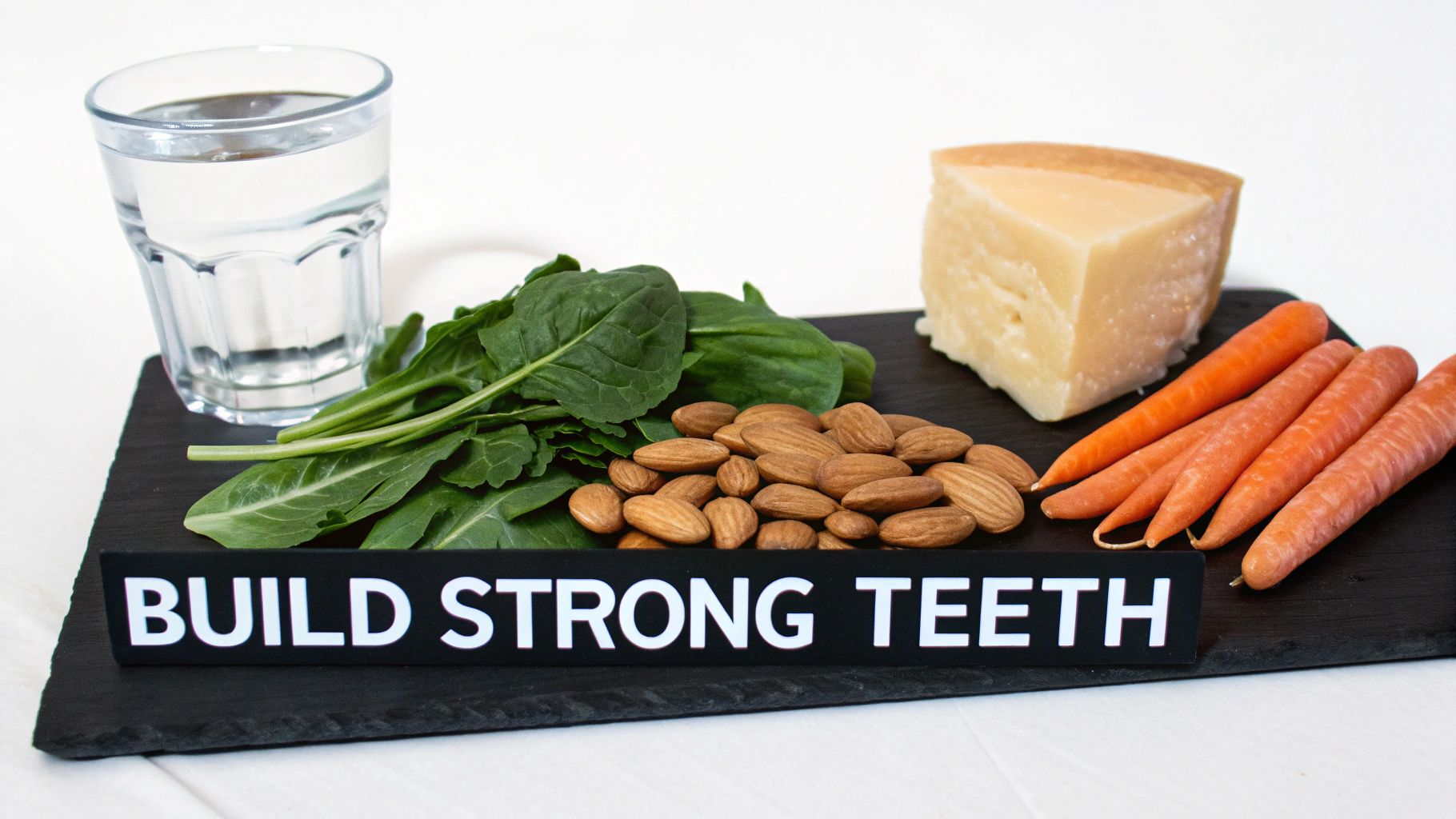
Calcium-Rich Foods: This is the primary mineral that makes up your teeth. Load up on leafy greens like spinach and kale, dairy products like cheese and yogurt, and almonds.
Phosphorus-Rich Foods: Phosphorus and calcium work together to build strong enamel. Find it in protein-heavy sources like fish, eggs, and lean meats.
Fat-Soluble Vitamins: Vitamins D and K2 are crucial—they act like traffic cops, directing calcium to your bones and teeth. Fatty fish, egg yolks, and organ meats are fantastic sources.
Actionable Tip: Trade your sugary afternoon granola bar for a handful of almonds and a few cubes of cheese. This swap cuts out the sugar that feeds bad bacteria and delivers a powerful dose of calcium and phosphorus for remineralization.
To round out your diet, add ingredients with known anti-inflammatory benefits. Reducing overall inflammation helps create a healthier oral environment. You can learn more about the anti-inflammatory properties of olive oil and how it can contribute to better health.
When planning meals, use this clear comparison of what helps and what hurts.
Tooth-Friendly Foods vs Decay-Promoting Foods
This table breaks down the foods that support tooth remineralization versus those that contribute to acid attacks.
Nutrient/Benefit | Foods That Help | Foods to Limit |
|---|---|---|
Minerals (Calcium & Phosphorus) | Cheese, yogurt, leafy greens, almonds, fish, eggs | Most processed foods, sugary drinks |
Vitamins (D, K2, C) | Fatty fish, egg yolks, bell peppers, broccoli, citrus fruits | Empty-calorie snacks, candy |
Fibrous & Cleansing | Raw carrots, celery, apples, crisp lettuce | Soft, sticky foods like white bread, crackers |
Hydration & Neutralization | Water, herbal teas (unsweetened) | Soda, fruit juice, sports drinks, sweetened coffee/tea |
Focusing on the "Foods That Help" column gives your saliva the resources it needs to protect and repair your enamel naturally.
Mindful Eating Habits for Stronger Enamel
What you eat is important, but how and when you eat are just as critical for preventing cavities.
Every time you eat or drink something starchy or sugary, your mouth’s pH drops, becoming acidic for 20-30 minutes. This is when demineralization—the leaching of minerals from your enamel—happens.
If you constantly snack, your mouth stays in that acidic danger zone. Stick to distinct mealtimes to give your oral pH time to stabilize and let remineralization win.
Here's a great habit to adopt: finish your meal with a "detergent" food. These crunchy, fibrous foods act like a natural toothbrush, scrubbing away plaque and stimulating saliva flow.
Try ending lunch or dinner with one of these:
A few raw carrot or celery sticks
A handful of apple slices
A small bowl of crisp lettuce
This simple trick cleans your teeth right after a meal and jumpstarts the neutralization process.
Upgrading Your Natural Oral Hygiene Routine
While diet lays the internal groundwork, your daily oral hygiene routine is your frontline defense against decay-causing bacteria. We all know to brush and floss, but a few intentional tweaks can dramatically boost their effectiveness.
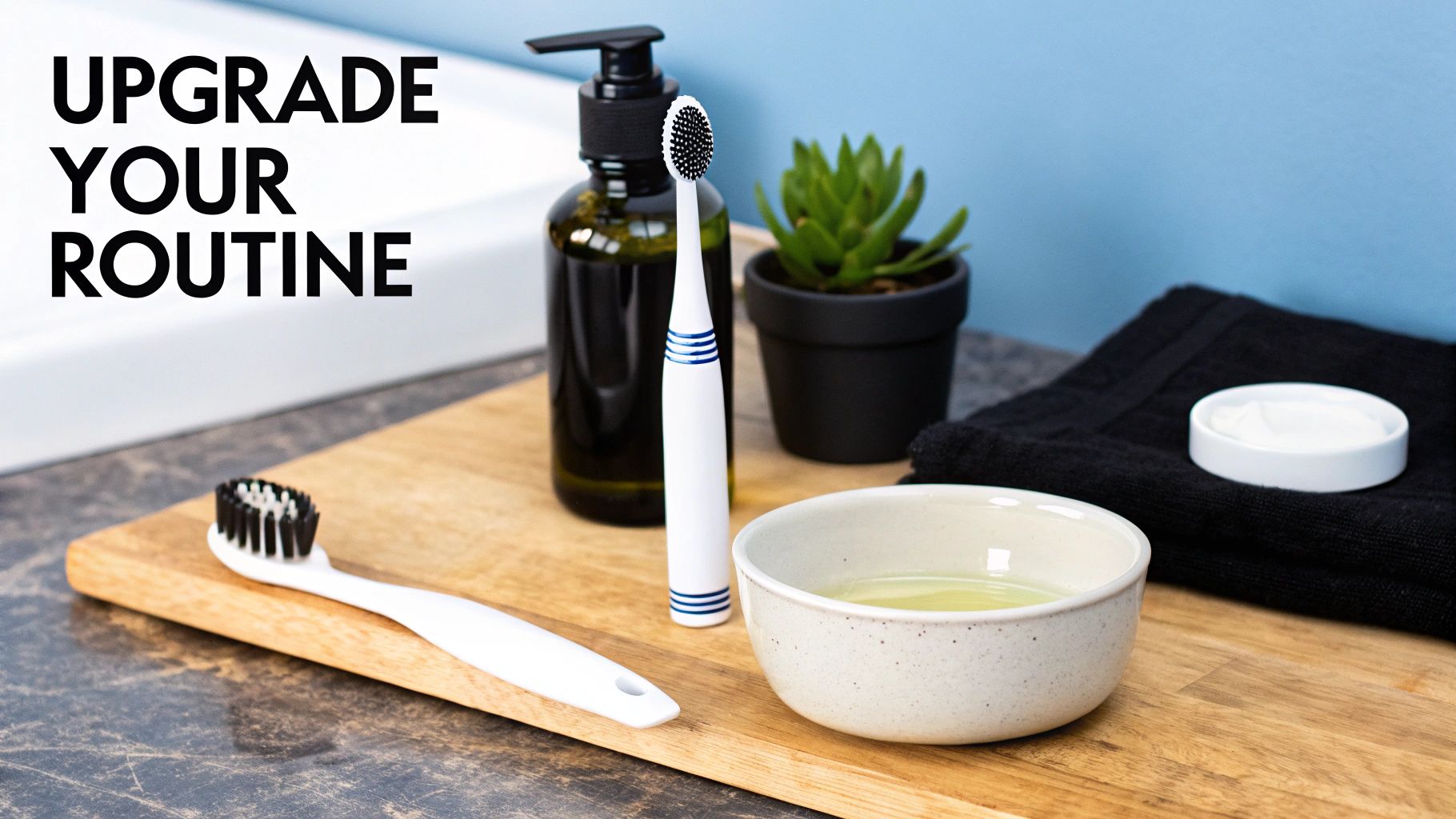
First, refine the basics. Brushing too hard wears down enamel and can cause gum recession. The correct technique is to use a soft-bristled brush and gentle, circular motions for a full two minutes, hitting every surface of every tooth.
When flossing, curve the floss into a "C" shape against the side of each tooth and gently slide it just below the gumline to effectively remove plaque. If you want a refresher, check out the advantages of flossing your teeth; it’s full of insights to help you get the most out of it.
Beyond Brushing: The Power Of Natural Ingredients
The products you use are as important as your technique. When choosing a natural toothpaste, look for science-backed ingredients proven to disrupt harmful bacteria.
Actionable Ingredient: Xylitol is a game-changer. This natural sweetener starves decay-causing bacteria (Streptococcus mutans) because they can't use it for energy. This cuts down their ability to produce enamel-eroding acid.
Chewing gum sweetened with xylitol is also effective. It stimulates saliva flow—your body's natural acid neutralizer—while actively fighting bad bacteria. You can learn more about the benefits of caffeine-free gum and its oral-friendly ingredients.
Adding Complementary Practices To Your Routine
To take your oral hygiene to the next level, adopt practices that disrupt the entire bacterial ecosystem in your mouth. This lowers the overall bacterial load, giving your teeth a better fighting chance.
Two highly effective methods are tongue scraping and oil pulling.
Tongue Scraping: Your tongue traps bacteria and food debris. Use a U-shaped tongue scraper every morning to remove this buildup. This one-minute habit tackles bad breath and significantly cuts down on harmful microbes.
Oil Pulling: This ancient practice involves swishing a tablespoon of oil (coconut, sesame, or sunflower) in your mouth for 15-20 minutes on an empty stomach. The oil "pulls" bacteria from nooks and crannies. While not a substitute for brushing, studies show it helps reduce plaque and bacteria.
Start small with oil pulling; even five minutes while you get ready is beneficial. Consistency is what matters. Integrating these practices creates a daily ritual that actively defends your smile.
Tap Into Natural Remedies and Supplements
While a tooth-friendly diet and solid hygiene are your cornerstones, you can give your teeth an extra edge with specific remedies and supplements. This two-pronged attack fights harmful bacteria on the surface while building stronger, more resilient teeth from the inside.
This approach combines targeted, topical support with whole-body, systemic health.
Give Your Mouth Some Topical Support
Nature provides powerful plants with antimicrobial properties that can offer another layer of defense.
Green Tea Rinses: Plain, unsweetened green tea contains catechins, which slow the growth of oral bacteria. Swish with cooled green tea for about one minute after you brush.
Clove Oil: Clove oil contains eugenol, a natural antiseptic and pain reliever. While it can offer temporary relief from a toothache, it is potent. Always use it sparingly and diluted with a carrier oil like coconut oil.
Key takeaway: These topical remedies support a healthy oral environment, but the real strength of your teeth comes from minerals. That's where internal health and nutrition take center stage.
Build Stronger Teeth from the Inside Out
Even with a good diet, getting the optimal amount of every nutrient for remineralization can be challenging. A few carefully chosen supplements can make a real difference.
The superstars for dental health are fat-soluble vitamins, which tell minerals where to go.
Vitamin D3: This is non-negotiable for healthy teeth. Vitamin D3 is essential for your body to absorb calcium from your diet. Without enough D3, the calcium you eat passes right through.
Vitamin K2: This is D3's most important partner. Vitamin K2 activates proteins that shuttle calcium directly into your bones and teeth, keeping it out of arteries and kidneys.
Beyond these vitamins, ensure you get enough minerals. Calcium and magnesium create the tough, crystalline structure of your enamel. Leafy greens, seeds, and nuts are fantastic sources, but you might consider a supplement if your diet is lacking.
It’s also worth understanding all tools available for prevention. Community water fluoridation has been a major public health success, safely cutting cavities by 40% to 70% in children and reducing tooth loss in adults by 40% to 60%. You can discover more insights about the role of fluoride in oral health to see how it fits into a comprehensive prevention strategy.
Lifestyle Habits That Protect Your Smile
Your oral health directly mirrors your overall lifestyle. The secret to preventing decay is to create a whole-body environment that naturally fights back.
Chronic stress, for example, can reduce saliva production, leading to dry mouth. Saliva is your body's best natural defense, constantly rinsing away bacteria and neutralizing acid. Without enough of it, you leave your teeth defenseless.
Stay Hydrated to Keep Saliva Flowing
One of the simplest and most effective actions you can take for your oral health is to drink more water. Staying hydrated prevents dry mouth and ensures your saliva glands work at full capacity.
Actionable Insight: Treat water as nature's mouthwash. Every sip helps wash away leftover food particles and sugar before bad bacteria can produce enamel-destroying acid. Make a habit of drinking at least eight glasses of water a day.
How Sleep and Other Habits Affect Your Oral Microbiome
Your mouth has a balanced ecosystem of bacteria—your oral microbiome. Certain lifestyle choices can give cavity-causing bacteria the upper hand.
Here are habits that make a massive difference:
Get Your Sleep: Skimping on sleep can trigger inflammation, including in your gums, and disrupt your oral bacteria. Aim for 7-9 hours of quality sleep each night.
Ditch Smoking and Vaping: Tobacco is a disaster for your mouth. It drastically reduces saliva, fuels gum disease, and creates an ideal environment for harmful bacteria.
Breathe Through Your Nose: Chronic mouth-breathing, especially at night, constantly dries out your mouth. This bypasses the protective shield of saliva and significantly increases your cavity risk.
Understanding how these daily choices add up is the first step. For more details, our guide on bad habits that could harm your teeth is a great resource. By making mindful changes, you build a powerful, natural defense system for your smile.
Let's translate this information into a simple, actionable daily routine.
Your Daily Playbook for a Cavity-Free Smile
Knowing what to do is one thing, but consistency is where the magic happens. The goal is to make small, smart choices that create a powerful defense against tooth decay. These key moments in your day add up, creating an environment where cavities can't thrive.
Kickstart Your Morning
Your morning routine should clear out bacteria that built up overnight before you give them fuel from breakfast.
First thing: Before eating or drinking, use a tongue scraper. A few gentle passes will remove the white film of bacteria. Follow up with oil pulling—even 5-10 minutes reduces the bacterial load.
After breakfast: Wait at least 30 minutes after eating to brush. Breakfast (especially with juice or fruit) makes your enamel temporarily soft. Brushing too soon can wear it down. Waiting gives your saliva time to remineralize your teeth.
Why this works: By cleaning your mouth before you eat, you remove the culprits before they can feast on sugars and produce acid. It's a simple but incredibly effective strategy.
Midday Maintenance
Lunchtime is about a quick reset. A couple of simple moves can keep your mouth's pH balanced.
The Post-Lunch Rinse: As soon as you finish eating, swish vigorously with plain water for 30 seconds. This is highly effective at dislodging food particles and washing away acids.
A Smart Refresh: If you need more, chew a piece of gum sweetened with xylitol. This stimulates protective saliva flow while the xylitol starves bad bacteria.
The Evening Wind-Down
Your nighttime routine is non-negotiable. It's your most important opportunity to clean your mouth before sleep, as saliva flow drops significantly overnight.
Floss Before You Brush: Floss first. Clear out plaque and food from between your teeth so your toothpaste can reach those surfaces.
Brush Smart: Use a soft-bristled brush and spend a full two minutes. Use gentle, circular motions, not aggressive scrubbing.
The Final Step (Optional): For an extra boost, swish with cooled, unsweetened green tea. Its antimicrobial properties are a great way to end the day. After this, drink only water until morning.
Got Questions? We’ve Got Answers.
When exploring natural ways to care for your teeth, questions are common. Here are answers to some of the most frequent ones.
Can You Really Remineralize a Cavity Naturally?
Yes, but only at the very earliest stage. If decay is just a small, white spot on the enamel (demineralization), you can reverse it. This requires a diligent, nutrient-dense diet and a top-notch oral hygiene routine, allowing saliva to redeposit minerals back onto the tooth.
However, once decay eats through the enamel and forms a hole, the game changes. At that point, the tooth structure is physically gone, and no amount of healthy eating will fill it back in. A professional filling is the only solution.
The takeaway: Natural methods are for preventing cavities and reversing the earliest signs of trouble. They are not a substitute for professional treatment once a cavity has formed.
How Effective Is Oil Pulling for Preventing Decay?
Oil pulling is a great supportive practice, but it doesn't replace the basics. Swishing with an oil like coconut or sesame for 15-20 minutes is fantastic for reducing the overall amount of bacteria in your mouth, especially the acid-producing culprit, Streptococcus mutans.
Think of your hygiene strategy like this:
Brushing and Flossing: These are your front-line tools for physically scraping away plaque and food.
Oil Pulling: This is your backup for lowering the total number of bad bacteria throughout your entire mouth.
By reducing the bacterial population, you reduce the potential for acid attacks. It’s a powerful habit, but it absolutely doesn't replace meticulous brushing and flossing.
Do I Still Need to See a Dentist?
Yes, one hundred percent. These natural prevention strategies are meant to work with professional dental care, not replace it.
Regular dental visits are non-negotiable for these reasons:
Professional Cleanings: Your hygienist can remove hardened plaque (tartar), which is impossible to get rid of at home.
Early Detection: We can spot the first signs of decay, gum disease, or other problems with exams and X-rays long before you would notice them.
Personalized Guidance: We provide advice specific to your mouth, habits, and risk factors.
Pairing a dedicated natural care routine at home with biannual dental check-ups is the ultimate combination for a healthy smile that lasts a lifetime.
At Beautiful Dentistry, our goal is to empower you with the knowledge to keep your mouth healthy between visits. If you’re looking for a team that supports your overall wellness journey with expert care, we’d love to have you. You can learn more about our comprehensive services and new patient offers at https://zdentist.com.


Comments