

How to Maintain White Teeth for a Permanently Bright Smile
- Caterina Rutter
- Jan 5
- 13 min read

You've achieved that brilliant, white smile. Now, the real goal is learning how to maintain white teeth so your results last. The secret is a consistent, actionable routine combining daily habits, smart eating, and regular professional care to protect your investment.
Think of it less as a chore and more as a sustainable lifestyle that actively prevents stains from returning.
Your Game Plan for a Permanently Bright Smile
The moment you leave the dentist's office with newly whitened teeth is when your maintenance plan kicks in. Without a solid strategy, everyday culprits like coffee, tea, or red wine can quickly reverse your progress. The goal is to build a proactive defense against new discoloration.
This isn't about giving up everything you love. It's about being strategic. A lasting, bright smile comes from the small, consistent actions you take every day.
The Core Strategies for Lasting Whiteness
The best approach to maintaining a white smile rests on a few fundamental pillars. Master these, and you create a powerful system that preserves your sparkle and boosts your overall oral health.
Here's a breakdown of the essentials.
The Four Pillars of White Teeth Maintenance
Maintenance Pillar | Why It's Crucial | Actionable Tip |
|---|---|---|
Diligent Daily Hygiene | This is your first line of defense against surface stains, removing daily buildup before it can set. | Use a whitening toothpaste a few times a week, and make it a habit to brush or rinse after consuming staining foods and drinks. |
Smart Diet Choices | What you eat and drink is the primary source of new stains. Being mindful is half the battle. | Drink dark liquids like coffee and red wine through a straw to minimize contact with your front teeth. |
At-Home Upkeep | Safely touching up your smile at home extends the life of professional treatments and fights gradual yellowing. | Use custom-fitted whitening trays with professional-grade gel for 15-30 minutes once a month, or as your dentist recommends. |
Professional Care | Your dentist removes stubborn, deep-set stains that daily brushing can't touch and spots potential issues early. | Schedule professional cleanings every six months to remove plaque and tartar, which act as magnets for stains. |
By integrating these four pillars into your routine, you create a comprehensive defense that keeps your smile looking its best year-round.
The infographic below illustrates how these components—daily habits, diet, and professional support—work together in a continuous cycle.
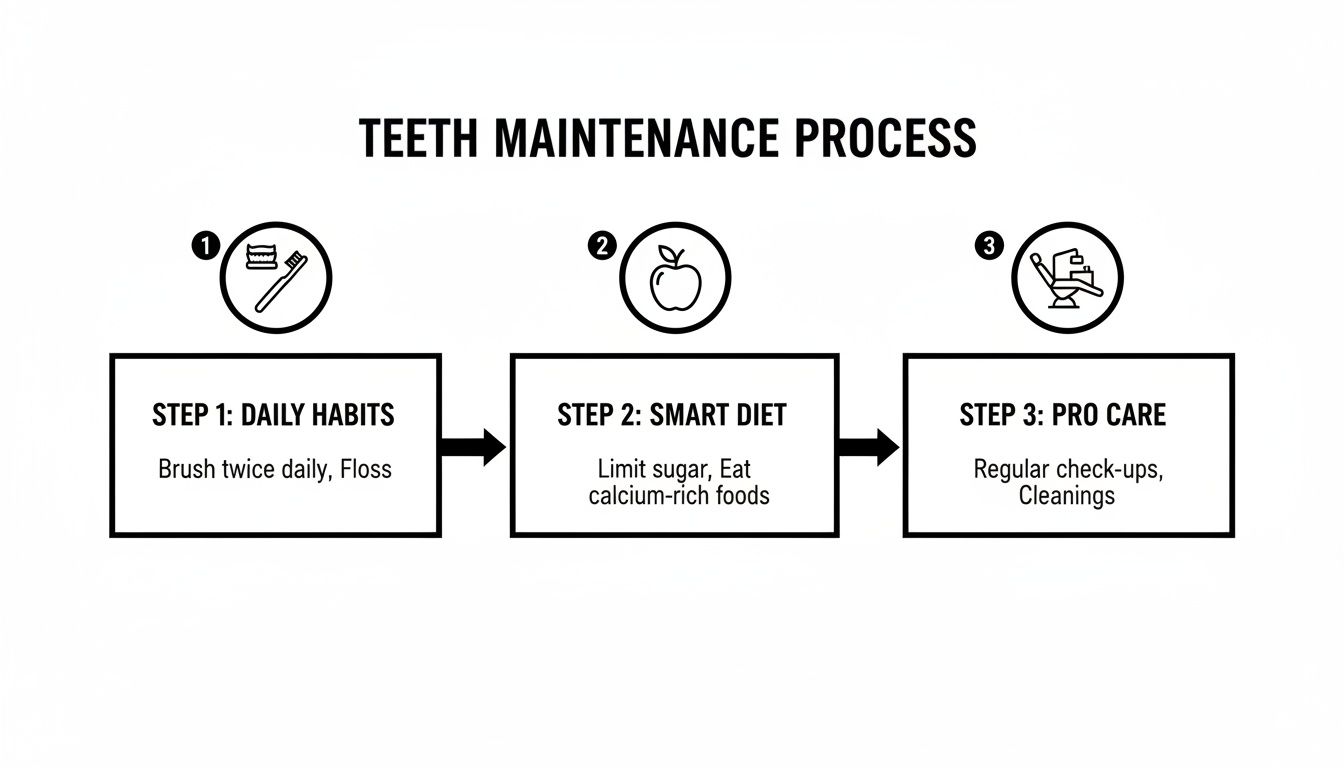
It’s a great visual reminder that success comes from making all three areas work together seamlessly.
The desire for a brighter smile is more than just a trend. The global teeth whitening market hit an impressive USD 8.52 billion in 2024 and is expected to climb to USD 12.77 billion by 2032.
Considering that up to 80% of adults notice tooth discoloration by age 30, it’s no surprise that effective maintenance is a priority. You can read the full research about teeth whitening market trends to see just how much people value a radiant smile.
Your Daily Habits: The Secret to a Lasting Bright Smile
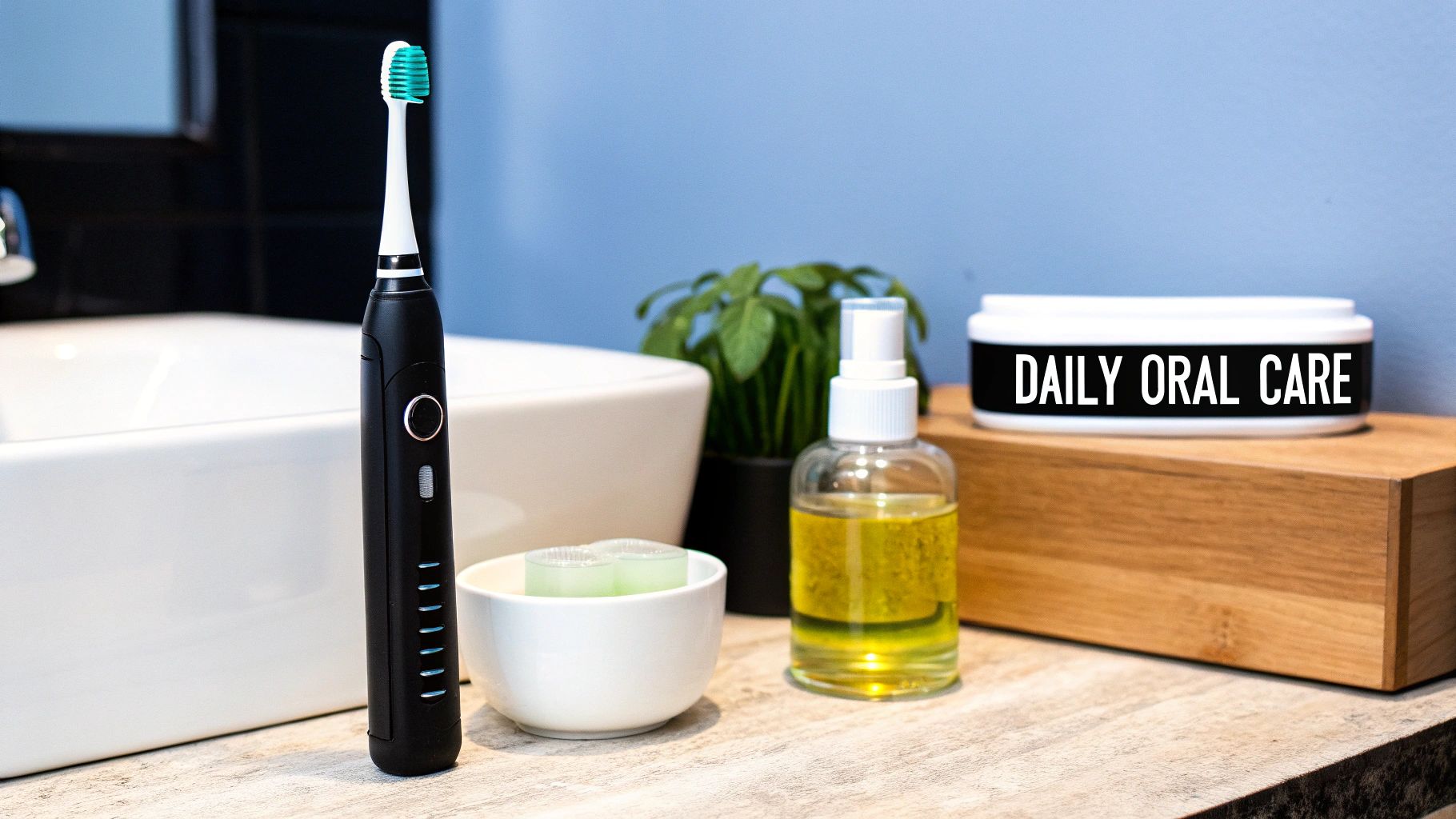
You've gotten your teeth to the perfect shade of white. Now what? The real work begins with your daily routine. This is your frontline defense, using specific tools and techniques to stop discoloration before it starts.
Think of it like this: if you spill coffee on a white shirt, you rinse it immediately. Letting it sit guarantees a stain. Your teeth are no different. Your daily oral care routine is that immediate rinse, creating a barrier against everything you eat and drink.
Brushing the Right Way to Keep Teeth White
Brushing is non-negotiable, but how you brush is critical. The goal is to remove the sticky plaque film that stains cling to without scrubbing so hard you wear down your enamel. When enamel thins, the yellowish layer underneath (dentin) shows through, making teeth appear darker.
Your best tool is a soft-bristled toothbrush. Use gentle, circular motions, angling the brush at 45 degrees toward your gumline to clean the tooth surface and the area just beneath the gums where plaque hides.
Here are three actionable brushing tips:
Set a Timer: Brush for a full two minutes, twice a day. Most electric toothbrushes have a built-in timer, which removes the guesswork.
Wait After Acids: After consuming anything acidic like orange juice or soda, wait at least 30 minutes before brushing. Brushing immediately can scrub acids into your enamel, causing more harm.
Do the Post-Coffee Swish: Can't brush after your morning latte? Swish vigorously with water for 30 seconds. This simple action neutralizes acids and washes away many staining compounds.
Why Flossing is Your Underrated Whitening Tool
Brushing cleans the front and back surfaces of your teeth, but it can't reach the tight spaces in between. That’s where stains often start, creating dark lines that dull your smile. Flossing is the only way to clear out that plaque and debris.
When plaque sits between your teeth, it creates a rough, sticky surface that acts as a magnet for stains from coffee, tea, and other foods. By flossing daily, you keep those in-between surfaces smooth and clean, giving stains nowhere to stick.
A lot of people think flossing is just for dislodging a piece of popcorn. In reality, its main job is to break up the invisible plaque that forms every day—the same plaque that leads to stains and gum disease.
If you find traditional string floss difficult, don't give up. Water flossers and interdental picks are excellent alternatives. To ensure you're doing it correctly, you can check out this detailed guide on how to properly floss teeth for a healthier smile.
Choosing the Right Finishing Touches
After brushing and flossing, two final steps can lock in protection and keep your smile bright.
What to Know About Whitening ToothpasteMost "whitening" toothpastes don't bleach teeth; they contain mild abrasives that polish away new surface stains. Look for one with the American Dental Association (ADA) Seal of Acceptance as proof of its safety and effectiveness. Use it daily, but if you notice sensitivity, alternate it with a regular fluoride toothpaste.
The Final Rinse: MouthwashA good antiseptic or fluoride mouthwash is a great finishing touch. It kills plaque-causing bacteria and reaches nooks you might have missed. Think of it as an extra layer of defense that makes your teeth slicker and less prone to staining. Avoid formulas with high alcohol content, as they can dry out your mouth, creating a better environment for stain-causing bacteria.
The Anti-Stain Diet: Foods to Embrace and Avoid
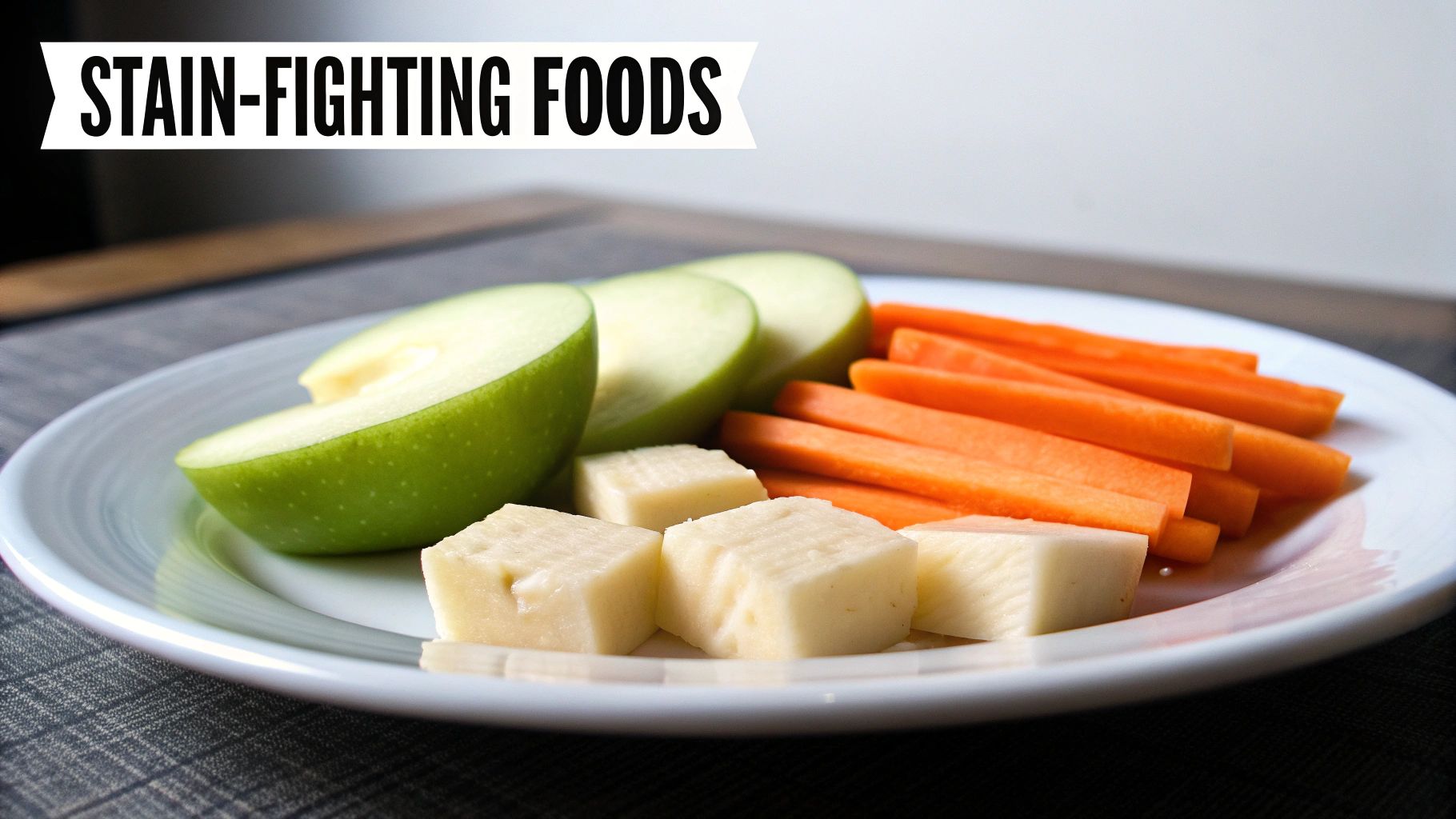
What you eat and drink has a direct impact on the brightness of your smile. While professional whitening provides a fantastic reset, your daily diet determines how long those results last. It's a constant balance between foods that defend your teeth and those that actively stain them.
Learning how to keep your teeth white through diet isn't about restriction. It's about making smart, sustainable swaps that let you enjoy what you love without undoing your hard work.
Know Your Enemies: The Top Stain Culprits
Some foods and drinks are notorious stainers due to intense color pigments, high acidity, and compounds called tannins, which all latch onto tooth enamel and cause yellowing.
Be mindful of these common culprits:
Coffee & Black Tea: Both are loaded with stain-causing tannins.
Red Wine: Deep pigments plus acid create a perfect storm for staining.
Dark Berries & Juices: Blueberries, blackberries, and pomegranates can transfer their vibrant colors to your teeth.
Sauces & Condiments: Dark, acidic liquids like balsamic vinegar and soy sauce are potent stain-causers.
Here's a simple rule of thumb: If it can stain a white t-shirt, it can stain your teeth. This makes it easy to spot potential culprits.
Smart Strategies to Minimize Staining
You don't have to give up your morning coffee or that glass of Merlot. It’s all about how you consume them. A few clever habits can make a world of difference.
Here are some easy-to-implement tips:
Use a Straw: When drinking iced coffee, tea, or soda, a straw helps the liquid bypass the front surfaces of your teeth, minimizing direct contact.
Rinse Immediately: After consuming something dark or acidic, swish with plain water for 30 seconds. This simple step washes away staining pigments and neutralizes acids before they can settle.
Don’t Linger: Finish your coffee or wine in one sitting instead of sipping it for hours. The less time your enamel is exposed, the better.
And if you're looking to make smile-friendly eating even easier, you can explore various diet meal delivery options, including those focused on clean eating to help maintain your anti-stain routine without the hassle.
Foods That Actually Help Keep Teeth White
Just as some foods stain, others actively help keep your smile bright. These "detergent foods" work by strengthening enamel and gently scrubbing away surface stains as you chew.
Adding more of these to your diet is a delicious and effective way to support your whitening goals. Think of them as nature's toothbrushes.
Crunchy, water-rich foods boost saliva production, which is your mouth's built-in cleaning system. Saliva rinses away debris and neutralizes the acids that weaken enamel and make it more prone to staining.
Here are a few top choices to incorporate into your diet:
Apples & Carrots: Their crisp, fibrous texture acts as a natural scrub, clearing away plaque and minor surface stains.
Cheese & Yogurt: Packed with calcium and phosphates, they help re-mineralize and strengthen tooth enamel, making it more stain-resistant.
Leafy Greens: Spinach and kale contain minerals that can form a protective barrier on your teeth, making it harder for stains to stick.
A healthy mouth is the foundation of a bright smile. To learn more about how nutrition impacts oral health, check out this guide on the 5 best vitamins for teeth and gums. When your teeth are strong and healthy, they look better.
Smart At-Home Whitening and Professional Touch-Ups
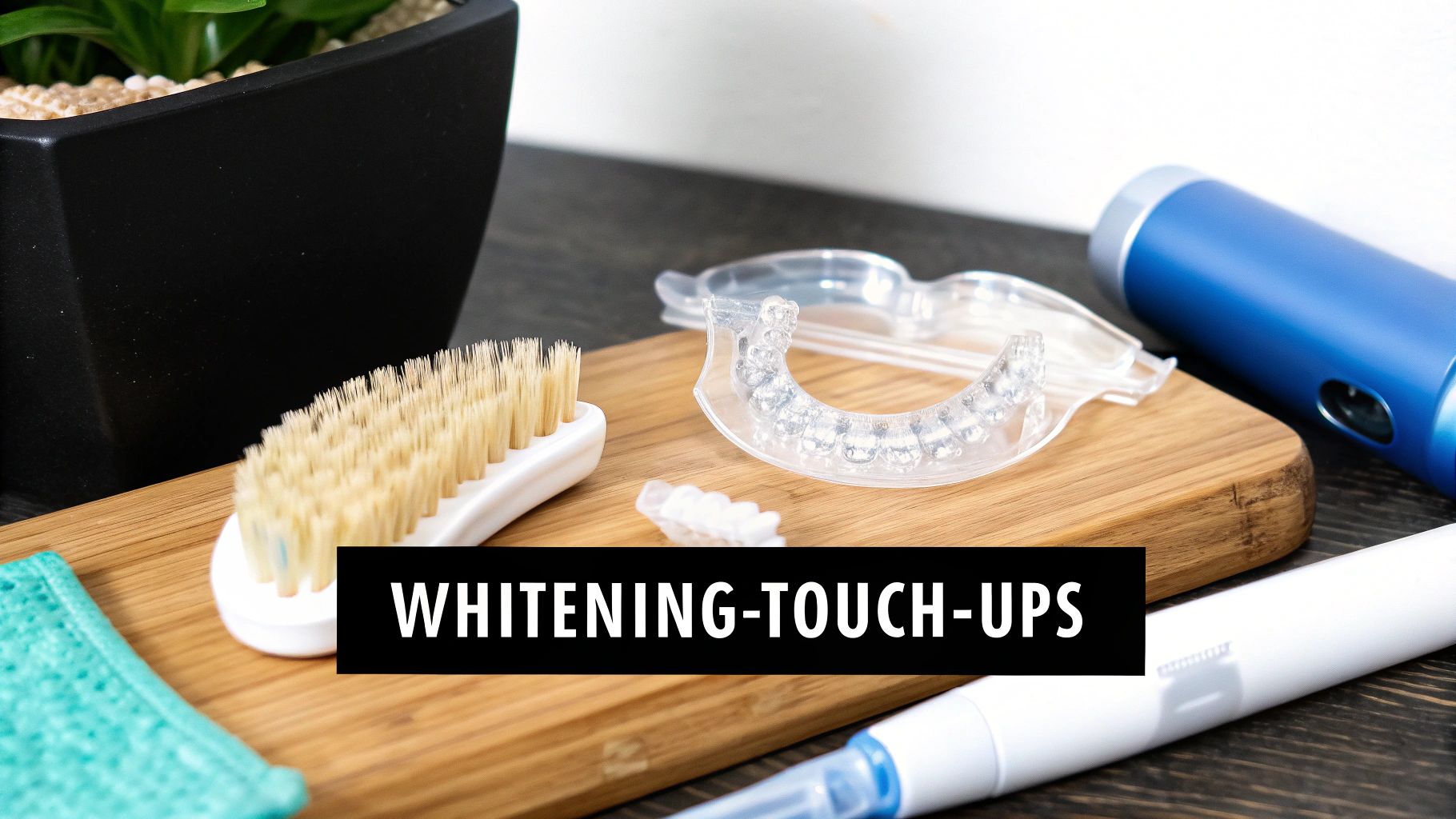
Keeping your teeth brilliantly white long after a professional treatment requires a smart, two-pronged approach: consistent at-home maintenance paired with timely professional touch-ups.
Think of it like caring for a car. Daily driving habits are crucial, but you still need periodic tune-ups. The same goes for your smile. The goal isn't to constantly blast your teeth with aggressive whitening agents, which can lead to sensitivity and enamel damage. Instead, focus on gentle, regular upkeep to lift new stains and extend the life of your professional results.
Your At-Home Maintenance Toolkit
The shelves are packed with at-home whitening products. When used for maintenance, these tools can be incredibly effective at tackling daily discoloration from coffee, tea, and other foods.
Here's an actionable guide to the most common options for upkeep:
Whitening Strips: Instead of a full two-week course, use them for a few consecutive days every 3-4 months. This is often enough to lift recent surface stains without overdoing it.
Whitening Pens: Perfect for "stain emergencies." After a glass of red wine or a cup of coffee, a quick, targeted application from a pen can stop a stain from setting.
LED Whitening Kits: These offer more power for an at-home touch-up. For maintenance, a 15-30 minute session once a month is usually sufficient to restore your sparkle.
The golden rule for at-home whitening is moderation. Overuse is the biggest cause of tooth sensitivity and gum irritation. Always follow the product's directions and give your teeth a rest between treatments.
Knowing When to Call in the Pros
At-home products are great for surface stains, but they have their limits. They can't match the strength of a professional treatment. Your dentist uses more potent, controlled whitening agents that can penetrate the enamel to break up deep, stubborn stains that over-the-counter kits can't reach.
How often should you book a professional touch-up? It varies.
For coffee, tea, or red wine drinkers: You'll likely notice new stains faster. A professional touch-up every 6 to 12 months can keep your smile looking its best.
For the diligent: If you consistently avoid staining foods, you might only need a visit every one to two years.
Don't forget your regular cleanings. A professional polish from a hygienist removes plaque and tartar, instantly brightening your teeth by buffing away surface stains. Those six-month cleanings are one of the best investments for your smile's health and appearance.
Striking the Right Balance Between Results and Safety
The demand for at-home whitening is huge—whitening devices are on track to grab a 40% market share by 2025. And with over 50 million U.S. adults using these products each year, it's clear people want brighter smiles. But here’s the catch: about 30% of users report sensitivity, often from overuse.
This is where expert guidance is critical. Professional treatments don't just deliver more dramatic results—they also help your smile retain its brightness 2-3 times longer than what you can get from a box. It's no wonder they see a 70% patient satisfaction rate, far outpacing the 45% for over-the-counter strips. You can discover more insights about teeth whitening market trends and see why more people are choosing safe, effective, professional solutions.
Ultimately, the secret to maintaining white teeth is this partnership: smart, moderate at-home care backed by the expertise of your dental team. It’s the best way to keep your smile brilliant and healthy for the long haul.
When to Bring in the Pros: Partnering with Your Dentist for a Lasting Bright Smile
Your at-home routine is your daily defense against new stains, but you might hit a plateau. That's normal. Think of your dentist not as a last resort, but as your strategic partner in maintaining a brilliant smile.
It's like fitness. You can make great progress at home, but a personal trainer can fine-tune your technique and design a plan for real, lasting results. A cosmetic dentist does the same for your smile.
Clear Signs It's Time to Call the Dentist
How do you know when it’s time for professional help? Certain issues won't respond to over-the-counter products, and trying to force it can lead to frustration or damage.
Look for these tell-tale signs:
Deep, Stubborn Stains Won't Budge: If you’ve been using whitening strips and toothpaste but yellow, brown, or grayish tints remain, they're likely intrinsic—inside the tooth. At-home products only work on surface stains.
Sensitivity Flares Up: Sharp pain after using a whitening product is a red flag. A dentist can identify the cause and offer professional treatments with desensitizing agents to protect your teeth.
The Results Look Splotchy: Uneven color or patches, especially around fillings or crowns, require a professional to create a seamless, natural look that blends with your existing dental work.
Your Personalized Maintenance Game Plan
There's no one-size-fits-all plan for maintaining white teeth. During a consultation, a dentist will assess your diet, habits, and oral health to create a realistic maintenance schedule for you.
This partnership is key to long-term success. It starts with scheduling professional dental cleanings and exams every six months. This isn't just a cleaning; it's a "reset" that polishes away surface stains and removes tartar buildup that attracts new discoloration.
A huge advantage of working with a dentist is access to custom-fitted whitening trays. Paired with professional-grade gel, these are far more effective and safer for at-home touch-ups than anything you can buy in a store, preventing gum irritation and ensuring your teeth get even coverage.
The desire for a brilliant smile is more powerful than ever, with 4.48 billion people on social media. In fact, a 2024 survey showed 62% of millennials are inspired by celebrity smiles to whiten their own. While cost concerns stop about 25% of people, many practices are making it easier to get expert advice without breaking the bank.
When Whitening Alone Isn't the Answer
Sometimes, discoloration isn't just a surface stain. Trauma, certain medications, or genetics can cause deep-seated discoloration that whitening gels can't reach. In these cases, your dentist can recommend cosmetic solutions that create a flawless, bright smile.
Dental Veneers: These ultra-thin, custom-crafted porcelain shells are bonded to the front of your teeth, instantly changing their color, shape, and size.
Cosmetic Bonding: A more affordable alternative, bonding uses a tooth-colored composite resin to cover imperfections and discoloration in a single visit.
These treatments blend science and artistry. For advanced solutions or top-tier routine care, you can explore professional dentistry services to find the right fit. Ultimately, teaming up with your dentist ensures your journey to a brilliant smile is safe, effective, and tailored to you.
Your Top Questions About Keeping Teeth White
Even with a solid plan, questions will come up. Here are straightforward answers to the most common questions about maintaining white teeth.
Use this as your quick reference guide for keeping your smile bright and healthy.
How Often Should I Really Be Whitening My Teeth?
The answer depends entirely on your lifestyle. There's no single schedule. The key is to pay attention to your own smile and habits.
If you are a daily coffee drinker or enjoy red wine, you will likely need more frequent touch-ups. A professional treatment every 6 to 12 months might be ideal.
For at-home care, follow this rule of thumb:
Whitening Toothpaste: Toothpaste with the ADA seal is safe for daily use. Its job is to gently polish away new daily surface stains.
Strips or Custom Trays: These are stronger and should be used less often. Use them for a few days every 3-6 months to boost your shade without overdoing it.
The best action is to consult your dentist. They can assess your enamel and habits to create a safe and effective touch-up schedule for you.
Is Whitening Toothpaste Actually Bad for My Enamel?
The vast majority of whitening toothpastes are safe for your enamel when used as directed. They don't bleach teeth; they use mild abrasives to scrub away new surface stains.
The key is to look for the American Dental Association (ADA) Seal of Acceptance on the box. This seal guarantees the product has been tested and proven to be both safe and effective.
If you experience sensitivity, your teeth are signaling you to take a break. It doesn't mean you've caused damage, but the formula might be too abrasive for you. Switch to a gentler toothpaste and mention it at your next check-up.
Does Drinking Coffee Through a Straw Actually Do Anything?
Yes, it makes a huge difference. A straw allows dark liquids like coffee, tea, or soda to bypass the front surfaces of your teeth—the ones everyone sees. This minimizes direct contact and dramatically reduces staining.
It’s one of the easiest and most effective habits you can adopt to protect your white smile.
To make it even more effective, get into the habit of swishing with plain water right after you finish your drink. A quick rinse will wash away any acidic residue and lingering pigments.
What's the Real Difference Between Professional and At-Home Whitening?
The difference comes down to two things: the strength of the whitening agent and professional supervision. These factors create a significant difference in results, safety, and longevity.
Here's a side-by-side comparison:
Feature | Professional In-Office Whitening | At-Home Whitening Kits |
|---|---|---|
Whitening Agent | High-concentration, professional-grade gel for fast, dramatic results. | Lower-concentration gel for gradual, safer use over a longer period. |
Application | Applied precisely by a dental professional who protects your gums from irritation. | Self-applied, which can sometimes lead to uneven results or gum sensitivity. |
Speed of Results | Whiter teeth in a single one-hour appointment. | Requires consistent use for days or weeks to see subtle changes. |
Supervision | Your dentist ensures your teeth and gums are healthy enough for whitening—a critical safety step. | No professional oversight, which is risky if you have underlying issues like cavities. |
Essentially, professional whitening is a powerful, controlled treatment for a significant, immediate transformation. At-home kits are excellent tools for more gradual whitening or for maintaining professional results between visits.
Ready to create a personalized plan to keep your smile brilliantly white? The expert team at Beautiful Dentistry is here to help you achieve and maintain the confident smile you deserve. From professional whitening to tailored at-home care advice, we provide the support you need every step of the way. Schedule your consultation with Beautiful Dentistry today!


Comments