

How to Clean Invisalign Aligners: A Simple, Actionable Guide
- Caterina Rutter
- Dec 12, 2025
- 7 min read

To keep your Invisalign aligners pristine, rinse them with lukewarm water the moment you take them out. Then, use a soft-bristle toothbrush and a drop of clear antibacterial soap for a gentle scrub. This daily action prevents saliva and plaque from drying, ensuring your aligners stay crystal-clear and odor-free. Avoid regular toothpaste—its abrasive texture will scratch the aligner surface.
Your Essential Daily Routine for Spotless Aligners
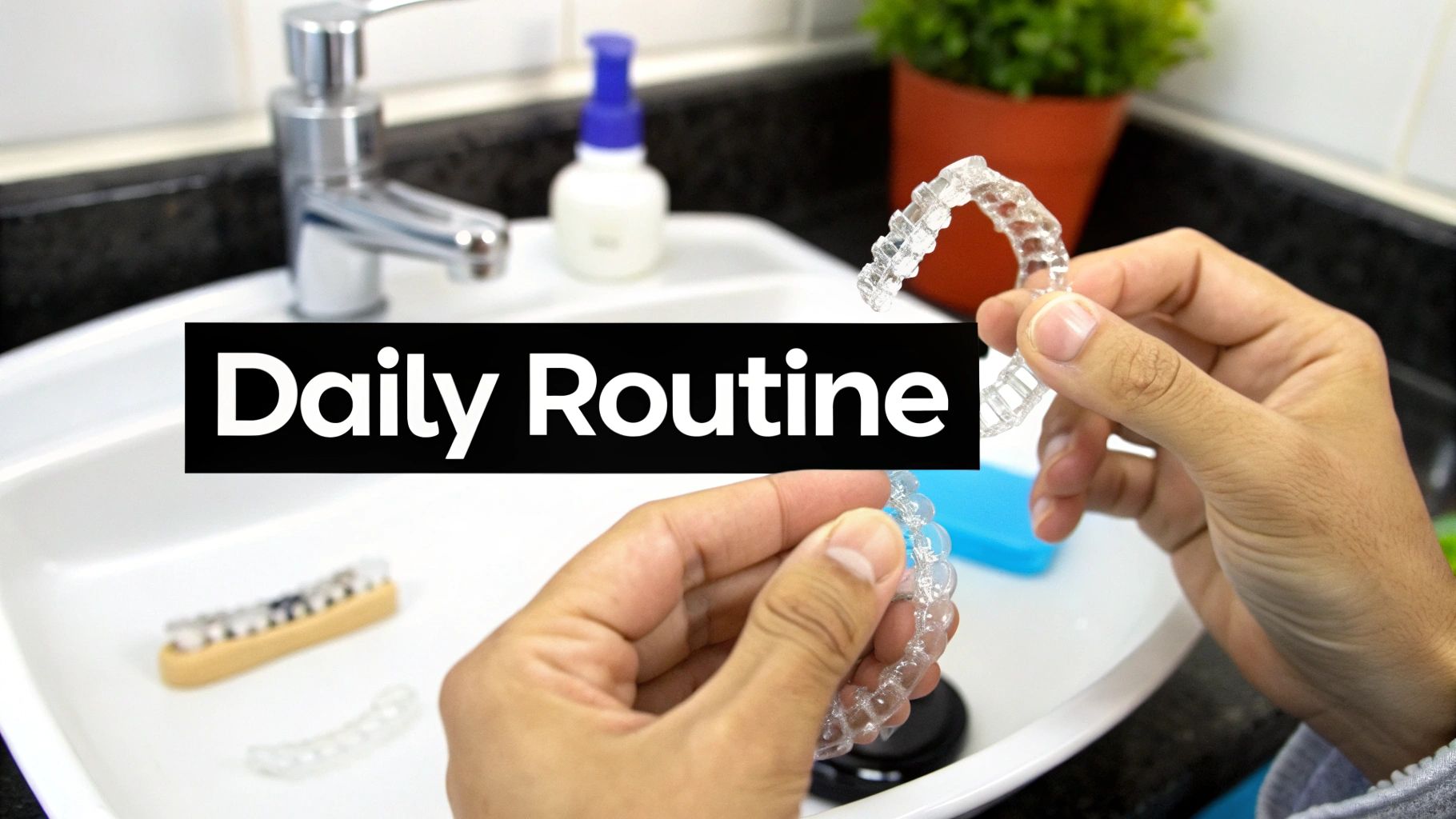
A consistent daily cleaning habit is the most effective way to maintain your Invisalign aligners. The most critical step is rinsing them immediately under lukewarm water after removal. This action washes away saliva and food particles before they can harden into a cloudy film.
After rinsing, gently brush your aligners. Use a dedicated, soft-bristle toothbrush—your regular one is too firm and can damage the plastic. Apply a small amount of clear, unscented antibacterial soap to disinfect the trays without leaving residue or an unpleasant taste.
Perfecting Your Brushing Technique
Use small, circular motions to clean both the inside and outside surfaces of the aligners. Pay extra attention to the ridges where your teeth sit, as this is a primary area for plaque and bacteria to accumulate. This meticulous cleaning is a key part of maintaining good dental health during your treatment.
Avoid toothpaste because it contains abrasive ingredients that create microscopic scratches on your aligners. These scratches make the trays look dull and provide more surface area for bacteria to cling to.
Actionable Tip: Treat aligner cleaning like brushing your teeth—a non-negotiable part of your morning and evening routine. This simple habit preserves both the hygiene and the "invisible" quality of your trays.
Why Consistency Matters Most
Cleaning your aligners twice a day is crucial because bacteria multiply rapidly, especially overnight. If you skip a cleaning, plaque buildup can double every 12 hours.
Sticking to this simple rinse-and-brush method is highly effective. It helps an estimated 75% of patients keep their aligners looking brand new. You can learn more about these aligner hygiene findings and see why this routine is so widely recommended by dental professionals.
Effective Deep Cleaning Methods for Aligners
While daily cleaning is your first line of defense, a weekly deep clean is essential for removing stubborn buildup and eliminating bacteria. These methods reach into every crevice, ensuring your aligners remain hygienic and transparent.
Using Specialized Soaks and Tablets
One of the most straightforward deep cleaning methods is using retainer or denture cleaning tablets. These are specifically formulated to dissolve plaque and kill odor-causing bacteria without damaging the aligner material. Simply place a tablet in a cup of lukewarm water, add your aligners, and let them soak for 15-20 minutes.
For an official solution, Invisalign Cleaning Crystals are guaranteed to be safe for your trays. The process is identical: dissolve the crystals in water and soak your aligners to remove any cloudy film that has developed. Understanding how Invisalign works reinforces the importance of keeping the custom material in optimal condition.
Key Takeaway: Combine daily brushing with a weekly deep clean. Brushing physically removes debris, while a chemical soak disinfects and breaks down microscopic buildup. This dual approach is significantly more effective than either method alone.
For a budget-friendly DIY option, a white vinegar solution is effective. Mix equal parts white vinegar and lukewarm water, then soak your aligners for about 20 minutes. The natural acidity helps break down tartar. Rinse them thoroughly afterward to remove the vinegar taste.
Take It to the Next Level with Ultrasonic Cleaning
For a professional-grade clean at home, an ultrasonic cleaner is an excellent investment. These devices use high-frequency sound waves to create microscopic vibrations in water, dislodging grime from every groove that a brush cannot reach.
Scientific evidence supports this method. Combining brushing with a chemical soak is effective, but adding ultrasonic cleaning elevates the results. Studies show that using an ultrasonic bath can reduce bacterial buildup by 70% more than soaking alone. You can read the full research on aligner hygiene for detailed data.
Comparing The Best Aligner Cleaning Solutions
With numerous cleaning options available, it's important to know which methods are both effective and safe for your aligners. Let's compare the most popular choices to help you build the best routine for your needs.
The infographic below provides a visual summary of several deep cleaning methods and their primary uses.
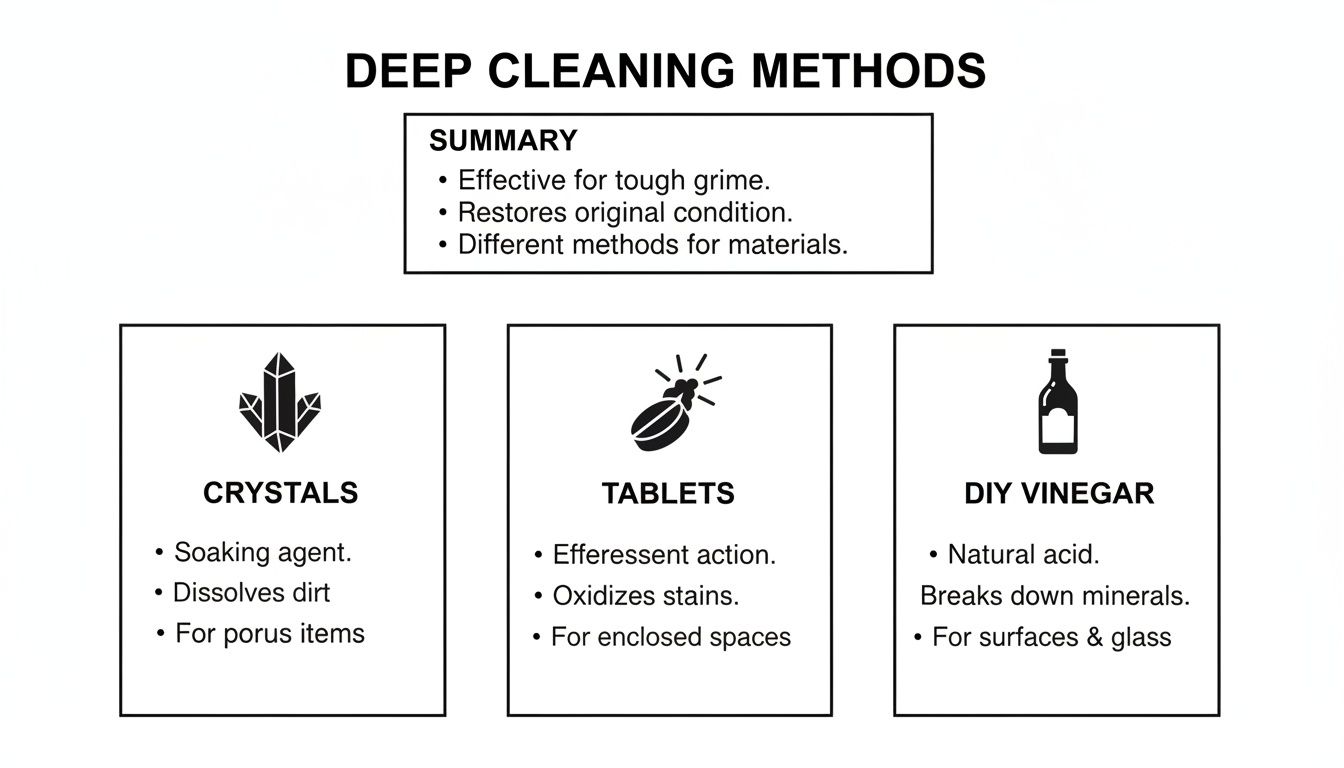
While DIY solutions are cost-effective, products designed for orthodontic appliances offer a guaranteed combination of effectiveness and material safety.
Invisalign Cleaning Methods At a Glance
This table offers a clear comparison of the most common cleaning methods to guide your decision.
Cleaning Method | Effectiveness | Convenience | Cost | Potential Risks |
|---|---|---|---|---|
Invisalign Crystals | Very High | High | $$ | None; designed for aligners |
Retainer Tablets | High | Very High | $$ | Generally safe; check ingredients |
White Vinegar | Moderate | High | $ | Can cause cloudiness over time |
Hydrogen Peroxide | Moderate | High | $ | Can be harsh if not diluted properly |
Soap & Water | Low | Very High | $ | Good for daily rinse, not deep cleaning |
This comparison highlights the trade-off between cost and specialized care. While daily soap-and-water cleaning is essential, it cannot replace a dedicated deep clean.
Specialized Cleaning Products
Invisalign Cleaning Crystals are the official recommendation because they are specifically formulated to dissolve plaque and kill bacteria without yellowing or damaging the aligner plastic. A daily soak of 15-20 minutes can visually reduce biofilm by up to 95%, restoring the aligners' clarity.
Retainer cleaning tablets, such as Retainer Brite, are another convenient and effective option. They function similarly to the crystals, using an effervescent action to dislodge buildup and disinfect trays. They are often more affordable and widely available.
DIY Cleaning Solutions
For a homemade alternative, a solution of 50% white vinegar and 50% lukewarm water is effective. The acetic acid in vinegar helps break down tartar buildup. However, frequent use may cause slight cloudiness, so it's best used intermittently rather than daily.
A diluted hydrogen peroxide solution is another option. Mix one part 3% hydrogen peroxide with one part water for a powerful antibacterial soak. It is crucial to rinse the aligners thoroughly before reinserting them. Understanding the benefits of using a neutral pH cleaner can help you avoid harsh solutions that may degrade the aligner material over time.
Common Cleaning Mistakes and How to Avoid Them
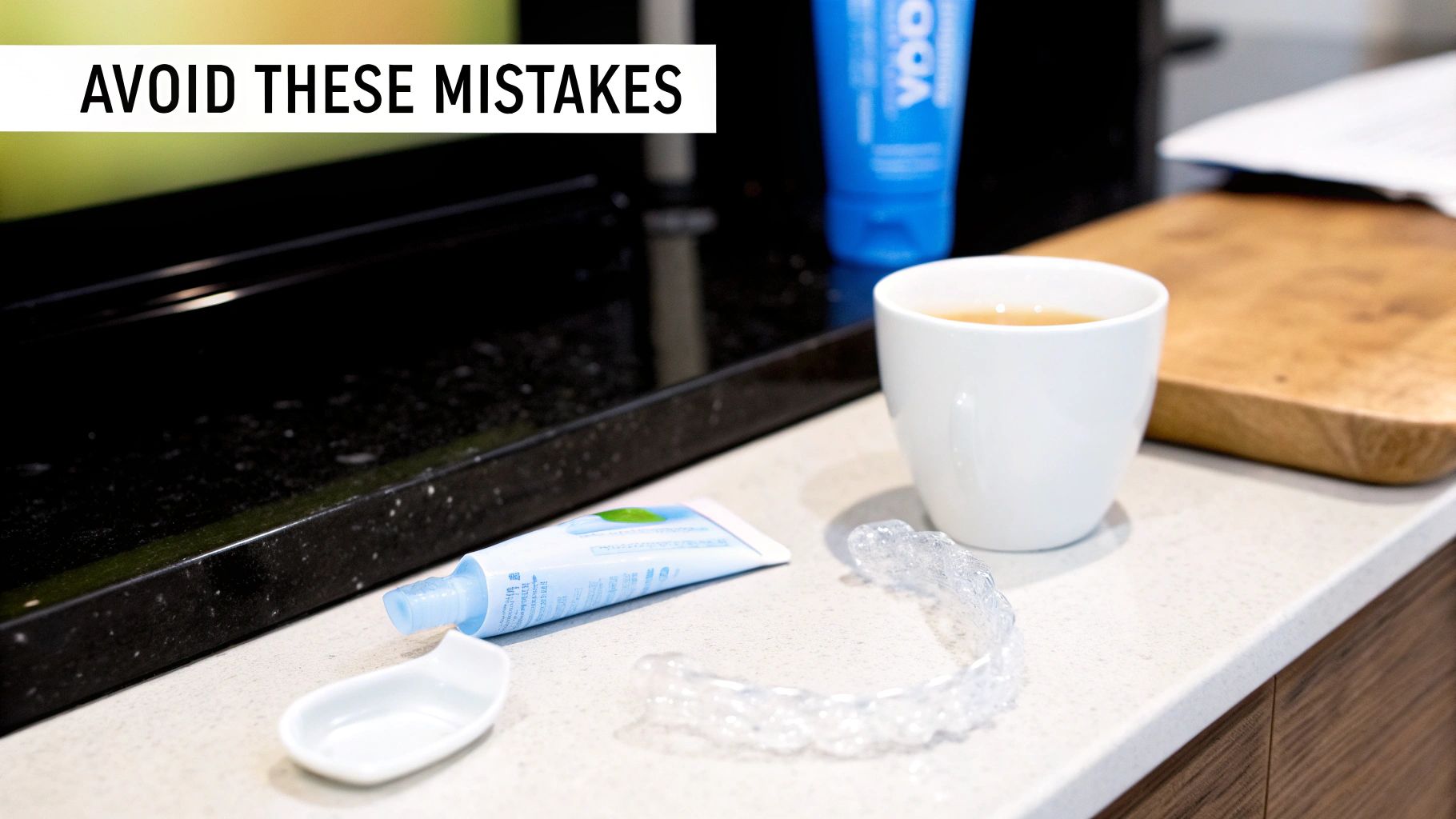
Knowing what to avoid is as important as knowing the correct cleaning techniques. Simple mistakes can cause permanent damage to your aligners and disrupt your treatment plan.
A frequent error is using hot water. While it may seem like a good way to sanitize, heat will permanently warp the SmartTrack™ plastic used to make your aligners. This material is precisely molded to your teeth, and even minor distortion can render an aligner useless. Always use lukewarm water for both rinsing and soaking.
Damaging Products to Keep Away From Your Aligners
Certain household products should never be used on your aligners. Here’s a list of what to avoid and why:
Abrasive Toothpaste: Most toothpastes contain abrasive particles designed for tooth enamel. On aligners, these create microscopic scratches that dull the surface and trap bacteria.
Colored or Scented Soaps: While clear antibacterial soap is ideal, soaps with dyes can stain your aligners, defeating their "invisible" purpose.
Mouthwash and Denture Cleaners: Soaking aligners in colored mouthwash will lead to discoloration. Many denture cleaners contain chemicals that are too harsh for Invisalign plastic and can cause damage.
Crucial Takeaway: Always use gentle cleaning methods. Avoid anything too hot, abrasive, or harsh. A gentle approach is the key to keeping your aligners clear, well-fitting, and effective.
Steering clear of these common mistakes will ensure your aligners remain as invisible and effective as they were on day one.
Even with a perfect routine, you might occasionally notice your aligners looking yellow, cloudy, or developing an odor. These are common issues that are usually easy to fix.
The cause is often a minor habit, such as drinking coffee with your aligners in or not rinsing them thoroughly enough after removal. These actions can lead to staining and residue buildup over time.
How to Get Rid of Yellow Stains and Cloudiness
To remove yellowing, perform a targeted deep soak. A 15-minute bath in a solution of one part 3% hydrogen peroxide to one part lukewarm water is highly effective. The oxidizing agents in peroxide gently lift surface stains without damaging the plastic.
To combat a cloudy film, which is often caused by mineral buildup from saliva or hard water, soak the aligners in a 50/50 mixture of white vinegar and water. This will help dissolve the mineral deposits.
Actionable Tip: If you consistently notice a cloudy film, increase the thoroughness of your daily brushing. Spend an extra 30 seconds scrubbing the inside surfaces and ridges where saliva pools to prevent buildup from forming.
By identifying the cause of the problem, you can adjust your routine and use the right cleaning solution to restore your aligners to their original clear and fresh state.
Common Aligner Care Questions, Answered
Here are practical answers to the most frequently asked questions about maintaining Invisalign aligners.
Can I Use Denture Cleaners on My Aligners?
No, you should not use denture cleaners on your aligners. Denture cleaners are formulated for a harder, more porous material and contain chemicals that can be too abrasive for the SmartTrack™ plastic. This can cause the aligners to become cloudy, brittle, or lose their precise shape.
My Advice: Stick to products specifically designed for clear aligners, such as Invisalign Cleaning Crystals or other retainer cleaning tablets. These are formulated to kill bacteria safely without damaging the aligner material.
How Often Should I Really Be Deep Cleaning My Trays?
While daily brushing is non-negotiable, a deep clean is also essential. We strongly recommend soaking your aligners for at least 15 minutes once a day. This routine effectively removes the invisible plaque and bacteria that accumulate in small crevices and cause odors and cloudiness.
What’s the Best Way to Handle My Aligners When I Travel?
Maintaining your aligner hygiene while traveling is crucial. If you don't have your usual cleaning tablets, a soft-bristled toothbrush and a small drop of clear, unscented antibacterial soap are an effective alternative.
Follow these travel tips:
Always carry your aligners in a hard-shell case.
If you can't brush after a meal, rinse your mouth thoroughly with water before reinserting your aligners.
Never wrap your aligners in a napkin, as this is the leading cause of them being accidentally thrown away.
Proper aligner care is part of a larger commitment to oral health. For more tips on building effective habits, review these frequently asked questions about oral care habits.
Ready to start your journey to a straighter, healthier smile with Invisalign? The team at Beautiful Dentistry is here to guide you every step of the way. Visit us at https://zdentist.com to schedule your consultation today.


Comments