

How to Choose a Dentist: A Practical Guide for Your Family
- Caterina Rutter
- Dec 3, 2025
- 9 min read

Finding the right dentist can feel overwhelming, but it's a manageable process if you know what to look for. Your goal is to move beyond a simple online search and conduct a focused investigation to find a practice that truly fits your family's needs. This guide will walk you through actionable steps to make a confident choice.
Step 1: Create Your Initial Shortlist

Don't try to find the perfect dentist in one go. The most effective first step is to identify three to five promising local practices. This narrows your focus and ensures you're only spending time vetting genuine contenders.
Action: Gather Trusted Recommendations
Before opening a browser, leverage your personal network for honest feedback. Word-of-mouth referrals are invaluable because they come from people you trust.
Here's how to get specific, useful information:
Friends and Family: Ask, "Who is your dentist, and what specifically do you like about them?" Follow up with questions like, "How do they handle billing?" or "Is it easy to get an appointment?"
Co-workers: Since they often live nearby, colleagues are an excellent source for local recommendations. Ask them about convenience and their overall experience.
Your Primary Care Doctor: Your family doctor or pediatrician can often refer you to dental professionals they know and respect within the local healthcare community.
These conversations provide a pre-screened list, which is a much more efficient starting point than a cold online search. If you have children, getting these insights is even more critical. You can learn more about the benefits of choosing a family dentist in our detailed article.
Action: Vet Candidates with Online Reviews
With a few names in hand, it’s time to validate them online. Reviews provide a broader perspective on a practice's consistency and patient experience. This step is crucial for most people.
A survey from the American Dental Association found that over 72% of adults check online reviews before picking a dentist. It also showed that practices with more than 100 reviews are 35% more likely to be chosen.
When you analyze reviews on Google, Yelp, or Healthgrades, go beyond the star rating. Look for patterns in the comments. Are patients consistently praising the friendly staff, gentle technique, or clean office? Conversely, multiple complaints about long waits, surprise bills, or rude front-desk interactions are significant red flags that you should take seriously.
Step 2: Investigate Credentials and Services
Once you have a shortlist, it's time to verify each dentist’s qualifications and ensure their services align with your family's needs. The goal is to find a practice that can handle most of your needs under one roof, saving you from future referrals and logistical headaches.
Action: Verify Their Credentials Online
Confirm that any dentist you consider is properly licensed. In the U.S., dentists will hold either a DDS (Doctor of Dental Surgery) or a DMD (Doctor of Medicine in Dentistry) degree—both signify the same level of education.
You can verify a dentist's license on your state’s dental board website. This is public information and a quick way to confirm they are in good standing. Beyond that, look for signs of a commitment to ongoing learning:
Board Certifications: Essential for specialists like orthodontists or oral surgeons.
Professional Memberships: Active participation in groups like the Academy of General Dentistry (AGD) or the American Academy of Implant Dentistry (AAID) indicates they are engaged with the latest advancements in their field.
A dentist who invests in continuing education is actively learning modern techniques to make your care more effective, comfortable, and successful.
Action: Match Their Services to Your Family's Needs
Think about your family’s current and future dental needs. A practice with a comprehensive range of services offers convenience and continuity of care.
Create a mental checklist: does the practice offer?
General and Family Dentistry: Can they treat both children and adults? This simplifies scheduling and builds a long-term relationship.
Restorative Treatments: Do they handle common issues like fillings, crowns, bridges, and dental implants in-house?
Cosmetic Options: If you're interested in aesthetic improvements, check for services like professional teeth whitening, veneers, or clear aligners like Invisalign.
Advanced Procedures: Can they manage more complex needs like root canals, wisdom tooth extractions, or gum disease treatments? This can prevent referrals to unfamiliar specialists.
Choosing a single practice that can grow with your family streamlines your healthcare. When a future need arises, you'll already be with a team you know and trust.
Step 3: Evaluate Technology and Patient Comfort
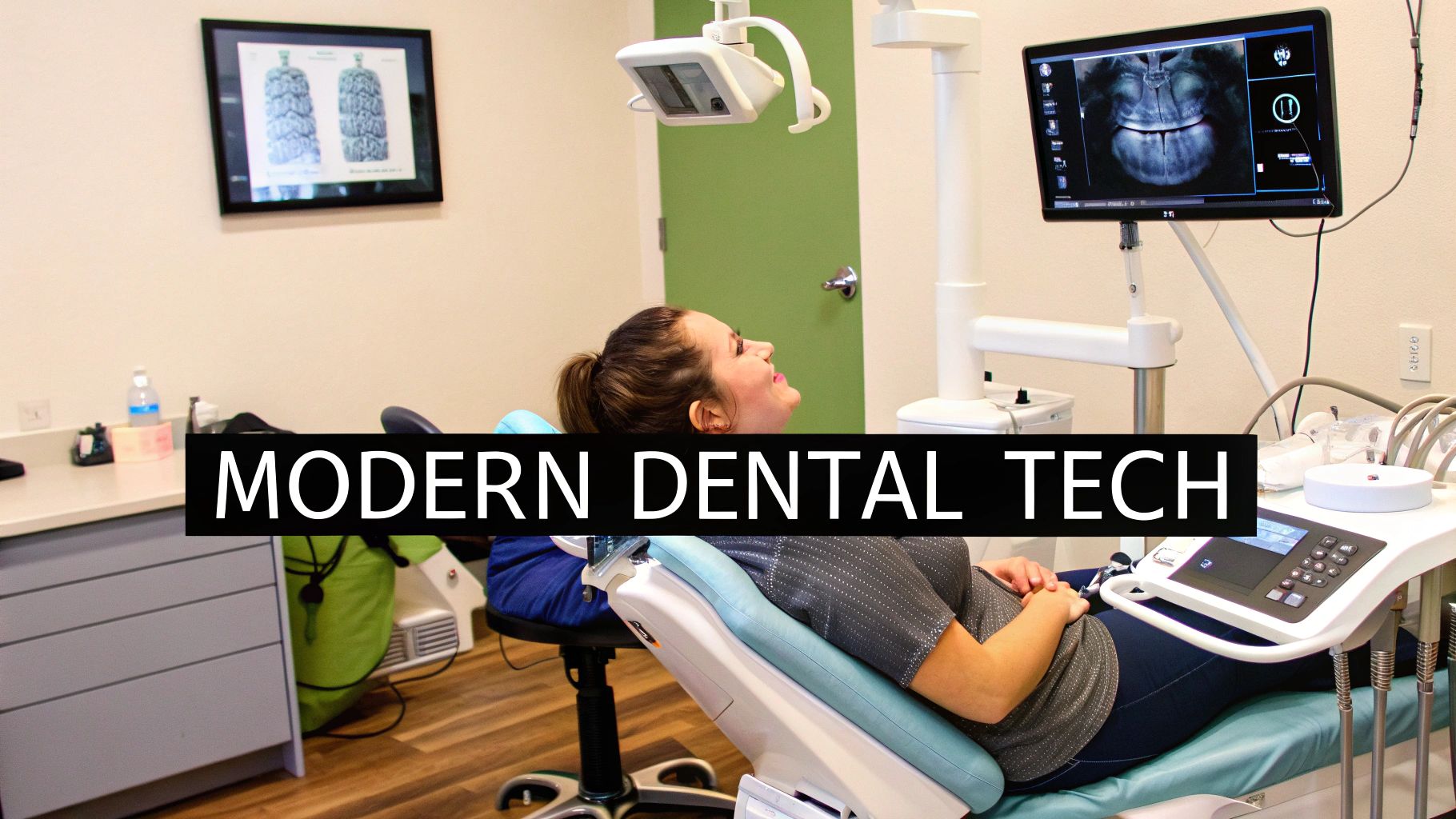
A dentist's skill is paramount, but the technology they use and the comfort they provide are what separate a good experience from a great one. Modern tools lead to faster, more precise, and more comfortable treatments. Equally important is an office environment that feels welcoming and respectful of your time, often using tools like queue management systems to keep appointments running smoothly.
Action: Look for Modern Dental Technology
The equipment a practice uses reflects its commitment to high-quality care. When you visit their website or call the office, ask about specific technologies.
Digital X-rays: This is a non-negotiable. They use up to 90% less radiation than film X-rays and provide instant, clear images for early diagnosis.
Intraoral Cameras: These pen-sized cameras let you see what your dentist sees on a monitor, helping you understand your diagnosis and treatment options.
Laser Dentistry: Lasers can be used for various procedures, often resulting in less pain, minimal bleeding, and faster healing.
Research shows that patients value modern technology. Over half report that up-to-date equipment is a key factor in their choice, with 65% of clinics in larger organizations having advanced tools compared to just 38% in independent practices.
Key Technologies in a Modern Dental Practice
Technology | What It Is | Patient Benefit |
|---|---|---|
Digital X-Rays | Low-radiation imaging that creates instant electronic pictures. | Safer (less radiation), faster diagnosis, and clearer images for detecting decay. |
Intraoral Camera | A small, camera-tipped wand that displays a live video of your mouth. | Helps you see exactly what the dentist sees, leading to better-informed decisions. |
3D Cone Beam CT (CBCT) | A specialized X-ray machine that generates a 3D model of your teeth, jaw, and bone. | Essential for precise implant placement, root canals, and orthodontic planning. |
CEREC® | Computer-aided design/milling technology to create crowns in a single visit. | No temporary crowns, no goopy impressions, and you walk out with a permanent restoration in one day. |
Laser Dentistry | Uses focused light beams to perform various soft and hard tissue procedures. | Often less pain, minimal bleeding, and a quicker recovery for gum treatments and cavity prep. |
The presence of these tools indicates a practice is invested in providing efficient and comfortable care.
Action: Assess the Commitment to Patient Comfort
Dental anxiety is real, and a great dental team should actively work to create a calming environment. This goes beyond a friendly greeting to include concrete measures that prioritize your well-being.
A patient-focused practice will be transparent about their approach to dental anxiety. If they seem dismissive when you ask, consider it a red flag.
You can often get a sense of the office atmosphere by taking a virtual tour of the dental office online.
Look for these comfort-focused features:
Sedation Options: Ask if they offer nitrous oxide ("laughing gas") or oral sedatives. These can make necessary treatments manageable for anxious patients.
Comfort Amenities: Simple touches like blankets, neck pillows, or noise-canceling headphones can significantly improve the patient experience.
Clear Communication: The team should take the time to explain procedures, answer all your questions, and ensure you feel in control of your care.
Step 4: Clarify Logistics and Office Policies
A dentist can be clinically brilliant, but if their office logistics are a nightmare, the relationship won't work. Before committing, get clear answers on insurance, costs, and emergency procedures to avoid future frustration.
The most important question to ask is not "Do you take my insurance?" but "Are you an in-network provider for my specific plan?" The difference can save you thousands of dollars.
Action: Get Clarity on Costs and Coverage
Financial surprises are a major source of patient dissatisfaction. A transparent office will discuss costs with you before treatment begins.
When you call the office, use this script:
"Hello, I'm considering becoming a new patient. Can you confirm if you are in-network with [Your Insurance Company] on the [Your Specific Plan Name] plan?"
"Could you provide an estimated cost for a new patient exam, cleaning, and a full set of X-rays?"
"For major procedures like a crown, what is your process for providing a pre-treatment estimate so I understand my out-of-pocket cost?"
This direct approach establishes clear financial expectations from the start. Many practices, like Beautiful Dentistry, also provide this information on their website, including a page on payment and financing options.
Action: Understand Key Operational Policies
A well-run office has clear, patient-friendly policies. Knowing these ahead of time provides peace of mind.
A great dental practice will openly discuss their policies for emergencies, cancellations, and payments. This transparency is a strong indicator of a patient-focused operation.
Here are the essential policy questions to ask:
Emergency Care: "How do you handle dental emergencies after hours? Is there an on-call dentist?"
Appointment Changes: "What is your cancellation policy? How much notice is required to avoid a fee?"
Payment Flexibility: "Do you offer in-house payment plans or work with third-party financing for larger treatments?"
Finding a practice whose policies align with your needs is crucial for a lasting and positive relationship.
Step 5: Make Your Final Decision at the Consultation
You've done the research. The final step is the in-person consultation. This visit is your opportunity to assess the environment and determine if the practice is the right fit. Treat it as an interview—you are evaluating them as much as they are evaluating you.
Pay attention to the atmosphere. Is the office clean and organized? Does the staff seem happy and work well together? A positive environment is often a sign of a well-run practice. Your goal is to leave feeling confident and cared for.
Action: Ask Revealing Questions
Use the consultation to understand the practice's philosophy of care. A great dental team will welcome your questions.
Here are some specific questions to ask:
To the Dentist: "What is your philosophy on preventive care?" and "How do you help patients who experience dental anxiety?"
To the Hygienist: "What do you look for during a cleaning beyond the basics?" and "What is one thing I can do at home to improve my checkups?"
To the Front Desk Team: "Can you walk me through how you explain treatment plans and costs to patients?"
The way they answer is as important as the answer itself. Do they provide clear, patient explanations, or do they seem rushed? This first interaction sets the tone for your future relationship.
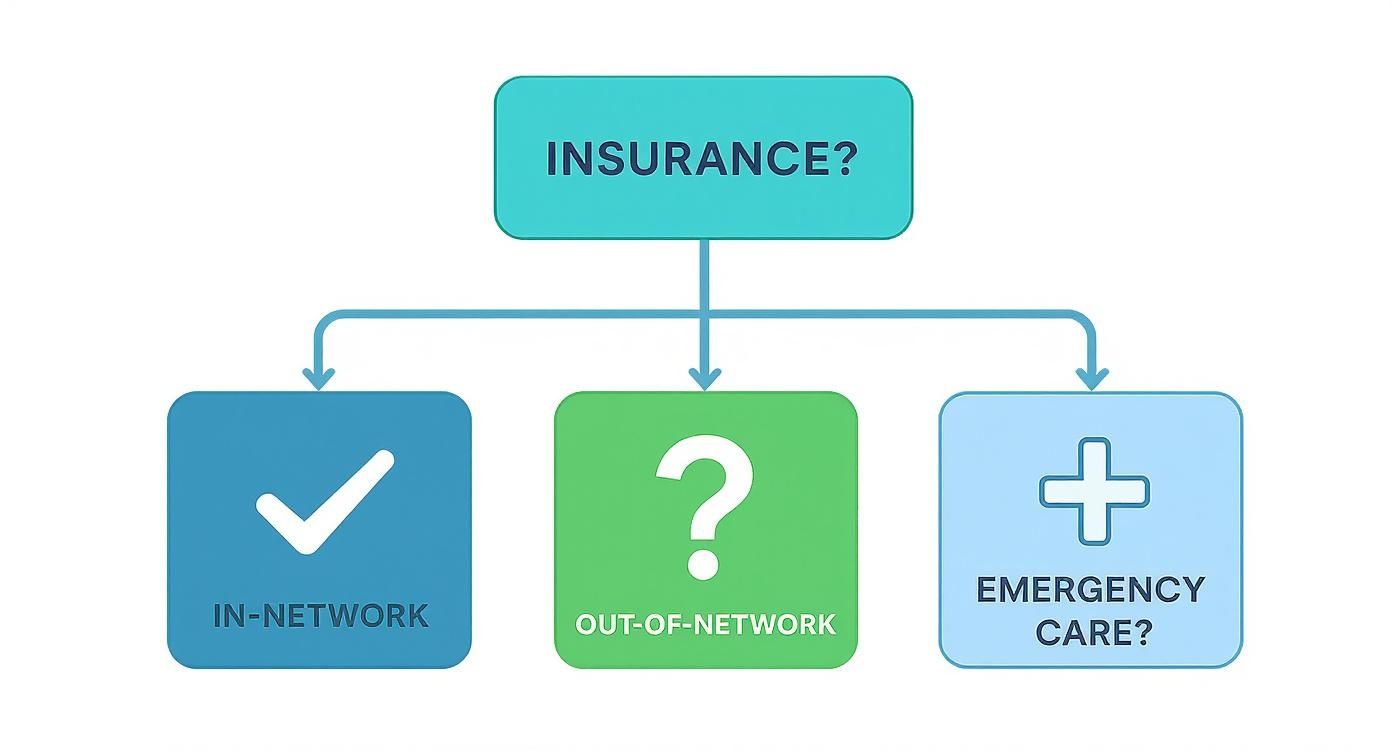
This decision workflow highlights how crucial factors like insurance status and emergency care are in making your final choice.
Action: Watch for Red Flags
Trust your gut. If something feels off, it probably is. Knowing what to avoid is as important as knowing what to look for.
Your comfort and trust are non-negotiable. Never feel pressured to proceed with a dentist who doesn't make you feel completely comfortable and respected.
Be alert for these warning signs:
Aggressive Upselling: Be wary if the focus is immediately on expensive cosmetic procedures you didn't ask about, rather than your actual oral health.
Lack of Transparency: Vague or evasive answers about treatment costs or the dentist's experience are causes for concern.
A Chaotic Environment: A disorganized front desk or long, unexplained waits can indicate larger operational problems.
Outdated or Unclean Facilities: The office should be spotless. Equipment that appears old or poorly maintained is a major red flag.
By preparing for your consultation, asking direct questions, and trusting your instincts, you can confidently choose a dentist who will be a true partner in your family's health.
A Few Final Questions You're Probably Asking
Even after thorough research, some common questions can remain. Here are clear answers to help you finalize your decision.
"Really, How Often Do I Need a Checkup?"
The "every six months" rule is an excellent baseline for most people, allowing for early detection of cavities and gum inflammation. However, your dentist should personalize this schedule based on your specific health profile. If you're at high risk for cavities or gum disease, they may recommend visits every three to four months. If your oral health is exceptional, they might suggest an annual checkup.
"What's the Deal with DDS vs. DMD?"
There is no practical difference between a DDS (Doctor of Dental Surgery) and a DMD (Doctor of Medicine in Dentistry). Both degrees require the same rigorous education, curriculum, and national board examinations. The title simply depends on the university that awarded the degree. You can be confident in a dentist with either credential.
"Should I Go with a Small Private Practice or a Big Clinic?"
This choice depends on your personal preference. Both models offer distinct advantages.
A Solo Private Practice typically offers a highly personal experience. You will likely see the same dentist and staff at every visit, fostering a strong, long-term relationship.
A Larger Dental Clinic often provides greater convenience, with more flexible hours, multiple specialists under one roof, and a wider array of advanced technology.
Consider what matters more to you: the consistency of a small practice or the one-stop-shop convenience of a larger clinic.
Dental anxiety is incredibly common. A practice that takes your concerns seriously and offers solutions is one that truly prioritizes patient well-being.
When you call a potential new office, be upfront about any dental anxiety. Ask directly what they offer to help patients feel comfortable, such as sedation options. Their response—whether compassionate or dismissive—will tell you everything you need to know about their approach to patient care.
Choosing the right dentist is about finding a true partner for your long-term health. At Beautiful Dentistry, we blend the personalized, one-on-one attention you'd expect from a private practice with the advanced services of a larger clinic. We offer sedation dentistry, have a bilingual staff, and provide concierge-style care for the whole family. New patients can experience our approach with a $59 comprehensive exam and X-rays. To learn more and book your visit, check out our website: https://zdentist.com.


Comments