

How Long Do Dental Implants Last? A Lifetime Investment Guide

When you’re considering restoring your smile, your first question is likely, "How long will this last?" It’s a critical question—this is an investment in your health, function, and confidence. So, how long do dental implants last?
Here’s the actionable answer: the implant post itself, which acts as a new tooth root, is designed to last a lifetime with proper care. The crown on top, the part you see and chew with, typically needs replacing every 10 to 15 years due to normal wear.
Built on a Permanent Foundation
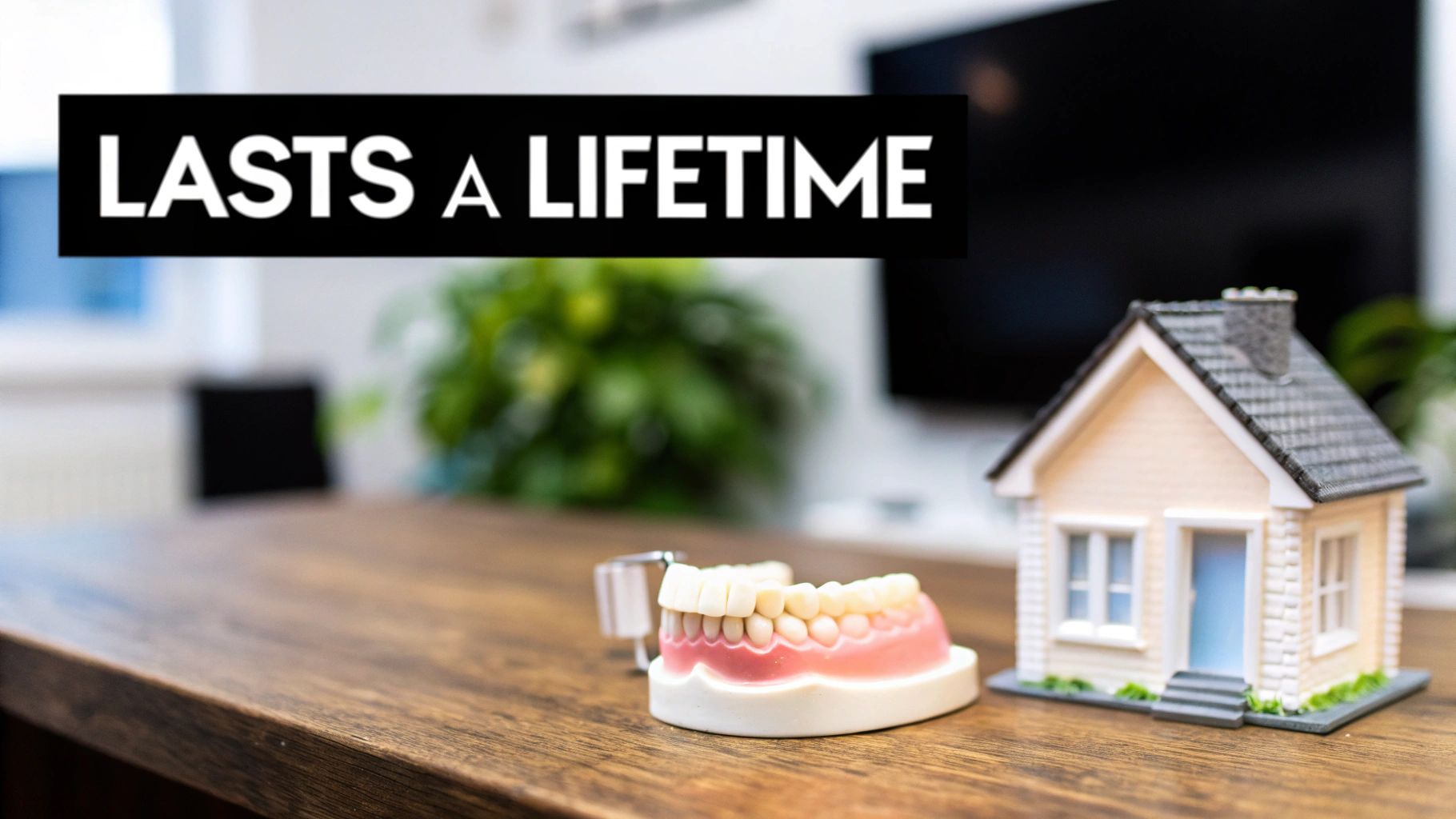
Think of your dental implant like a house. The small titanium post placed in your jawbone is the foundation. It’s incredibly strong because it fuses directly with your bone in a process called osseointegration. Just like a home's foundation, it’s built to be permanent.
The crown, however, is like the roof. It’s made of tough, beautiful materials that withstand daily use, but it’s exposed to every meal. After a decade or more of service, it may need to be refreshed to keep your smile functioning at its best.
This two-part design is what makes implants a superior long-term solution. You get a permanent, stable base with a replaceable tooth on top, making future maintenance simple and predictable.
The Lifespan of Each Part
To maximize your implant's longevity, it's crucial to understand its three components. Each has a specific job and, as a result, a different life expectancy.
A dental implant isn't one piece. It's a three-part system engineered for strength and easy maintenance. Your action plan should focus on protecting the lifetime foundation (the implant post) while preparing for the eventual replacement of the functional crown.
This isn't just theory; it's backed by extensive research. One of the largest long-term studies followed over 10,871 modern implants and found a remarkable cumulative survival rate of 94.0% after 15 years. This data confirms that while the crown will need attention, the implant itself is a truly dependable solution. You can dive deeper into the numbers with this detailed analysis of implant durability.
Dental Implant Component Lifespan At a Glance
Use this breakdown to plan for the future of your new tooth. Knowing what to expect from each part helps you maintain it effectively.
Component | Average Lifespan | Your Action |
|---|---|---|
Titanium Implant | Lifetime | Protect the surrounding bone and gum tissue with excellent daily hygiene. |
Abutment | Lifetime | Keep the area clean and attend regular check-ups to ensure it remains secure. |
Crown | 10–15 Years | Avoid chewing exceptionally hard items (ice, pits) and plan for its eventual replacement. |
As you can see, the core components are built for the long haul. The crown is the only part you'll likely ever need to replace, making maintenance straightforward.
The Science Behind a Permanent Smile
The incredible durability of dental implants comes from a biological process that you can actively support. The secret to their longevity is osseointegration—the process of the implant literally becoming part of your jawbone. Understanding this science shows you why your role in its care is so vital.
Imagine a healthy tree sending roots deep into the ground. Those roots become so intertwined with the earth that the tree stands strong for a lifetime. Osseointegration is the same concept, but with a biocompatible titanium implant and your jawbone.
When the implant is placed, your body doesn't reject it. Instead, your bone cells grow directly onto and fuse with the implant’s surface. This fusion creates an incredibly strong, unified structure, turning the implant into a new tooth root that's locked firmly in place.
What Clinical Survival Rates Mean for You
When dentists discuss "survival rates," we're talking about the percentage of implants still functioning after a certain number of years. Decades of clinical studies show incredibly high rates, giving you powerful proof of their reliability.
These aren't small studies. They track thousands of patients over many years to collect solid, real-world data that confirms implants are a predictable, long-term solution.
For instance, a 20-year meta-analysis found a mean implant survival rate of 92% after 20 years in prospective studies. Other retrospective studies reported an overall 20-year survival rate of 88%. The actionable takeaway: the vast majority of implants are still going strong two decades later, but success depends on the right initial placement and consistent aftercare. You can see the specifics in the full research summary on implant survival.
Osseointegration is why a dental implant can last a lifetime. By becoming one with your jawbone, it creates a permanent foundation. Your job is to protect the health of that jawbone.
The Foundation of Predictable Success
Achieving that powerful bone-to-implant bond requires meticulous planning. The scientific foundation for your implant's success rests on precise diagnostic tools. For example, advanced CBCT dental imaging provides a detailed 3D map of your jawbone. This allows us to find the perfect spot to place the implant, maximizing the potential for fusion and long-term stability.
This careful approach ensures we create the ideal conditions for osseointegration from day one. By combining biology with technology, we build a smile that is truly designed to last. This scientific backing is what gives both us and our patients total confidence in answering, "how long do dental implants last?"
Factors That Determine Your Implant's Lifespan
While osseointegration creates a permanent anchor, the actual lifespan of your implant depends on a partnership between your dental team and your daily habits. Several key factors can either protect or jeopardize your investment.
Think of it like a high-performance car. The engineering is superb, but it’s regular maintenance and smart driving that keep it on the road for decades. Your daily choices are what maintain the health of the surrounding bone and gums—the secret to your implant's stability.
Your Daily Oral Hygiene Routine
Your implant crown can't get a cavity, but the gum tissue around it can still get infected. A consistent, effective oral hygiene routine is your primary line of defense.
This means more than a quick brush. To properly care for an implant, you need the right tools to clean where plaque hides.
Interdental Brushes: Use these small brushes to clean around the base of the implant where it meets your gumline—a spot a regular toothbrush misses.
Water Flossers: Use a water flosser to flush out bacteria and food particles from around the implant and under the crown.
Low-Abrasive Toothpaste: Choose a gentle, non-abrasive toothpaste to protect your crown from microscopic scratches, keeping it looking great for years.
Making these habits a non-negotiable part of your daily routine is the single best action you can take to keep the tissues supporting your implant healthy and infection-free.
The Critical Role of Bone and Gum Health
Your implant's long-term success hinges entirely on a solid foundation of healthy jawbone and gum tissue. Before placement, we meticulously check that you have enough strong bone to support it.
This fusion process is what gives the implant its incredible strength and stability.
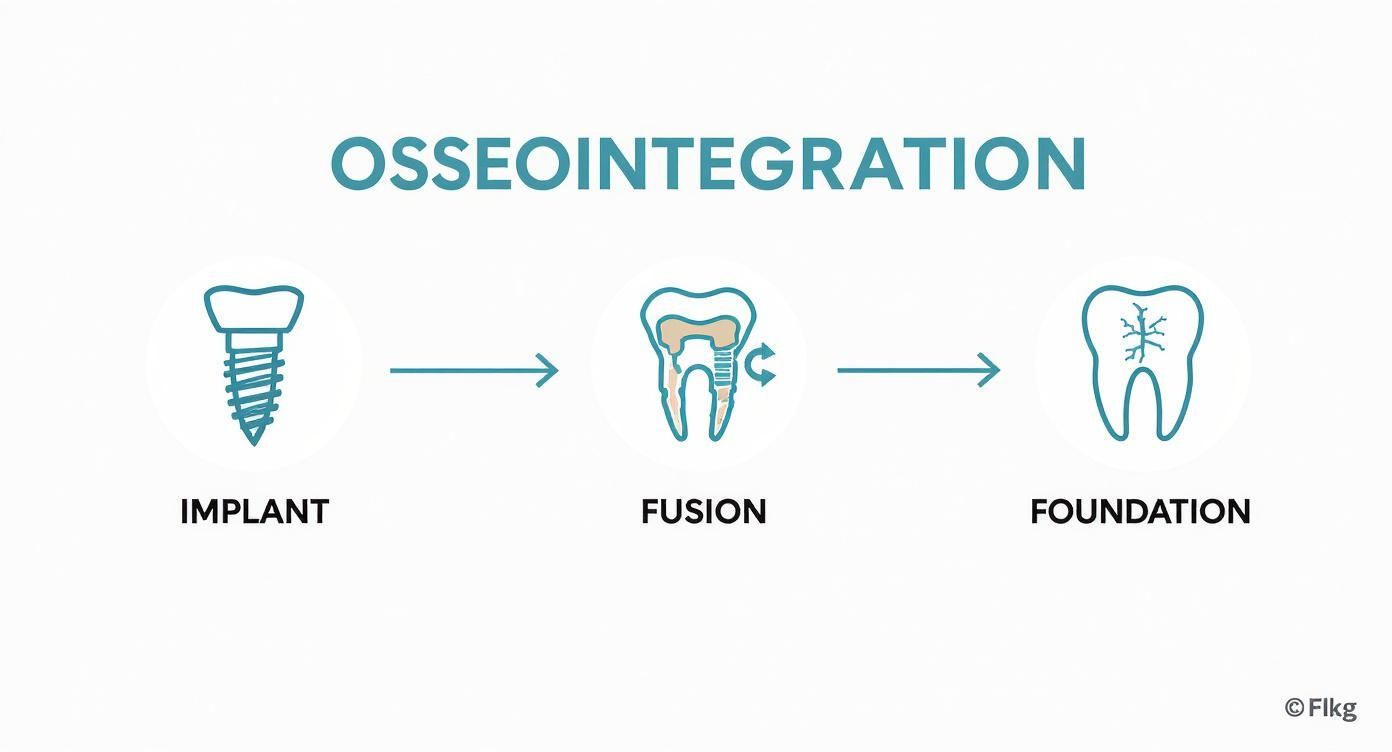
As you can see, fusion is the crucial bridge connecting the implant to the final, stable foundation.
If your bone volume is low, a procedure like bone grafting may be necessary. In those cases, understanding your dental bone graft success rate is a key part of planning for success. After surgery, your job is to maintain that healthy foundation.
Any condition that weakens your gums or bone, like untreated periodontal disease, can erode this foundation. This is why regular dental checkups are non-negotiable. They allow us to spot potential issues while they are still easy to fix.
Lifestyle Habits and Their Impact
Your daily habits directly affect your body's ability to maintain healthy bone, which in turn determines how long your dental implants last. Smoking is the single biggest risk factor you can control.
The chemicals in tobacco smoke restrict blood flow to your gums and bone. This slows healing and can interfere with osseointegration, raising the risk of the implant failing to fuse with your jaw. Studies show the implant failure rate for smokers can be more than double that of non-smokers.
Your choices directly impact the long-term health of your implant. Use this table to guide your habits.
Impact of Lifestyle Choices on Dental Implant Longevity
Factor | Positive Impact (Extends Lifespan) | Negative Impact (Shortens Lifespan) |
|---|---|---|
Diet | Eat a balanced diet rich in calcium and vitamin D to support strong bones. | Avoid a diet high in sugar and acidic foods, which can contribute to gum inflammation. |
Tobacco Use | Do not smoke. This allows for optimal blood flow, healing, and bone integration. | Smoking constricts blood vessels, slows healing, and can double the risk of implant failure. |
Alcohol | Limit alcohol consumption to maintain overall health and healing capacity. | Excessive alcohol use can impair healing and contribute to bone loss over time. |
Stress | Manage stress to reduce teeth grinding (bruxism) and support immune function. | Chronic stress can lead to clenching, putting excessive force on the implant. |
Health Management | Proactively manage conditions like diabetes to keep your body's systems stable. | Uncontrolled systemic diseases increase infection risk and compromise healing. |
As you can see, taking care of your overall health is a huge part of protecting your dental implant. A balanced diet, regular checkups, and avoiding harmful habits are your recipe for lasting success.
Understanding the Implant Versus the Crown
When asking how long a dental implant lasts, it's easy to think of the whole restoration as one unit. But it's two separate parts, and knowing the difference is key to planning for the long haul.
Think of it like a light fixture. The implant is the hidden wiring inside the wall—the permanent, secure foundation that’s installed once and designed to last a lifetime.
The crown is the visible light bulb. It does all the work, but after thousands of hours of use, it will eventually burn out. This doesn't mean the wiring has failed; you just need a new bulb.
Why the Crown Wears Out First
The crown is the workhorse. It’s the surface that grinds food and withstands biting forces. Even though it's made from incredibly tough materials, it's not indestructible.
After years of chewing, a crown will show wear. It might chip, crack, or just get worn down. Most crowns last 10 to 15 years before needing a refresh. This isn’t a failure—it’s the natural lifecycle of a hard-working part. You're not replacing the entire implant, just the component that's taken a decade of wear. For more on this, see our guide on how long dental crowns last.
The separation of implant and crown is a brilliant design. It ensures your foundational investment is permanent, while the functional part can be easily updated without disturbing the stable base.
Clinical research confirms this. A study tracking implants for up to 40 years found a 95.6% cumulative survival rate for the implant posts. The crowns, however, had a survival rate of 60.9% over that same period. This landmark clinical study on implant and crown longevity clearly shows the implant is a lifetime solution, while the crown is a replaceable component.
How Material Choice Impacts Crown Durability
The material we choose for your crown makes a big difference in its durability. When we design your restoration, you can help choose the option that best fits your needs.
Porcelain Fused to Metal (PFM): This option combines the strength of a metal base with a natural-looking porcelain layer. A potential downside is that the porcelain can sometimes chip, or a dark line may appear at the gumline over time.
All-Porcelain or Ceramic: Best for aesthetics, this material perfectly mimics the translucency of a natural tooth, making it a top choice for front teeth. It can be more fragile, so it may not be ideal for molars that handle heavy chewing forces.
Zirconia: This is the modern powerhouse of dental materials. It’s exceptionally strong and fracture-resistant, making it a perfect choice for back teeth. Modern zirconia is also highly aesthetic, giving you a restoration that is both durable and natural-looking.
We'll discuss these options with you to select the right material for your bite, goals, and budget, ensuring your new smile is built for longevity.
Your Action Plan for Lifelong Implant Care

Knowing how long an implant can last is one thing; making sure yours does is what matters. You have direct control over that outcome. Your daily habits and professional care are the two biggest factors in protecting your investment for decades.
This is a simple maintenance schedule for a healthy smile. It's about safeguarding the gum and bone that anchor your implant, keeping it as secure as the day it was placed.
Your Daily At-Home Care Checklist
Your implant needs daily cleaning to fight off plaque and keep gums healthy. The technique is slightly different because you must clean around the base where the crown meets the gumline.
Follow this simple routine:
Gentle Brushing: Use a soft-bristled toothbrush and non-abrasive toothpaste twice a day. Focus on the area where the crown meets the gums.
Specialized Flossing: Use implant-specific floss, an interdental brush, or a water flosser to effectively clean around the entire base of the crown. Regular floss can shred.
Antibacterial Rinse: Swish with a non-alcoholic, antibacterial mouthwash to kill bacteria in hard-to-reach spots.
Following this routine is your best defense against peri-mucositis (gum inflammation) and peri-implantitis (bone loss), the leading cause of late-stage implant failure.
Professional Maintenance Your Implant Needs
Your work at home is the foundation, but it must be paired with regular professional check-ups. Our team can do things for your implant that you can't do at home.
Our hygienists use specialized tools made from materials like plastic or titanium that can safely clean the implant’s surface without scratching it—something metal instruments used on natural teeth can't do.
During your semi-annual visits, here’s what we do:
A Detailed Cleaning: The hygienist removes any hardened plaque (tartar) from the implant, abutment, and crown using special tools.
Gum Health Check: We measure the pocket depths around your implant to monitor for early signs of inflammation or bone loss.
Bite and Stability Test: Your dentist checks that the crown is secure and your bite is aligned. An uneven bite can put too much pressure on the implant.
These appointments are your early warning system, allowing us to fix minor issues before they become major problems.
When to Call Your Dentist Immediately
While implants have an incredible success rate, you are the first line of defense. Contact us immediately if you notice any of these red flags—don't wait for your next scheduled appointment.
Pain or Discomfort: Any persistent ache or sharp pain from the implant site is not normal.
Bleeding Gums: Gums bleeding when you brush or floss around the implant is an early sign of inflammation.
Visible Swelling: Puffy, red, or swollen gums around the implant require attention.
Looseness: The crown should feel solid. If it feels wobbly or the implant itself seems to move, it requires an urgent evaluation.
Catching these things early usually means the fix is simple. Being proactive is the best way to ensure your implant serves you for a lifetime.
Planning Your Next Steps for a Lasting Smile
With a great dental team and a commitment to care, a dental implant can truly last a lifetime. It is a partnership: we provide the clinical expertise and technology; you provide the commitment to daily care and regular check-ups.
This combination is the formula for turning your investment into a long-term win for your smile and health. Now that you understand the factors that determine how long do dental implants last, you can take control of the outcome.
What to Expect During Your Consultation
Taking the first step is simple and stress-free. Your consultation is a conversation where you can get clear, honest answers from an expert.
Here's what will happen during your first visit:
Initial Assessment: We’ll perform a comprehensive exam of your teeth, gums, and jaw to understand your current oral health.
Advanced 3D Imaging: We use a CBCT scanner to create a detailed 3D image of your jawbone, which is critical for planning the perfect implant placement.
Personalized Treatment Plan: Dr. Sobieraj will sit down with you to review your options, lay out a step-by-step plan, and discuss the timeline and costs. You will leave with a clear path forward.
Our goal is to demystify the process. We want you to feel confident and informed, because a well-informed patient is a successful one.
If you're ready to explore this solution, learn more about our approach to dental implants in Tempe. When you’re ready, schedule your consultation, and let's start building your new smile together.
Your Questions About Dental Implants, Answered
Here are answers to some of the most common questions we hear from patients, giving you the actionable insight you need.
What Happens If a Dental Implant Fails?
First, know that implant failure is rare. When it happens, it's typically due to an infection (peri-implantitis) or incomplete bonding with the jawbone. Even so, it's not the end of the road.
In most cases, we can remove the implant, treat the area, and let it heal. Sometimes, a bone graft is needed to rebuild a solid base. Once the site is healthy, we can often place a new implant successfully. The key is early detection. Call us immediately if you feel any looseness or pain.
Do All-on-4 Implants Last as Long as Single Implants?
Yes. The titanium posts used in an All-on-4 treatment are the same as single implants and rely on the same osseointegration process to become a permanent part of your jaw. The foundation is built to last a lifetime.
The actionable difference is the maintenance of the full-arch restoration. It requires incredibly diligent cleaning underneath to prevent plaque buildup. With All-on-4, consistent professional cleanings are essential for long-term stability.
The underlying titanium posts in an All-on-4 system are just as permanent as single implants. Your focus must be on meticulous hygiene to protect the entire restoration, ensuring the answer to "how long do dental implants last" remains "a lifetime."
Will Dental Insurance Cover an Implant Replacement?
This depends entirely on your specific plan. Dental insurance policies vary widely. Some may help cover the initial implant, but coverage for a replacement crown or a failed implant is far less common.
Here's the practical advice: assume insurance will not cover a crown replacement after 10-15 years, as it's often viewed as elective. The only way to know for sure is to review your policy details or call your provider directly. To ensure long-term care is always affordable, we offer flexible financing options to help you plan for future needs without financial stress.
Ready to take the next step toward a permanent, confident smile? The expert team at Beautiful Dentistry is here to answer all your questions and create a personalized plan just for you. Schedule your consultation today by visiting us at https://zdentist.com.


Comments