

Can a Wisdom Tooth Cause Migraines? Your Guide to Actionable Relief

Are you wondering if a problem wisdom tooth can truly cause a migraine? The answer is a definitive yes. An impacted wisdom tooth can create intense jaw pressure or irritate major facial nerves. Your brain can interpret these signals as a severe headache, turning a localized dental problem into a full-blown neurological event. Understanding this connection is your first step toward finding a lasting solution.
The Surprising Link Between Wisdom Teeth and Migraines
If you're battling recurring migraines without a clear cause, the culprit might be hiding at the back of your mouth. While it's easy to blame stress or diet, the link to dental health—specifically wisdom teeth—is often overlooked. What feels like a head problem can frequently start with pressure in your jaw.
The core issue is evolutionary: our modern jaws are smaller than our ancestors', leaving insufficient room for third molars to erupt properly. This crowding creates a perfect storm for impaction and other issues.
Did you know that up to 90% of people have at least one impacted wisdom tooth? This common issue arises because our modern jaws are too small for these final molars. When a wisdom tooth gets stuck, it can directly trigger migraines through jaw pressure and nerve irritation. For more details on this connection, explore the Cleveland Clinic's health blog.
This sets the stage for several scenarios that can lead directly to head pain. The constant force from a trapped tooth can cause a cascade of issues. Your first action is to recognize these signs:
Monitor for Persistent Muscle Tension: Pay attention to a tired or strained feeling in your jaw muscles. This tension can radiate to your temples and forehead, signaling a potential dental issue.
Identify Direct Nerve Irritation: An impacted tooth can physically press on major nerves, firing pain signals your brain interprets as a headache. Note if your headache feels deep, achy, and persistent on one side.
Check for Inflammation and Infection: Look for swelling, tenderness, or a bad taste at the back of your mouth. A partially erupted tooth creates a pocket for bacteria, leading to inflammation that contributes to head pain.
Recognizing this link is a crucial first step. By investigating what's happening in your mouth, you can start treating the source of the pain, not just masking the symptoms with medication.
How a Problem Tooth Can Hijack Your Nervous System
Think of your nervous system as a complex highway. The main route connecting your face, jaw, and brain is the trigeminal nerve. When an impacted wisdom tooth creates pressure or inflammation, it sends constant distress signals up this highway to your brain's command center.
Your brain can only handle so many of these signals before it becomes overwhelmed. This continuous barrage can lower your natural migraine threshold, making an attack more likely. This is precisely how a problem starting in your jaw can manifest as a debilitating headache.
This diagram illustrates the pathway from a problem tooth to a full-blown migraine.
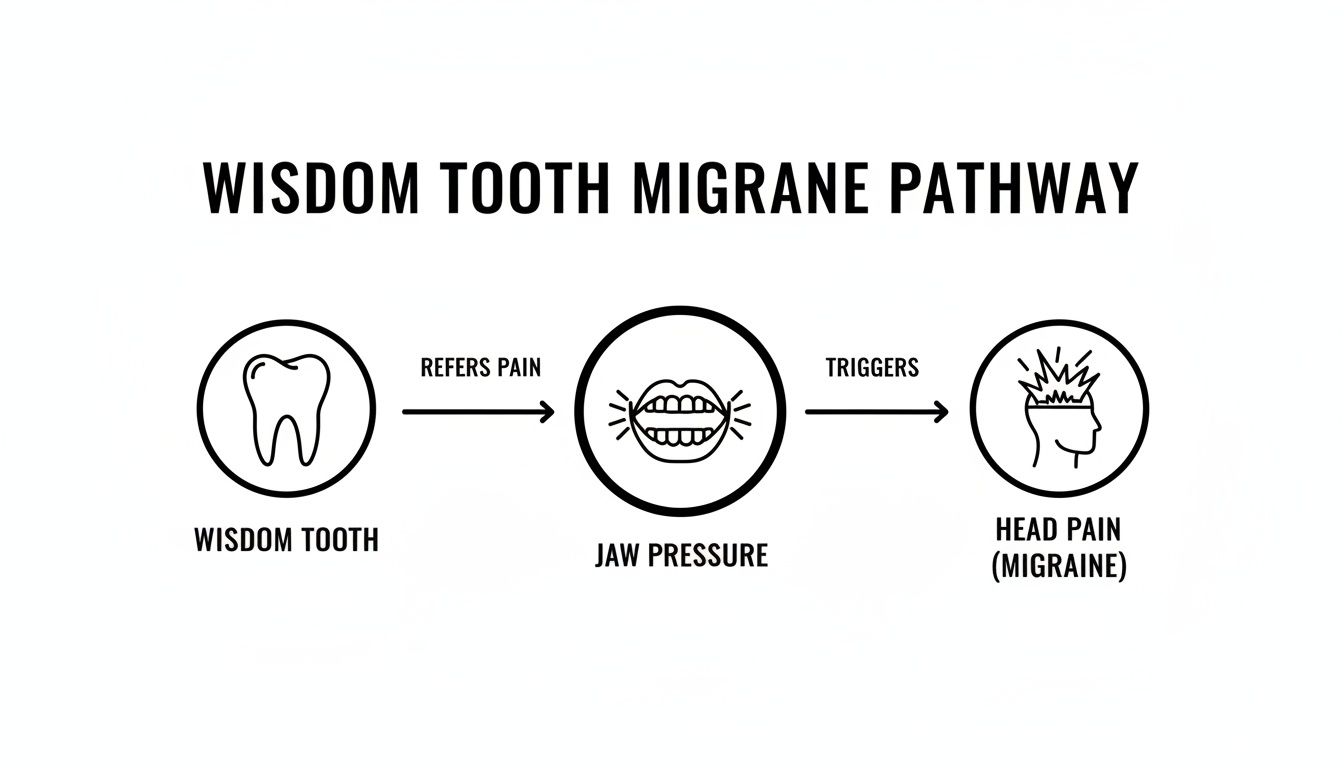
As you can see, the initial irritation from the wisdom tooth builds into jaw pressure, which in turn hijacks the trigeminal nerve and triggers pain in the head.
Understanding Referred Pain
This phenomenon is called referred pain—a case of mistaken identity by your brain. Because the trigeminal nerve serves the teeth, jaw muscles, and parts of the head, signals can get crossed. Your brain struggles to pinpoint the exact source of the distress.
The brain misinterprets the intense signals from your jaw as if they originated in your head. Your wisdom tooth is the silent alarm, and the migraine is the loud siren it triggers somewhere else entirely.
This explains why you might not feel a classic toothache. Instead, that low-grade irritation from the tooth shows up as a throbbing temple or a tension headache that won't quit. Spotting this connection is key to finding real relief.
The Overlooked Dental Connection
Dental issues are a frequently overlooked source of chronic head pain. Wisdom teeth are particularly sneaky, as they can silently worsen TMJ disorders. While red flags like gum bleeding are easy to connect to a tooth, it's the invisible nerve irritation and muscle strain that often trigger migraines. You can read more about this link between wisdom teeth and headaches at TheTeethDoctors.com.
Your actionable insight is to shift focus. Instead of only treating the headache with pain medication, investigate the root cause—the problematic wisdom tooth. By stopping distress signals at the source, you can prevent them from ever reaching your brain and triggering a migraine.
Four Ways Your Wisdom Teeth Can Trigger Headaches
When a wisdom tooth causes trouble, the pain doesn't always stay in your mouth. It can manifest as a nagging headache or a debilitating migraine. Understanding the four most common ways this happens is your first step toward getting the right diagnosis and treatment.
Each of these issues creates pain differently and often comes with its own set of symptoms. By recognizing these patterns, you can better connect the dots between your headache and a potential dental problem.
1. Direct Nerve Pressure from an Impacted Tooth
The most direct link is impaction—a clinical term for a stuck tooth. It might be growing sideways into another tooth, trapped under the gum, or pushing against other roots. This constant pressure can irritate the massive trigeminal nerve, a major information highway to the brain.
What to look for: A dull, persistent ache in your temples or behind your eyes that doesn't respond well to typical headache remedies. This type of headache is often present on one side and feels deep-seated.
2. Muscle Strain and TMJ Headaches
An emerging wisdom tooth can throw your bite out of balance, forcing your jaw muscles to work overtime. This constant, uneven strain is a classic trigger for Temporomandibular Joint (TMJ) dysfunction, a well-known source of stubborn headaches. The stress doesn't stay in your jaw; it travels.
What to look for:
Pain that radiates: Notice if tension spreads from your jaw up into your cheeks and temples.
Morning headaches: An off-kilter bite often leads to nighttime clenching or grinding (bruxism). Waking up with a headache is a strong indicator of TMJ-related issues.
Up to 21.8% of adults with tension headaches find that dental issues play a role. You can discover more about how dental issues contribute to headaches in this detailed study.
3. Pain from Infections and Cysts
A partially erupted wisdom tooth often has a small flap of gum tissue covering it, creating a perfect pocket for bacteria. This can lead to a painful local infection called pericoronitis.
What to look for: The inflammation and swelling create pressure that can cause a throbbing pain traveling to your ear, neck, and head. Also, be aware of a persistent bad taste or odor in your mouth, which can signal an underlying infection. In some cases, a fluid-filled cyst can form around the tooth, increasing pressure on the jawbone and nerves.
4. Sinus Pressure from Upper Wisdom Teeth
Your upper wisdom teeth are located directly beneath your maxillary sinuses. As these teeth move, their roots can push against the sinus floor, creating pressure and inflammation that mimics a sinus headache.
What to look for: A dull, constant ache in your cheeks, behind your eyes, and across your forehead, especially if you don't have other cold or allergy symptoms. If sinus medications offer no relief, your upper wisdom teeth could be the cause.
Is It a Dental Migraine or Something Else?
Learning to spot the difference between a standard migraine and one sparked by a wisdom tooth is your first step toward getting the right relief. A typical migraine often comes with light sensitivity, nausea, or visual auras. A dental-related headache feels more like the direct result of a physical problem in your jaw.
Red Flags That Point to a Dental Cause
If your headache is linked to a wisdom tooth, it will likely be accompanied by other symptoms centered around your mouth and jaw. Use these red flags as a checklist to discuss with your dentist.
Pain Worsens with Jaw Movement: Test it. Does chewing, yawning, or talking make your head hurt more? This is a strong clue that the pain is linked to muscle strain or pressure in your jaw.
Persistent Jaw Stiffness or Soreness: Check your jaw when you wake up. Is it tight, achy, or worse on one side? This points to an imbalanced bite, often caused by a problem wisdom tooth.
Swelling at the Back of Your Mouth: Look in the mirror. If you see puffy, tender, or swollen gums behind your last molar, it's a direct sign of an impacted or infected wisdom tooth.
A Bad Taste or Odor: If you have persistent bad breath or a foul taste that brushing doesn't fix, it could be a low-grade infection around a partially erupted wisdom tooth.
Key Differentiator: Pay attention to the location and feeling of the pain. While both types of headaches can cause pain in the temples, a dental headache is far more likely to come with a dull, constant ache in the jaw, near the ear, or along the side of the face.
Symptom Checker: Wisdom Tooth vs. Typical Migraine
Use this table to help identify which type of headache you might be experiencing. Bring your findings to your dental appointment.
Symptom | More Likely a Typical Migraine | More Likely a Wisdom Tooth Migraine |
|---|---|---|
Pain Location | Usually one-sided, throbbing, often around the eye or temple. | Dull ache in the jaw, ear, temple, or side of the face; can be one-sided. |
Triggers | Light, sound, smells, stress, certain foods. | Chewing, talking, yawning, or clenching your teeth. |
Accompanying Signs | Nausea, vomiting, visual auras, sensitivity to light/sound. | Jaw stiffness, earache, sore throat, bad breath, swelling in the back of the mouth. |
Pain Character | Pulsating or throbbing. | A constant, deep, and often radiating ache. |
Morning Symptoms | May or may not be present. | Often includes a stiff, sore jaw upon waking from clenching or grinding overnight. |
This isn't a substitute for a professional diagnosis, but it provides a clearer picture of what might be happening. A misaligned bite from emerging wisdom teeth can lead to TMJ dysfunction. To learn more about how we address this, read about our approach to TMJ treatment and teeth grinding in Tempe.
Ultimately, tracking these specific symptoms arms you with powerful information for your dental consultation. Instead of saying, "I have a headache," you can say, "My head hurts, it gets worse when I chew, and my jaw is always stiff on the right side." This specific feedback helps us pinpoint the cause and create an effective treatment plan.
Your Game Plan for Diagnosis and Real Relief
If you suspect a link between your wisdom teeth and headaches, your next move is to get a definitive answer. This roadmap will guide you from uncertainty to a clear solution.
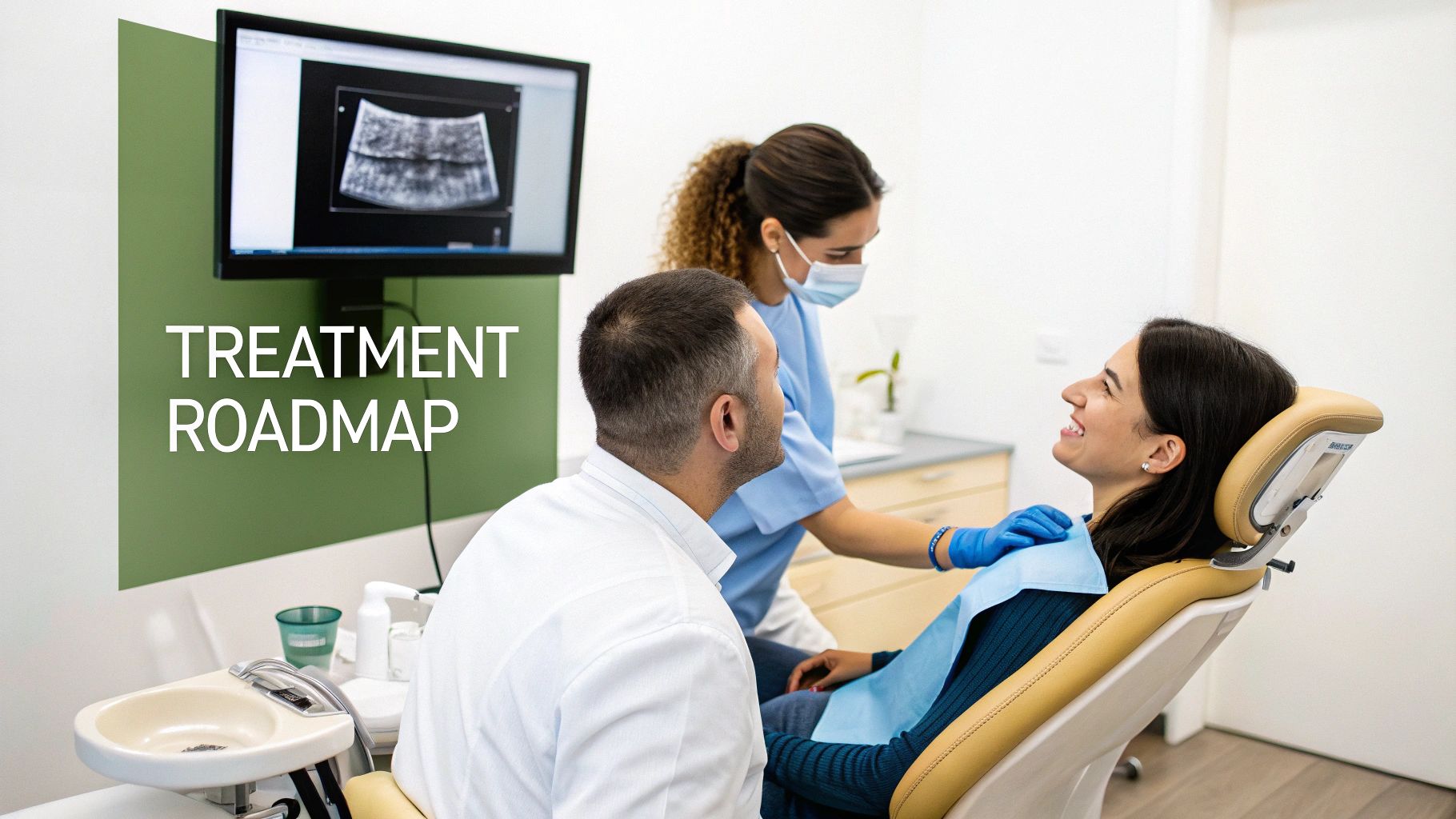
It all begins with a thorough dental consultation where we build a complete picture of your oral health, focusing on your third molars using advanced imaging.
The Diagnostic Process: What We’re Really Looking For
To understand what’s happening below the gumline, we rely on dental X-rays. These images reveal the exact position, angle, and health of each tooth. During this evaluation, we look for specific headache triggers:
Impaction: Are your teeth stuck or growing sideways? We check for pressure on other molars, which is a classic source of referred pain.
Nerve Proximity: We map how close the tooth's roots are to major nerves, like the trigeminal nerve. Proximity or direct pressure can be a direct migraine trigger.
Signs of Infection: X-rays reveal subtle signs of infection or cysts that create inflammatory pressure.
Sinus Involvement: For upper wisdom teeth, we check if the roots are pushing against the sinus cavity, a common cause of facial pain that mimics a sinus headache.
This detailed exam provides the hard evidence needed to confirm if your wisdom teeth are the culprits.
A targeted diagnostic exam isn't about guesswork. It’s about using precise imaging to pinpoint the exact mechanical or inflammatory problem—be it an impaction, an infection, or nerve pressure—that's firing off pain signals to your brain.
Treatment: Your Path Forward
If we confirm a wisdom tooth is the source of the problem, the most direct and effective solution is often extraction. By removing the troublemaker, we eliminate the source of pressure and inflammation for good. Many patients are amazed by how quickly their chronic headaches disappear after the procedure.
We understand that oral surgery can be intimidating. That’s why we prioritize your comfort with options like sedation dentistry to ensure a relaxed and stress-free experience. Our team uses gentle techniques for a smooth process. You can learn more about our approach to oral surgery in Tempe.
For anyone diagnosed with migraines, exploring all paths to relief is crucial. Beyond dental causes, there are many effective migraine treatment options that can complement your care plan.
Find Your Answers at Beautiful Dentistry in Tempe
If you're in the Tempe area and tired of unexplained headaches, your first action is a proper diagnosis. At Beautiful Dentistry, we’ve created a welcoming environment where finding answers is a clear and comfortable process.
Our team takes the time to listen to your experiences. By combining your story with advanced dental imaging, we can determine if an impacted wisdom tooth is the true cause of your pain. From there, we'll develop a personalized plan focused on lasting relief.
Don't let uncertainty dictate your life. A comprehensive exam is the first definitive step toward understanding if your wisdom tooth is causing migraines and finally getting the relief you deserve.
It’s time to stop guessing and start getting answers. If you suspect a dental problem is at the root of your headaches, schedule a consultation with our team.
Learn more about our patient-focused approach to wisdom teeth removal in Tempe and let us help you get back to feeling like yourself again.
Your Questions Answered: Wisdom Teeth & Headaches
It’s normal to have questions when trying to determine if your teeth are causing your headaches. Here are clear answers to some of the most common concerns.
How Soon Will My Headaches Go Away After an Extraction?
Many people feel a significant improvement surprisingly quickly. It's common for patients to notice their headaches becoming less frequent and intense within the first few weeks after surgery. Once the problematic tooth is removed, the source of pressure and inflammation is gone. As the area heals and swelling subsides, the nerve irritation stops, often leading to complete headache relief.
My Wisdom Tooth Doesn't Hurt. Could It Still Cause Migraines?
Yes, absolutely. This is a critical point. An impacted wisdom tooth does not need to cause a "toothache" to be the source of your migraines. It can silently push against other teeth, throw your bite out of alignment, or cause low-grade inflammation. You may not feel this in your tooth, but the constant stress can trigger referred pain that manifests as a debilitating headache. This is why a dental exam with X-rays is essential, even if your teeth feel fine.
It's a myth that a problem tooth must be a painful tooth. The reality is that silent pressure from an impacted wisdom tooth can be the hidden culprit behind chronic headaches, sending pain signals along complex nerve pathways without ever causing a classic toothache.
Is Extraction for Migraines Covered by Dental Insurance?
Coverage depends on your specific plan, but in many cases, the answer is yes. If the extraction is deemed medically necessary due to impaction, infection, or damage to adjacent teeth—all common reasons behind these types of headaches—it is often a covered procedure. Our team at Beautiful Dentistry will help you understand your insurance benefits and provide a clear breakdown of any costs, ensuring you can make an informed decision with confidence.
At Beautiful Dentistry, we know you're looking for clear answers and a real solution to find relief. If you're done guessing what’s causing your headaches, we're here to provide the clarity you need.
Take the next step and schedule your comprehensive exam today.


Comments