

A Practical Guide on How to Stop Gum Bleeding for Good
- Caterina Rutter
- Dec 22, 2025
- 12 min read

That little bit of pink in the sink when you brush your teeth is easy to ignore, but it's one of the first ways your body signals that your gums need more attention. While it can be a bit startling, it’s usually not a cause for panic. More often than not, it's a clear sign of gingivitis.
Understanding Why Your Gums Bleed and What to Do Now
So, what's really happening? That pink tinge is almost always a direct result of plaque—a sticky film of bacteria—building up along your gumline. This buildup irritates the sensitive gum tissue, causing inflammation, tenderness, and, eventually, bleeding. This is the classic definition of gingivitis, the earliest and most reversible stage of gum disease.
You're certainly not alone in this. Severe gum disease is a global issue, affecting over 10% of the population. Here in the U.S., the numbers are even more striking, with over 47% of adults aged 30 and older showing some form of gum disease. But here’s the good news: because gingivitis is so common, the steps to reverse it are well-established and highly effective, and you can start right at home. You can explore more research on gum disease prevalence to understand its widespread impact.
Immediate Steps You Can Take Tonight
You don’t need to wait for a dental appointment to start turning things around. A few simple adjustments to your routine tonight can make a world of difference. Think of these as quick wins that can immediately soothe irritation and start the healing process.
When you're dealing with bleeding gums, the last thing you want to do is cause more irritation. The table below outlines gentle but powerful actions you can take right away.
Immediate Actions to Reduce Gum Bleeding
Action | Technique | Why It Helps |
|---|---|---|
Brush Gently | Use a soft-bristled brush at a 45-degree angle to the gums. Use small, circular motions. | This angle effectively cleans the gumline where plaque hides, while the soft bristles and gentle motion prevent further damage to inflamed tissue. |
Floss Correctly | Guide floss between teeth in a 'C' shape, gently sliding it just below the gumline. | This removes trapped plaque and food particles from areas your toothbrush can't reach without snapping the floss and injuring your gums. |
Rinse with Saltwater | Mix ½ teaspoon of salt in a cup of warm water and swish for 30 seconds. | Salt is a natural antiseptic that helps reduce inflammation, soothe sore gums, and promote a cleaner oral environment for healing. |
These simple changes are your first line of defense. They get right to the heart of the problem by removing the plaque that’s causing the inflammation in the first place.
By focusing on these gentle but effective techniques, you are directly addressing the root cause of the bleeding—plaque buildup—without causing further trauma to your sensitive gum tissue. This is the foundational first step in your journey back to gum health.
Fine-Tuning Your Daily Oral Hygiene Routine
If you're seeing pink in the sink, just going through the motions of brushing and flossing isn't going to cut it. The real solution lies in how you're doing it. By refining your technique and using the right tools, you can turn a simple habit into a powerful defense against gum inflammation and bleeding.
It all starts with your toothbrush. Many people think a medium or hard-bristled brush gets their teeth cleaner, but for sensitive, bleeding gums, that's a recipe for disaster. A soft-bristled brush is your best friend here—it’s tough on plaque but gentle on your gums.
Mastering Your Brushing Technique
The goal isn’t to scrub your teeth into submission; it's to meticulously clean the delicate area where your teeth and gums meet. This is ground zero for plaque buildup and inflammation.
To get this right, you have to nail the angle. Position your soft-bristled brush at a 45-degree angle to your gumline. Then, use gentle, short, circular strokes to massage both the tooth surface and the gum tissue. This specific angle is critical because it allows the bristles to sweep just beneath the gumline, dislodging the bacteria causing all the trouble.
An electric toothbrush can be a game-changer here, as many have built-in pressure sensors that alert you if you're pushing too hard.
Your toothbrush is a precision tool, not a scrub brush. The 45-degree angle isn't just a suggestion—it's the most effective way to disrupt the plaque colonies that have settled along the gumline, which is the primary source of the problem.
This methodical approach ensures you clean the most critical areas without making your sensitive gums even angrier. Make sure you dedicate a full two minutes to this process, twice a day, and hit every single surface.
The Real Purpose of Flossing
Let's be honest: flossing is often the first thing to go when we're in a rush. But it's absolutely crucial for stopping bleeding gums. Brushing alone only cleans about 60% of your tooth surfaces. The other 40% is between your teeth, and that’s plaque's favorite hiding spot.
When you floss, resist the urge to snap it down onto your gums. Instead, gently guide it between your teeth and wrap it into a "C" shape against the side of each tooth. Slide the floss carefully just below the gumline until you feel a little resistance. This is how you scoop out the plaque your toothbrush can't touch.
If you're new to flossing (or getting back into it), you might see some bleeding at first. Don't panic. This should stop within about a week as your gums get healthier. For a great refresher on technique, you can learn about the proper way to floss for a truly healthy smile to make sure you’re getting the most out of it.
Choosing the Right Mouthwash
The final piece of the puzzle is your mouthwash. That intense, minty sting from an alcohol-based rinse might feel like it's working, but it can actually dry out your mouth, which sometimes makes gum problems worse.
Instead, look for a therapeutic mouthwash that contains ingredients specifically designed to fight gingivitis. Here are a couple of things to look for on the label:
Cetylpyridinium Chloride (CPC): A common and effective anti-plaque and anti-gingivitis agent found in many great alcohol-free formulas.
Chlorhexidine: This is a powerful antiseptic available by prescription for more persistent gum issues.
Weaving these small but significant changes into your daily routine will build a solid foundation for healthier gums. For even more ways to level up your oral health, check out these comprehensive toothcare tips for optimal oral hygiene.
How Diet and Lifestyle Impact Your Gum Health
While your toothbrush and floss are your frontline defense, the battle for healthy gums is also won from the inside out. What you eat and the habits you keep have a surprisingly direct impact on your gums' ability to fight off inflammation and heal properly.
Think of it this way: your diet is the foundation for your entire oral health. Making a few simple, intentional changes can dramatically reduce gum bleeding. This isn't about a complete dietary overhaul, but more about making smart additions and swaps that give your gums the support they need.
Foods That Fortify Your Gums
Some foods are just packed with the exact vitamins and minerals your gum tissue craves. Vitamin C, for example, is absolutely crucial for producing collagen—the protein that keeps your gums firm and healthy. When you don't get enough, your gums can become fragile and much more likely to bleed.
There's a significant link between low vitamin C levels and a higher risk for gingivitis. In fact, studies show that supplementing with vitamin C can cut down on gum bleeding by 30-50%, especially for high-risk groups like smokers. Getting the daily recommended 75-90mg is a powerful strategy to stop bleeding gums. You can read more about the connection between vitamin C and gum health.
To give your gums a boost, try working these foods into your meals:
Vitamin C Powerhouses: Don't just think oranges. Bell peppers, broccoli, strawberries, and kiwi are loaded with this nutrient.
Leafy Greens: Spinach and kale are rich in Vitamin K, which helps with blood clotting—a critical factor when you're dealing with bleeding gums.
Crunchy Vegetables: Think of celery, carrots, and cucumbers as natural toothbrushes. Chewing them stimulates your gums and helps scrub away plaque.
For great gum health, getting enough of the right nutrients is non-negotiable. You might want to look into resources on finding the best Vitamin C for collagen production to support that essential gum tissue. We also have a guide on the 5 best vitamins for teeth and gums that takes a deeper dive.
Habits That Harm Your Gum Health
Just as certain foods can help, some habits are actively working against you. They fuel the very inflammation that causes your gums to bleed in the first place. Being mindful of these is just as important as eating the right things.
Snacking on sugary foods or constantly sipping on acidic drinks like soda creates the perfect breeding ground for harmful bacteria right at your gumline. This bacteria produces acids that irritate your gums, leading straight to inflammation and bleeding.
Smoking is another huge one. It weakens your body's immune response and restricts blood flow to your gums, making it incredibly difficult for them to heal. Quitting is truly one of the best things you can do for your gums.
Even small changes—like swapping one soda for a glass of water or adding a side salad to your lunch—can have a powerful, cumulative effect on your journey to healthier, bleed-free gums.
Knowing When to See a Dentist for Bleeding Gums
A solid home care routine is your best first line of defense, but there are times when it just isn't enough to stop your gums from bleeding. Knowing when to pick up the phone and call a professional is crucial for stopping a small problem before it spirals into a big one. Your body is pretty good at sending signals when it's time to book that appointment.
If you've been consistent with your brushing and flossing for a week or two and you're still seeing pink in the sink, that’s your first major clue. Bleeding that doesn't let up usually means the inflammation is being caused by something your toothbrush can't touch—that stubborn, hardened plaque we call tartar.
Red Flags That Signal a Dental Visit
Beyond bleeding that just won’t quit, a few other symptoms should be on your radar. These are often signs that early-stage gingivitis is progressing into more serious gum disease, and you definitely don't want to ignore them.
Keep an eye out for these tell-tale signs:
Persistently Swollen or Puffy Gums: Healthy gums are firm and have a nice, light pink color. If yours are red, puffy, and tender, that's a sign of persistent inflammation.
Receding Gums: Ever feel like your teeth look a bit longer than they used to? That's not your imagination. It's your gums pulling back from the teeth, exposing the sensitive roots.
Chronic Bad Breath (Halitosis): We're not talking about morning breath. This is a persistent bad taste or odor that hangs around even after you brush, often caused by bacteria hiding deep below the gumline.
Pus Between Teeth and Gums: This is a definitive sign of an infection. If you see this, it’s time to call the dentist immediately.
This simple chart can help you visualize the decision-making process for your gum health.
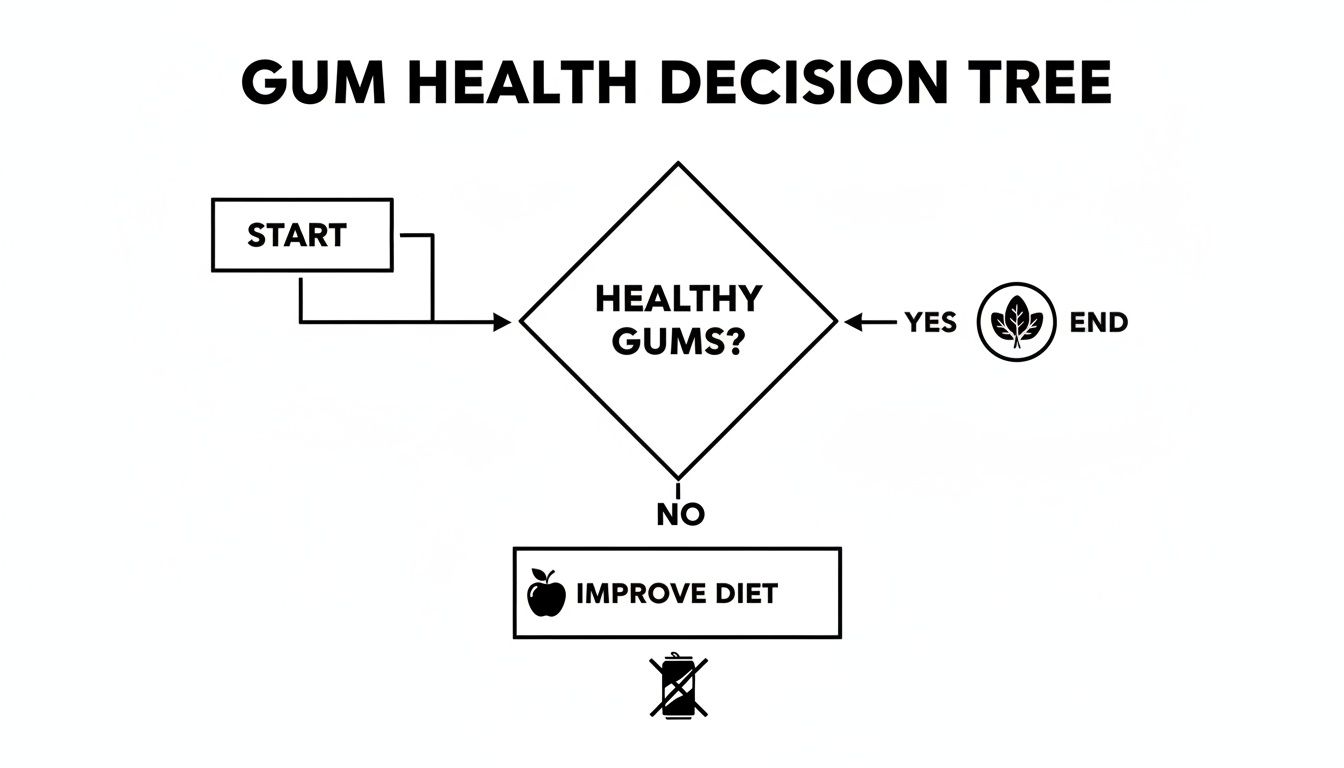
As the flowchart shows, improving your home care is a fantastic starting point, but ongoing problems always warrant a professional look.
What to Expect from Professional Dental Treatments
Making an appointment for bleeding gums isn't something to be afraid of; it's the most empowering step you can take to get your oral health back on track. The main goal is simple: professionally remove the plaque and tartar buildup that you can't get to at home. With an estimated 1.07 billion people worldwide dealing with periodontal diseases, professional cleanings are the universally accepted foundation of treatment. If you're local, knowing the options for gum disease treatment in Tempe can help you feel prepared and confident.
One of the most common procedures is scaling and root planing, which patients often know as a "deep cleaning." During this treatment, your dentist or hygienist uses specialized instruments to gently remove tartar from above and below the gumline (that's the scaling part). Next, they smooth out the tooth roots (planing), which helps your gums heal and reattach snugly to your teeth. It's incredibly effective—studies have shown this can reduce bleeding by 50-70% in just a few months.
Think of a professional cleaning as hitting the reset button. It removes the stubborn buildup that fuels inflammation, giving your gums a clean slate and making your daily home care routine far more effective.
Building Long-Term Habits for Bleed-Free Gums
Getting your gums to stop bleeding is a great first step, but keeping them from starting again is the real win. To do that, you need to build a routine that sticks—one that looks at the bigger picture of your health, not just what happens at the bathroom sink.
Believe it or not, things like stress and the medications you take have a huge impact. When you're stressed, your body pumps out more cortisol. That hormone can kick inflammation into high gear everywhere, including your gums, making them much more likely to bleed.
Learning how to stop gum bleeding for good means creating a lifestyle that gives your gums the support they need to stay healthy and resilient.
Beyond Brushing and Flossing
A solid oral hygiene routine is your foundation, but a few other habits are just as critical for keeping your gums in great shape. These are the small, consistent things that add up over time to prevent inflammation from sneaking back.
For instance, are you drinking enough water? Hydration is a big one. Staying hydrated helps you produce plenty of saliva, which is your mouth’s built-in cleaning crew. Saliva rinses away food debris and neutralizes the acids that can harm your gums.
A dry mouth is a breeding ground for bacteria, which leads directly to more plaque and irritation. Just sipping water throughout the day is one of the easiest, most effective things you can do for your gums.
Also, take a look at your medicine cabinet. Hundreds of common medications, from allergy pills to blood pressure drugs, can cause dry mouth. If you suspect that’s happening, chat with your doctor or dentist. They might suggest a special mouth rinse or even chewing sugar-free gum to get your saliva flowing again.
Proactive Care is Your Best Defense
The single most important long-term habit? Sticking to your regular dental appointments. Those check-ups and cleanings aren't just for when something goes wrong; they are the absolute core of preventing problems in the first place.
Think of it like getting the oil changed in your car—you do it to stop big, expensive issues from ever happening.
Professional Cleanings: Your hygienist can get rid of hardened plaque, or tartar, that your toothbrush simply can't touch. This removes the main source of gum irritation.
Expert Eyes: Your dentist can catch the earliest warning signs of gum disease, like tiny changes in gum color or pocket depth, long before you'd ever notice them yourself.
Personalized Advice: This is your chance to get guidance that's truly for you. Maybe you need a different kind of floss, or perhaps a new health diagnosis is impacting your gums. Your dental team can help you connect the dots.
When you commit to regular visits, you shift from being reactive to being proactive. Instead of just dealing with bleeding gums when they show up, you're building a defense that helps ensure they never get a chance to start. That consistent partnership with your dental team is what keeps you smiling confidently for years.
Your Top Questions About Bleeding Gums, Answered
Even with all this information, you probably still have a few specific questions. That's completely normal. When it comes to your health, especially something as noticeable as bleeding gums, you want clear, direct answers. Let's tackle some of the most common real-world questions we hear from patients.
Is It Normal for Gums to Bleed a Little When I Floss?
This is probably the number one question we get. While it's incredibly common, it's definitely not "normal" for healthy gums to bleed.
Think of it as a signal. That little bit of pink in the sink is your body telling you there's some inflammation going on, usually from plaque that's built up right at the gumline. Your gums are essentially saying, "Hey, there's an irritant here!"
The good news? This is often a problem you can solve yourself. With consistent, gentle flossing, the inflammation should calm down and the bleeding should stop within a week or two. If it doesn't, that's your cue to give your dentist a call.
Could Bleeding Gums Point to a More Serious Health Problem?
Most of the time, bleeding gums are a straightforward sign of gingivitis, which is reversible with good care. But yes, in some cases, persistent bleeding—especially if your oral hygiene is already top-notch—can be a red flag for an underlying health condition.
Your mouth is a window to your overall health, and sometimes systemic issues show up there first. These can include:
Vitamin Deficiencies: A lack of Vitamin C (crucial for tissue repair) or Vitamin K (essential for blood clotting) can make your gums bleed more easily.
Hormonal Fluctuations: Big hormonal shifts during pregnancy, for example, can trigger what's known as "pregnancy gingivitis," making gums extra sensitive and prone to bleeding.
Bleeding Disorders: While less common, conditions that affect your body's ability to clot blood can certainly cause unexplained gum bleeding.
If you’ve been diligent with your home care and the bleeding just won't quit, it’s a smart move to see both your dentist and your family doctor to get to the bottom of it.
How Fast Can I Stop My Gums from Bleeding with Better Habits?
For a standard case of mild gingivitis, the results can be surprisingly quick. If you really commit to a solid home care routine, you can often see a massive improvement in just one to two weeks.
Consistency is everything. That means brushing correctly (but gently!) twice a day and flossing the right way once a day, without fail. If you stick to it and still don't see the bleeding stop, it's a strong sign that tartar has built up below the gumline. No amount of brushing or flossing at home can remove that, which is when a professional cleaning becomes essential to get your gums back on track.
At Beautiful Dentistry, we know that healthy gums are the foundation of a great smile. If you're tired of dealing with bleeding gums and want professional guidance, we're here to create a plan that works for you. Schedule your new patient exam, which includes X-rays, for just $59 and take the first real step toward a healthier, more confident smile.
You can book your appointment today and get started.


Comments