

Your Actionable Guide to Dental O-Ring Implants for a Secure Denture Fit
- Caterina Rutter
- Dec 28, 2025
- 12 min read
Tired of dealing with messy denture adhesives and the constant worry of an embarrassing slip? Dental O-ring implants are a practical solution, creating a secure, snap-on connection that anchors your dentures firmly in place. To get this rock-solid grip, tiny, durable rubber O-rings are fitted inside your denture, which then 'snap' onto ball-shaped attachments on dental implants in your jaw. This guide provides the actionable steps you need to understand, use, and maintain this system for a confident smile.
How Dental O-Rings Give Your Dentures a Confident Grip
If you've worn traditional dentures, you know the daily struggle. You're constantly worried about them shifting while you eat or talk. To combat this, you've likely turned to goopy adhesives for extra security. This balancing act can limit your diet and make you feel hesitant in social situations.
Implant-retained dentures—often called snap-in dentures—offer a much more stable and reliable alternative. The entire system is built on a simple but brilliant mechanical design that you can actively control.
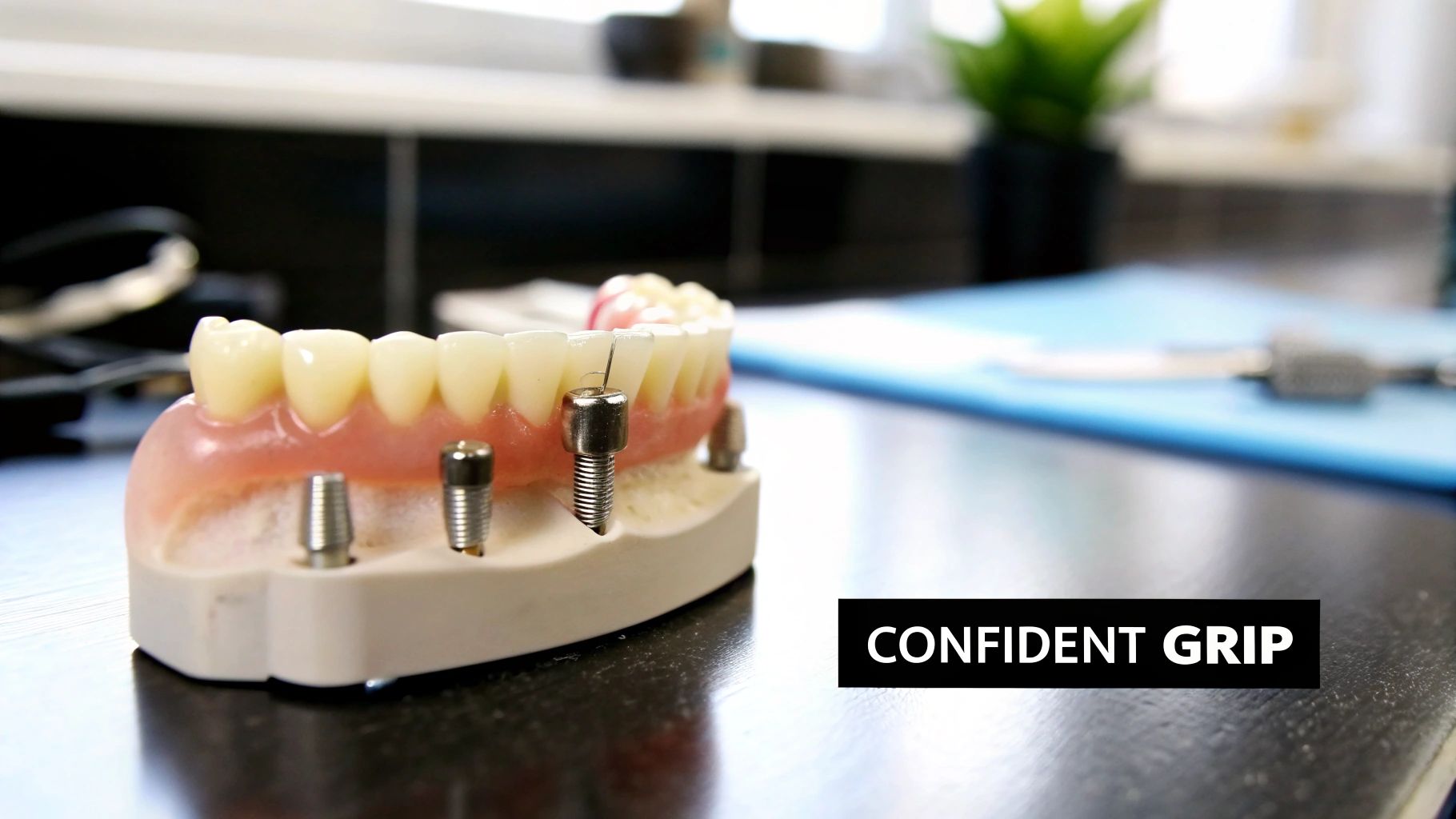
The Snap-On Mechanism Explained
Think about the satisfying and secure click when you snap a button on a jacket. That’s the feeling you should expect from your dental O-rings. Understanding how the parts work together helps you use and care for them correctly.
Dental Implants: These are small titanium posts surgically placed in your jawbone, acting as powerful anchors. The very top of each post features a small, rounded head known as a ball abutment.
Denture Housings: On the underside of your denture, you'll find small metal housings that must be perfectly aligned with the ball abutments to function correctly.
The O-Ring: Tucked inside each of those housings is a small, resilient rubber dental O-ring. This is the key component providing the system's incredible grip.
To secure your denture, press down firmly until you hear or feel a distinct "snap." This confirms the flexible O-rings have stretched over the ball abutments and locked into the undercut beneath them. This action creates a firm, stable connection that stops your denture from moving, giving you back the freedom to eat, laugh, and speak with total confidence.
For a practical comparison, here is how you can expect your daily experience to change when upgrading from traditional dentures.
O-Ring Implants vs Traditional Dentures: What to Expect
Feature | Your Experience with Traditional Dentures | Your Experience with O-Ring Implant Dentures |
|---|---|---|
Stability | Relies on suction; prone to slipping. Action: Avoid certain foods, speak carefully. | Snaps securely onto implants; virtually no movement. Action: Eat confidently. |
Comfort | Can rub and cause sore spots on gums. Action: Use cushions or see a dentist for adjustments. | Rests on implants, reducing gum irritation. Action: Enjoy greater comfort all day. |
Chewing Power | Limited; hard or chewy foods are a challenge. Action: Stick to softer foods. | Significantly improved. Action: Reintroduce more of the foods you love into your diet. |
Bone Health | Can lead to jawbone loss over time, loosening the fit. Action: Require frequent relines. | Implants stimulate the jawbone, preventing bone loss. Action: Maintain your facial structure. |
Confidence | Constant worry about slippage. Action: Feel self-conscious in social settings. | Speak, laugh, and eat without fear or hesitation. Action: Engage socially with confidence. |
As you can see, the upgrade to an O-ring system isn't just about convenience—it's about restoring function, comfort, and quality of life through actionable improvements.
Why This System is a Recommended Standard of Care
The use of implant-retained overdentures has skyrocketed, with millions of patients enjoying the benefits. Many professional dental organizations now recommend an overdenture supported by two implants with O-ring attachments as a fantastic, cost-effective standard of care. Actionable Insight: When discussing options with your dentist, ask if this two-implant standard is right for you, as it dramatically improves chewing efficiency and patient satisfaction. For those in our area, our guide on getting dentures in Tempe offers local context for this conversation.
This simple 'snap' does so much more than just hold your denture in place—it restores your natural function and brings back your peace of mind. The O-ring even acts as a tiny shock absorber, cushioning the implants from chewing forces and protecting the whole system from excess wear and tear.
Recognizing When Your Dental O-Rings Need Replacement
Dental O-rings are the functional core of your implant denture, but like the tires on your car, they eventually wear out. Knowing their typical lifespan and, more importantly, the actionable signs of wear is crucial for maintaining the secure, confident fit you rely on.
Think of an O-ring as a tiny, high-performance gasket. Every time you bite down or snap your denture into place, it compresses and flexes. After months of this constant work, the material naturally loses its elasticity and grip—much like a rubber band that's been stretched one too many times.
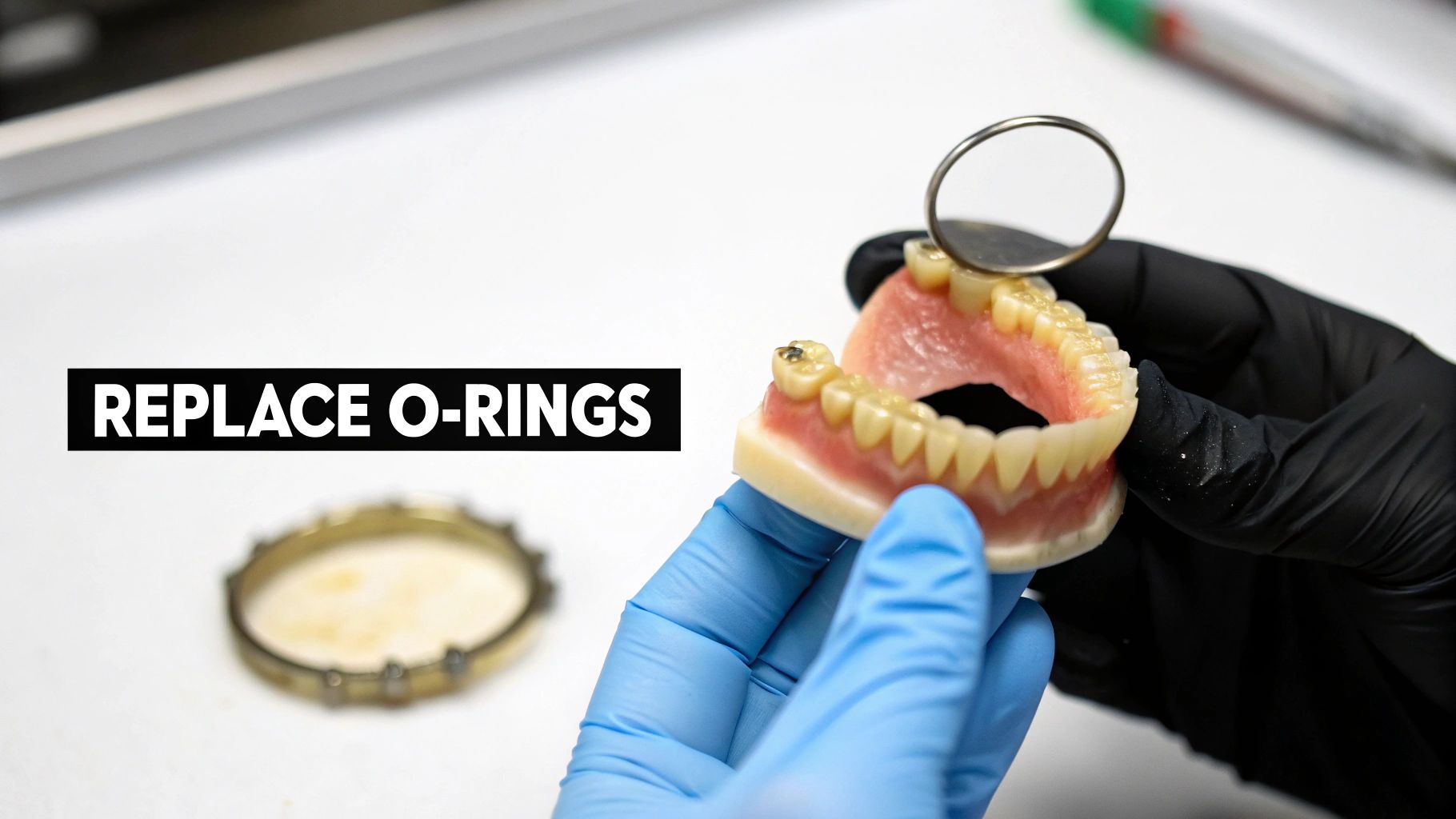
Key Factors That Affect O-Ring Lifespan
While most dental O-rings for implants have a lifespan of about 6 to 18 months, this is just a guideline. Actionable Step: Monitor your own habits to predict when you might need a replacement.
Your bite force plays a huge role; a powerful bite places more stress on the O-rings. Your diet is another factor; regularly eating hard or chewy foods accelerates wear. Your daily cleaning routine is also key to preventing plaque buildup that can interfere with O-ring function.
So, how do you know when it's time for a refresh? Your denture will start sending you clear signals. Pay attention to these changes so you can act before the problem worsens.
A worn O-ring does more than just make your denture feel wobbly. It also loses its ability to absorb shock, which can put unnecessary stress on the implant abutments and the denture base. Swapping them out is a simple, proactive way to protect your entire investment.
A Practical Checklist for Worn O-Rings
You don’t need to be a dentist to spot the signs of a worn-out O-ring. If you notice any of the following, your next action should be to book a quick appointment for a replacement.
Increased Looseness: This is the most obvious sign. Your denture doesn't feel as snug as it used to. Action: Test it by pushing gently with your tongue; if it rocks or feels unstable, it's time for a check-up.
Movement While Talking or Eating: Are you noticing your denture shifting or lifting when you speak or chew? This means the O-rings have lost their secure grip on the dental o rings implants.
A Clicking Sound: A distinct click or pop when you bite down often means the O-ring isn't seating properly over the implant abutment, allowing for tiny, unwanted movements.
Difficulty Chewing: If you're suddenly avoiding foods that used to be easy to eat, it could be because the lack of stability from worn O-rings is making it uncomfortable. Action: Note which foods are causing trouble and mention this to your dentist.
Visible Wear or Damage: When you take your denture out for cleaning, inspect the O-rings closely. Action: Look for flattening, fraying, or changes in color. If you see any, schedule a replacement.
Catching these signs early and getting them checked out is the best way to ensure your implant-retained denture continues to give you the comfort and confidence you deserve.
The Professional O-Ring Replacement Process Explained
When your implant-retained denture starts to feel loose, it can be tempting to search for a DIY O-ring replacement kit. However, attempting this yourself is a significant risk to the investment you've made in your smile. Actionable Advice: Always have a professional handle the replacement to ensure a perfect fit and avoid costly damage to your denture or implants.
Having your dentist perform this service is about precision. Every implant system uses a specific dental o-ring size and tension level. Using the wrong one can lead to a fit that’s either too loose to be effective or so tight it puts dangerous stress on your implant abutments and the denture itself.
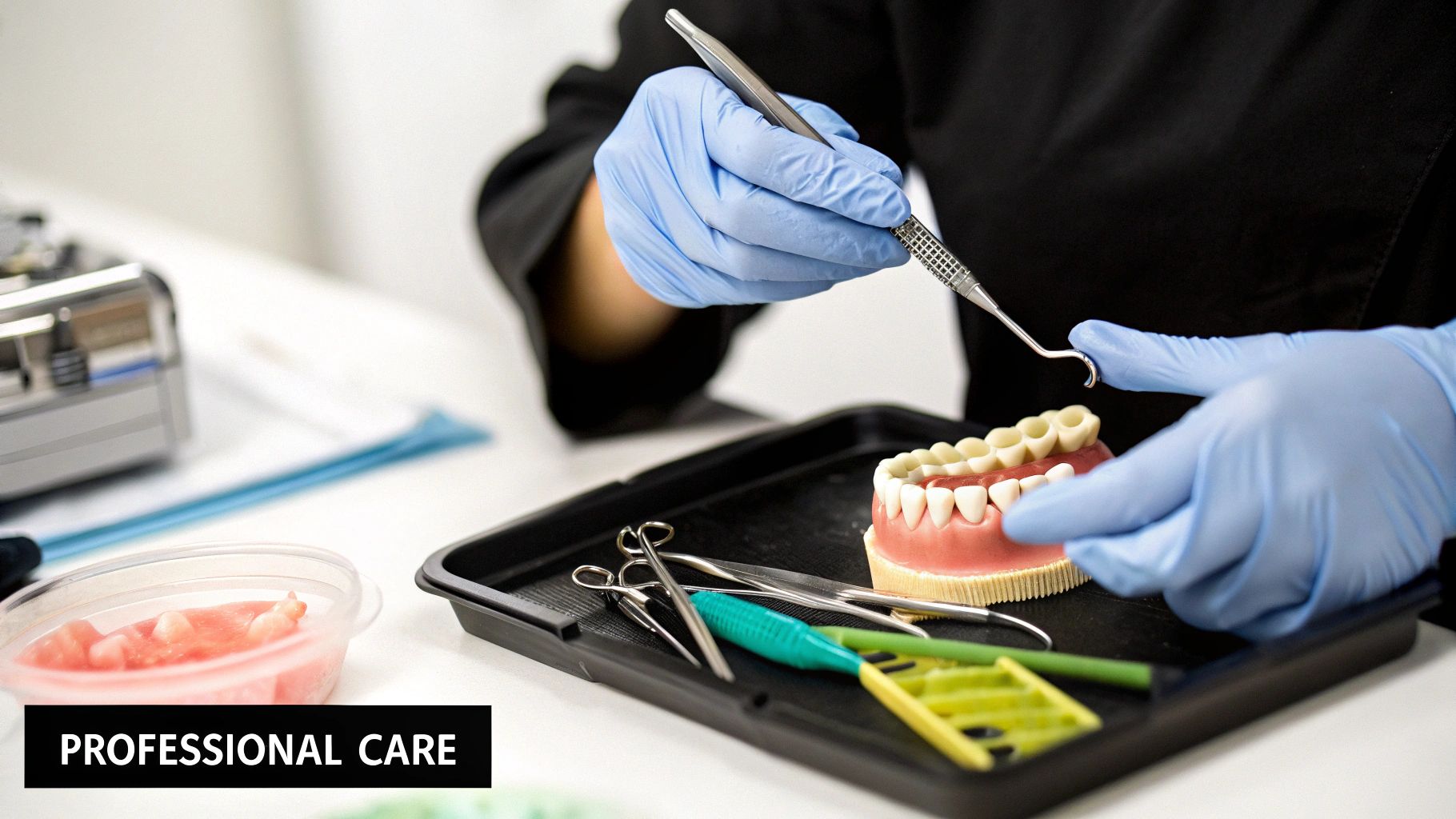
What to Expect During Your Appointment
A professional O-ring replacement is one of the fastest, simplest maintenance tasks in dentistry. It’s a routine and painless appointment that protects the health of your dental o-rings implants for years. Here’s a step-by-step walkthrough of what to expect.
Assessment and Removal: Your dentist will first check the denture's fit to confirm worn-out O-rings are the cause of the looseness. Once confirmed, they will use a specialized tool to quickly and gently remove the old O-rings from their metal housings inside your denture.
A Thorough Cleaning: This step is critical. The housings will be meticulously cleaned to remove any plaque, food debris, or bacteria. A perfectly clean surface is necessary for the new O-rings to seat properly and create a secure grip.
Placing the New O-Rings: Your dentist will select brand-new O-rings specified exactly for your implant system. They will then carefully seat them into the clean housings, ensuring they are perfectly positioned without any twists or pinches.
Checking the Final Fit: You will snap the denture back into place. Your dentist will check the retention to confirm you get that satisfying "click" and a snug, stable fit. It should feel comfortable and secure, restoring the confident feeling you rely on.
The entire process is typically completed in just a few minutes during a normal check-up. It's a small, inexpensive bit of maintenance that keeps your smile stable and helps prevent bigger, more complicated problems down the road.
Protecting every part of your restoration is key to its longevity. If you want to understand the foundation of these systems better, you can learn more about getting dental implants in Tempe and see what makes them such a reliable solution. Trusting a professional for this quick and easy tune-up is the best way to keep your smile working exactly as it should.
Daily Care Tips to Maximize O Ring Performance
To get the most out of your dental O rings implants, adopt a simple, consistent daily routine. Following these best practices will protect your investment, extend the life of your O-rings, and keep your mouth healthy—all while ensuring your dentures feel secure.
Think of it as basic maintenance: a little daily attention prevents bigger problems. Your primary goal is to keep every part of the system—from the denture to the implant abutments—completely free of plaque.
Your Nightly Cleaning Checklist
The most critical part of your routine is what you do before bed. Actionable Rule: Always remove your denture every night. This allows your gum tissues to rest and breathe, preventing the irritation and inflammation that can occur from 24/7 wear.
Once it's out, focus on these cleaning steps:
Clean the Denture: Use a soft-bristled denture brush and a non-abrasive denture cleaner. Do not use regular toothpaste, as its abrasiveness creates micro-scratches where bacteria can hide.
Handle with Care: Place a folded towel in your sink or fill it with water before cleaning your denture. This simple trick provides a soft landing in case it slips.
Soak Overnight: After cleaning, place your denture in a glass of water or a dedicated denture soaking solution. This is crucial for keeping it hydrated, which prevents warping and preserves its shape.
The Most Overlooked Step: Cleaning Your Implants
Cleaning the denture is straightforward, but many people forget the other half of the equation: cleaning the ball abutments inside your mouth. These are the rounded posts that the dental O rings snap onto. Plaque and food particles can easily build up around the base of these posts.
If plaque builds up on the ball abutments, it can prevent the O-rings from seating correctly. This not only makes your denture feel loose but can also lead to gum irritation and inflammation around your implants.
Actionable Step: Use a very soft toothbrush or a special implant brush to gently clean around each ball abutment. Focus on the area where it meets your gumline. This quick two-minute step is all it takes to guarantee a clean connection and a secure fit every morning.
For an even deeper dive into best practices, this guide on snap-on dentures maintenance helps separate fact from fiction. Following these steps helps ensure your smile stays healthy and your dentures stay put.
Comparing O-Rings with Other Denture Attachment Systems
While O-rings offer a fantastic and reliable way to secure your denture, they aren't the only option. To have a productive conversation with your dentist, it's smart to understand the alternatives and what they mean for your daily life.
Think of it like choosing a fastener: O-rings are like sturdy snaps, Locator attachments are like self-aligning magnets, and a bar-retained system is like a custom railing for maximum support. Each works well but offers a different user experience.
O-Rings: The Simple and Effective Choice
The O-ring system is popular for its straightforward design. It uses a ball-shaped post (the abutment) on your implant and a rubber O-ring inside your denture. When you press the denture into place, the O-ring snaps over the ball. It’s simple, secure, and cost-effective.
The ball abutments are durable, but the rubber O-rings wear out and typically need replacement every 6 to 18 months. Actionable Takeaway: Factor this quick, inexpensive dental visit into your long-term maintenance plan.
Locator Attachments: A Step Up in Convenience
Locator attachments have a lower profile than ball abutments, sitting closer to your gums. This design, combined with a self-aligning feature, makes it easier for many people to guide their denture into place.
The key benefit of Locators is their customizability. The attachments use small, color-coded nylon inserts, each offering a different level of grip—from gentle to very firm. Actionable Insight: If you have limited dexterity or prefer a specific level of tightness, ask your dentist if Locator attachments would be a better fit for you.
No matter which system you have, daily care is the key to making it last.
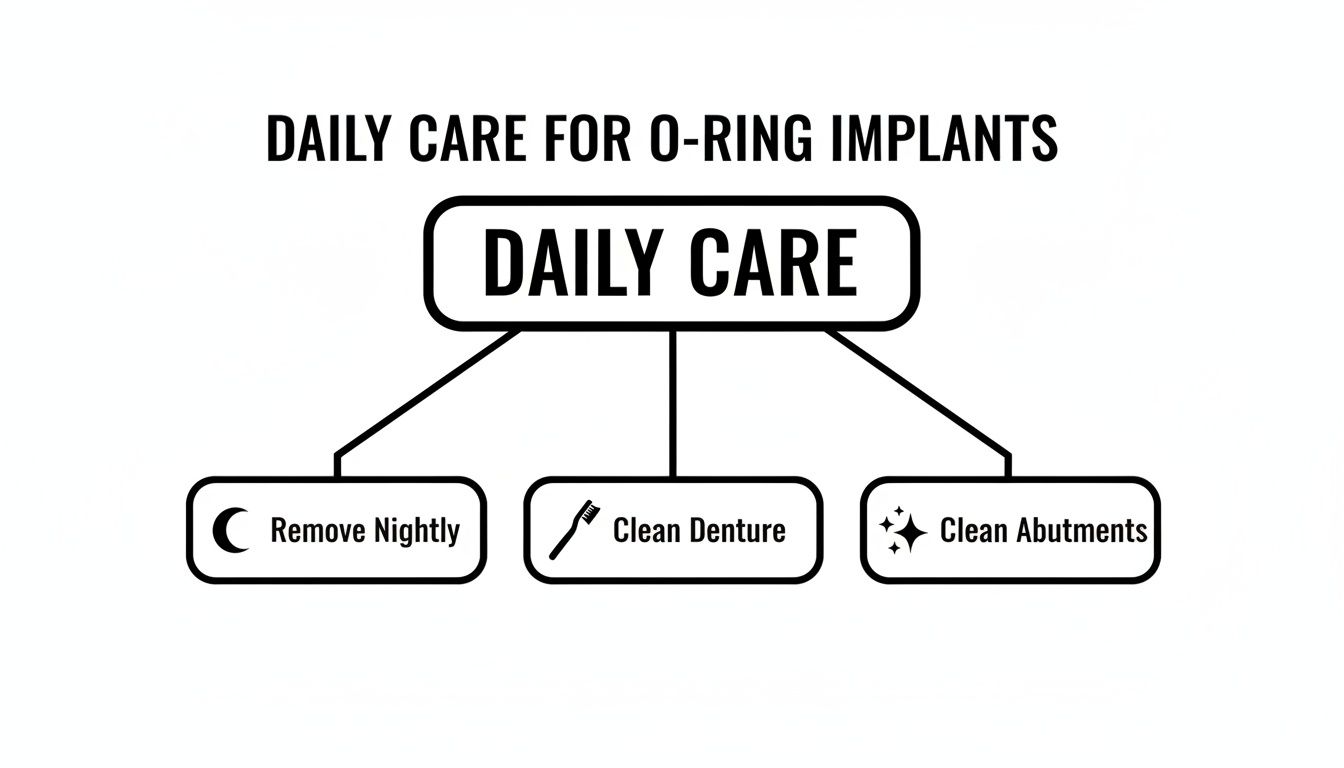
This flowchart highlights that keeping the abutments clean is just as important as cleaning the denture itself. A clean connection is a healthy and secure connection.
Bar-Retained Systems: The Ultimate in Stability
For the strongest and most stable fit, nothing beats a bar-retained system. A custom-milled metal bar connects all your dental implants, creating one solid foundation. Your denture then clips firmly onto this bar.
This setup distributes chewing forces evenly across all implants, resulting in incredible stability with virtually zero movement. It’s the go-to recommendation for patients needing a full-arch restoration or for anyone who wants a rock-solid feel. Naturally, this is also the most complex and costly option.
The technology behind these systems has evolved significantly since Professor Per-Ingvar Brånemark's work on osseointegration proved that titanium could fuse with bone after 1965. By the 1990s, implant treatments became mainstream, leading to today's advanced attachments. You can explore the dental implants market on precedenceresearch.com for more historical context.
If a full-arch solution sounds like what you need, our guide to All-on-4 dental implants in Tempe explains one of the most effective approaches.
Choosing the right attachment is a big decision. Use this table to prepare for your dental consultation.
Denture Attachment System Comparison
Attachment Type | Primary Benefit | Best For | Actionable Maintenance Tip |
|---|---|---|---|
O-Ring | Simplicity & Cost-Effectiveness | Patients seeking a reliable, straightforward, and budget-friendly solution for 2-4 implants. | Schedule replacements proactively every 6-18 months to maintain a tight fit. |
Locator | Ease of Use & Adjustability | Patients with limited dexterity or those who want a customizable, low-profile fit. | Ask your dentist to adjust the nylon inserts if the retention feels too loose or tight. |
Bar | Maximum Stability & Rigidity | Full-arch restorations or patients wanting the most secure fit with no movement. | Use special floss or brushes to clean under the bar to prevent plaque buildup. |
Ultimately, there’s no single "best" system—only the best one for you. This table gives you a starting point for a conversation with your dentist to determine the ideal match for your unique smile.
Your Questions About Dental O-Rings Answered
When you're getting used to implant dentures, you're bound to have questions. You deserve straightforward answers that give you confidence in your care. Here are practical answers to common questions about dental o-rings implants.
My goal is to clear up any confusion about real-world concerns, from costs to maintenance, so you can make the best decisions for your health.
What Is the Typical Cost for O-Ring Replacement in Tempe?
Replacing O-rings is an affordable and routine part of denture maintenance. The exact price can vary based on your specific implant system, but it is a minor expense compared to the initial investment in your smile.
Actionable Advice: Treat this service like an essential tune-up for your car to avoid more expensive repairs to the denture or implant abutments later. Your best bet is to call our office for a precise, no-surprise quote based on your specific needs.
Will My Dental Insurance Cover O-Ring Maintenance?
This is a great question. In most cases, O-ring replacement is considered essential prosthetic maintenance, meaning your dental plan will likely cover at least a portion of it.
Actionable Step: Let our team do the legwork for you. Here at Beautiful Dentistry, we can run a complimentary benefits check to see what your specific plan covers for implant-related care and help you maximize your benefits.
Don't let questions about insurance coverage keep you from getting the care you need. A quick benefits check gives you the clarity to move forward with confidence and keep your denture secure and working perfectly.
Taking a moment to understand the different parts of these systems is a great first step. If you want a solid foundation on what makes these denture systems so stable, you can learn more about What Are Dental Implants and see how they create a solid base for restorations. A little knowledge goes a long way in conversations about your treatment.
What Happens if I Delay Replacing Worn O-Rings?
Putting off O-ring replacement may seem minor, but it can trigger a chain of problems. The first thing you'll notice is a loss of security. A loose denture is frustrating and can be embarrassing.
More importantly, a wobbly denture puts uneven pressure on your implants, which could lead to complications. It also accelerates wear on more expensive components, like the metal housings and ball abutments. Actionable Takeaway: Be proactive with replacement. It’s a simple way to protect both your health and your financial investment.
How Do I Know if O-Ring Implants Are Right for Me?
Learning about the benefits of dental o-rings implants is a great start, but the only way to know if they're the ideal solution for you is through a professional consultation. Everyone’s anatomy, health history, and personal goals are different.
Dr. Sobieraj can sit down with you, perform a thorough evaluation, and listen to your concerns. We will discuss all available options to determine the best path forward for you. Actionable First Step: Schedule a personalized exam to find a stable, comfortable, and long-lasting solution for your smile.
Ready to see if dental O-rings can bring back your confidence? The team at Beautiful Dentistry is here with the answers and expert care you deserve. Schedule your consultation today by visiting us at https://zdentist.com.