

What does a dry socket look like: An Actionable Guide to Recognition and Care
- Caterina Rutter
- Jan 6
- 10 min read

After a tooth extraction, your primary goal is a smooth, fast recovery. Understanding the warning signs of a complication is the most actionable step you can take to prevent unnecessary pain.
A healthy healing socket contains a dark, reddish blood clot. This clot acts as a natural bandage, protecting the sensitive bone and nerves underneath. If that protective clot is dislodged or dissolves prematurely, typically within 3 to 5 days of your procedure, you have a dry socket.
This condition, known as alveolar osteitis, isn't just minor discomfort. It's a severe complication that exposes underlying structures to air, food, and bacteria, causing intense pain. Knowing what a dry socket looks like is your first line of defense in seeking timely treatment.
What Does a Dry Socket Look Like?
To identify a potential dry socket, look directly at the extraction site. A healthy socket will be filled with a dark clot, but a dry socket appears noticeably different and empty.
You may see the pale, whitish, or yellowish color of the jawbone itself. The surrounding gums will often look inflamed and bright red. This visual check is a critical diagnostic tool you can use at home.
Key Signs You Might Have a Dry Socket
Beyond its appearance, a dry socket has distinct symptoms that demand action. If you notice these signs, it's time to call your dentist.
Here’s your checklist:
An Empty-Looking Hole: The most reliable visual cue is the absence of the dark, jelly-like blood clot. The socket will look hollow.
Visible Bone: This is a definitive sign. If you can see a white or yellowish substance deep in the socket, contact your dentist immediately.
Intense, Radiating Pain: Unlike normal healing soreness that improves daily, dry socket pain is a deep, throbbing ache that starts a few days post-extraction and worsens. The pain may radiate to your ear, eye, or temple.
Bad Breath or a Foul Taste: A persistent bad taste or odor is a common indicator. This is caused by bacteria and food debris accumulating in the exposed socket.
Actionable Insight: A healthy healing socket is a protected site, covered by a dark blood clot. A dry socket is an open wound. The moment you see an empty-looking socket combined with pain that over-the-counter medication isn't managing, your next step should be to contact your dental professional.
This exposure is what causes the severe pain and halts the healing process. Don't wait for it to get better on its own; proactive communication with your dentist is key.
Dry Socket vs Normal Healing at a Glance
Distinguishing between normal healing and a complication can be challenging. Use this table as a quick reference guide around day 3-5 after your procedure.
Feature | Normal Healing Socket | What a Dry Socket Looks Like |
|---|---|---|
Appearance | A dark, reddish blood clot fills the socket. | The socket looks empty or hollow; the clot is missing. |
Color | The clot is a deep red or brownish color. | You might see a whitish, yellowish, or grayish color (the bone). |
Pain Level | Soreness that gradually gets better each day. | Severe, throbbing pain that starts 2-4 days after and worsens. |
Pain Location | Pain is localized to the extraction site. | Pain often radiates to the ear, eye, or temple. |
Taste/Smell | No unusual taste or smell. | A persistent foul taste or bad breath from the socket. |
If your symptoms align with the "dry socket" column, the most effective action is to call your dentist. A quick consultation with a team like the one at Beautiful Dentistry will put you on the fastest path to relief.
What a Dry Socket Actually Looks Like Up Close
After a tooth is pulled, you should see a dark, reddish blood clot filling the void. This clot is essential, acting as a natural shield for the bone and nerves while your gums heal.
A dry socket occurs when this vital blood clot is lost. Instead of the protective dark plug, you'll see an empty, hollow-looking hole. This stark emptiness is the most unmistakable visual sign.
Reading the Warning Signs: Color and Appearance
The colors in and around the socket provide actionable clues about the healing process. A healthy socket is deep red and gradually closes. A dry socket sends different visual alerts.
Bright Red Gums: The gum tissue around the socket's edge will often appear puffy and inflamed—an "angry" red. This signals significant irritation, not normal healing.
Visible Bone: This is the critical sign requiring immediate attention. Looking into the empty socket, you might see a whitish, yellowish, or grayish substance. That is your jawbone, and its visibility means the protective clot is gone.
Actionable Insight: Think of the socket as an open wound that has lost its scab. This exposure to your mouth's environment is what needs to be addressed by a professional.
This concept map highlights the key indicators that should prompt you to seek dental care: intense pain, exposed bone, and a foul odor.
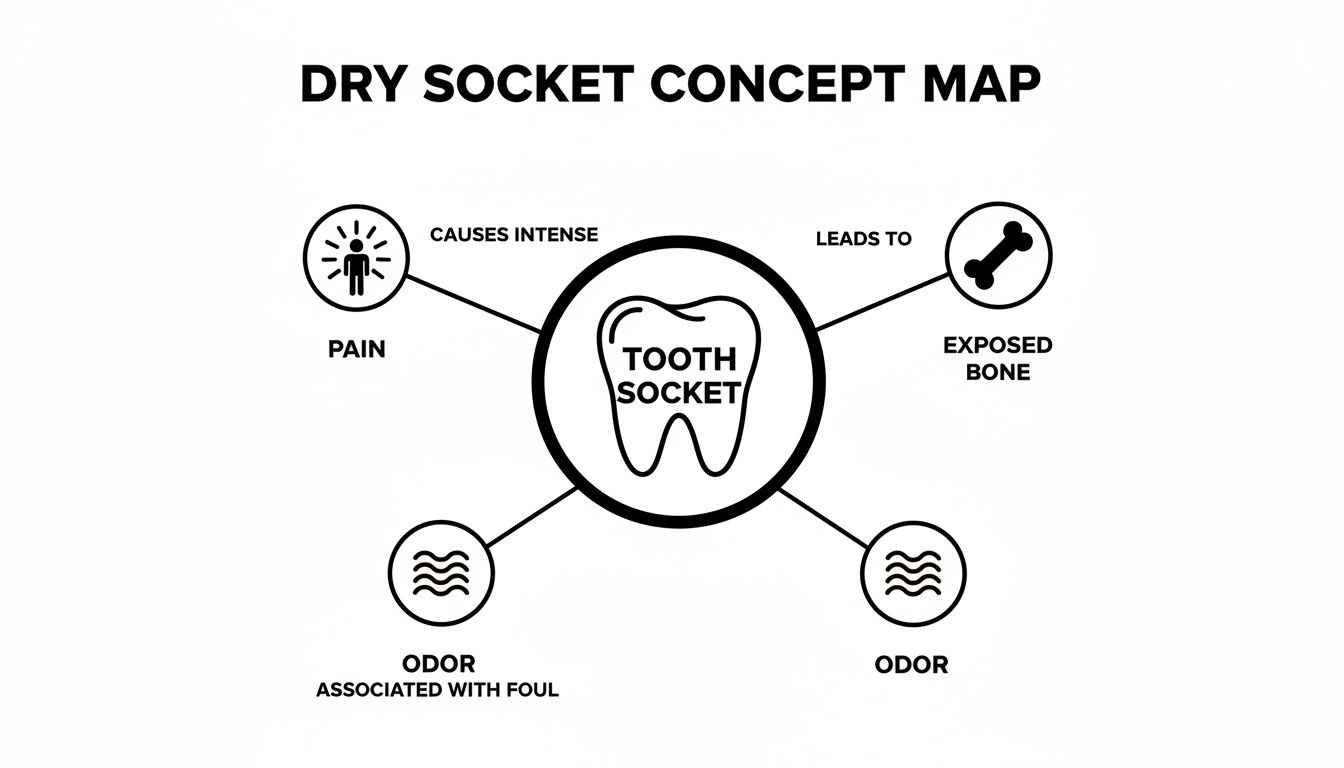
The visual appearance of the socket is directly linked to the other symptoms you'll experience.
Why Debris, Taste, and Smell Are Also Major Clues
An unprotected socket becomes a trap for food and bacteria. This accumulation leads to two very unpleasant but useful diagnostic signs.
A dry socket is almost always accompanied by a foul taste and a distinct bad breath that you can't resolve. This isn't typical post-op breath; it’s a specific odor from bacterial activity in the open wound.
This condition, clinically known as alveolar osteitis, is defined by the loss of the blood clot. The combination of an empty-looking socket, visible bone, and a foul smell is your clear signal to seek professional help. For more clinical details, you can review published medical research.
Beyond Appearances: How a Dry Socket Actually Feels
While an empty socket is a key visual sign, the most urgent indicator of a dry socket is the pain. This is not typical post-extraction soreness; it's a severe, deep pain that signals a disruption in the healing process.
This intense pain often has a delayed onset. You might feel fine for a day or two, but then, around two to four days after your procedure, the pain emerges and intensifies. While normal healing pain subsides, dry socket pain escalates into a persistent, throbbing ache that over-the-counter painkillers cannot manage.

The Nature of Dry Socket Pain
A defining characteristic of dry socket pain is that it radiates. Because the underlying bone and nerves are exposed, the ache travels across your face.
You might feel the pain spreading to these areas:
Up to your ear on the same side.
Towards your eye or temple, feeling like a severe headache.
Down into your neck and along your jawline.
Actionable Insight: Consider the blood clot an insulating bandage for the nerve endings. Without it, simple stimuli like cool air or water can trigger waves of intense pain. This sensitivity is a key symptom to report to your dentist.
Other Unpleasant Sensory Symptoms
In addition to the pain, a dry socket presents other sensory clues. An open socket traps food particles and bacteria, leading to noticeable symptoms.
Bad Breath (Halitosis): The buildup of bacteria and debris creates a persistent and potent foul odor that brushing and mouthwash won't resolve.
Unpleasant Taste: A foul, metallic, or strange taste originating from the extraction site is another direct result of bacterial activity.
These symptoms are just as important as the socket's appearance. To learn more about the specific sensations, you can explore what a dry socket feels like in our detailed guide. When you experience the combination of severe, worsening pain and a foul taste or smell, it is a clear call to action: contact your dentist for treatment.
What Puts You at Risk for a Dry Socket?
Not everyone has the same risk of developing a dry socket. Certain factors can interfere with your body's healing process, making this painful complication more likely. Understanding these risks is the first step toward prevention.
Some risk is inherent to the procedure. A difficult extraction, such as an impacted wisdom tooth, causes more trauma to the area, making it harder for the blood clot to form and remain stable. Dry sockets are also more common in the lower jaw.
How Your Health and Habits Affect Healing
Your daily habits and overall health play a significant role in your recovery. To ensure a smooth healing process, you must actively avoid certain triggers.
Here are the most common risk factors you can control:
Tobacco and Nicotine Use: Smoking or vaping is a major risk. The suction can physically dislodge the clot, while nicotine constricts blood vessels, slowing healing by reducing oxygen and nutrient supply to the site. Actionable Step: Avoid all nicotine products for at least 72 hours post-extraction.
Oral Contraceptives: High estrogen levels in some birth control pills can interfere with clot formation. Actionable Step: Discuss timing your extraction with your dentist and physician if this is a concern.
Poor Oral Hygiene: Failing to keep your mouth clean (gently!) allows bacteria to accumulate, which can break down the protective clot. Actionable Step: Follow your dentist's hygiene instructions precisely.
Certain Medical Conditions: Your overall health is linked to oral health. Conditions affecting immunity or blood flow can impair healing. Learn more about the link between diabetes and oral health.
A dry socket is a disruption of the natural wound healing process. Protecting the initial blood clot is your most important job during recovery.
Research shows that while dry sockets affect 0.5% to 5.6% of routine extractions, the risk can climb to as high as 30% for complex surgical extractions. Poor post-operative care is a primary contributor, underscoring the importance of following your dentist's guidance. You can discover more insights about these findings on Wiley Online Library.
What to Do If You Suspect a Dry Socket
If you see an empty socket and are experiencing radiating pain, it's highly likely you have a dry socket. The most critical action is to remain calm and call your dentist. In the meantime, here are a few steps you can take for immediate care.
What You Can Do at Home Right Now
Your priority is to be gentle. Your first action should be a simple warm saltwater rinse. Dissolve half a teaspoon of salt into a glass (eight ounces) of warm water.
Do not swish or spit aggressively. Tilt your head to let the saltwater solution gently flow over the socket. This action helps remove food particles without causing further irritation. For pain, an over-the-counter anti-inflammatory like ibuprofen can offer temporary relief, but it is not a long-term solution.
The Most Important Step: Call Your Dentist
Home care provides temporary comfort but does not treat the underlying problem. A dry socket requires professional dental care to heal properly and relieve your pain.
When you call your dentist's office, be prepared to provide clear, actionable information to convey the urgency:
Specify the date of your extraction.
Describe the pain as severe and radiating toward your ear or eye.
State that you believe the blood clot is missing and you can see bone.
Mention any foul tastes or odors.
Providing these specific details will help the dental team recognize the situation as a priority and schedule you for an appointment as soon as possible. Professional treatment is the only way to get true relief and prevent infection.
Actionable Insight: You cannot "tough out" a dry socket. It is an open wound with exposed bone and nerves. A dentist must clean the site and apply a medicated dressing to protect it, eliminate the pain, and restart the healing process.
For additional guidance while you await your appointment, consult our actionable guide on what to do if you have a dry socket.
How Dentists Treat a Dry Socket to Relieve Pain
If you are experiencing the relentless pain of a dry socket, seeking professional dental care is the most effective action you can take. The treatment is direct, provides almost immediate comfort, and is essential for proper healing.
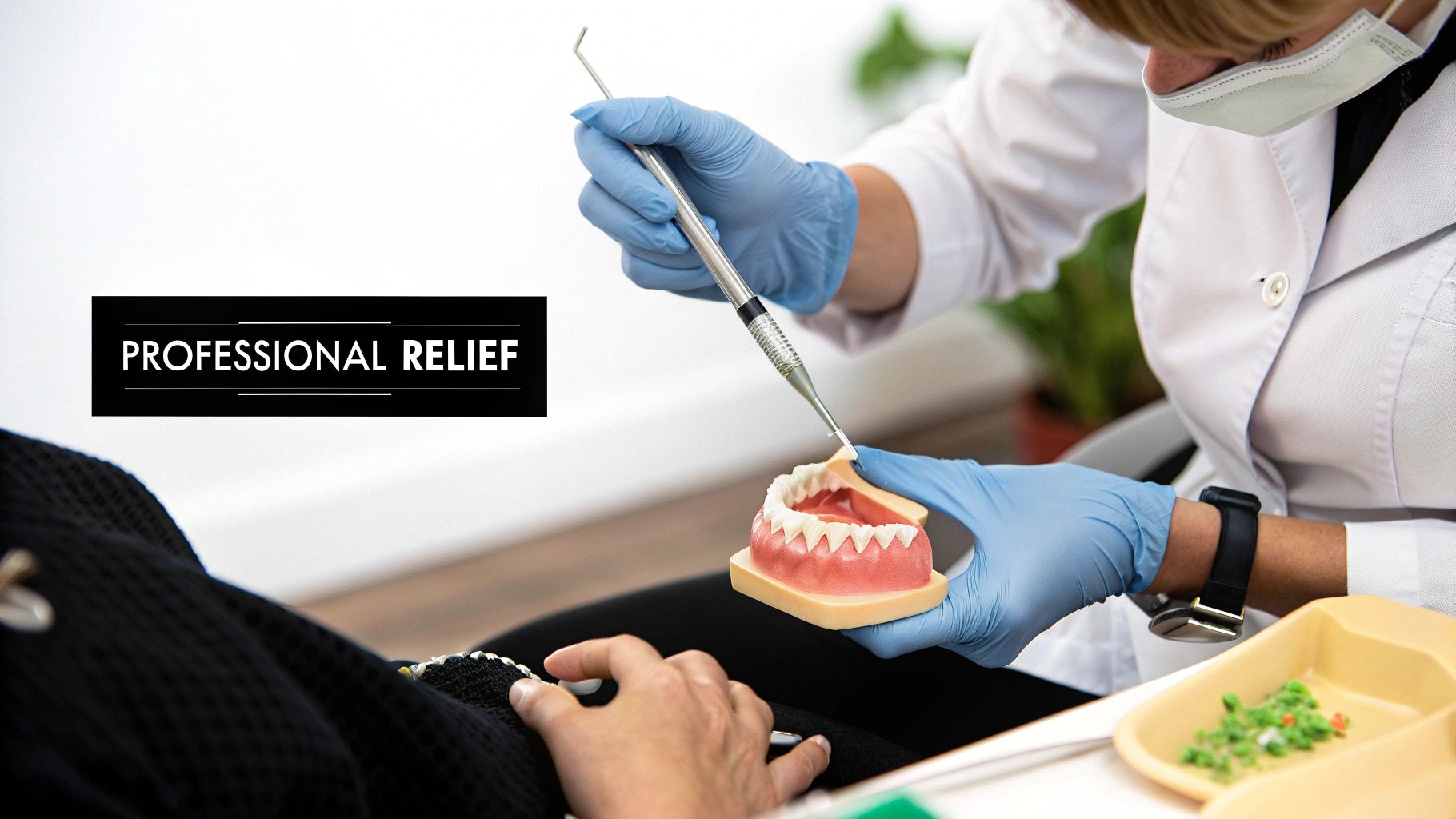
First, your dentist will gently clean the socket by flushing out any food debris or bacteria that has collected in the exposed area. This step is crucial to prevent infection and prepare the site for treatment.
Next, your dentist will place a special medicated dressing into the socket. This is not simple gauze; it is a specialized paste or strip containing ingredients designed to soothe the pain directly at the source.
The Power of a Medicated Dressing
This medicated dressing functions as a temporary, artificial clot. It creates a protective barrier over the exposed bone and nerve endings, shielding them from the air, food, and fluids that trigger severe pain.
This is why patients often feel immediate relief once the dressing is in place.
Soothes Nerves: The dressing often contains agents like eugenol (from clove oil), a natural anesthetic that calms the exposed nerves.
Protects the Bone: It physically covers the exposed jawbone, which is the primary source of the pain.
Promotes Healing: By keeping the area clean and protected, the dressing creates an optimal environment for new tissue growth.
One of the key visual signs of a dry socket is that visible, off-white or yellowish bone. This complication impacts up to 10% of extractions globally. Studies indicate it's more frequent in younger adults, with one report showing a peak incidence of 4.8% in patients aged 18-33. You can find more details on these dry socket incidence findings in this study.
Actionable Insight: Professional treatment has three clear goals: clean the wound, protect the exposed structures, and manage pain. This intervention stops the intense throbbing and allows your body to resume the healing process correctly.
Your dentist may also prescribe stronger pain medication or antibiotics if there is a risk of infection. You will likely need a follow-up visit to have the dressing changed or removed, ensuring your recovery stays on track.
Your Dry Socket Questions, Answered
Navigating post-extraction healing can be confusing, especially when you're in pain. You need clear, actionable answers. Here are responses to the most common questions about dry sockets.
How Long Does Dry Socket Pain Last?
If left untreated, the severe pain of a dry socket can last for 7 to 10 days. However, you do not have to endure this.
With professional dental treatment, such as the placement of a medicated dressing, most people experience significant pain relief within hours. The dressing acts as a protective shield, soothing the exposed nerve and allowing healing to begin.
Can I Just Treat a Dry Socket at Home?
No, you cannot effectively treat a dry socket on your own. While a gentle warm saltwater rinse can help keep the area clean, it will not resolve the underlying issue of exposed bone and nerve endings.
A dry socket is an open wound. Attempting to pack it with at-home materials is dangerous and can introduce bacteria, leading to a serious infection. This condition requires professional care.
Will a Dry Socket Heal By Itself Eventually?
Yes, the body would eventually grow new tissue over the bone, but this healing process is extremely slow and painful, often taking several weeks.
Leaving a dry socket untreated not only prolongs your pain but also significantly increases the risk of developing a secondary infection in your jawbone. The only effective path to fast relief and safe healing is professional dental treatment.
How Do I Prevent a Dry Socket After My Next Tooth Extraction?
Prevention is your best strategy. Your primary goal is to protect the blood clot by strictly following your dentist's post-operative instructions.
Here is your prevention action plan:
No Suction: For at least the first 48-72 hours, do not use straws, smoke, or vape. The negative pressure created by suction is the leading cause of clot dislodgement.
Eat Soft Foods: Stick to a soft diet for the first few days (e.g., yogurt, smoothies, mashed potatoes). Avoid hard, crunchy, or spicy foods that could irritate the extraction site.
Practice Gentle Hygiene: Keep your mouth clean, but avoid vigorous rinsing or spitting, which can dislodge the fragile clot.
Adhering to these rules gives you the best chance for a complication-free recovery.
If you’re experiencing severe pain after a tooth extraction or believe you have a dry socket, do not wait. The team at Beautiful Dentistry is ready to provide the prompt, gentle care you need to relieve your pain and support your recovery. Contact us today to schedule an emergency appointment.


Comments