

Veneers on chipped tooth: Your Guide to a Flawless Smile
- Caterina Rutter
- Dec 29, 2025
- 9 min read

Yes, dental veneers are a fantastic solution for fixing a chipped tooth, especially when the damage is on one of your front teeth where it's most noticeable.
A veneer acts as a custom-made, super-thin facing for your tooth. It doesn't just patch up the damage—it completely restores the tooth's original shape, strength, and natural look. This makes it a permanent and highly aesthetic fix that gives you a predictable, long-term result.
Your Instant Answer for Fixing a Chipped Tooth

When you chip a tooth, you want a repair that’s not just reliable but invisible. Your action plan should be to find a solution that offers a complete aesthetic restoration, blending flawlessly with the rest of your smile. Dental veneers are designed for exactly this purpose.
Think of a veneer as a wafer-thin shell, usually made from high-quality porcelain, meticulously designed to bond to the front of the tooth. Its job is to hide the chip while reinforcing the tooth’s overall structure. This makes it a proactive choice for not just looking better, but also protecting the tooth from further damage.
Why Veneers Are a Top Choice for a Chipped Tooth
When evaluating your options, consider these key benefits to decide if a veneer aligns with your goals.
Feature | Benefit for Your Chipped Tooth |
|---|---|
Flawless Appearance | Custom-shaded and shaped to match your other teeth perfectly, making the repair undetectable. |
Incredible Durability | Made from strong porcelain that resists chips and cracks, reinforcing your tooth's structure. |
Stain Resistance | Porcelain is non-porous, so it naturally resists stains from coffee, tea, and wine. |
Long-Lasting Solution | With good care, a veneer can last for 15 years or more, making it a smart investment. |
As you can see, the benefits go far beyond a simple cosmetic fix, offering strength and longevity that other treatments might not.
Chipped teeth are a common dental emergency. In fact, over 5 million ER visits in the U.S. are for dental-related issues, many of which involve chipped front teeth from accidents.
A chipped tooth feels like a big deal, but it doesn't have to be a permanent problem. Your first actionable step is to get a professional evaluation. If you're unsure how serious the chip is, our guide on handling dental emergencies in Tempe provides immediate steps you can take. However, only a dentist can determine if a veneer is the right choice for you.
How Do Veneers Actually Fix a Chipped Tooth?
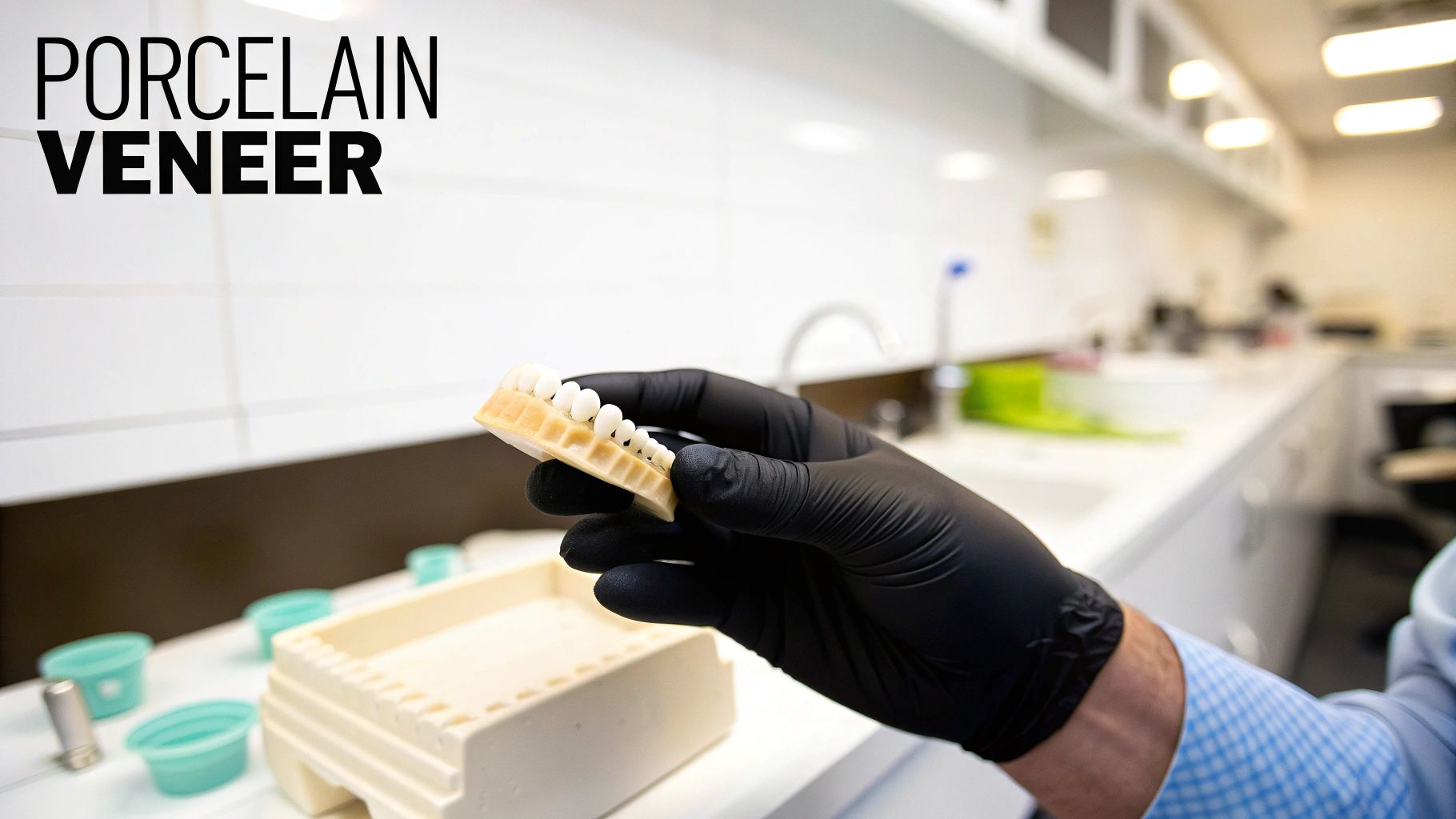
When you chip a tooth, your goal is to find a fix that is both cosmetic and structural. A dental veneer is more than a patch; it’s a brand-new, master-crafted facing that restores the tooth's original strength and appearance.
A veneer is a super-thin, custom-made shell bonded directly to the front of your tooth. It’s not just applied; it’s a precise piece of dental artistry designed to integrate perfectly, creating a durable and completely natural-looking result.
The Science Behind the Smile
The key to successfully using veneers on a chipped tooth is the material. Dentists almost always recommend high-grade porcelain because its slightly translucent quality perfectly mimics how light reflects off natural tooth enamel. This means your repaired tooth will blend in so well that no one will know it wasn't perfect to begin with.
From an actionable standpoint, choosing a veneer means you are also choosing to restore the tooth's structural integrity. By bonding this tough ceramic shell to the tooth, you reinforce the area lost from the chip. It acts as a strong new outer layer, protecting the tooth from further damage. This is a very different approach from other cosmetic fixes, like the enamel shaping and recontouring in Tempe, which involves carefully reshaping the existing tooth itself.
A veneer doesn’t just hide the damage; it becomes a functional and protective part of the tooth. It reinforces the weakened area against future fractures while creating a beautiful, uniform surface that completes your smile.
It's no wonder this approach has become so popular. The demand for veneers has jumped by 250% over the last decade. The global market for veneers hit USD 2.47 billion in 2024, with many people choosing them specifically to fix chips and improve their confidence. Your dentist will carefully plan the exact shape, size, and color to create a veneer that not only fixes the chip but enhances your entire smile, letting you get back to your life without a second thought.
Your Veneer Journey: From First Chat to Final Smile
If you’ve chipped a tooth and are considering a veneer, understanding the process is your first step. Knowing what to expect makes you a more informed patient and helps ensure a successful outcome.
The process is a blend of artistry and precision, involving a few key visits, each one building on the last to get that perfect, long-lasting result.
The Initial Consultation and Assessment
Everything starts with a conversation. This first appointment is crucial for developing a practical treatment plan. You can often book your initial consultation online to get started.
Here’s what your dentist will assess to determine if you're a good candidate:
The Chip Itself: Is it a minor cosmetic issue, or is it deep enough to affect the tooth's strength?
Tooth Health: Your tooth needs a solid foundation. The dentist will check for any underlying decay or gum disease that must be treated first.
Your Bite: How your teeth come together will be checked to ensure the new veneer won’t be under unusual pressure that could cause it to fail.
Use this appointment to clearly communicate your goals. The more your dentist knows about the look you want, the better they can tailor the final result to your expectations.
Prepping the Tooth for a Perfect Fit
If a veneer is the right call, the next step is preparing the tooth. To ensure the veneer sits flush and doesn't look bulky, your dentist will gently remove a wafer-thin layer of enamel—less than 0.5 millimeters, about the thickness of a fingernail.
Think of it like this: if you were putting high-end tile on a wall, you'd first have to make sure the surface was perfectly smooth. That's all we're doing here—creating the ideal surface for the veneer to bond to, ensuring it looks seamless and completely natural.
This precise preparation is what allows the veneer to blend in perfectly.
Crafting and Placing Your Custom Veneer
With the tooth prepped, your dentist will take a highly accurate digital impression. This 3D scan is sent to a dental lab where a technician will handcraft your veneer, matching the exact shade, shape, and translucency of your natural teeth.
This custom work typically takes one to two weeks. In the meantime, you'll wear a temporary veneer to protect the tooth.
At your final placement appointment, here is the action plan:
The dentist will place the new veneer on your tooth to confirm the fit and color.
Any minor adjustments will be made for a perfect result.
The tooth’s surface is cleaned and prepared to ensure a strong, permanent bond.
A special dental cement and a high-intensity light are used to permanently attach the veneer.
After a final polish and bite check, you can walk out with your smile fully restored. That chip will be a distant memory.
Comparing Veneers With Other Chipped Tooth Repairs
While veneers on a chipped tooth are an excellent choice, they aren't the only option. To make an informed decision, you need to compare them against other common repairs based on the size of the chip, your budget, and your long-term goals.
Here's a practical way to think about it: dental bonding is a quick patch-up for a minor scuff. A veneer is a new, beautiful facade for more noticeable damage. A crown is a full structural helmet for a seriously weakened tooth.
Veneers vs Dental Bonding
For small, straightforward chips, dental bonding is often the most practical first option. It’s a fast, cost-effective fix that can be done in one visit. The process involves applying a tooth-colored composite resin to the chip and sculpting it to match your tooth.
The trade-off is durability. Bonding resin is more porous than porcelain, so it can stain over time and isn't as tough as a veneer, meaning it may need replacing sooner. For a quick fix on a minor chip, you can learn more about dental bonding in Tempe.
This flow chart maps out the typical journey for getting veneers, from the first conversation to your finished smile.
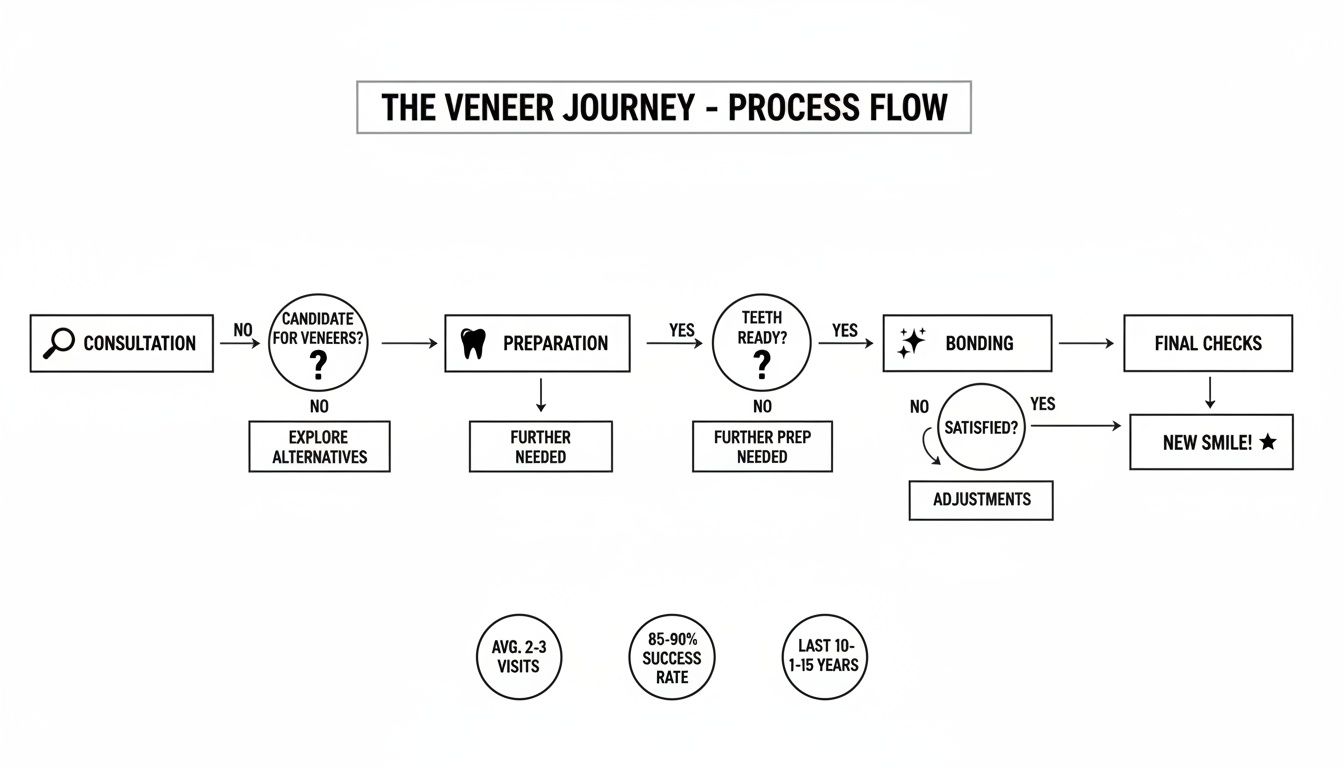
As you can see, getting veneers is a carefully planned, multi-step process designed for a precise and lasting result—a very different approach from the single-visit convenience of bonding.
Veneers vs Dental Crowns
If the chip is large or has weakened the tooth's structure, a dental crown is the more appropriate solution. Unlike a veneer that just covers the front, a crown (or "cap") encases the entire tooth down to the gum line.
A crown's primary job is restorative. It's built to bring back the tooth's strength and function. While modern crowns look fantastic, their main purpose is protection, making them the go-to for molars or for front teeth that have taken a serious hit.
The decision hinges on how much healthy tooth is left. If the tooth is still fundamentally strong, a veneer is the best cosmetic choice. If its integrity is compromised, a crown provides the reinforcement it needs.
Chipped Tooth Repair Veneers vs Bonding vs Crowns
Use this table to directly compare your options and discuss them with your dentist.
Treatment | Best For | Durability | Appearance | Average Cost |
|---|---|---|---|---|
Veneers | Moderate chips, discolouration, or cosmetic flaws | 10-15+ years | Most natural and stain-resistant | $900 - $2,500 per tooth |
Bonding | Small, minor chips on low-stress areas | 3-10 years | Good, but can stain over time | $300 - $600 per tooth |
Crowns | Large chips, cracks, or structural damage | 15+ years | Can be very natural-looking | $1,100 - $2,500 per tooth |
Ultimately, this table shows there's no single "best" option—just the right option for your specific situation.
Porcelain veneers currently hold a 60% market share because of their impressive, chip-resistant strength, making them a top choice for front teeth. Any cosmetic treatment works best when your teeth are healthy, so taking proactive steps by learning proven ways to strengthen tooth enamel will help protect your entire smile. In the end, only a professional consultation can determine the perfect path forward for you.
Protecting Your Investment with Proper Veneer Care
Once your new veneer is bonded, your goal is to protect it for its full lifespan, which can be 15 years or longer. The good news is that caring for a veneer requires the same simple, consistent habits as caring for your natural teeth.
Think of it as a small daily commitment to protect a big investment in your confidence.
Your Daily Veneer Care Checklist
Follow these steps to keep your veneer in top shape and protect the healthy tooth underneath.
Practice Gentle Brushing: Use a soft-bristled toothbrush and non-abrasive toothpaste. Gritty pastes can create micro-scratches on the veneer's surface, dulling its shine over time.
Floss Daily Without Fail: Plaque can build up where the veneer meets your gum line. Flossing every day is the best way to remove it, preventing decay and keeping your gums healthy, which is critical for the veneer’s long-term stability.
Maintain Regular Dental Visits: Schedule a professional cleaning and check-up every six months. Your dentist can polish your veneer safely and spot any potential issues before they become serious problems.
These simple actions are the foundation for a long and healthy life for your restored tooth.
Protecting Your Veneer from Damage
Porcelain is strong, but not indestructible. You must actively protect your veneer from unnecessary stress to prevent chips or cracks.
Remember, your teeth—and your veneers—are for chewing food. They are not tools for opening packages, biting your nails, or tearing tape. Using them for anything else is one of the fastest ways to cause damage and need a costly replacement.
Put these practical tips into action to avoid accidents:
Avoid Biting Hard Objects: Be mindful of biting directly into things like ice, hard candy, or bones. Use your molars for chewing hard foods.
Wear a Nightguard if You Grind: If you clench or grind your teeth at night (bruxism), the constant pressure can fracture a veneer. Get a custom-fitted nightguard from your dentist for essential protection.
Use a Mouthguard for Sports: If you play contact sports, a protective mouthguard is non-negotiable to prevent impact-related damage.
By following this straightforward advice, you can enjoy the confidence that comes with your restored smile for many years.
Of course, you probably still have a few practical questions. Let’s tackle some of the most common things people ask when considering veneers for a chipped tooth.
Does It Hurt to Get a Veneer on a Chipped Tooth?
The process is designed to be comfortable. Before starting, your dentist will numb the tooth and surrounding area with a local anesthetic, so you won't feel pain during the preparation or bonding.
Most people report feeling no pain during the appointment. You might experience minor tooth sensitivity for a day or two afterward, but this is temporary and fades quickly.
What If My Tooth Chip Is Really Big? Can I Still Get a Veneer?
This is a great question. The answer depends on how much healthy tooth structure remains. Veneers are the best solution for small-to-medium chips on a tooth that is otherwise strong.
However, if the chip is so large that it compromises the tooth's integrity, a veneer isn't the right tool for the job. In these cases, a dental crown is the recommended solution. A crown covers the entire tooth, providing the heavy-duty structural support it needs. Only a dentist can make this determination after an examination.
A good way to think about it is that veneers restore the face of a tooth, while crowns rebuild its entire structure. The size of the chip is what tells us which one you need for a repair that will actually last.
Will a Single Veneer Match the Rest of My Teeth?
Yes, absolutely. This is where the artistry of cosmetic dentistry is crucial. Your dentist will act as both an artist and a scientist to ensure a perfect match.
They use special shade guides and digital imaging to create a veneer that precisely matches the color, brightness, and translucency of your adjacent teeth. The goal is for the veneer to blend in so seamlessly that no one can spot the difference.
Ready to find out if a veneer is the perfect solution for your chipped tooth? The expert team at Beautiful Dentistry is here to provide a personalized consultation and create a treatment plan just for you. Visit us online to book your appointment today at https://zdentist.com.


Comments