

Recognizing the Signs of Sleep Apnea in Adults
- Caterina Rutter
- Dec 26, 2025
- 12 min read

Loud snoring isn't just an annoyance—it's often the most obvious signal that you need to investigate your sleep health. Pay close attention if your partner says you stop breathing or if you wake up suddenly, gasping for air. These aren't minor sleep quirks; they are critical warnings that can lead to severe daytime fatigue, persistent morning headaches, and an inability to concentrate.
Recognizing these connected symptoms is the first actionable step toward addressing a serious health condition.
What Are the Most Common Signs of Sleep Apnea in Adults?
Sleep apnea is more than just snoring; it's a sleep disorder where your breathing repeatedly stops and starts throughout the night.
Think of your airway as a flexible tube. When you sleep, your throat muscles relax. For someone with sleep apnea, these muscles relax too much, causing the "tube" to collapse and block airflow. Your brain, detecting a dangerous drop in oxygen, sends a panic signal that briefly wakes you up to resume breathing. This cycle can happen hundreds of times a night, often without your conscious awareness.
This constant disruption prevents you from reaching the deep, restorative sleep your body needs to repair itself. The result is a cascade of symptoms that directly impact your daily life and long-term health. Your next step is to learn to connect these symptoms to their root cause.
Connecting Nighttime Events to Daytime Struggles
The problems from your disrupted sleep don't end when your alarm goes off. Some of the most debilitating signs of sleep apnea manifest during the day. The key is to connect what's happening at night with how you feel when you're awake. If you can make this connection, you are empowered to seek a diagnosis.
This concept map helps visualize how nighttime events directly cause daytime problems.
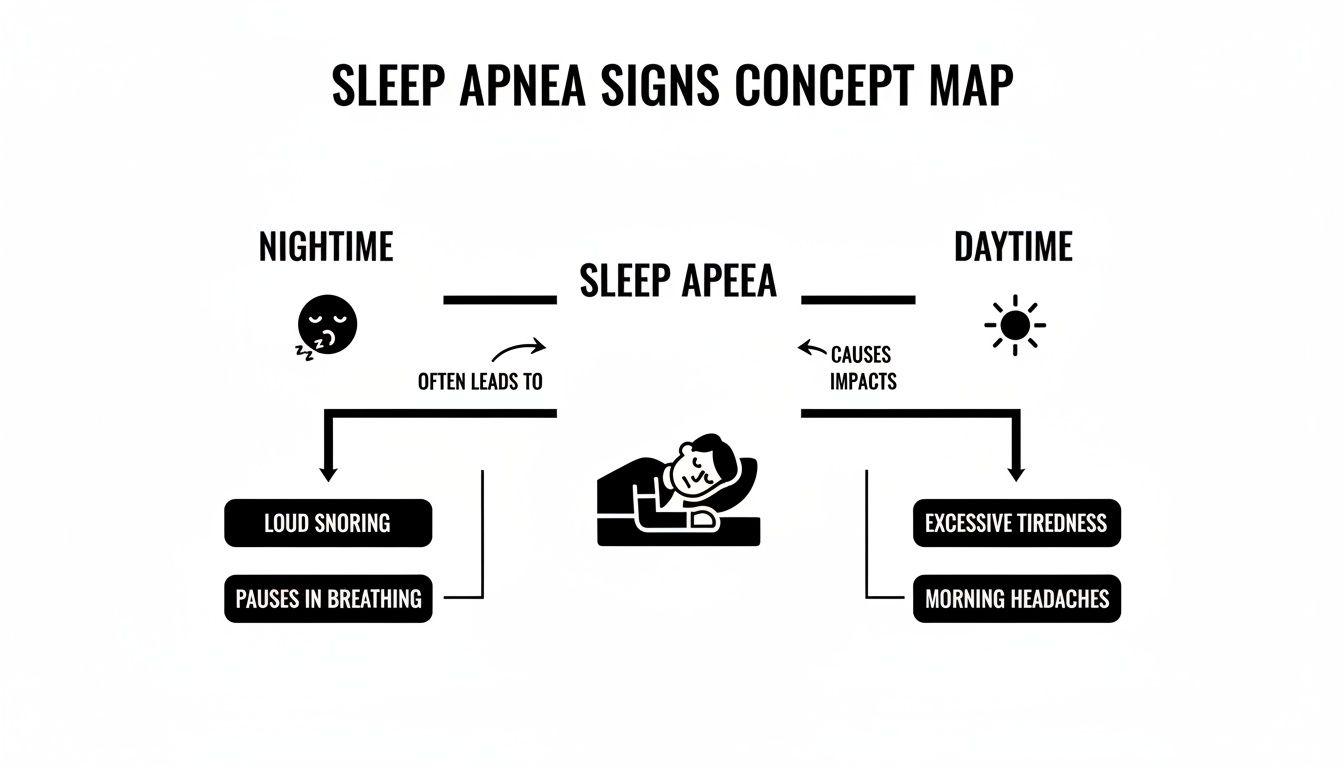
Use this visual to understand that snoring isn't a standalone issue; it's the starting point for daytime problems like mental fog. Recognizing this link is crucial for understanding the full impact sleep apnea may be having on your life.
Comparing Nighttime vs. Daytime Signs of Sleep Apnea
To help you identify the pattern, let’s group the signs by when they occur. Use this table to check if you are experiencing symptoms in both columns. A match in both is a strong indicator that you should speak with a healthcare professional.
Nighttime Signs (During Sleep) | Daytime Signs (When Awake) |
|---|---|
Loud, chronic snoring that disrupts others | Excessive daytime sleepiness, even after a full night's sleep |
Pauses in breathing observed by a partner | Waking up with a dry mouth or sore throat |
Waking up suddenly, choking or gasping for air | Morning headaches that are difficult to explain |
Frequent trips to the bathroom (nocturia) | Difficulty concentrating or "brain fog" |
Restless sleep and tossing and turning | Irritability, mood swings, or symptoms of depression |
Night sweats unrelated to room temperature | Decreased libido or sexual dysfunction |
If you see yourself in this table, you are not alone. A landmark 2019 global study estimated that 936 million adults have mild to severe obstructive sleep apnea, with 425 million requiring treatment. Projections show that nearly 77 million people in the U.S. will be affected by 2050. These numbers highlight the importance of taking your symptoms seriously. You can learn more about the global prevalence of sleep apnea in this detailed study.
The Nighttime Signs That Go Way Beyond Snoring
While loud snoring is the most recognized sign, your body sends many other signals that it's struggling for air at night. Don't dismiss these as a "bad night's sleep"—they are crucial clues that demand action.
Every time your breathing stops, an alarm goes off in your brain, jolting you out of deep, restorative sleep. This can happen hundreds of times a night without you fully waking up. This cycle is what causes the less obvious nighttime symptoms. Your action is to start tracking them.
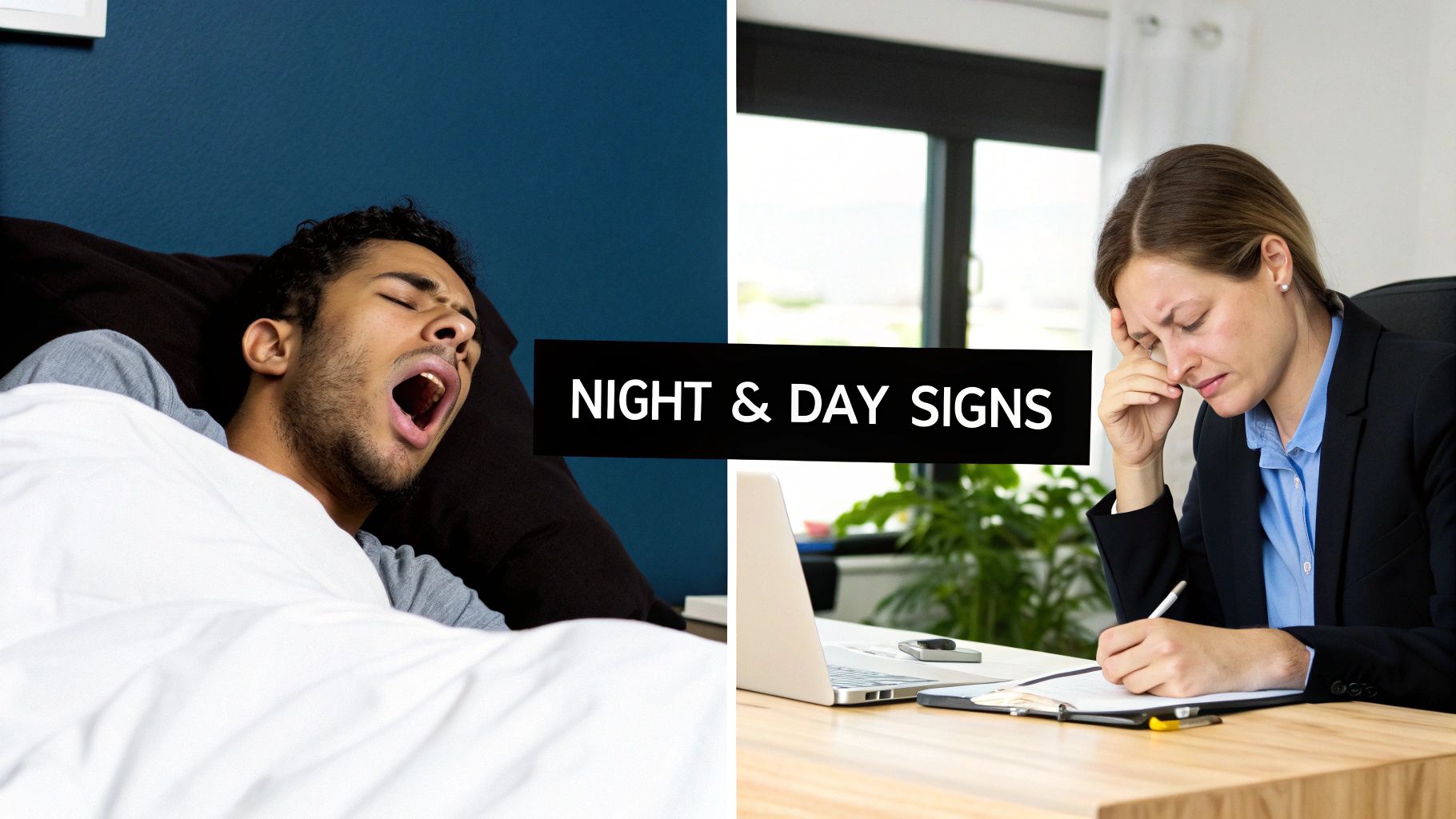
Waking Up Gasping or Choking
This is one of the most direct and frightening signs. If you wake up suddenly, heart racing, feeling like you can't breathe, your body is sending an emergency signal. This isn't a nightmare; it's a physical response to a blocked airway and low oxygen. Take this symptom seriously—it's a clear red flag that your breathing is compromised during sleep.
Drenching Night Sweats
Waking up soaked in sweat, even in a cool room, is a sign of intense physical exertion. When deprived of oxygen, your body enters a fight-or-flight state, causing your heart rate to spike as you struggle to breathe.
This struggle for air is like running a marathon in your sleep. That intense physical effort causes profuse sweating. If this is happening, it's time to find out why.
Frequent Trips to the Bathroom
If you wake up two or more times a night to urinate (nocturia), don't automatically blame age. Apnea events cause oxygen drops and chest pressure changes that disrupt hormones controlling bladder function. Many patients find this frustrating symptom disappears once their sleep apnea is treated. This is a solvable problem.
Other Important Nighttime Clues
Pay attention to these additional signals. If they occur alongside the others, it strengthens the case for getting a sleep assessment.
Restless Sleep: Constant tossing and turning is often your body's subconscious attempt to find a position that keeps your airway open.
Heart Palpitations: The strain on your cardiovascular system can cause an irregular heartbeat while sleeping. Never ignore this symptom; discuss it with your doctor immediately.
Waking with a Dry Mouth or Sore Throat: This is clear evidence of mouth breathing, a common compensation for a blocked airway. This can also lead to persistent bad breath, a problem that can be addressed with proper diagnosis and care. Learn more about our bad breath treatment in Tempe.
How Sleep Apnea Steals Your Daylight
The effects of sleep apnea follow you into your day, impacting your mood, focus, and safety. The deep exhaustion you feel isn't just from a busy schedule; it's the direct result of a body that spent the night fighting for oxygen instead of resting.
Think of it as trying to function after pulling an all-nighter, every single day. Your next step is to stop blaming yourself for feeling this way and instead view these daytime struggles as medical symptoms that point to a treatable root cause.
The Heavy Fog of Daytime Sleepiness
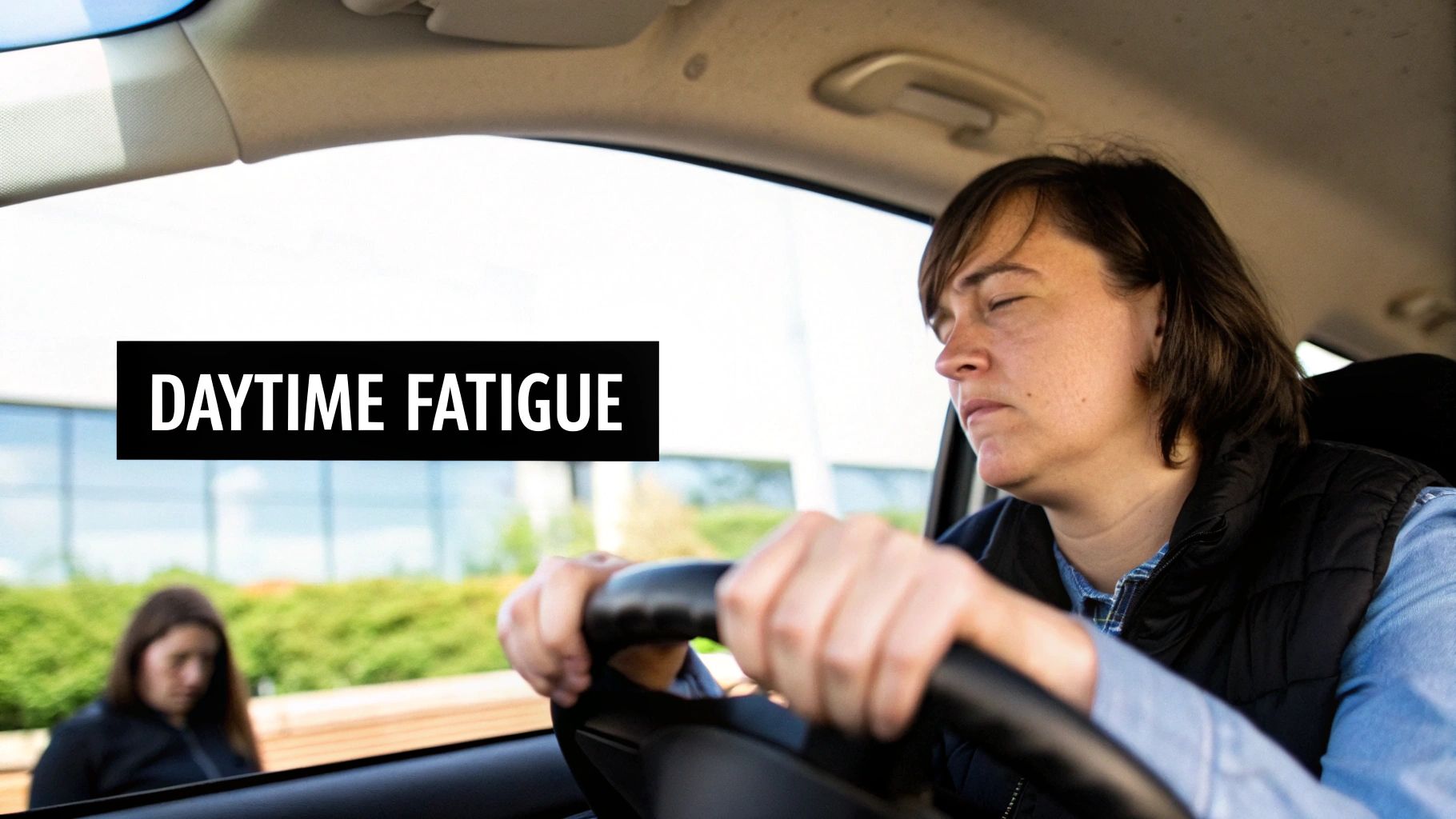
A primary sign is excessive daytime sleepiness (EDS). This is not a normal afternoon slump. It's a persistent, heavy exhaustion that makes daily activities a struggle, no matter how long you were in bed.
You might find yourself dozing off in meetings, feeling an irresistible urge to nap, or worse, feeling drowsy while driving. This level of fatigue is not just an inconvenience; it's dangerous.
One of the most critical signs of sleep apnea in adults is relentless daytime sleepiness. If tasks like driving feel impossible because you can't stay alert, it's a clear signal to seek immediate medical advice.
This sleepiness is a major public health concern. A 2019 global study found that of the 936 million people with obstructive sleep apnea, up to 38% report EDS, significantly increasing their risk for accidents. In the U.S., this symptom affects 26% of adults aged 30-70 and is a major cause of car crashes. You can review the global impact of sleep apnea from this detailed report.
It's More Than Just Feeling Tired: The Mental Toll
Sleep apnea also attacks your mental clarity. Repeated oxygen drops put immense stress on your brain, leading to frustrating cognitive issues. It’s time to stop dismissing these as personal failings and recognize them as medical signs that require a solution.
Here are the key cognitive and emotional signs to act on:
Persistent "Brain Fog": If you constantly feel hazy and struggle to concentrate or remember details, it’s a classic symptom. This isn't normal; it's a sign your brain isn't getting the restorative sleep it needs.
Morning Headaches: Waking with a dull, throbbing headache is often caused by a buildup of carbon dioxide in your blood from improper breathing overnight. This is a physical symptom with a medical cause.
Increased Irritability and Mood Swings: Chronic exhaustion shortens your fuse. If you find yourself overreacting to small annoyances, it may be a direct result of poor sleep quality, not a personality flaw.
Symptoms of Depression or Anxiety: There is a strong link between untreated sleep apnea and mental health. The physical stress and lack of deep sleep can trigger or worsen feelings of depression and anxiety.
If these daytime struggles are your reality, the actionable insight is this: these are not character flaws. They are clear signals that your body needs help.
Oral Health Clues That Point to Sleep Apnea
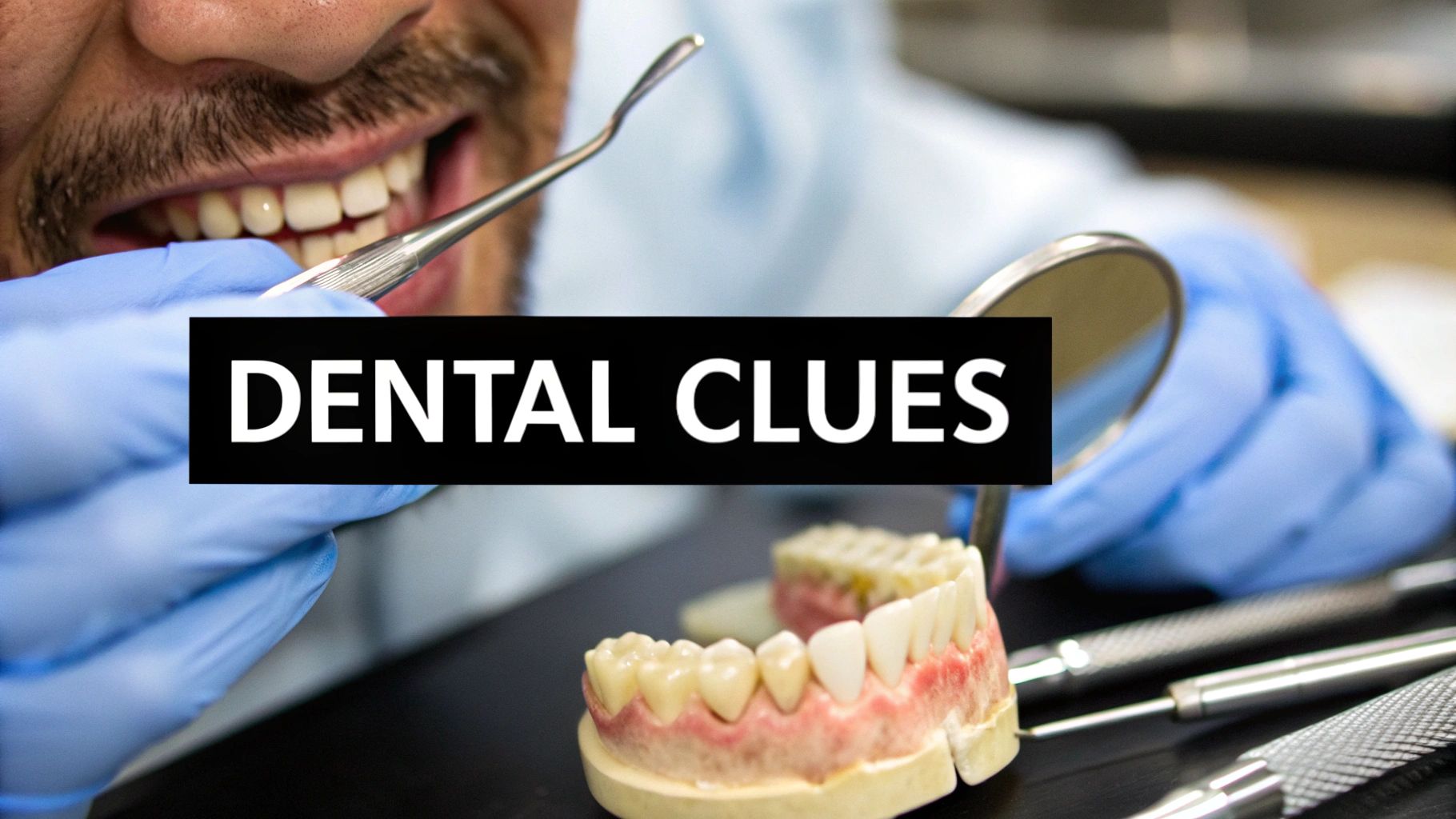
Your dentist can be a key partner in identifying sleep apnea. While you might focus on snoring or fatigue, the physical evidence is often hiding in your mouth. The nightly struggle for air leaves specific clues that a trained dentist can easily spot.
When your airway collapses, your brain triggers a survival response: clenching your jaw and grinding your teeth (bruxism). This action pushes the lower jaw forward, momentarily reopening the airway. It's a protective reflex, but it causes significant damage to your teeth and jaw over time.
The Damaging Effects of Nightly Teeth Grinding
Chronic teeth grinding is a major red flag for sleep apnea. It is not just a habit; it's a physical manifestation of your body's fight to breathe. This intense force leads to predictable dental problems. If your dentist points these out, your next step should be to ask about a sleep apnea screening.
Watch for these signs of damage:
Severely Worn-Down Enamel: Teeth that appear flat, chipped, or shorter are a sign that protective enamel is being ground away night after night.
Cracked or Fractured Teeth: The immense pressure can cause cracks that may require crowns or even extraction.
Jaw Pain and Headaches: Waking with a stiff, sore jaw or tension headaches is a classic symptom of your jaw muscles being overworked all night.
Many patients seek help for a TMJ disorder, not realizing their symptoms are driven by an underlying sleep breathing issue. It is critical to address the root cause. You can learn more about how we connect these issues when treating TMJ and teeth grinding in Tempe.
More Than Just Grinding: Other Dental Red Flags
Beyond bruxism, other oral clues indicate a struggle for air at night. A comprehensive dental exam should assess these signs.
Think of your dentist as a health detective. Clues like worn-down teeth or a scalloped tongue help solve the mystery of your fatigue and point toward a diagnosis.
Here are more signs to look for during your next dental visit:
A Scalloped Tongue: Wavy or rippled edges on your tongue suggest it's pushing against your teeth, a common effort to keep the airway open.
Persistent Dry Mouth: Waking with a parched mouth is a clear sign of mouth breathing, which dramatically increases your risk for cavities and gum disease.
Redness in the Throat: Chronic snoring and mouth breathing irritate throat tissues, leaving them red and inflamed.
These oral signs provide physical proof of a potential problem. Recognizing them is the first step toward getting a medical diagnosis that can improve your overall health.
The Serious Health Risks of Ignoring Sleep Apnea
Understanding the signs is the first step, but knowing the high stakes of inaction is what should motivate you to seek help. Untreated sleep apnea isn't just about feeling tired; it's a serious medical condition that actively harms your long-term health.
Each time you stop breathing, your body is starved of oxygen, flooded with stress hormones, and your blood pressure skyrockets. When this cycle repeats hundreds of times a night, it puts an unsustainable strain on your entire body, dramatically increasing your risk for several life-threatening conditions. Your actionable insight is to view treatment not as an option, but as a necessary step to protect your future health.
The Cardiovascular Connection
The link between sleep apnea and heart health is direct and dangerous. The constant oxygen deprivation and blood pressure surges force your heart to work much harder than it should, leading to significant wear and tear. Ignoring these signs of sleep apnea in adults actively contributes to the development of serious cardiovascular diseases.
High Blood Pressure (Hypertension): Nightly blood pressure spikes lead to sustained high blood pressure during the day, a primary risk factor for heart attack and stroke.
Heart Attack: Sleep apnea significantly increases heart attack risk by starving the heart of oxygen and increasing strain.
Stroke: Fluctuations in oxygen and pressure can damage blood vessels in the brain, making a stroke more likely. Studies show that moderate to severe sleep apnea dramatically increases this risk.
Metabolic and Cognitive Consequences
The damage extends beyond your heart. Chronic sleep disruption throws other critical systems off balance, affecting how your body processes sugar and how well your brain functions.
Untreated sleep apnea is a systemic breakdown that quietly undermines your health, night after night. Taking action is not just about sleeping better; it's about preventing chronic diseases that can shorten your life.
Getting treatment is a proactive step to protect your entire body. Here are other major risks of inaction:
Type 2 Diabetes: Sleep apnea impairs your body's ability to use insulin, leading to insulin resistance. Up to 80% of people with Type 2 diabetes may also have obstructive sleep apnea.
Cognitive Decline: Chronic oxygen deprivation can lead to significant problems with memory, concentration, and decision-making, and may contribute to more serious long-term cognitive impairment.
Accidents and Injuries: Severe daytime fatigue dramatically increases the risk of falling asleep while driving or having a workplace accident. Getting treated protects you and others.
The evidence is clear: ignoring the signs is a gamble with your health. The most important action you can take is to make a proper diagnosis a priority.
Your Path to Diagnosis and Effective Treatment
Recognizing the signs empowers you to take the next step: getting a diagnosis and finding an effective treatment. This straightforward process can help you reclaim your energy and protect your long-term health.
Start by talking to your doctor or a dentist with specialized training in sleep medicine. Based on your symptoms, they will likely recommend a sleep study to confirm the diagnosis and determine its severity.
How a Diagnosis Actually Works
Traditionally, a diagnosis required an overnight stay in a sleep lab for a polysomnography. While effective, this can be inconvenient and intimidating for many.
Fortunately, there is now a more accessible and comfortable option: at-home sleep tests.
Today, diagnosing sleep apnea is as simple as wearing a small device in the comfort of your own bed. This modern approach makes it easier than ever to get the answers you need without disrupting your life.
Home sleep apnea tests (HSATs) are user-friendly. You wear a few small sensors that track your breathing, oxygen levels, and heart rate as you sleep. A sleep physician analyzes this data to get a precise picture of your sleep patterns. This convenience empowers more people to get diagnosed and start treatment sooner.
Effective Treatment Goes Beyond the CPAP
Once diagnosed, the goal is to find the right treatment for you. While the CPAP (Continuous Positive Airway Pressure) machine is well-known, it's not the only option. Many people find the mask uncomfortable and give up on treatment.
A powerful and more comfortable alternative is oral appliance therapy, provided by a dentist trained in sleep medicine.
An oral appliance is a custom-fitted device, similar to a mouthguard, worn only at night. It works by gently shifting your lower jaw slightly forward, which keeps the soft tissues at the back of your throat from collapsing and ensures your airway remains open all night.
The Big Wins of Oral Appliance Therapy
For those with mild to moderate obstructive sleep apnea, an oral appliance can be a life-changing solution. Here’s what you need to know:
Comfortable and Simple: These devices are small, discreet, and require no noisy machines or electricity.
Portable and Convenient: Easily pack your oral appliance for travel, ensuring you never miss a night of treatment.
Completely Non-Invasive: This is a non-surgical solution to manage your sleep apnea effectively.
High Compliance Rate: Because they are comfortable and easy to use, patients are more likely to wear them every night, which is the key to successful treatment.
Finding the right team is crucial. Dentists with advanced training in sleep medicine, like our team at Beautiful Dentistry, collaborate with sleep physicians to provide this excellent treatment. If you recognize any signs of sleep apnea in adults, we can guide you through the diagnosis process and determine if an oral appliance is the right fit for your sleep apnea treatment in Tempe. Improving your general sleep habits can also provide benefits; learn more about understanding and alleviating sleep disorders.
Frequently Asked Questions About Sleep Apnea
It's normal to have questions as you learn about sleep apnea. Here are clear answers to the most common concerns we hear, helping you move forward with confidence.
Can Sleep Apnea Go Away on Its Own?
No, for adults, sleep apnea is a chronic condition that rarely resolves without treatment.
While lifestyle changes like weight loss or sleeping on your side can reduce the severity of symptoms, they are not a cure. The actionable insight is that consistent, professional treatment is necessary to manage the condition and prevent serious health risks like heart disease.
Is Sleep Apnea Just Really Bad Snoring?
No, they are fundamentally different, and it's critical to know the distinction. Snoring is the sound of air struggling to pass through a partially obstructed airway.
Sleep apnea is a physical event. It's when your airway becomes fully blocked, causing you to stop breathing for ten seconds or more. One is a noise; the other is a medical emergency that repeats all night long.
What Is the First Step if I Suspect I Have Sleep Apnea?
The most important first step you can take is to talk to a healthcare professional. You can start with your primary care physician or a dentist who has advanced training in dental sleep medicine, like our team in Tempe.
From there, the next action is a sleep study—often a simple at-home test—to get a definitive diagnosis. This is the gateway to effective treatment and better health.
Recognizing the signs is your first step toward reclaiming your health and energy. If you are experiencing symptoms and are ready for a clear diagnosis and effective treatment options, the team at Beautiful Dentistry is here to help. Schedule your consultation today by visiting us at https://zdentist.com.


Comments