

How to Treat Sleep Apnea: Your Action Plan for Diagnosis and Care
- Caterina Rutter
- Dec 23, 2025
- 13 min read

If you're looking for how to treat sleep apnea, know that it's a step-by-step process, not a quick fix. Your journey starts with recognizing the signs and ends with a treatment plan you can stick with. This might involve a CPAP machine, a custom-fit dental appliance, or specific lifestyle adjustments. The first step is to get a proper diagnosis and then understand your options.
Your Guide to Treating Sleep Apprecia
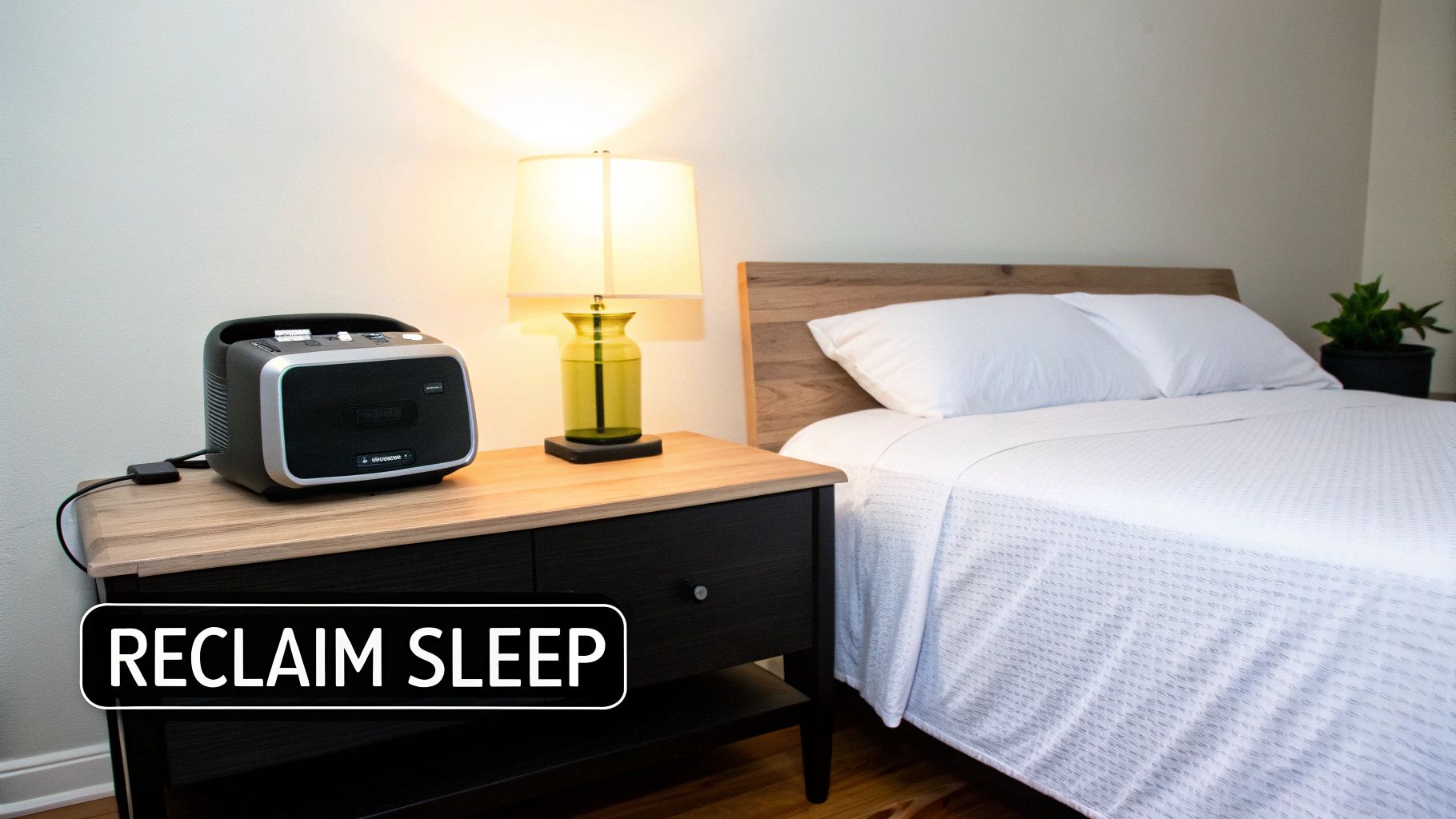
Waking up exhausted after a full night's sleep isn't just a bad morning—it's a sign you need to investigate. Sleep apnea is a serious condition where your breathing pauses repeatedly during sleep, depriving your body of essential oxygen. This guide provides a clear, actionable roadmap to reclaim your sleep and your health.
Taking action doesn't have to be overwhelming. We'll walk you through the practical steps, from identifying symptoms like morning headaches to understanding the diagnostic tests. Once you have a clear diagnosis, you can confidently explore the effective solutions available today.
A Roadmap to Restful Nights
Most people hear "sleep apnea" and immediately picture a bulky CPAP machine. While CPAP is a common option, the world of treatment has expanded. This guide is designed to give you a complete picture of your choices so you can have an informed conversation with your doctor.
Here's what you can act on:
Get Diagnosed: Learn the difference between at-home sleep tests and in-lab sleep studies so you know what to expect and which to ask for.
Explore Treatment Options: Get a balanced look at CPAP therapy, modern dental oral appliances, and other effective solutions you can discuss with your provider.
Make Lifestyle Changes: Discover powerful daily habits that can significantly boost the effectiveness of your chosen treatment.
It's surprising, but sleep apnea affects a huge number of people—somewhere between 936 million and 1 billion worldwide. The real problem is the massive gap in treatment.
The sheer number of people dealing with this condition underscores how important it is to get good information out there. In the U.S. alone, about 31% of adults diagnosed with sleep apnea aren't getting treated. This isn't just a personal health issue; it has real financial costs. Untreated sleep apnea can make a person's healthcare expenses 2.5 times higher than someone without the condition. You can dig deeper into these sleep apnea market insights if you're interested.
This guide is here to help close that information gap, giving you the confidence to take that crucial first step toward lasting relief.
To give you a bird's-eye view, here's a quick summary of what the treatment process generally looks like.
Overview of Sleep Apnea Treatment Pathways
Treatment Phase | Key Action | Primary Goal |
|---|---|---|
Symptom Recognition | Identifying signs like snoring, daytime fatigue, or morning headaches. | Building awareness and realizing a potential problem exists. |
Medical Evaluation | Consulting with a healthcare provider or sleep specialist. | Getting a professional opinion and a referral for a sleep study. |
Formal Diagnosis | Undergoing a sleep study (at-home or in-lab). | Confirming the presence and severity of sleep apnea. |
Treatment Selection | Discussing options like CPAP, oral appliances, or surgery with your doctor. | Choosing the most effective and sustainable treatment for you. |
Ongoing Management | Consistent use of treatment and regular follow-ups with your provider. | Ensuring long-term health benefits and quality of life. |
Each phase is a step toward better health, moving you from uncertainty to a clear, manageable plan for better sleep.
Recognizing the Signs and Getting a Diagnosis
The first actionable step to treating sleep apnea is realizing you might have it. Many people dismiss fatigue as a result of stress or a busy life, never suspecting an underlying issue. While loud snoring is a well-known symptom, it’s often the less obvious clues that reveal the problem.
Ask yourself: Do you wake up with a pounding headache that fades after an hour? Do you struggle with "brain fog" that coffee can't fix? Unexplained irritability and mood swings are also direct signs that your body isn't getting the restorative, oxygen-rich sleep it needs.
These daytime struggles are the result of nighttime disruptions. When your breathing stops, your brain jolts you awake just enough to restart it. This can happen dozens or even hundreds of times a night, often so quickly you don't remember it, completely preventing you from reaching deep, restorative sleep.
Are Your Symptoms Pointing to Sleep Apnea?
Take a moment to assess your daily life. Are you constantly fighting the urge to nap? Has your partner told you that you gasp or choke in your sleep? These are not minor quirks; they are critical signals from your body that require action.
This visual guide helps connect the dots between common symptoms.
Seeing how daytime fatigue and concentration issues link directly to nighttime snoring and breathing pauses can motivate you to seek a proper medical evaluation.
Keep in mind that symptoms can overlap with other conditions. For instance, morning headaches and jaw pain could also indicate teeth grinding (bruxism) or a TMJ disorder. It's useful to understand related issues, like TMJ and teeth grinding treatment in Tempe, so you can provide your doctor with a complete picture.
How Doctors Diagnose Sleep Apnea
Once you and your doctor suspect sleep apnea, the next step is a formal diagnosis. This process is straightforward and typically involves one of two tests.
At-Home Sleep Apnea Test (HSAT): This is a convenient first step. You'll receive a simple device to wear for one night in your own bed. It tracks key data like your breathing, blood oxygen levels, and heart rate. Ask your doctor if this is a suitable option for you.
In-Lab Polysomnography (PSG): For a more comprehensive evaluation, your doctor may recommend an in-lab study. This is the gold standard. You'll spend a night at a sleep center where technicians monitor everything from brain waves and eye movements to muscle activity, breathing, and oxygen. This is often recommended for individuals with complex medical histories or if an at-home test is inconclusive.
Whichever test you take, the goal is the same: to confirm if you have sleep apnea and determine its severity. The results provide the hard data needed to create an effective treatment plan.
The most important metric from your study is your Apnea-Hypopnea Index (AHI). This number represents the average times your breathing stops (apnea) or becomes shallow (hypopnea) per hour. Your AHI score will classify your condition as mild, moderate, or severe, which directly informs the best course of action.
Comparing Your Primary Treatment Options
After a sleep apnea diagnosis, the next step is deciding on a treatment. There is no one-size-fits-all solution. The best option for you depends on your apnea's severity, your anatomy, and what you can realistically use every night.
Let's break down the main choices so you can have a productive conversation with your doctor.
For decades, Continuous Positive Airway Pressure (CPAP) therapy has been the standard treatment, especially for moderate to severe obstructive sleep apnea (OSA). A machine delivers a steady stream of pressurized air through a mask, acting as a pneumatic splint to keep your airway open while you sleep.
However, CPAP is not the only option. A highly effective and often more comfortable alternative is Oral Appliance Therapy (OAT). This involves a custom-made dental device, similar to a mouthguard, that gently shifts your lower jaw forward. This small adjustment is enough to tighten the soft tissues at the back of your throat and keep your airway open.
CPAP Therapy: How It Works
A CPAP setup includes three parts: the machine, a hose, and a mask. Modern machines are quiet and often have comfort features like a heated humidifier to prevent dry mouth.
The key to CPAP success is finding the right mask. Here are the main styles to try:
Nasal Pillows: Small cushions that sit at your nostrils. Ideal if you feel claustrophobic or move frequently during sleep.
Nasal Masks: Cover your nose from the bridge down, offering a stable seal for most users.
Full-Face Masks: Cover both your nose and mouth. This is the best choice if you breathe through your mouth or have nasal congestion.
Despite its effectiveness, adherence to CPAP can be challenging. Studies show that 30% to 60% of patients don't use their device as prescribed due to discomfort, leaky masks, or skin irritation. Work with your sleep specialist to find the right mask and pressure settings for you.
The Freedom of Oral Appliance Therapy
For many people, especially those with mild to moderate OSA, Oral Appliance Therapy is a game-changer. Instead of forced air, OAT uses your body's own mechanics. A qualified dentist takes precise molds of your teeth to create a device that fits you perfectly.
When you sleep, your jaw and tongue can relax and fall backward, obstructing your airway. An oral appliance holds your lower jaw in a slightly forward position, creating space and preventing this collapse.
The benefits are clear: no machine, no hoses, no noise. It is simple, silent, and portable. If you travel frequently or find CPAP intolerable, an oral appliance could be your solution for consistent, restorative sleep. It is crucial to find a dentist specifically trained in this area. If you’re local, you can see how our team provides custom devices for sleep apnea treatment in Tempe.
This flowchart shows how the diagnostic journey typically leads to considering these treatment options.

As you can see, the process starts with recognizing the symptoms, moves to testing (either at home or in a lab), and ends with a confirmed diagnosis that points toward the best treatment for you.
To help you compare the two most common treatments, here’s a quick head-to-head breakdown.
CPAP vs Oral Appliance Therapy At a Glance
Feature | CPAP Therapy | Oral Appliance Therapy (OAT) |
|---|---|---|
Mechanism | Pressurized air keeps the airway open. | Repositions the lower jaw to open the airway. |
Best For | Moderate to severe OSA. | Mild to moderate OSA; CPAP intolerance. |
Comfort | Can be cumbersome, noisy, and restrictive. | Non-invasive, quiet, and allows free movement. |
Portability | Bulky machine and accessories; requires power. | Small, easy to pack; no electricity needed. |
Maintenance | Requires daily cleaning of mask, tubing, and filter. | Simple daily cleaning with a toothbrush or cleanser. |
Side Effects | Dry mouth, skin irritation, bloating, nasal congestion. | Jaw soreness, tooth movement, excess salivation (often temporary). |
Ultimately, both are proven methods for treating obstructive sleep apnea. The "better" one is the one that fits your diagnosis, your lifestyle, and your ability to use it consistently.
Exploring Other Treatment Avenues
While CPAP and OAT are the primary treatments, other strategies can be effective, either alone or in combination with your main therapy.
Positional Therapy is a simple yet effective approach if your apnea worsens when you sleep on your back. You can try sewing a tennis ball to the back of your pajamas or use a modern wearable device that vibrates when you roll over. For some, using adjustable bases with anti-snore capabilities to elevate the head is enough to make a difference.
For those who cannot tolerate CPAP and are not candidates for OAT, Hypoglossal Nerve Stimulation is an advanced option. This surgically implanted device acts like a pacemaker for your tongue. It monitors your breathing and, when it senses an impending apnea, sends a gentle pulse to the nerve controlling your tongue, causing it to move forward and keep the airway open.
Choosing the right treatment is a collaborative effort between you and your healthcare team. By understanding what each option involves, you can actively participate in the decision-making process and select a solution you can thrive with.
Lifestyle Changes That Amplify Your Treatment

Successful sleep apnea treatment extends beyond nightly therapy. Your daily habits and routines are critical to how well your treatment works. Think of your oral appliance or CPAP as your primary tool; these lifestyle changes are what make it most effective.
This isn’t about a sudden life overhaul. It's about making smart, sustainable choices to create an environment for uninterrupted breathing. Every decision, from what you eat to how you sleep, can either help or hinder your airway.
Here are the most powerful habits you can start building today.
Strategic Weight Management for Airway Health
For many people with obstructive sleep apnea, even modest weight loss can have a significant impact. Excess tissue around the neck and throat physically narrows your airway, increasing the likelihood of collapse during sleep.
The connection is direct: losing just 10% of your body weight can reduce your Apnea-Hypopnea Index (AHI) by an average of 26%.
Focus on sustainable changes, not crash diets.
Eat for Fuel: Prioritize whole foods like vegetables, lean proteins, and healthy fats. These keep you satisfied and nourished, reducing cravings for processed snacks that contribute to weight gain.
Get Moving: You don't need to run a marathon. Start with a 30-minute walk each day. This improves cardiovascular health, aids weight management, and strengthens respiratory muscles.
By making these adjustments, you directly reduce the physical pressure on your airway. This makes your oral appliance or CPAP's job easier, giving you more control over your treatment.
Rethink Your Evening Routine
Your actions in the hours before bed directly affect your airway. Alcohol and certain medications, such as sedatives or muscle relaxers, can over-relax your throat muscles. This dramatically increases the risk of airway collapse and worsens your sleep apnea.
For example, a couple of glasses of wine might make you feel drowsy, but the alcohol can turn mild apnea into a severe episode for the night, causing more frequent and longer breathing pauses and negating your treatment's benefits.
Here are simple swaps for a sleep-friendly evening:
Swap alcohol for a calming herbal tea like chamomile.
Talk to your doctor about timing your medications. If you take medications that cause drowsiness, ask if you can take them earlier in the day.
Stop eating at least two to three hours before bed. This helps prevent acid reflux, which can irritate your airway.
Beyond your prescribed treatment, simple daily habits can make all the difference. You can find more great strategies with these tips to improve overall sleep quality.
Master Your Sleep Position
Your sleeping posture is one of the most powerful and overlooked factors you can control. Many people find their symptoms are significantly worse when they sleep on their back. This is known as positional sleep apnea.
When you lie on your back, gravity pulls your tongue and soft palate backward, obstructing your airway. The solution is to become a side-sleeper.
Sleeping on your side keeps your airway naturally open. If you've been a back-sleeper your whole life, use these strategies to make the switch:
Use Pillows Strategically: Wedge or contoured pillows can make side-sleeping more comfortable and prevent you from rolling onto your back.
Try the Tennis Ball Trick: Attach a tennis ball to the back of your pajama top. The discomfort will cause you to shift back to your side if you roll over.
Elevate Your Head: If you must sleep on your back, use an adjustable bed or a wedge pillow. Elevating your upper body uses gravity to your advantage, keeping your airway clearer.
Each of these adjustments gives you more control over your sleep apnea. When you combine these habits with medical treatment, you create a comprehensive strategy for reclaiming your nights and protecting your long-term health.
Your Guide to Long-Term Treatment Success
Starting sleep apnea therapy is a major step toward better health, but long-term success comes from consistency. This is where motivation meets the daily reality of treatment. The goal is not just to use a device, but to integrate it into your routine so seamlessly that it becomes second nature.
Whether you use a CPAP machine or an oral appliance, expect an adjustment period. This is normal. The goal is to make your therapy as automatic as brushing your teeth before bed.
Getting Comfortable with Your CPAP Machine
For new CPAP users, the first few weeks can be frustrating. Common issues include a dry mouth, skin irritation from the mask, or feeling claustrophobic. The good news is that these problems are almost always fixable.
Don't get discouraged. A few small tweaks can make a significant difference.
Dry Mouth and Nose? Check for an air leak by ensuring your mask has a good seal. Try turning up the heated humidifier on your machine.
Skin Irritation: Red marks usually mean your mask is too tight. Loosen the straps. If that doesn't help, ask your supplier about different mask styles.
Feeling Claustrophobic: If a full-face mask feels overwhelming, try a smaller nasal pillow mask. You can also acclimate by wearing the mask for short periods while you're awake, like when watching TV.
Fine-Tuning Your Oral Appliance
If you have a custom oral appliance, the adjustment process is different but just as important. Think of it as a precision tool that needs to be kept in optimal condition.
Initially, you may feel some temporary jaw soreness or notice increased salivation as your jaw gets used to the new position. This usually subsides within a week or two.
Your relationship with your dentist doesn't end when you receive your appliance. Regular check-ins are crucial for long-term success.
Over time, your bite can shift or the device can wear. During follow-up visits, your dentist will make precise adjustments to maintain a perfect fit and keep your airway open. Your dentist is your partner in this, and the skilled professionals on the Beautiful Dentistry team are here to guide you through every step of that journey.
How Do You Know It’s Really Working?
Feeling more energetic is a great sign, but objective proof is essential. Your doctor will likely recommend a follow-up sleep study to confirm the therapy's effectiveness.
This often involves an at-home sleep test performed while you use your CPAP or oral appliance. The results will show whether your Apnea-Hypopnea Index (AHI)—the number of breathing pauses per hour—has dropped to a safe level.
This confirmation is vital. It provides both you and your doctor with the confidence that your therapy is effectively protecting your long-term health.
Your Top Questions About Sleep Apnea Treatment, Answered
Starting sleep apnea treatment raises many questions. Getting clear answers helps you feel confident and in control. Here are answers to some of the most common concerns.
Can Sleep Apnea Be Cured Permanently?
For most adults, obstructive sleep apnea is a chronic condition that must be managed, not cured. Similar to managing high blood pressure, therapies like CPAP and oral appliances are effective only when used consistently.
There are exceptions. Significant weight loss can sometimes resolve sleep apnea entirely. In specific cases, surgery might offer a permanent solution. However, for most individuals, the focus is on nightly management to protect long-term health.
Think of it this way: your treatment controls the condition. If you stop using it, the health risks and symptoms return. Consistency is key.
How Long Does It Take to Get Used to Treatment?
The adjustment period varies. Some people adapt to their CPAP mask within a few nights, while others may need several weeks of trial and error to find the right mask and pressure settings.
With a custom-fit oral appliance, the transition is often quicker. Most patients feel comfortable within a few days to a couple of weeks as their jaw adjusts.
The key to success with any treatment is consistent use. The more you use it, the faster your body adapts. Stay in close contact with your sleep doctor or dentist to troubleshoot any comfort issues immediately.
What Happens If I Stop My Sleep Apnea Treatment?
Stopping your treatment means the symptoms and serious health risks will return quickly. The loud snoring, daytime fatigue, and brain fog will come back almost immediately.
More importantly, you will again experience dangerous pauses in breathing throughout the night. This puts immense strain on your cardiovascular system, increasing your risk for high blood pressure, heart attack, and stroke. Sticking with your treatment every night is non-negotiable for protecting your health.
Are There New Sleep Apnea Treatments on the Horizon?
Yes, the field of sleep medicine is advancing rapidly.
New Medications: Researchers are making strides with medications that improve airway muscle tone. The FDA recently approved Zepbound (tirzepatide) for adults with moderate-to-severe OSA and obesity, marking a significant step toward less invasive treatments.
Smarter Devices: Hypoglossal nerve stimulators are becoming more common. These small, implanted devices send a gentle pulse to the tongue muscle, preventing it from collapsing into the airway. They are a highly effective option for many who cannot tolerate CPAP.
Discuss these newer therapies with your sleep specialist. They can assess your specific diagnosis and health profile to determine if you are a good candidate. The future of sleep apnea care is moving toward more personalized and comfortable solutions.
Here at Beautiful Dentistry, our focus is on custom oral appliance therapy—a proven, comfortable, and highly effective alternative for managing sleep apnea without a mask. If you’re in the Tempe area and ready to explore a CPAP-free solution, schedule a consultation with our experienced team. We’re here to help you finally reclaim your sleep.


Comments