

Can a Chipped tooth be repaired? Your Step-by-Step Guide to a Flawless Fix
- Caterina Rutter
- Dec 15, 2025
- 12 min read

The answer is yes, a chipped tooth can almost always be repaired. The real question is how it should be fixed, and that decision depends entirely on the severity of the damage.
Think of it like a chip in your car's windshield. A tiny nick can be filled with a simple resin, making it virtually disappear. But a large crack that spiders across the glass? That requires a full replacement. The same principle applies to your teeth—a minor cosmetic chip is a quick, straightforward fix, while a major fracture requires a more comprehensive solution to restore its strength and function.
Your Guide to Chipped Tooth Repair Options
That awful crunch when you bite down on something hard, followed by the discovery of a sharp, unfamiliar edge—it’s a sinking feeling. But before you panic, know that modern dentistry offers a toolbox of effective techniques to restore your tooth's strength, function, and natural look.
Whether you have a tiny chip on your front tooth that you can only feel with your tongue or a significant break that's causing pain, there is a clear path forward. This guide will walk you through the practical steps of assessing the damage and understanding the best treatment for your situation.
Matching the Damage to the Solution
The logic is simple: the bigger the break, the more comprehensive the repair needs to be. A small chip that only affects the enamel (the tooth's hard outer shell) is a completely different scenario from a deep fracture that exposes the sensitive, living pulp inside.
To help you understand what to expect, here is a practical breakdown of how dentists match the chip's severity with the most effective repair options.
Chipped Tooth Severity and Common Repair Options
Chip Severity | Actionable Signs to Look For | Most Effective Repair Solution |
|---|---|---|
Minor Chip | A small, rough edge with no pain or sensitivity; primarily a cosmetic issue. | Dental Bonding or Smoothing (Contouring) |
Moderate Fracture | A visible piece of the tooth is missing; may cause sharp sensitivity to hot or cold. | Porcelain Veneer or a Dental Crown |
Severe Fracture | A large portion of the tooth is gone; often causes constant pain and exposes the tooth's nerve. | Root Canal Therapy followed by a Crown |
Cracked Tooth | The tooth is cracked but intact; pain typically occurs when chewing or releasing a bite. | Root Canal and Crown; in some cases, extraction is necessary. |
This table gives you a solid starting point. In the next sections, we'll dive into the practical details of each scenario and treatment, equipping you with the knowledge to walk into your dental appointment confident and prepared.
How to Check Out a Chipped Tooth at Home
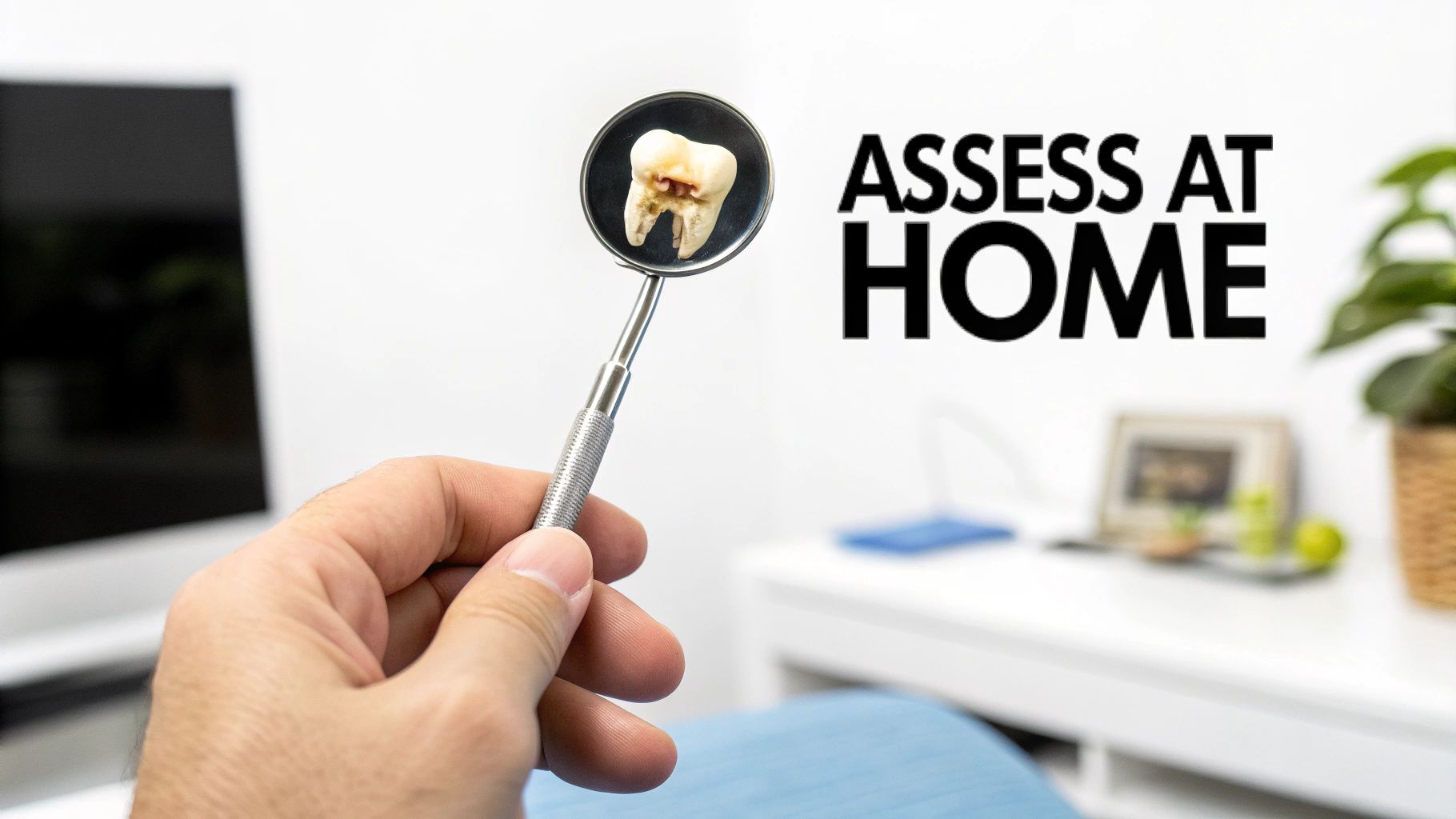
Before you call the dentist, take a moment to assess the situation. A quick, careful look in the mirror will help you understand the urgency and give you the right words to describe the problem when you call. This isn't about self-diagnosis; it's about gathering clear information.
First, gently rinse your mouth with warm salt water to clean the area. Next, find a well-lit mirror and examine the tooth. Pay close attention to how it feels—is it sharp, sensitive, or painful? What you feel is just as important as what you see.
Identifying Minor Enamel Chips
Often, a chip is just a small nick in the enamel, the tooth's ultra-hard outer layer. You can think of it as a small scuff on a ceramic tile—the structure is sound, but there's a cosmetic flaw.
What to look for: You'll likely feel a rough or sharp spot with your tongue, but the chip may be too small to see easily. These chips are almost always painless because enamel has no nerves. While not an emergency, it's wise to have it smoothed out to prevent irritation to your tongue or cheek.
If you find this happening frequently, our guide on why teeth chip so easily and how to prevent it offers actionable prevention tips.
Gauging Moderate Cusp Fractures
A cusp fracture is a more significant break. The cusps are the pointed chewing surfaces on your back teeth (molars and premolars). When a piece of a cusp breaks off, it's noticeable—a clear chunk of your tooth will be missing.
What to look for: This break exposes the layer beneath the enamel, called dentin. As a result, you might feel a sudden twinge when consuming hot, cold, or sweet foods and drinks. Even if the pain is minimal, a broken cusp weakens the entire tooth, making it vulnerable to further cracking. Professional repair is essential to protect it.
A key indicator of a moderate fracture is new sensitivity. If a tooth that was previously fine suddenly zings when you drink cold water, it’s a clear sign the damage is more than superficial.
Recognizing Severe Fractures and Pulp Exposure
The most critical type of break is a severe fracture, where a large piece of the tooth has broken off, sometimes extending below the gum line. This deep damage often exposes the tooth's center, the pulp, which contains nerves and blood vessels.
What to look for: The signs are unmistakable and demand immediate action.
Intense, throbbing pain that doesn't subside.
Visible red or pink tissue (the pulp) inside the broken tooth.
Extreme sensitivity to any temperature change or even light touch.
This is a true dental emergency. An exposed pulp is highly susceptible to infection, which can lead to a painful abscess and tooth loss. Seek immediate dental care to manage the pain and save the tooth.
From Minor Fixes to Full Restorations: Your Repair Options
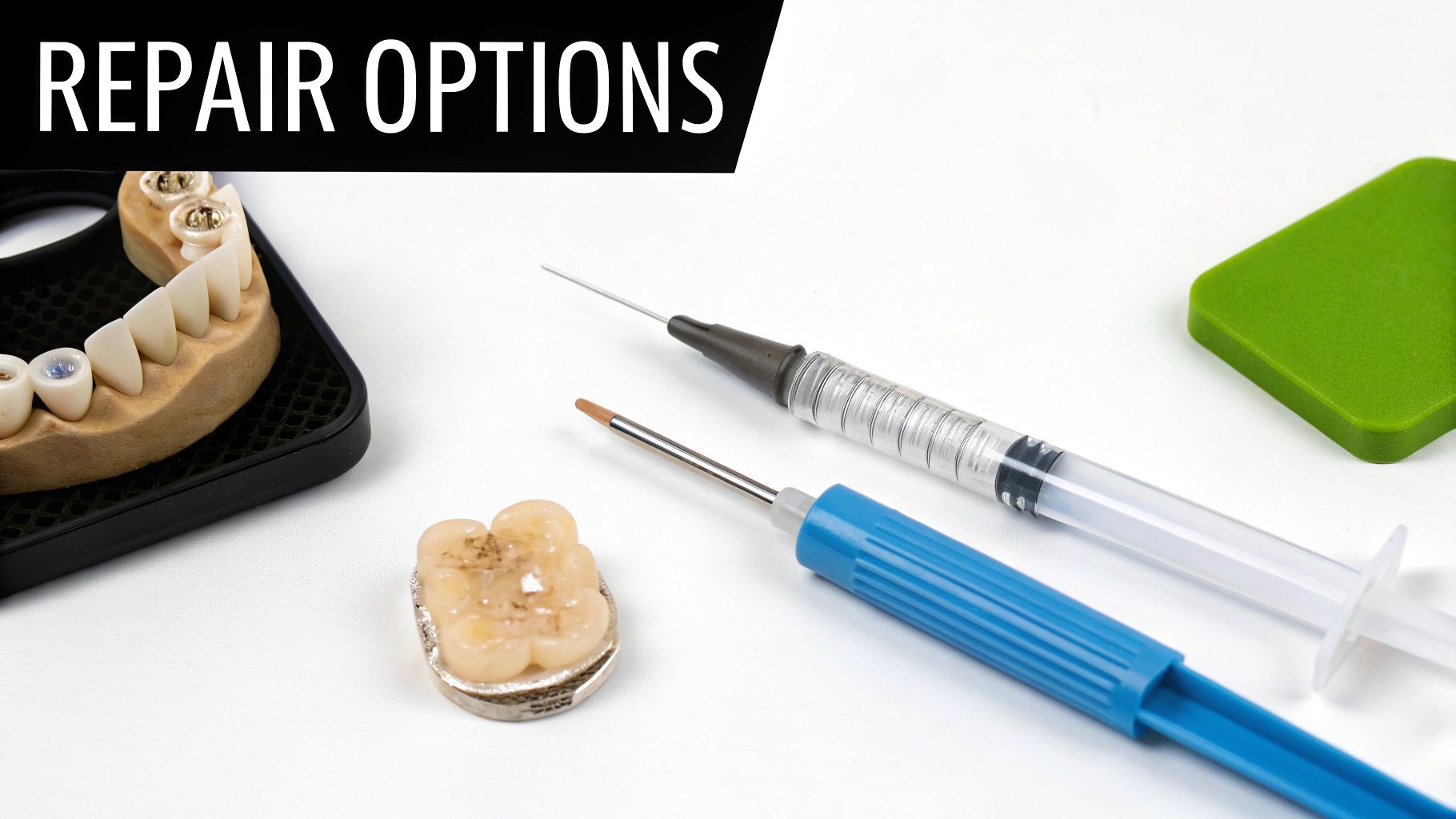
After assessing the damage, your next question is likely, "What can the dentist do to fix this?" The good news is that we have a range of effective solutions. The right repair is chosen by matching the treatment to the chip's size, location, and severity, ensuring your tooth is restored to full health and appearance.
The goal is always to use the most conservative treatment that provides a durable, long-lasting result. Let's walk through the most common repair options, starting with the simplest fixes and moving to more comprehensive restorations.
Dental Bonding for Small Cosmetic Chips
For small, noticeable chips—especially on front teeth—dental bonding is often the ideal solution. Think of it as a skilled touch-up. The process is quick, painless, and typically completed in a single visit.
First, the tooth's surface is gently prepared. Then, a tooth-colored composite resin is applied and meticulously sculpted to fill the chip and recreate the tooth’s natural shape. A special light hardens the material instantly, and after a final polish, it blends seamlessly with your smile. For a deeper dive, check out our practical guide to the dental bonding procedure.
Porcelain Veneers for a Flawless Facade
If the chip is more significant, or if you also want to correct other cosmetic issues like stains or small gaps, a porcelain veneer is an excellent choice. A veneer is an ultra-thin, custom-made shell of porcelain that is bonded to the entire front surface of a tooth.
A veneer doesn't just patch a chip; it gives the tooth a completely new, perfect-looking face. It's like putting premium siding on a house—it fixes the damage while dramatically improving its overall appearance.
To place a veneer, a tiny amount of enamel is removed to ensure a flush fit. An impression is taken, and the custom veneer is crafted. Finally, it is securely bonded to the tooth, resulting in an incredibly strong, stain-resistant, and natural-looking restoration.
Dental Crowns for Serious Fractures
When a tooth suffers a major fracture, such as a broken cusp or a large corner shearing off, the priority is protection. A dental crown is the gold standard for this situation. Often called a "cap," a crown fits over the entire visible part of the tooth down to the gum line. It acts like a helmet, holding the damaged tooth together and restoring its original shape, size, and strength.
This robust repair is necessary when the damage is too extensive for bonding or a veneer. It prevents the tooth from cracking further and allows you to chew with confidence. Crowns are crafted from durable, tooth-like materials like porcelain or ceramic, ensuring they blend seamlessly into your smile.
Root Canal Therapy to Save an Infected Tooth
If a chip is deep enough to expose the tooth's inner pulp (the soft center containing nerves and blood vessels), it's a dental emergency. The opening allows bacteria to enter, leading to a painful infection. To save the tooth from extraction, a root canal is necessary.
During a root canal, the infected pulp is removed, the inside of the tooth is cleaned and disinfected, and the space is filled and sealed. However, a root canal is not the final step; it’s the procedure that saves the tooth and prepares it for final restoration.
After a root canal, a tooth can become brittle. That's why a dental crown is always placed over it afterward. This two-step process is crucial for long-term success, with studies showing that this combination leads to survival rates for treated cracked teeth between 86% and 97%. Skipping the crown is a significant risk; one study showed that without it, the two-year survival rate dropped to just 20%.
Your Immediate Action Plan for a Chipped Tooth
That jarring crunch, the sudden sharp edge against your tongue—chipping a tooth is an unpleasant surprise. What you do in the first few moments can significantly impact the success of your repair.
Think of this as dental first aid. Your goal is not to fix the tooth yourself but to manage the situation, prevent further injury, and keep things stable until you can see a dentist.
Your Emergency Action Plan
Take a deep breath and follow this simple, actionable checklist.
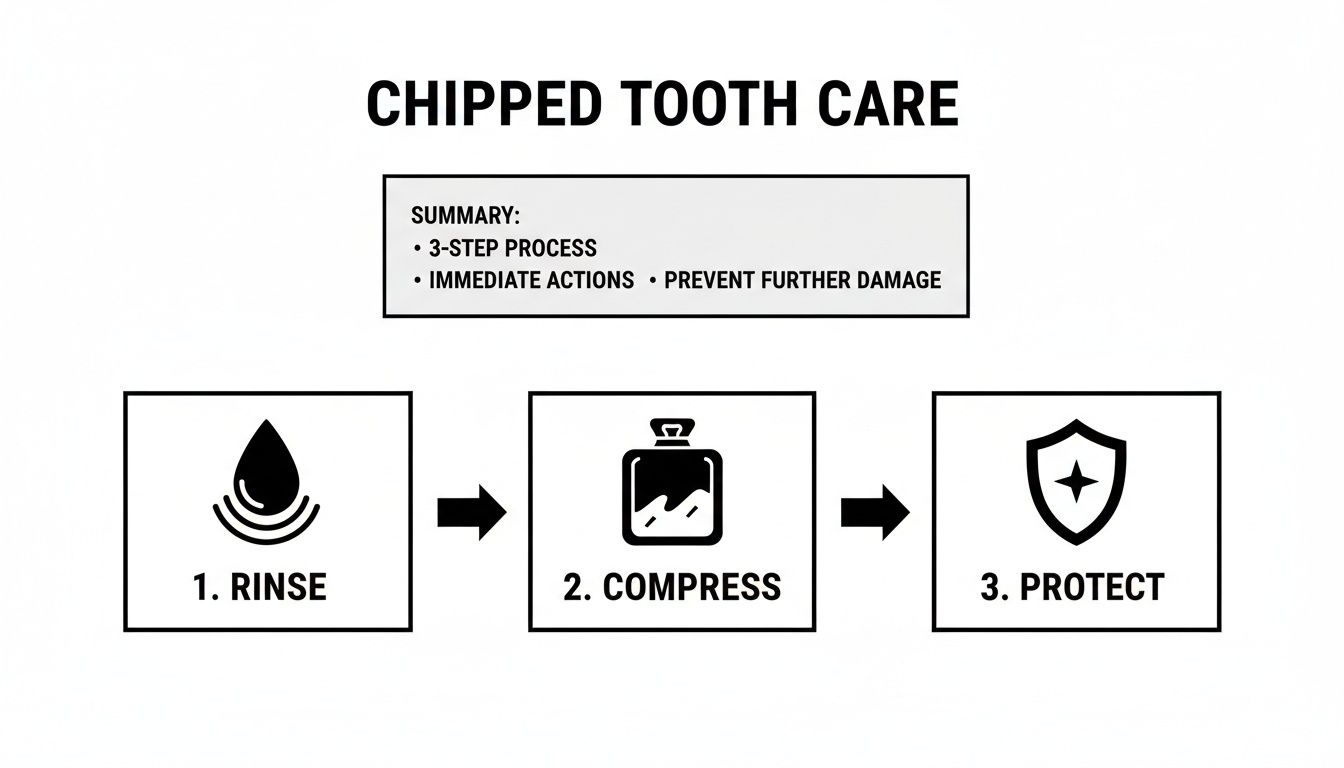
Rinse with Warm Salt Water: First, gently clean the area. Mix half a teaspoon of salt into a glass of warm water and swish carefully. This helps remove debris and reduces the risk of infection.
Apply a Cold Compress: If there was an impact, you'll likely experience swelling. Apply a cold compress or an ice pack wrapped in a cloth to your cheek or lip over the injured area. Use it in 15-minute intervals to reduce swelling and numb the area.
Cover Any Sharp Edges: A freshly chipped tooth can cut your tongue or cheek. Temporarily cover the jagged edge with a piece of sugar-free gum or dental wax, which is available at most pharmacies.
Manage Pain Safely: Over-the-counter pain relievers like ibuprofen can help manage discomfort. Follow the dosage instructions on the package. Important: Never place aspirin directly on the tooth or gums, as it can cause a painful chemical burn.
When Is a Chipped Tooth a True Emergency?
Do you need to drop everything and race to the dentist? It depends on the severity. Knowing when to seek immediate care can save you stress and improve your outcome.
The key signs of a dental emergency are severe, unrelenting pain and any bleeding that appears to come from inside the tooth. These indicate that the nerve has been exposed, and you need to see a dentist immediately to prevent infection and save the tooth.
If a large piece of your tooth is missing, the pain is intense, or you see a pink or red spot in the broken area (the pulp), consider it an emergency. If the chip is tiny, painless, and just feels rough, you can likely schedule an appointment within the next day or two.
Understanding the Costs and Timelines for Tooth Repair
After chipping a tooth, two questions are top of mind: How much will this cost, and how long will it take to fix? The right solution balances your budget, timeline, and the desired longevity of the repair.
For a tiny cosmetic chip, dental bonding is the fastest and most affordable fix, often completed in a single visit. For more serious damage, you'll be looking at a larger investment of time and money. A custom porcelain veneer, for example, requires at least two appointments, while a full dental crown might take one or two visits depending on the dentist's technology.
Navigating the Investment in Your Smile
The final cost depends on the materials used (composite resin vs. high-strength porcelain), the complexity of the fracture, and your dental insurance coverage. Always ask for a detailed cost breakdown before treatment so you can check your benefits and plan accordingly.
The timeline varies just as much. While bonding is a quick, in-and-out procedure, more durable solutions require more time.
Dental Bonding: One visit, typically 30-60 minutes per tooth.
Porcelain Veneers: At least two appointments—one for preparation and impressions, and a second to place the final veneer.
Dental Crowns: Traditionally two visits, but modern dental offices (like ours!) can often create and place a crown in a single day.
Root Canal and Crown: The most involved repair, usually requiring two or more appointments to resolve the infection before placing the protective crown.
Chipped Tooth Repair At a Glance Cost and Timeline
Treatment Option | Typical Cost Range | Number of Visits | Expected Lifespan |
|---|---|---|---|
Dental Bonding | $300 - $600 | 1 | 5 - 10 years |
Porcelain Veneer | $925 - $2,500 | 2+ | 10 - 15+ years |
Dental Crown | $1,000 - $3,500 | 1 - 2 | 15 - 30+ years |
Root Canal + Crown | $1,500 - $4,500+ | 2+ | 15 - 30+ years |
Note: These are estimated ranges. An accurate quote and timeline can only be provided after a dental examination of the specific damage.
The Critical Role of Full Restoration
When a tooth is damaged enough to require a root canal, crowning it afterward is not optional—it is essential to saving the tooth long-term. A root canal removes the tooth's blood supply, which can make it brittle and prone to fracture. The crown acts as a protective helmet, shielding the weakened tooth from chewing forces and preventing a catastrophic break.
Research confirms that for teeth needing root canal treatment, a full crown restoration is the key to lasting success. Without this final step, the risk of losing the tooth increases dramatically.
The data is clear. Studies show that teeth restored with a full crown after a root canal have a survival rate as high as 97%. In contrast, one study found that teeth that did not receive a crown were 11.3 times more likely to be extracted. You can read more about the long-term success of crowns after root canals to understand just how vital this final step is.
Finding the Right Chipped Tooth Repair in Tempe
Knowing your chipped tooth can be fixed is one thing; finding a dentist you trust to do it right—and quickly—is another. At Beautiful Dentistry in Tempe, we combine advanced dental technology with a compassionate approach to handle everything from minor cosmetic chips to major dental emergencies.
A broken tooth is stressful enough. That’s why for significant fractures that used to require multiple appointments, we offer a better solution. We can design, create, and place durable, natural-looking same-day crowns in Tempe in a single visit. This means no temporary crown, no waiting, and no return visits. You leave with your smile fully restored.
Your Comfort Comes First
Dental anxiety is real, and the thought of a procedure can be more stressful than the injury itself. We prioritize your comfort by offering sedation dentistry options, allowing you to relax completely while we restore your tooth. Your peace of mind is as important to us as the quality of our work.
While we specialize in dental care, your overall well-being is paramount. For broader needs, you can explore general health solutions in Arizona to connect with other specialists.
Many people assume a badly cracked tooth is a lost cause, but that's rarely true today. Modern dentistry makes saving your natural tooth the number one priority.
The results are compelling. The American Association of Endodontists reports a 90% success rate for cracked teeth treated promptly with modern methods, especially when protected by a crown. In fact, research shows that placing a full crown after treatment makes the tooth 11.3 times less likely to need extraction compared to a simple filling. You can review the data on how various treatments impact cracked tooth survival rates to see the effectiveness for yourself.
Don’t let a small chip become a major problem. The best first step is to schedule a consultation. Our team at Beautiful Dentistry is ready to provide a clear assessment and create a plan to restore your smile.
Still Have Questions About Chipped Tooth Repair?
Even after learning about the different repair options, you might still have a few questions. Here are answers to some of the most common concerns we hear from patients.
Will My Repaired Tooth Look Natural?
Yes, absolutely. Modern dental materials are designed to perfectly mimic the appearance of natural teeth. Whether we use composite resin for bonding or high-grade porcelain for a veneer or crown, we meticulously match the color, shine, and translucency of your adjacent teeth. The goal is a seamless repair that is indistinguishable from your natural smile.
Is It Painful to Repair a Chipped Tooth?
For most chipped tooth repairs, you'll feel little to no discomfort. Simpler fixes, like smoothing an edge or applying bonding, often don't even require anesthetic. For more significant repairs that require a crown or root canal, we ensure the area is completely numb before beginning any work.
Your comfort is our top priority. We will not start any procedure until you are fully numb, and for anxious patients, we offer sedation options to ensure a stress-free experience.
How Can I Prevent My Teeth from Chipping Again?
This is the most important question because prevention is the best strategy. While it's reassuring that a chipped tooth can be repaired, avoiding another one is the ideal outcome.
Here are three actionable steps to protect your smile:
Avoid Chewing Hard Objects: This is the leading cause of chips. Stop chewing on ice, hard candy, popcorn kernels, and non-food items like pen caps or fingernails.
Wear a Mouthguard: If you play sports, a custom-fit mouthguard is essential. It's also critical if you grind your teeth at night (bruxism), as it provides a protective cushion against immense forces.
Maintain Strong, Healthy Teeth: Strong teeth are less likely to chip. Consistent brushing and flossing, combined with regular dental check-ups, keep your enamel strong and prevent decay that can weaken teeth from within.
Adopting these habits will help protect both your natural teeth and your dental restorations for years to come.
If you're dealing with a chipped tooth, don't wait for it to get worse. At Beautiful Dentistry, our team is here to restore your smile with gentle, expert care. New patients can get started with our $59 Comprehensive Exam & X-Rays. Schedule your appointment today!


Comments