

Are you supposed to brush your tongue? A Practical Guide to Oral Health

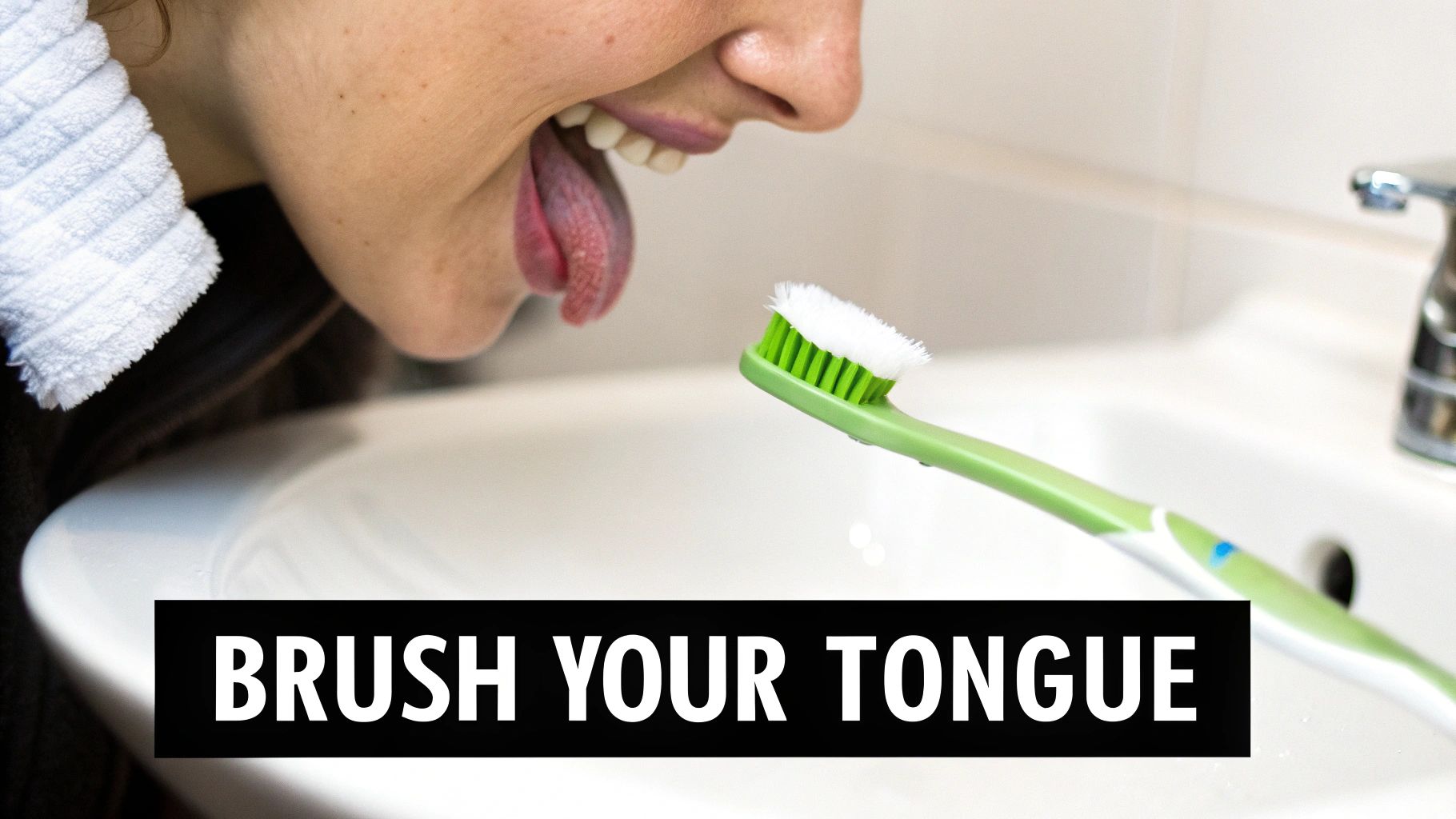
When you're going through your daily oral hygiene routine, do you ever stop and think, "Am I actually supposed to brush my tongue?" The answer from any dental professional is a resounding yes. It's a simple, quick step that's often skipped, but it's absolutely essential for a truly healthy mouth.
Why Your Tongue Needs a Daily Cleaning
Think of the surface of your tongue like a high-pile shag carpet. It might look smooth from a distance, but it’s covered in tiny bumps and crevices called papillae. These little bumps are fantastic at trapping food debris, dead skin cells, and, most importantly, bacteria.
Over time, all this gunk builds up into a thin, often visible, film. This isn't just some harmless coating; it's a living biofilm, and it’s the main culprit behind several common oral health issues that brushing your teeth alone just can't fix.
For instance, this bacterial buildup is a major source of bad breath. In fact, for up to 90% of people dealing with halitosis, the tongue is the primary source. The bacteria living on your tongue release smelly volatile sulfur compounds, leading to odors that brushing and flossing alone can't eliminate. You can learn more about the science behind bad breath in research from the National Institutes of Health.
Actionable Benefits of a Clean Tongue
Adding this quick task to your daily routine brings some serious benefits you'll notice right away:
Fresher Breath: Physically remove the root cause of bad breath. This provides longer-lasting freshness than gum or mouthwash can achieve.
Improved Taste: Clear away the layer of buildup covering your taste buds. Food will literally taste better and more vibrant.
Better Overall Oral Health: Reduce harmful bacteria in your entire mouth. This helps lower the risk of plaque developing on your teeth and can lead to healthier gums.
"Forgetting to clean your tongue is like vacuuming your living room but never cleaning the rug. It's where the most persistent problems can hide in plain sight, impacting everything from your breath to how you taste your food."
Making tongue cleaning a daily habit is one of the easiest and most effective actions you can take to elevate your oral hygiene and boost your confidence.
Think of your tongue as a deep-pile carpet. Now, imagine never, ever vacuuming it. That's essentially what's happening in your mouth if you skip tongue cleaning.
Your tongue's surface is covered in millions of tiny bumps called papillae, which are fantastic at trapping a nasty film of bacteria, food debris, and dead cells. This gunk doesn't just hang out—it becomes a breeding ground for problems.
This buildup is what fuels the production of volatile sulfur compounds (VSCs), the main reason for chronic bad breath. You can brush your teeth perfectly, but if you ignore the source on your tongue, the odor will stick around.
It's More Than Just Bad Breath
Letting that bacteria thrive on your tongue has a ripple effect across your entire mouth. It’s not just about a fresh feeling; it's about your overall oral health.
Plaque on Overdrive: Bacteria from your tongue easily spread to your teeth, helping plaque and tartar form much faster and increasing your cavity risk.
Irritated Gums: Those same germs can creep down to your gumline, causing inflammation, bleeding, and gingivitis—the first stage of gum disease.
Muted Taste: The thick film covers your taste buds, dulling your sense of taste. Cleaning your tongue lets you fully savor your food.
A coated tongue isn't just a cosmetic problem. It’s a clear sign that bacteria are out of balance, and it can sabotage all your other efforts to keep your mouth healthy.
This bacterial hotspot is one of the biggest contributors to halitosis. If you're struggling with odor that won't go away, looking into professional bad breath treatment in Tempe can help you tackle the problem at its source, which always includes proper tongue care.
When it comes down to it, skipping your tongue means you're only cleaning half your mouth. The bacteria you leave behind will quickly spread back to your teeth and gums, undoing all the hard work you just put in with your toothbrush and floss.
The Right Way to Clean Your Tongue Step-by-Step
You're sold on the why; now let's focus on the how. Adding this to your daily routine takes less than a minute, and the right technique is key to getting a clean that’s both effective and comfortable.
The secret is to work from the back of your tongue toward the front.
Stick your tongue out as far as you comfortably can.
Place your tool (toothbrush or scraper) on the backmost part of your tongue.
Apply gentle but firm pressure and pull the tool forward to the tip in one smooth motion. This scrapes away the film of bacteria and debris.
Rinse the tool under running water after each pass. This is critical to avoid smearing the gunk back onto your tongue.
Repeat 2-3 times, covering the entire surface of your tongue.
Choosing Your Tool: Toothbrush vs. Tongue Scraper
You can use your existing toothbrush, but a dedicated tongue scraper is almost always the better option. Studies show that tongue scrapers can remove 30% more odor-causing compounds than a toothbrush.
Here’s a quick comparison to help you choose the right tool for you.
Feature | Toothbrush | Tongue Scraper |
|---|---|---|
Effectiveness | Bristles dislodge debris but can sometimes spread it around. | Designed to scrape away the entire film of buildup in one clean pass. |
Ease of Use | The bulkier head can sometimes trigger a stronger gag reflex. | The low-profile design makes it easier to reach the back of the tongue. |
Actionable Tip | Use a toothbrush with soft bristles to avoid irritation. | Choose a scraper made of plastic, copper, or stainless steel for hygiene. |
Ultimately, a specialized tongue scraper is built for this specific task and delivers a more thorough clean.
The diagram below shows exactly what happens when your tongue is neglected—plaque builds up, leading directly to bad breath and even a dulled sense of taste.
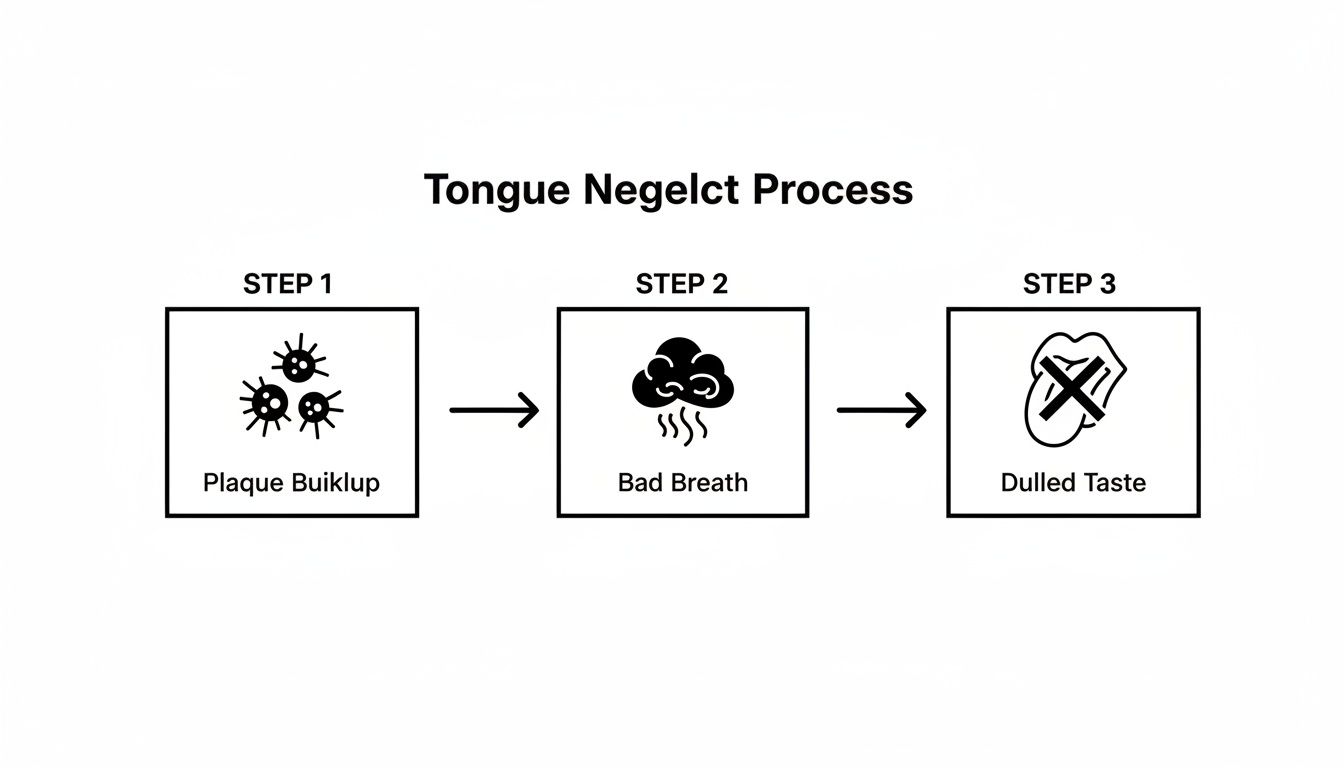
As you can see, skipping this simple step allows some of the biggest culprits behind common oral health issues to thrive in a place your toothbrush alone just can't handle.
Pro Tip: If you have a sensitive gag reflex, try this simple trick: exhale slowly as you scrape. This helps relax your throat muscles and makes the whole process much easier. Remember, you don't need to press hard at all—light, steady pressure is all it takes to get the job done without causing any irritation.
How Often Should You Clean Your Tongue?
When it comes to tongue cleaning, consistency beats intensity every time. The goal is to make it a non-negotiable part of your daily routine, just like brushing your teeth. This ensures you get all the benefits without causing irritation.
For optimal results, clean your tongue at least once a day. The best time to do it is first thing in the morning. Bacteria have multiplied overnight, causing that fuzzy film and classic morning breath. A quick scrape or brush clears it all out and starts your day feeling fresh.
Finding Your Gentle Rhythm
Your tongue's surface is delicate. The goal is to gently lift away the biofilm, not scrub your tongue raw.
Use firm but gentle pressure. If you ever experience pain or notice bleeding, that's a clear signal you’re pushing too hard. Ease up on the pressure—this process should feel refreshing and clean, never uncomfortable. It's just as important as keeping your tools fresh; you can learn more about how frequently you should change your toothbrush to make sure your entire routine is in top shape.
Actionable Goal: Maintain a healthy tongue that is pink and relatively smooth. If you notice a persistent, thick coating that doesn't go away with daily cleaning, it's a sign to consult your dentist.
Once a day is the gold standard. Cleaning your tongue twice a day (after brushing) is also fine, as long as you remain gentle. The most important takeaway is to listen to your body, find a routine that works for you, and stick with it.
Busting Some Common Myths About Tongue Brushing
Many misconceptions about oral hygiene exist. Let's clarify the facts so you can feel confident in your tongue-cleaning routine.
One persistent myth is that mouthwash is enough to clean your tongue. While mouthwash helps by killing some bacteria and providing a fresh feeling, it's a temporary fix. It cannot physically remove the film of bacteria, food particles, and dead cells. Think of it like rinsing a dirty dish instead of scrubbing it—you're not getting rid of the source of the problem.
Will Brushing Hurt Your Taste Buds?
This is a common concern. The good news is that gentle cleaning will not ruin your taste buds. Your taste buds (papillae) are surprisingly resilient.
In fact, cleaning your tongue improves your sense of taste by removing the coating that dulls their sensitivity. The only way to cause harm is by applying excessive pressure and scrubbing aggressively.
The truth is, gentle daily cleaning enhances your sense of taste; it doesn't diminish it. You're uncovering your taste buds, not scrubbing them away.
Let's put a few other common misconceptions to rest:
Myth: You only need to brush your tongue if you have bad breath. * Reality: Tongue cleaning is preventative. By removing bacteria daily, you stop bad breath and other problems before they start.
Myth: The bacteria on your tongue are harmless. * Reality: These bacteria can migrate to your teeth and gums, contributing to cavities and gum disease.
Myth: You need to brush hard to get your tongue really clean. * Reality: Brushing too hard will only cause irritation, sensitivity, or bleeding. A gentle glide is all it takes to effectively lift the bacterial film without causing damage.
When to See Your Tempe Dentist About Tongue Health
While daily cleaning is your best first line of defense, some signs indicate it's time to call a professional. Your tongue can be a window into your overall oral health, so knowing when to seek an expert opinion is key. A consistent routine is fantastic, but it can't solve every underlying issue.

If you’re doing everything right but still notice problems, that’s your cue to schedule a visit. Never ignore persistent changes to how your tongue looks or feels.
Symptoms That Require a Professional Look
It's time to schedule an appointment if you experience any of these issues:
Persistent White Patches: A white film that doesn't go away with daily cleaning might indicate an infection or another underlying condition.
Sores That Won't Heal: Any sore, lump, or ulcer on your tongue that lasts for more than two weeks needs to be professionally evaluated.
Unusual Discoloration: If your tongue turns bright red, black, or develops hairy-looking patches, it's time for a professional diagnosis.
Chronic Bad Breath: If bad breath persists despite regular brushing of teeth and tongue, it often points to a deeper issue that requires attention.
For our neighbors here in Tempe, an exam at Beautiful Dentistry is the perfect time to bring up any concerns you have. We've worked hard to create a comfortable, anxiety-free space where you can get the expert care you deserve.
Staying on top of your routine check-ups is the single best way to catch potential problems early. You can learn more about what we cover during our dental cleaning and exams and see how we can help keep your smile healthy. For those in the industry, there are also comprehensive resources for dental professionals available that offer some great insights.
Common Questions About Tongue Cleaning
You've got the why, the how, and the when down, but you might still have a few practical questions. Let's tackle some of the most common things people ask about tongue cleaning so you can feel completely confident about adding this to your routine.
Can Cleaning My Tongue Help Prevent Cavities?
Yes, it can. While you aren't scraping plaque directly off your teeth, you are significantly reducing the overall number of harmful bacteria in your mouth.
These bacteria can easily move to your teeth and contribute to the sticky plaque that causes cavities. Think of it as disrupting the problem at its source. A cleaner tongue supports a healthier environment for your entire mouth.
What if My Tongue Bleeds When I Clean It?
Bleeding is typically a sign that you’re being too aggressive. The surface of your tongue is delicate, so a gentle touch is all you need. If you see blood, ease up on the pressure significantly.
If the bleeding continues even with a very gentle approach, it's a good idea to book an appointment with your dentist. Persistent bleeding can sometimes indicate another issue that needs a professional eye.
Is It Safe for Kids to Brush Their Tongues?
Absolutely! Teaching kids to clean their tongues early is a fantastic habit. As soon as your child can brush their own teeth without swallowing toothpaste, you can show them how to gently clean their tongue.
Supervise them to ensure they use light pressure and don't go too far back, which can trigger their gag reflex.
Will Tongue Cleaning Get Rid of Bad Breath for Good?
For many people, it’s a game-changer. Since up to 90% of the bacteria that cause bad breath live on the tongue, daily cleaning is one of the most effective actions you can take for fresher breath.
However, if bad breath persists, other factors could be at play, such as diet, dry mouth, or an underlying dental or medical issue. If cleaning your tongue doesn't solve the problem, it's time to talk to your dentist.
Ready to take the next step toward a healthier, more confident smile? The team at Beautiful Dentistry is here to help with personalized care and expert advice. Schedule your $59 new patient exam and X-rays today!


Comments